
Blood Communion: A Tale of Prince Lestat by Anne Rice, published in 2018, is the thirteenth installment in the Vampire Chronicles, a gothic horror saga that has redefined the modern vampire genre. Narrated by Lestat de Lioncourt, this entry chronicles his reign as the self-proclaimed Prince of the Blood Communion, a newly unified court of vampires. It is a deeply personal and political narrative, focused on his efforts to bring peace, unity, and purpose to a fragmented and often savage race of immortals.
Plot Summary
In the snow-cloaked mountains of France, the ancient Château of Lestat de Lioncourt flickered with candlelight and music, alive once again with the presence of blood drinkers from every shadowed corner of the earth. There, within its marble halls and vaulted chambers, a Court had been born – the Blood Communion – and Lestat, once the Brat Prince of rebels and outlaws, now ruled as its sovereign. His dream was fragile: to bind together the scattered and often violent immortals into a community of respect, peace, and shared purpose. But no crown rests easily on the brow of a killer, and Lestat bore not only the burdens of leadership but the ghosts of his own recklessness, the scars of countless battles fought in centuries past.
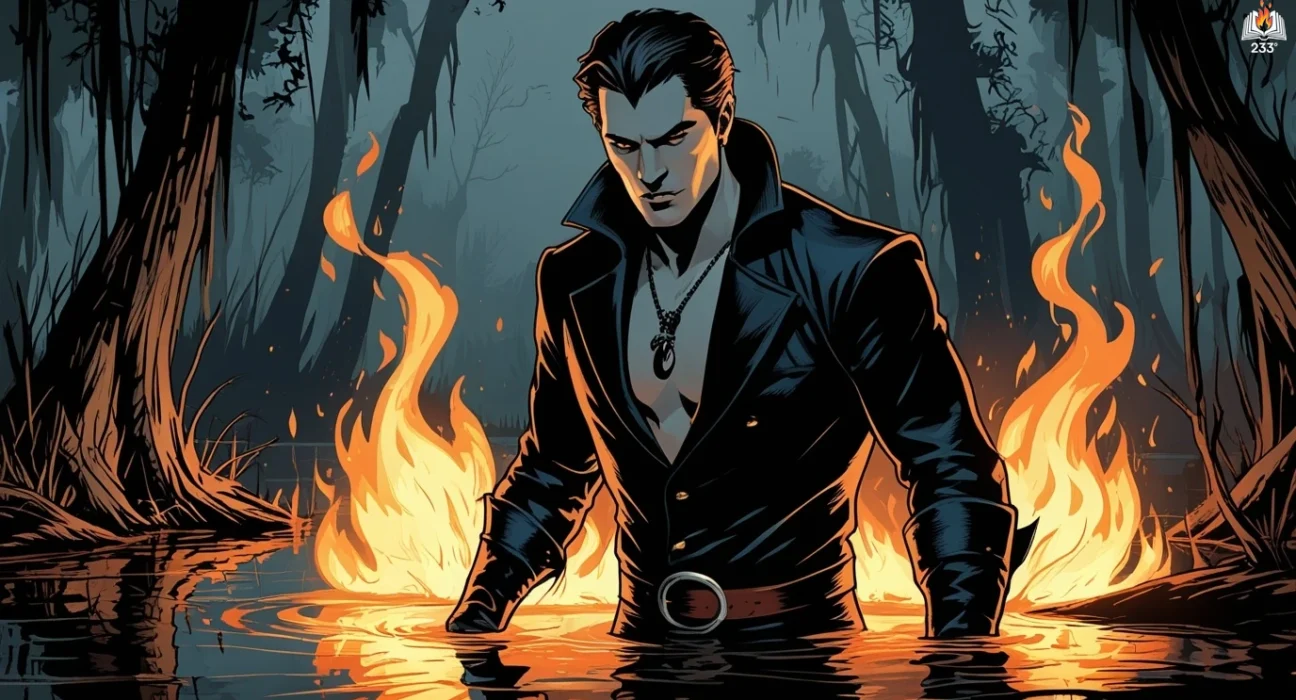
Trouble stirred swiftly. A letter arrived, inked by a delicate and archaic hand, from an old immortal named Dmitri Fontayne. His house in the Louisiana swamps had been raided, his mortal servants murdered, his horses stolen, and his solitude shattered. Though unknown to Lestat, Fontayne’s plea carried the tone of a gentleman and a brother of the night, and Lestat answered with haste. Accompanied by his loyal guards Thorne and Cyril, he crossed the ocean and struck swiftly. The maverick blood drinkers who had sown terror were obliterated with the Fire Gift – bodies burned, skulls shattered, justice done.
Yet, after the blood and vengeance, unease lingered. One of the mavericks had dared to ask by what right Lestat wielded death. The question clung to him. Authority, it seemed, had a weight even greater than power.
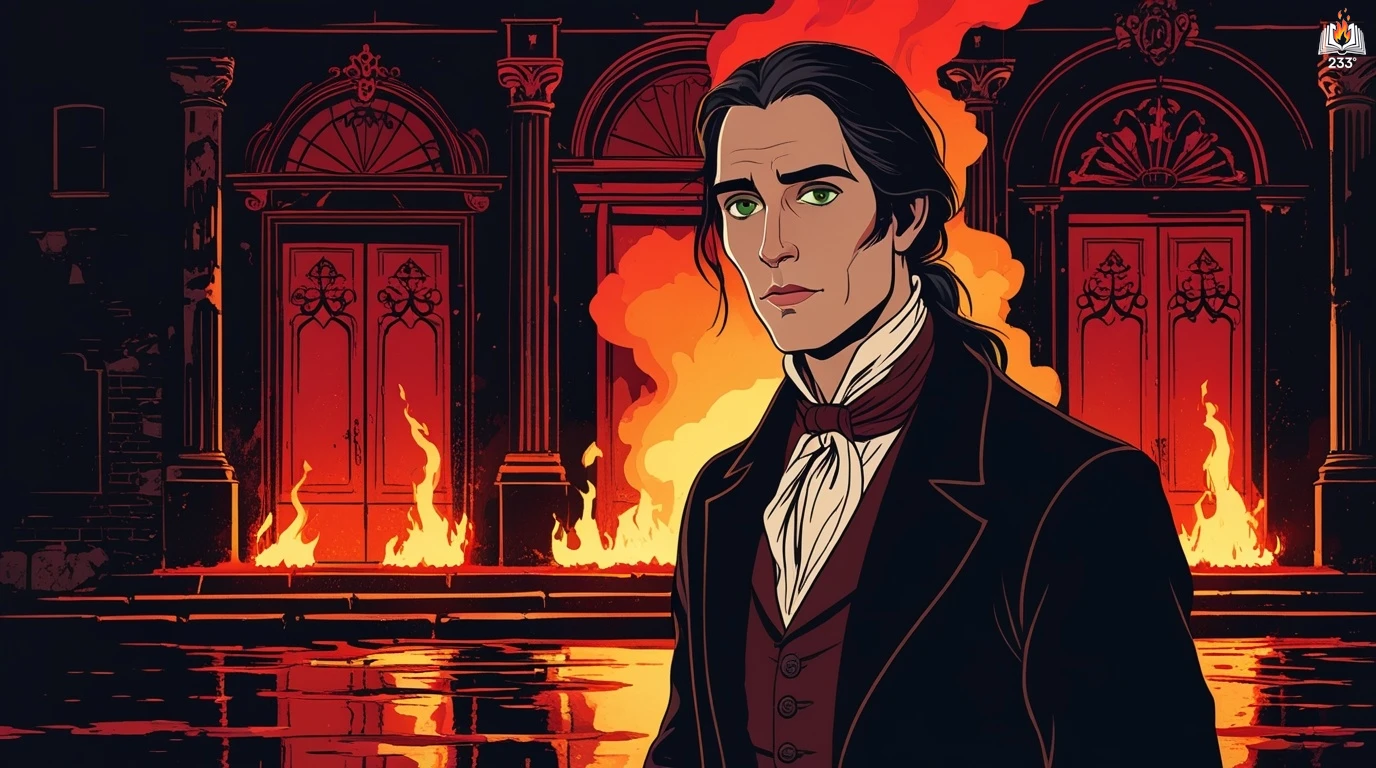
Seeking solace or perhaps meaning, Lestat ventured into the swamps to meet the reclusive Fontayne. What he found was not a raving rogue but a poised and elegant creature, a child of Catherine the Great’s court, who lived amidst lace curtains, polished wood, and a sea of books. Fontayne – who preferred to be called Mitka – welcomed the Prince with a grace that warmed the wintry night. His house shimmered with memory, his voice with gentleness, and Lestat, for once, felt no need to perform. They spoke as equals, both acutely aware of the endless ache of immortality.
Mitka revealed his reason for avoiding the Court: Arjun, an ancient vampire from India, a cruel and possessive being, who had once loved Pandora and nearly killed Mitka in a jealous fury. Pandora, trying to save Mitka’s life, had given him the Blood, and in doing so, provoked Arjun’s undying hatred. Before exiling Mitka, Arjun had promised to burn him alive should they ever meet again.
Lestat listened, his decision clear. If his Court were to mean anything, it had to be a sanctuary for those who sought peace. He promised Mitka that he would settle the matter with Arjun, would face him before the Council and demand either forgiveness or departure. Mitka, reluctant but trusting, accepted.
But fate moved faster than Lestat. Word came from Eleni in New York. Arjun had been destroyed by Marius.
The Court was hushed. Marius – that most ancient of vampires, the keeper of history and order – had said little. Lestat returned at once, walking the stone corridors of his ancestral Château now filled with whispers. The Court had grown – not just in number but in structure. The village below the Château bustled with craftsmen, the halls shimmered with tapestries and music, and the nights were alive with discourse and pageantry. But beneath the beauty, uncertainty pulsed. Arjun’s death raised questions. Had Marius acted from justice or rage? Had Arjun provoked him beyond the limits of mercy?
Lestat summoned the Council. Marius stood before them, silent at first, then solemn. Arjun, he explained, had become more than a threat – he had been unraveling. Dangerous, erratic, cruel to the young and volatile to the old. In a violent confrontation, he had raised the Fire Gift against another, and Marius, sensing catastrophe, had intervened. Arjun perished in the blaze.
The Council accepted Marius’s judgment, but unease remained. Lestat knew he must not merely react. He must shape the future. To that end, he returned to Mitka with the news. Arjun was no more. The way to the Court lay open.
Mitka crossed the ocean in Lestat’s company, the cold wind of the Atlantic slicing through them as they sped over waves and darkness. In the Court, his arrival was quiet, but meaningful. He brought with him gifts – books, paintings, artifacts of centuries lived in beauty and thought. More than that, he brought perspective. He had lived alone, untouched by vampire politics, yet had yearned for belonging.
Lestat saw in him a symbol – a reason to lead. Not to wield power over others, but to protect those who dared to hope. His thoughts turned to others, to blood drinkers who wandered lost and hunted, to fledglings destroyed without counsel, to old ones too weary to speak. If the Blood Communion could be real, it must offer more than sanctuary. It must offer justice, continuity, and meaning.
A new enemy emerged – whispered only in Mitka’s passing mentions. Baudwin, an ancient creature, older than most, whose presence felt like shadow and salt. Though he vanished as suddenly as he came, his name lingered. A warning of battles yet to come.
But for now, the Château stood firm. Snow fell upon the mountains. The great ballroom shimmered with light and laughter. Musicians played, blood drinkers danced, and the ancient halls rang with the joy of beings who had, for too long, lived in silence and secrecy. Louis stood at the edge of the music, thoughtful, distant. Marius paced the library, his long fingers tracing the spines of books older than the very walls.
Lestat stood upon a terrace, gazing out at the forests and peaks, the night sky above so deep it felt like drowning. He had not chosen to lead. The role had chosen him. But in this frozen silence, as snow dusted his shoulders and the wind whispered through pine and stone, he felt something rare – peace. Not the peace of the hunted or the hidden, but the peace of a king who has found his kingdom.
And far below, in the sleeping village, candles flickered behind warm windows. The Court had endured. It was real. And it would last, so long as there were those who believed.
Main Characters
Lestat de Lioncourt – The charismatic and rebellious narrator, Lestat has evolved from reckless maverick to reluctant monarch. As Prince, he grapples with the burden of leadership, the ethics of vampiric existence, and his enduring desire for love and connection. His arc in this novel is reflective, emotional, and ultimately transformational, as he strives to lead a tribe of killers toward a new moral and communal identity.
Marius de Romanus – An ancient Roman vampire and mentor to many, Marius is both guide and critic to Lestat. Wise yet stern, he challenges Lestat to accept the truth about their predatory nature. His presence in the court serves as both philosophical ballast and a reminder of the past’s weight.
Louis de Pointe du Lac – Lestat’s long-time companion and emotional anchor, Louis remains a symbol of moral conflict within vampiric existence. Though quieter in this installment, his history and damaged relationship with Lestat remain critical to the emotional undercurrent of the story.
Mitka (Dmitri Fontayne) – A refined and elegant vampire with roots in Russia, Mitka embodies grace, solitude, and tragedy. He becomes an emotional mirror to Lestat and his desire to build community. His confrontation with Arjun’s legacy provides a poignant subplot about trauma, forgiveness, and justice.
Arjun – A powerful and unstable ancient vampire, Arjun represents the unruly danger still lurking within the vampire world. His obsession with Pandora and his violent jealousy make him a symbolic antagonist to Lestat’s vision of order and peace.
Thorne and Cyril – Loyal bodyguards to Lestat, they are quiet yet powerful presences. Their continued loyalty, even after the Sacred Core has been removed from Lestat, reflects a growing sense of fraternity and hierarchy within the Court.
Theme
Power and Responsibility: Lestat’s transformation into a monarch is not one of conquest but of reluctant obligation. The novel examines how power must be tempered by conscience and vision. Lestat’s struggle to maintain justice while embracing his violent nature is central to the tension in the narrative.
Unity vs. Isolation: The Blood Communion represents a fragile dream of vampire unity. Many characters, including Lestat and Mitka, grapple with deep loneliness and long for belonging. The court becomes a symbol of potential reconciliation and sanctuary for vampires alienated by centuries of solitary existence.
Nature of Evil: Rice revisits one of her oldest philosophical themes – whether vampires, by their very essence, are evil. Lestat refuses to believe in inherent evil, instead positing that evil arises from the choices made in the fight for survival. This theme is explored not only in abstract terms, but through concrete decisions and conflicts that test Lestat’s ethics.
Memory, Legacy, and Redemption: Lestat is haunted by the past, including his own, and by those who shaped it. Redemption for past violence is an ever-present question. Can creatures born of blood rewrite their legacy through community, love, and structure? The story asserts that perhaps they can.
Court as Microcosm: The Court of the Blood Communion serves as a metaphor for all societies built on conflicting ideals – tradition vs. progress, individualism vs. order, love vs. law. It dramatizes the attempt to create a civilization among monsters.
Writing Style and Tone
Anne Rice’s prose in Blood Communion is, as ever, lush, sensual, and steeped in introspection. Her signature baroque style continues here, but it is softened somewhat by the informal, first-person narration of Lestat. His voice is confiding and conversational, filled with tangents, personal anecdotes, and rhetorical questions that make the reader feel like an intimate confidant. This stylistic choice deepens the emotional resonance of the story and gives insight into Lestat’s tumultuous inner world.
The tone oscillates between grandeur and melancholy. Lestat’s musings are often poetic and philosophical, but they are grounded in the visceral realities of his vampire court – politics, executions, betrayal, and reconciliation. Anne Rice infuses the novel with a sense of dusk-tinted nostalgia, as if her characters are perpetually watching a world pass them by. Yet there is also joy – in music, architecture, art, and the fleeting moments of connection that justify eternity.
Quotes
Blood Communion – Anne Rice (2018) Quotes
“The edge of sleep can be such a precious time.”
“Some of us are infinitely better at being miserable than happy.”
“I've loved you more than any being in all the world whom I've ever loved.”
“I understand the very definition of "hate" when I think of you.”
“I wrestled as well with my passion for life, my lust for pleasure, for music, and beauty, and comfort and sensuality, and the inexplicable joys of art—and the baffling majesty of loving another so much that all the world, it seemed, depended on that love.”
“Seems I’d read somewhere, or heard it in a film, that the Jews believe each life is a universe, and if you take a life, well, then you are destroying a universe. And I thought, Yes, this is true of us, this is why we must love one another, because we are each an entire world.”
“the Jews believe each life is a universe, and if you take a life, well, then you are destroying a universe.”
“I hate you as much as I have ever loved you.”
“And your eyes pass over me as if I don't exist.”
“Do it for a world that will never knew you or thank you, but a world that you can now truly save.”
“I love the sounds of the French Quarter on mild nights...laughter, chatter, gaiety, Dixieland jazz drifting out of open doors, rock music pounding somewhere—an eternal carouse.”
“But then I do not remember everything, as I once thought I did. There is something in us, even us, that will not allow for that, something that pushes the memory of suffering that is unbearable slowly away.”
“Some of us are infinitely better at being miserable than happy,” he said gently. “We’re good at it, and proud of it, and we get better and better at it, and we simply don’t know what it means to be happy.”
“Soe of us are infinitely better at being miserable than happy.”
“You must have more than that to love, because loving, loving keeps us alive, loving is our best defense against time, and time is merciless. Time is a monster. Time devours everything.”
“and only by the coldest act of will did I avoid falling into a black pit of grief, so black that it would blind me to anything and everything.”
“Out, out, brief candle.” Such comforting remembrance can turn in an instant to agony.”
“And I thought, Yes, this is true of us, this is why we must love one another, because we are each an entire world.”
“Ultimately they will all disappoint you.”
“I’d demeaned and insulted those who didn’t know how to be happy. Yes, I was determined to be happy. And I fought furiously for ways to be happy.”
“And believe me when I say you will survive this, and that you must for all of us. You will survive because you always have and you always will.”
“I love; therefore I am.”
“I love; therefore I am”
“The entire history of evil in this world is related to what human beings do to one another in order to survive.”
We hope this summary has sparked your interest and would appreciate you following Celsius 233 on social media:
There’s a treasure trove of other fascinating book summaries waiting for you. Check out our collection of stories that inspire, thrill, and provoke thought, just like this one by checking out the Book Shelf or the Library
Remember, while our summaries capture the essence, they can never replace the full experience of reading the book. If this summary intrigued you, consider diving into the complete story – buy the book and immerse yourself in the author’s original work.
If you want to request a book summary, click here.
When Saurabh is not working/watching football/reading books/traveling, you can reach him via Twitter/X, LinkedIn, or Threads
Restart reading!