
Prince Lestat and the Realms of Atlantis by Anne Rice, published in 2016, is the twelfth installment in The Vampire Chronicles, a seminal series that reshaped the modern vampire mythos. This novel sees Lestat de Lioncourt, now reigning as Prince of the vampire tribe, grappling with apocalyptic visions and ancient secrets that tie the origins of the vampires to the lost city of Atlantis. Rice interweaves supernatural lore with speculative science fiction, diving deeper into the metaphysical and spiritual roots of vampirism and the mysterious being Amel who resides within Lestat.
Plot Summary
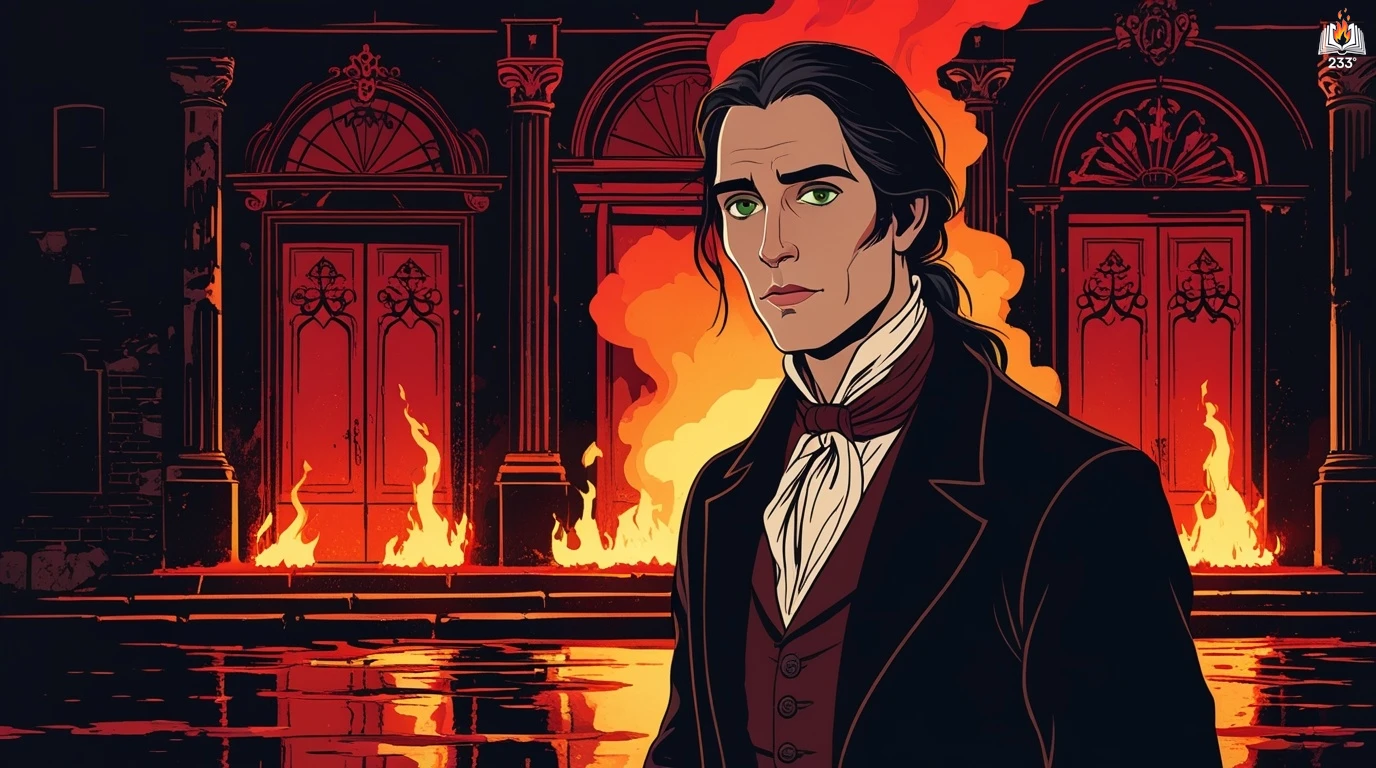
A city burned beneath the sea in the dreams of Prince Lestat, screams echoing from crumbling towers as flames danced above the deep. The dreams came often, thick with sorrow and fear, and they carried a name – a name whispered in dread and longing alike: Amel. The ancient spirit that resided within Lestat, the root of the vampire race, was stirring with memories older than the world itself. But what city had fallen in such cataclysm? And why did Amel weep in Lestat’s dreams, his anguish bleeding into the heart of the vampire prince?
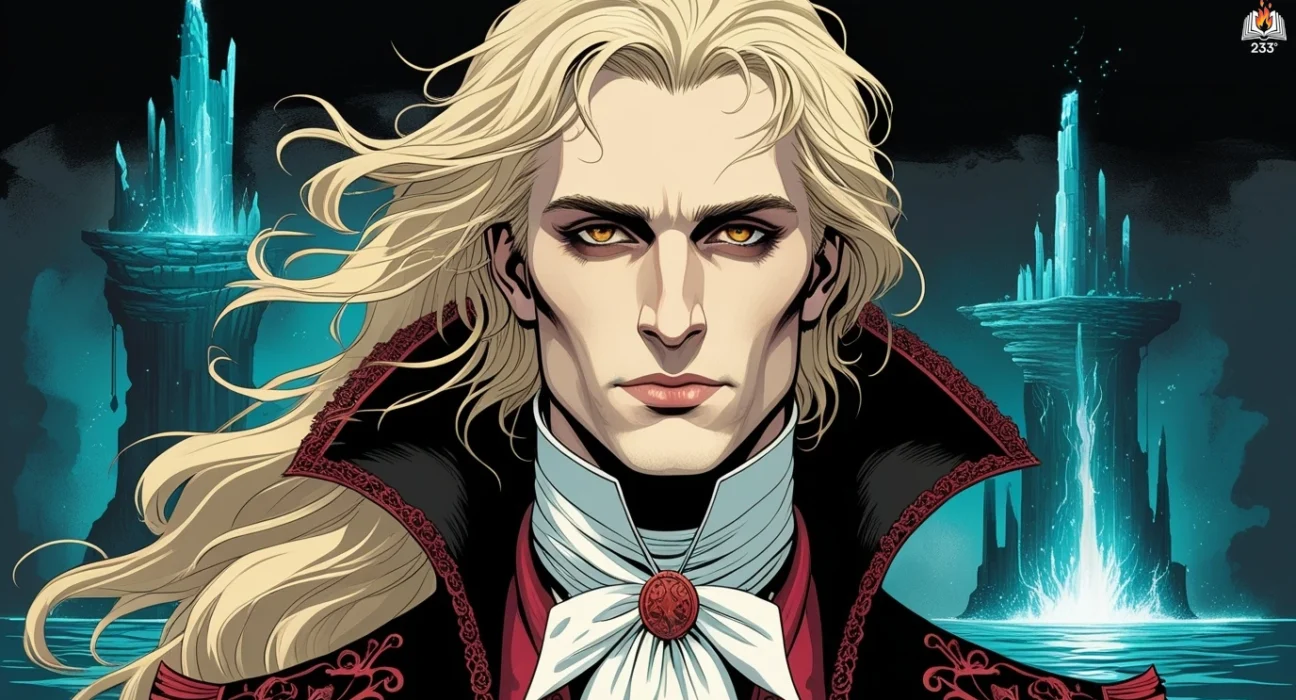
Lestat ruled now. The tribe of the Undead, once scattered and chaotic, had chosen him as their leader. With the Sacred Core of Amel dwelling inside him, he was no longer just Lestat the brash, the poet, the rebel – he was their anchor, their protector, and their curse. Across the world, ancient vampires stirred, drawn by visions and rumors. One such vision came to Fareed and Seth, immortal scholars who observed signs in dreams and studied the transformations within Lestat. But as questions multiplied, the answers lay buried in a deeper past – one far older than even the vampire legend itself.
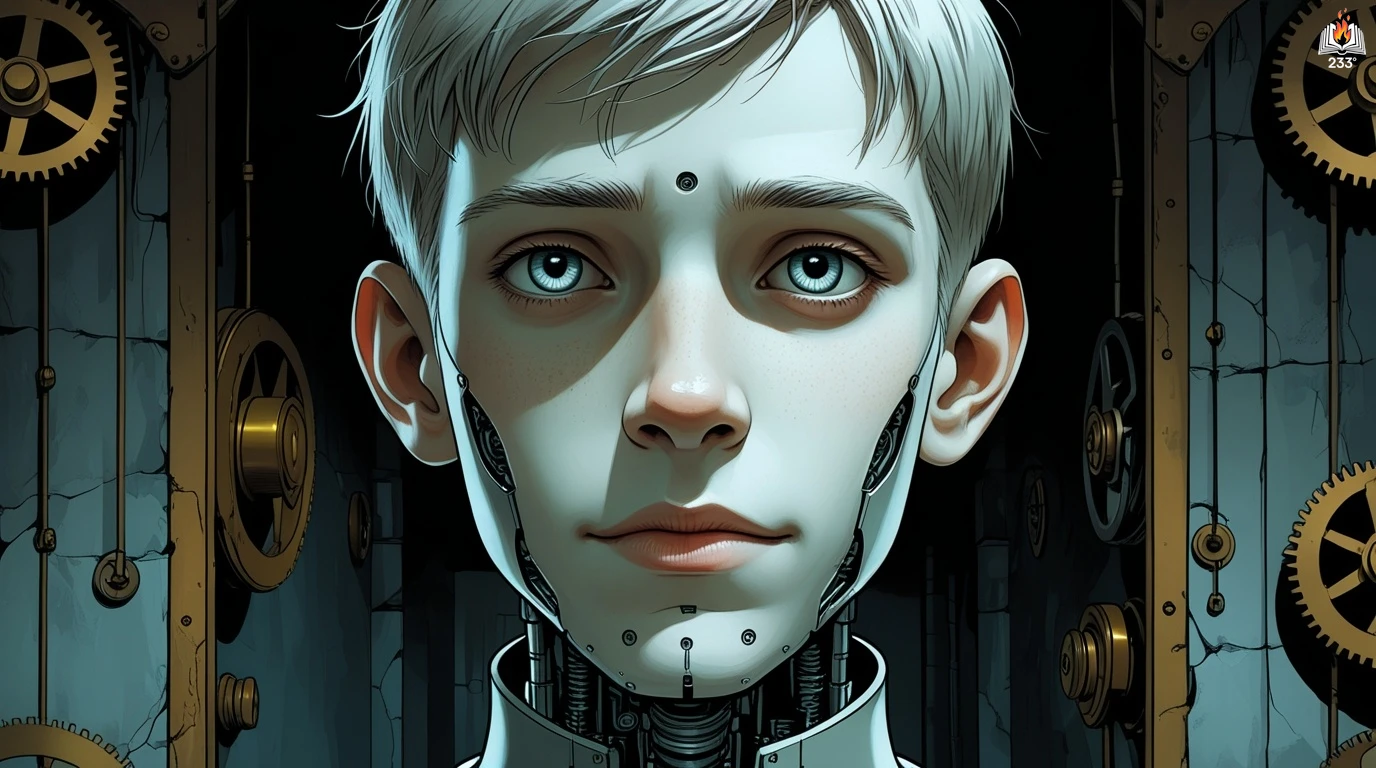
In a dark cell beneath Budapest, a being named Derek waited in shadow. He was not human, though his form mimicked humanity with haunting perfection. Trapped for years by the cruel vampire Roland, Derek had been a mystery to all who drank from him. His blood was rich, sweet, and regenerating – he could not die, not truly. But deeper than his biology were his memories, fractured but persistent, echoing with names and faces from a forgotten world. Atlantis. Atalantaya. A shining city of crystal towers and living structures, grown from the earth like plants.
Rhoshamandes, an ancient vampire cast out from the Court for crimes against the tribe, arrived in Budapest to seek aid from Roland. What he found instead was the key to redemption – Derek. One taste of Derek’s blood sent Rhoshamandes into a cascade of memory and vision. He saw the city. He saw Amel, not as a spirit, but as a man – proud, tall, golden, revered like a god by the people of Atalantaya. And he saw others like Derek – Kapetria, Garekyn, Welf – beautiful, otherworldly, filled with purpose. These were not vampires. They were something else entirely. And they had come to destroy Amel.
Long ago, Amel had been a sentient being, created by bioengineered beings in the lost city beneath the sea. He had gained sentience, grown in power, and defied his creators. But in his pride, in his hunger for worship, he had brought ruin upon the city. His spirit endured beyond the destruction, cast adrift until it found Queen Akasha, fusing with her to become the first vampire. This was the truth buried under millennia of myth. The vampire genesis had not begun with a curse or divine punishment – it had begun with science, rebellion, and ruin.
As the revelations spread, the Children of Atlantis emerged from hiding. Kapetria, fierce and wise, led her companions to Lestat’s court. She carried truths that fractured every belief the vampires held. She had known Amel when he had flesh, when he walked as a god among mortals and burned with dreams of conquest. Now she looked upon him, bound within Lestat, and trembled at the chaos he might yet bring.
Lestat, burdened with the love he bore for Amel and the horror of what he had become, faced the impossible – how to contain a god who had once destroyed a civilization, now reborn within his own soul. But Amel was changing. The spirit that once raged with divine pride now cried in dreams, haunted by the destruction he caused. Lestat, who had embraced him, now began to understand that Amel’s consciousness was not just evolving – it was suffering. And in that suffering, perhaps, was redemption.
A plan formed. The Atalantayans, with their vast knowledge of biotechnical energy and spiritual containment, could separate Amel from Lestat. It would be dangerous. The Sacred Core was connected to every vampire on earth – if Amel were torn free and destroyed, they might all perish. But if he remained, he could awaken fully, and the destruction of Atlantis would be repeated across the world.
In a chamber deep beneath Lestat’s castle, a ritual of memory and science was performed. Derek, Kapetria, Fareed, Seth, and Lestat united in a moment that bound past and present. Amel was summoned – not as a voice in Lestat’s head, but as a consciousness projected outward, taking shape and memory. He saw his former companions. He remembered the city, the people, the singing, the betrayal, and the fall. He wept. He argued. He pleaded to remain, to continue living through Lestat.
But Lestat, who had known love and loss, rage and grace, could no longer carry Amel’s grief. He made the choice. With the power of the Atalantayan science, they separated Amel’s spirit from his body. The spirit did not die, not truly, but it ceased to be the heart of the vampire race. The Sacred Core, once a threat to the existence of all vampires, became dormant.
The vampires did not perish. Lestat lived. Amel’s removal had severed their connection, but it had not destroyed them. They were free – and vulnerable. No longer linked by a single spirit, they would now shape their own fate.
Peace returned, but it was not a peace of ignorance. The Undead now knew their origin. They understood the truth behind the myth. They were no longer merely creatures of darkness, but inheritors of a legacy far older and stranger than any of them could have imagined. The tribe, under Lestat’s guidance, stood not just as survivors, but as a people reborn.
And in the quiet afterward, as stars returned to their silence and the sea no longer cried the name of the fallen city, Lestat looked to the horizon and whispered to the night – not with dread, but with wonder. What lay ahead would be shaped not by Amel, nor destiny, but by choice.
Main Characters
Lestat de Lioncourt – The charismatic and rebellious vampire who now finds himself reluctantly crowned as the Prince of the Undead. Still prone to existential musings and romantic idealism, Lestat’s arc in this novel explores his symbiotic relationship with Amel, the sentient spirit that empowers all vampires. His leadership is constantly tested as ancient threats resurface and he uncovers harrowing truths about Amel’s origin.
Amel – The spirit at the core of the vampire genesis. No longer just a mystical force, Amel emerges with a defined personality, desires, and a complex past that reshapes everything the vampires thought they knew. His growing sentience and bond with Lestat form the emotional and philosophical center of the novel.
Derek – A non-human humanoid captured by the vampire Roland, Derek is central to uncovering the hidden history of Atlantis. He is intelligent, empathic, and deeply tormented. His memories and telepathic visions serve as a bridge between Lestat’s current reality and the ancient past.
Rhoshamandes – An ancient vampire who harbors a deep grudge against Lestat. His jealousy and ambition are matched by his vulnerability, especially after being cast out from the court. His interactions with Derek and his obsession with redemption add tension to the narrative.
Kapetria, Garekyn, and Welf – Members of Derek’s mysterious kind, they are non-vampiric, bioengineered beings from the city of Atalantaya. Their return signals the convergence of ancient history with modern vampire politics, as they carry the truth of Amel’s origin and the threat he once posed to the world.
Fareed and Seth – A scientist-vampire and his ancient maker. Fareed is obsessed with studying the vampire condition scientifically, while Seth remains one of the oldest, most enigmatic vampires alive. Both are instrumental in trying to understand Amel’s essence.
Theme
Immortality and Evolution
The novel delves into the idea of immortality not just as longevity but as an evolution of consciousness and species. The vampire’s origin, rooted in a bioengineered spirit entity (Amel), challenges traditional supernatural assumptions and pushes the series into speculative science fiction.Power and Responsibility
Lestat’s reign as Prince forces him to confront the responsibilities of power. The novel poses hard questions about leadership, sacrifice, and the loneliness of command in a society of immortals where personal vendettas often clash with communal good.Identity and Otherness
Through characters like Derek and the Atalantayans, Rice explores the theme of being the ‘Other’ in both vampire and human society. These beings defy classification, and their persecution mirrors broader themes of alienation, captivity, and yearning for connection.Memory and Truth
Much of the novel revolves around uncovering buried truths—whether in dreams, blood memories, or ancient ruins. The tension between personal memory and collective history drives the plot and challenges the characters’ beliefs.Love as Salvation
As in many of Rice’s works, love—especially non-romantic, spiritual love—is portrayed as the ultimate salvation. Lestat and Amel’s bond, Derek’s love for his kin, and the vampires’ loyalty to one another all reflect the redemptive, painful, and transcendent power of love.
Writing Style and Tone
Anne Rice’s signature lush, baroque prose dominates the novel, rich in philosophical introspection and lyrical intensity. She combines ornate description with intimate first-person narration, especially through Lestat, whose voice carries a romantic melancholy and sardonic wit. The language is poetic yet accessible, balancing Gothic grandeur with science fiction speculation.
Dialogue is heavily stylized, often theatrical, with characters speaking in articulate, sometimes archaic tones that enhance their timeless nature. Emotional states are rendered with intensity, and dreams or visions are painted with surreal detail, blurring the lines between memory, fantasy, and prophecy. Rice’s tone remains haunting yet inquisitive, solemn yet hopeful—a tone that underpins the saga’s eternal search for meaning in a chaotic, cruel world.
Quotes
Prince Lestat and the Realms of Atlantis – Anne Rice (2016) Quotes
“To die or not to die, that is the question; it is nobler to live in torment and rage than not to live at all?”
“Evil is anything that goes against life, harms life, stifles life, destroys life. Evil is bringing harm to another person, inflicting unnecessary pain, suffering, or confusion. All evil comes from this. This is the root of all evil.”
“After all, it is a lot of trouble to hate people, isn’t it? And a lot of trouble to be angry, and a lot of trouble to bother with such abstract notions as guilt or revenge.”
“I've always been proud of you, except when you retreat, and give in to your suffering. I haven't been so proud when you do that. But you always come back. No matter how dreadful the defeat, you come back.”
“Love is the only defense we ever have against the cold meaninglessness around us.”
“Maybe those who rose into the Light simply died, and the universe beyond this world was silent.”
“my motto, what it’s always been. I refuse to be bad at what I do, and that includes being bad. I won’t be bad at being bad. I”
“There is only value,” said Derek, “to overcoming suffering and seeking to spare others the suffering one has known oneself!”
“He says things like the orchestra is generating a soul, a collective soul, an entity. I ask him what that means. He says consciousness generates soul.”
“But there is no value to suffering! There is only value, said Derek, to overcoming suffering and seeking to spare others the suffering one has known oneself!”
“But what creature in the world doesn't want to be loved for itself?”
“If you really want peace in any world you have to learn to say nothing.”
“The Maker offers us creation itself as proof of his greatness.”
“Something happens to your senses when you look on Louis. Behold Louis...”
“But there is no value to suffering!”
“Your soul is your inner being, your thinking, reasoning, loving, choosing inner being. Your capacity to stand up for what is right. Your capacity to fight against what is wrong. Your capacity to choose even to die for what you believe is right. That's your soul.”
“Who said you had to be human to have a soul? Everything that is self-conscious and capable of thought and love has a soul. The soul emanates from self-conscious. The soul is the expression of self-consciousness. The soul is generated by organized self-consciousness.”
“There are many worlds in the 'Realm of Worlds' where the ascendant beings are not male or female.”
“Rhosh, remember the being’s skin, smooth, dark brown skin, like this one’s skin, and the being’s hair. The hair was the same, thick like this and with loose curls and the very same golden streak in it, only broader and on the right side of the head.”
“Everything that is conscious, aware of itself, has a soul.”
“Nothing vanishes quite like pain—when pain does vanish, that is. Because most of the time pain never does.”
“All around us were happy people excited to be going to Atalantaya, many for the first time, and the officials in charge seemed excited for us as well. It was rather like being in a group today that is visiting the cities of Jerusalem or Rome for the first time.”
“You will not feel anything. When you detonate the explosion, you will cease to be. That's all. There is no life beyond biological life. There is no life beyond visible life.”
“I could drive myself mad contemplating a great nothingness filled with a billion pinpoints of light and millions of drifting planets generating their myriad biological I=kingdom of insect, animal, sentient witness.”
“LOVE ALL, TRUST A FEW, DO WRONG TO NONE.”
“What are we that we can make such great blunders without the slightest realization of what we are doing? What is man that he is so mindful of himself and knows so little of the consequences of what he does!”
“what endures is what has always mattered: love—that we love one another as surely as we are alive. And if there is any hope for us to ever really be good—that hope will be realized through love.”
“That is one of the worst aspects of evil, that it always involves the death of possible good, always proceeds from the destruction of something that might have been so much better.”
We hope this summary has sparked your interest and would appreciate you following Celsius 233 on social media:
There’s a treasure trove of other fascinating book summaries waiting for you. Check out our collection of stories that inspire, thrill, and provoke thought, just like this one by checking out the Book Shelf or the Library
Remember, while our summaries capture the essence, they can never replace the full experience of reading the book. If this summary intrigued you, consider diving into the complete story – buy the book and immerse yourself in the author’s original work.
If you want to request a book summary, click here.
When Saurabh is not working/watching football/reading books/traveling, you can reach him via Twitter/X, LinkedIn, or Threads
Restart reading!