

Ivan the Fool by Leo Tolstoy, first published in 1885, is a parable-like tale that critiques societal values and explores the nature of wisdom, power, and simplicity. Framed in the guise of a folk tale, the story follows Ivan, a seemingly dim-witted peasant, whose genuine kindness, industriousness, and refusal to engage in greed or violence gradually unravel the schemes of devils and expose the corruption of worldly ambition. Through sharp irony and rich allegory, Tolstoy contrasts the supposed wisdom of the world with the humble, divine logic of simplicity and moral integrity.
Plot Summary
In a quiet village, where the earth bore wheat and cattle, a rich peasant had three sons – Simeon the soldier, Tarras-Briukhan the merchant, and Ivan the fool – along with a daughter named Milania who was born mute. Simeon took to war and earned lands and rank, Tarras pursued trade and built a fortune, but Ivan stayed behind to till the soil and care for the household with his dumb sister. His heart was open, his hands tireless, and his mind simple, always ready with a laugh and never touched by greed.
When Simeon returned demanding a share of the family’s wealth, the father refused, for Simeon had not worked for it. But Ivan agreed without complaint, and so Simeon took his third and left. Later, Tarras made the same demand. Again the father denied it, for Tarras too had not toiled to earn it. But Ivan, with his carefree smile, divided the grain and gave up the mare. His brothers left, each pursuing their fortunes, while Ivan continued to work the land with his sister and support his aging parents.
The Old Devil, watching the harmony between brothers, grew restless. He sent three little devils to turn them against each other. Each devil was to ruin one brother, bringing misery that would sow discord. The devils agreed, setting out to their tasks.
The one who followed Simeon filled him with ambition. Simeon begged the Czar for command of a great army, promising to conquer the world. But the devil wet the gunpowder, and the army faltered. Straw soldiers rose from the earth, and Simeon’s men fled in terror. Stripped of his rank and facing execution, Simeon escaped and returned to his father’s home in shame.
The devil who shadowed Tarras filled him with greed. He bought goods beyond his means, borrowed heavily, and fell into ruin. When his debts came due, he fled as well, seeking refuge under his father’s roof. Both brothers, once proud and distant, returned to Ivan, asking for shelter. Ivan welcomed them kindly. But their wives turned up their noses at his worn coat and sent him to eat on the porch.
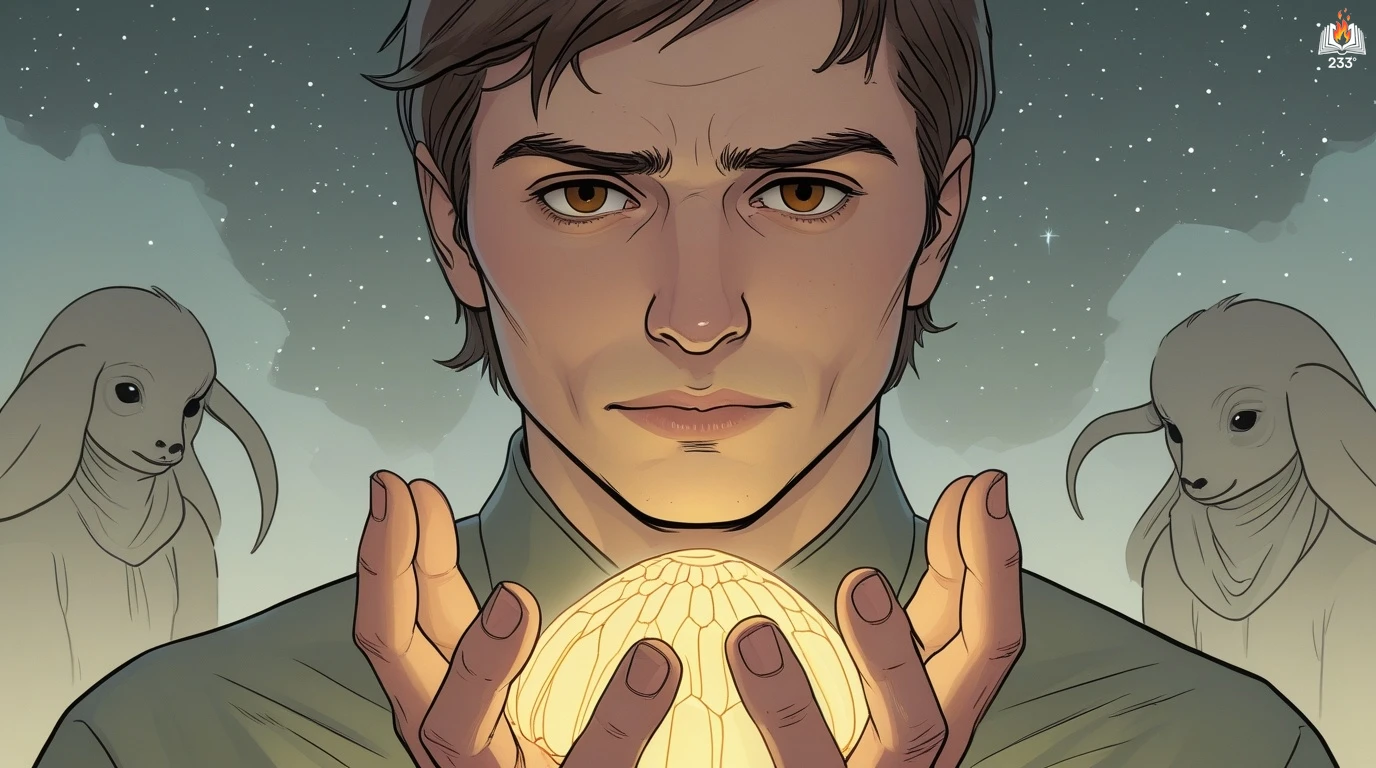
The devil that plagued Ivan found resistance at every turn. Ivan, though sickened and burdened, pushed his plow through hardened earth. The devil wrapped himself around the plow, only to be dragged and cut. When Ivan pulled him from the soil, the creature begged for mercy, offering magical roots to cure any illness. Ivan accepted them and let the creature go, invoking God’s name, which sent the devil hurling into the earth.
Still determined, another devil ruined the meadow. Ivan returned to find the grass too thick to mow. He sharpened his scythe, brought bread, and promised not to leave until the work was done. The devil hid in the grass, but Ivan’s swing cut him, and though he cried, Ivan continued. When he poked the devil again with his pitchfork in the grain heaps, the creature yelped and promised to summon singing soldiers from straw. Ivan watched with wonder as they danced in the fields, then demanded the straw be returned, for he could not spare the grain. With a blessing, he dismissed the devil.
At last, the third devil tried to stop him in the forest. Ivan felled tree after tree, and one landed atop the devil. The devil offered him a new trick – leaves that turned to gold. Ivan was delighted and imagined giving them to the village children. When the devil asked to leave, Ivan again invoked the name of God, and the devil vanished beneath the soil.
Soon Simeon returned, hearing of the magical soldiers, and asked Ivan to raise more. Ivan agreed, filling the field with straw regiments. Tarras came next, eager for gold, and Ivan made him a pile of coins from leaves. But when both brothers returned later demanding more, Ivan refused. Simeon’s soldiers were used for war, and Tarras’s gold had bought a poor woman’s cow, leaving her children with nothing. Ivan would not contribute to such harm again.
Simeon and Tarras ruled kingdoms – one by force, the other by wealth. Ivan remained in the village, plowing fields and caring for his parents and sister. When the old dog fell ill, Ivan fed him bread laced with the healing root, curing him. News reached the palace where the Czar’s daughter was deathly ill. Ivan journeyed to her, and by his mere presence, she was healed. He was married to her, and when the Czar died, Ivan became ruler.
But the crown did not suit him. Ivan returned to his peasant clothes and life, inviting his family to join him. His wife followed his example, discarding her silks to work alongside his sister. They lived simply, without money, their wealth in labor and kindness. Wise men left the land, but fools remained. Yet in their foolishness was peace.
The Old Devil, furious, took matters into his own hands. Disguised as a general, he guided Simeon to war. Mighty weapons were built, flying machines created, and a vast army assembled. But another nation matched his strength, and Simeon was defeated, left with nothing but flight.
The devil next approached Tarras as a wealthy merchant. He paid more than anyone, buying up everything, drawing away laborers with promises of gold. Tarras, though rich, could not build, could not find food, could not even buy a sable coat. The devil bought up all the goods, forcing Tarras to starve amid his fortune.
Lastly, the devil entered Ivan’s land as a nobleman, offering to build palaces and pay in gold. The fools were amused. They accepted the coins for playthings but lost interest quickly. When the nobleman tried to buy food, he was refused. The gold had no use here. Ivan suggested they hire him as a shepherd. When he came to dinner, his soft hands betrayed his idleness. Ivan’s sister-in-law denied him a seat at the table.
The devil, desperate, claimed his brain was his tool, not his hands. Ivan allowed him to speak from the tower. The fools came to listen but left unimpressed. When hunger struck, no one offered him food. Finally, dizzy and weak, he fell from the tower and struck his head. Ivan watched curiously as the devil slid into the earth, leaving only a hole behind.
Ivan still lived, his table always open. Whoever asked for food was welcomed. But only those with toil-worn hands were seated first. Those with smooth, idle hands were served what remained.
Main Characters
Ivan (the Fool) – The titular character, Ivan appears simple-minded, but his sincerity, selflessness, and hard work enable him to resist evil. Though mocked by his brothers, Ivan remains generous and humble, even turning devils into allies through his goodness. He becomes a ruler but discards power to live as a peasant, proving the power of virtue over might or wealth.
Simeon (the Soldier) – Ivan’s eldest brother, Simeon seeks glory and power through military conquest. His desire for dominion leads him to ruin, as his reliance on force and warfare ultimately fails. He represents blind ambition and the futility of violent power.
Tarras-Briukhan (the Merchant) – The second brother, Tarras becomes obsessed with wealth. His greed blinds him, and though he achieves great riches, he is eventually overwhelmed by the very system he exploits. He embodies the destructive nature of avarice and consumerism.
Milania (the Dumb Sister) – Though she cannot speak, Milania works loyally alongside Ivan. She symbolizes silent labor and humble perseverance, playing a vital role in the household’s survival and the moral structure of Ivan’s world.
The Old Devil and Little Devils (Tchertionki) – Personifications of evil, they try to corrupt the brothers through conflict, temptation, and deception. Despite their cunning, they are consistently defeated by Ivan’s moral resilience and divine simplicity.
Theme
Folly as Wisdom – Tolstoy flips conventional notions of intelligence. Ivan’s “foolishness” is actually profound wisdom—an instinctive moral compass that values kindness, work, and peace over intellect, cunning, or strategy.
The Corruption of Power and Wealth – Both Simeon and Tarras fall prey to the illusions of power and prosperity. Their downfalls illustrate how authority and money, when pursued selfishly, lead to spiritual and societal collapse.
Resistance to Evil through Simplicity – The devils fail repeatedly because Ivan doesn’t respond with malice or revenge. His simplicity, patience, and lack of greed make him impervious to corruption, positioning moral purity as the strongest defense against evil.
Community and Labor – Ivan’s society is built on shared labor and mutual respect. Everyone works, and status is determined by effort rather than wealth. This motif champions agrarian values and a utopian vision of egalitarianism.
Divine Grace and Invocation of God – Whenever Ivan invokes God’s name, evil is banished. This repeated motif highlights the spiritual dimension of Ivan’s character and suggests that divine alignment is achieved through humility and faith, not ritual or doctrine.
Writing Style and Tone
Tolstoy writes in a deceptively simple, fable-like prose, employing the language of folklore to tell a deeply philosophical tale. His style mimics oral storytelling with repetitive phrasing, clear moral contrasts, and archetypal figures. This accessibility is a deliberate choice—it allows complex ethical ideas to emerge through seemingly childlike narrative forms, engaging readers across all levels of literacy and age. Tolstoy blends satire, irony, and gentle humor to challenge societal norms without didacticism, ensuring the story remains warm and approachable.
The tone is both earnest and subversive. On the surface, the story maintains a playful and whimsical mood, yet beneath this lies a sharp critique of modern civilization’s moral decay. Tolstoy mocks the institutions of war, commerce, and statecraft, juxtaposing them with Ivan’s agrarian simplicity. The tone thus oscillates between childlike innocence and prophetic gravity, amplifying the contrast between Ivan’s way of life and that of his brothers. The result is a narrative that is both entertaining and intellectually stirring.
We hope this summary has sparked your interest and would appreciate you following Celsius 233 on social media:
There’s a treasure trove of other fascinating book summaries waiting for you. Check out our collection of stories that inspire, thrill, and provoke thought, just like this one by checking out the Book Shelf or the Library
Remember, while our summaries capture the essence, they can never replace the full experience of reading the book. If this summary intrigued you, consider diving into the complete story – buy the book and immerse yourself in the author’s original work.
If you want to request a book summary, click here.
When Saurabh is not working/watching football/reading books/traveling, you can reach him via Twitter/X, LinkedIn, or Threads
Restart reading!