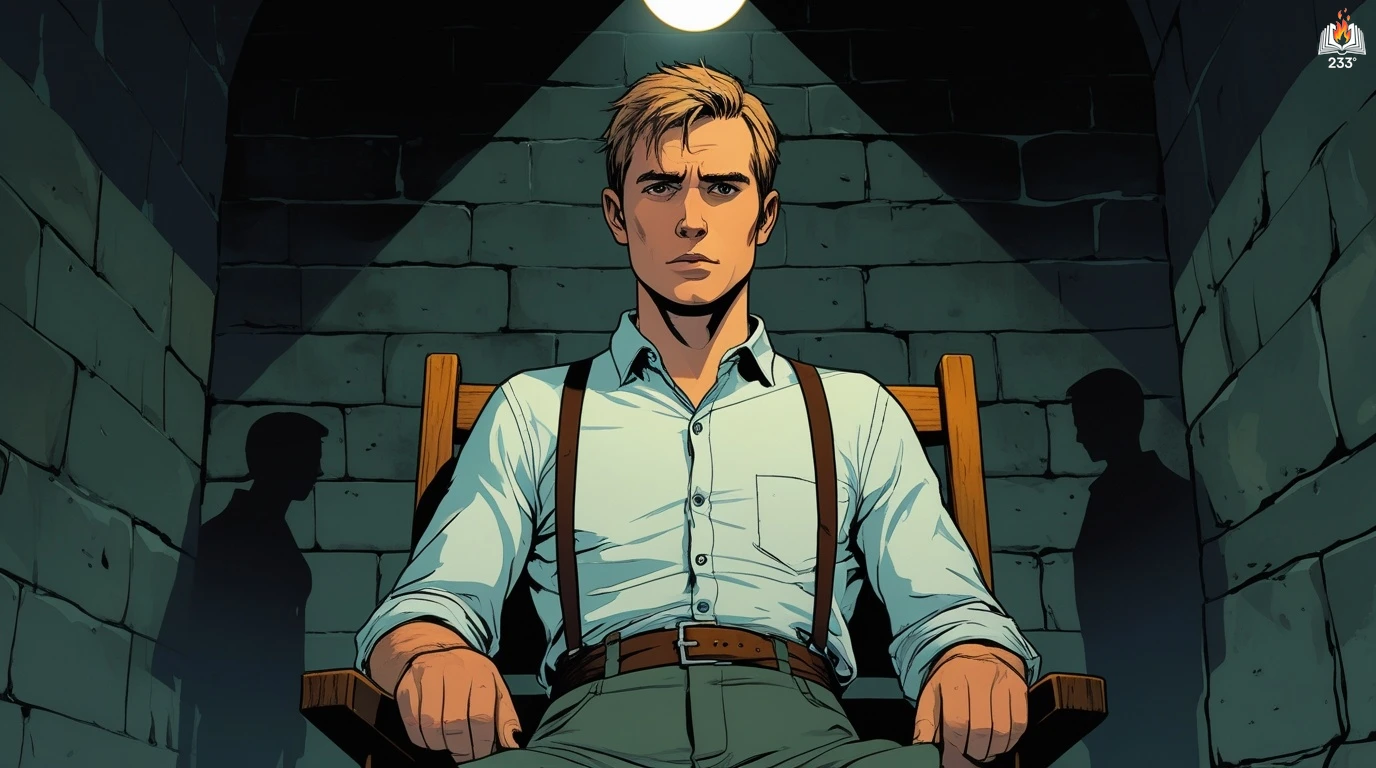
A Prisoner in the Caucasus by Leo Tolstoy, first published in 1872, is a gripping tale set against the rugged and perilous backdrop of the Caucasus Mountains during the era of imperial Russia’s military conflicts with local tribes. Drawing on Tolstoy’s own experiences as a soldier, the story follows the harrowing captivity and quiet resilience of two Russian officers caught by Tatar tribesmen, blending psychological depth, cultural observation, and the harsh realities of war and human endurance.
Plot Summary
In the searing heat of the Caucasus summer, an officer named Zhilin receives a letter from his mother, pleading with him to return home before her final days. Touched by her words and curious about a potential bride she has chosen, he secures leave and sets off across the treacherous, war-torn steppe. Danger stalks the roads, where Tatars lie in wait to seize or kill unwary travelers. To minimize risk, he joins a military convoy moving between fortresses.
But the pace of the caravan wears on him. As the sun scorches the land, Zhilin rides ahead with another officer, Kostuilin, hoping to reach shelter sooner. Their decision proves fateful. When Zhilin rides up a hill to scout the path, he sees a group of mounted Tatars. Though he turns to flee, they give chase. His horse – swift and loyal – carries him far, but the Tatars are swifter still. His comrade flees without a backward glance. Gunfire brings the noble horse down, and Zhilin, though he fights with blade and fists, is captured, bound, and stripped.
They haul him into the mountains, through forests and rivers, past villages that whisper with foreign tongues and watchful eyes. At last they reach a Tatar aul, where children throw stones and villagers sneer. He is locked in a filthy barn and shackled. The next morning, his captors come – Kazi Muhamet, the red-bearded one who seized him, and Abdul Murat, smaller, dark, and quick-footed. Abdul, now his master, laughs and gestures, trying to make himself understood. Zhilin’s resistance only sparks more shouting. They demand a ransom – three thousand rubles. Zhilin counters with five hundred, suspecting the letter he writes will never reach home. He plans to escape.
In time, Kostuilin is brought in, captured on the same road. He is weary and passive, willing to write whatever is demanded. Zhilin, however, maintains his pride, offering no more than five hundred rubles, even when threatened with death. Abdul accepts this, albeit begrudgingly, and promises food and clothing. Still, their meals are meager, their beds a scattering of stalks, and their freedom a distant dream.
Zhilin begins to explore his prison with his eyes and hands. He crafts clay dolls and weaves baskets. When Abdul’s daughter, a solemn girl named Dina, notices his dolls, she is fascinated. Slowly, she begins to bring him treats – milk in a jug, a piece of mutton hidden in her sleeve, a smile when none others would offer one. In her quiet presence, Zhilin finds a flicker of light in the dark.
The villagers learn of Zhilin’s skill. He fixes watches, mends tools, and even nurses the sick. Bit by bit, he earns a strange place among them – still a prisoner, but useful. Even Abdul grows fond of him. Yet others, like Kazi Muhamet and a grim old Hadji who lost sons to Russian swords, seethe at his presence.
Night after night, Zhilin digs beneath the barn, carving a tunnel with patience and grit. He scouts the surrounding valleys with a child in tow, mapping escape routes in his mind. When the Tatars kill a mare in mourning for a fallen warrior, and feast for days in his memory, Zhilin senses an opening. Ten men ride out on a raid, and only Abdul remains. He convinces Kostuilin to flee.
They escape through the tunnel under the barn wall, but Kostuilin is weak. His boots rub his feet raw, and every step is agony. Zhilin, barefoot and bleeding, half-drags him across valleys and rocky forests. They evade barking dogs and wandering shepherds, navigating by starlight. Once, a stag startles them with its crashing horns. Then, they hear hoofbeats – a lone Tatar drives a cow through the woods. Hiding behind trees, they pray not to be seen.
Eventually, Kostuilin collapses, unable to go on. Zhilin hoists him over his shoulders and presses on. But the scream Kostuilin lets out in pain alerts the enemy. A shot rings out in the night, and though it misses, the chase begins. Tatars give pursuit, and again Zhilin carries his comrade through the darkness. Exhausted, they stop at a spring, only to be found by dogs and men. The captors beat them, tie them, and drag them back.
This time, they are thrown into a pit behind the mosque, ten feet deep. Their feet are locked in stocks. Their food is barely edible. Kostuilin grows ill, and Zhilin feels despair settling over him. But one day, cakes fall into his lap, and then cherries. Above the pit, Dina peers down. Her eyes shine in the starlight, and her necklace glints like coins of hope.
She returns again, whispering that her father plans to kill him. Zhilin begs her for help. One night, as the village sleeps and the mulla’s call fades into silence, a pole slides down into the pit. Dina steadies it, pulling with all her might as Zhilin climbs. Twice he slips. On the third try, Kostuilin helps push him, and Dina hauls him up.
Zhilin urges Kostuilin to join him, but the man cannot move. With a kiss and a final farewell, he escapes alone. The lock on his shackle won’t break. Dina appears again, tries to help, but cannot. She cries, gives him cakes, and disappears into the hills, the sound of her ornaments vanishing into the dark.
He limps through the valley, drags his leg, and hides in shadows as the moon rises. The light turns the forest silver. He presses on, hiding from passing Tatars, resting only when his body gives out. At dawn, he reaches the edge of the forest. Across the open plain lies the Russian fortress. But on a hill nearby, three Tatars see him and begin their descent.
Zhilin runs, cries out. His voice echoes. From the fortress, Cossacks ride out. The Tatars stop, uncertain. The Cossacks reach him just in time. They wrap him in a cloak, feed him, and break his chains. His comrades welcome him back.
Zhilin never makes it home to his mother. He does not see the bride she had chosen. He remains in the Caucasus, bound not by chains, but by a duty deeper than his own freedom.
Main Characters
Zhilin – The protagonist, a resourceful and resilient Russian officer. Driven by love for his mother and curiosity about a potential bride, he embarks on a journey that leads to his capture. Zhilin is inventive and brave, fashioning tools, toys, and escape plans during his imprisonment. His stoic endurance and compassion, especially for his fellow prisoner Kostuilin and the young girl Dina, drive the emotional core of the story.
Kostuilin – Zhilin’s comrade and fellow prisoner. He is portrayed as physically weaker, more despondent, and reliant on Zhilin’s leadership. Kostuilin’s passivity contrasts sharply with Zhilin’s spirit, especially during their escape attempt, underscoring themes of strength and dependency.
Abdul Murat – A dark-complexioned, energetic Tatar who becomes Zhilin’s captor and owner. Though initially threatening, Abdul grows to admire Zhilin’s craftsmanship and grit. His ambiguous moral stance – somewhere between captor and reluctant protector – adds complexity to the story.
Dina – Abdul’s daughter, a young Tatar girl with a quiet yet growing affection for Zhilin. Through small acts of kindness and silent companionship, she becomes a symbol of innocent human connection across cultural divides. Her assistance proves crucial in Zhilin’s final escape.
Kazi Muhamet – A fierce red-bearded Tatar who captures Kostuilin and acts as a foil to Abdul. Unyielding and vengeful, especially after the death of his brother, he embodies the ever-present threat of violence looming over the prisoners.
The Old Hadji – A wrathful elder who has suffered deeply at the hands of Russians and calls for the execution of the prisoners. His unrelenting hatred personifies the cyclical nature of vengeance and cultural enmity.
Theme
Captivity and Freedom: The central theme revolves around literal and metaphorical imprisonment. While Zhilin is physically confined, his ingenuity and mental resilience allow him to remain spiritually unshackled. His struggle for freedom, particularly his escape through treacherous mountains, becomes a powerful metaphor for self-determination.
Cultural Clash and Human Commonality: Tolstoy explores the contrasts between Russian soldiers and the Tatar tribes – their customs, beliefs, and worldviews. Yet through characters like Dina and Abdul, he also reveals the shared humanity that can exist amid conflict. This duality criticizes imperial attitudes while fostering empathy for the ‘other.’
Loyalty and Brotherhood: The bond between Zhilin and Kostuilin, though strained at times, exemplifies loyalty in dire conditions. Zhilin’s refusal to abandon his comrade underscores the value Tolstoy places on moral integrity and brotherhood, especially under extreme adversity.
Resourcefulness and Dignity: Zhilin’s ability to craft toys, repair watches, and win favor through skill rather than submission celebrates the dignity of labor and the intellect. His inner strength is not diminished by captivity but instead highlighted through his adaptability.
Innocence Amid Hostility: Dina’s character introduces a motif of childlike innocence amidst a world driven by violence and vendetta. Her silent friendship with Zhilin offers a fragile bridge between enemy cultures, illustrating that compassion often survives where politics and war cannot.
Writing Style and Tone
Tolstoy’s prose is marked by a stark clarity and economy of language. He avoids ornate embellishment, instead favoring a straightforward narrative that mimics oral storytelling traditions. This lends the tale an almost mythic quality, akin to a parable or fable, with moral undertones embedded in every episode. His descriptions are vivid yet restrained, focusing more on internal states and symbolic gestures than elaborate settings.
The tone of A Prisoner in the Caucasus is a poignant blend of tension, melancholy, and quiet heroism. It is contemplative, often somber, but not without warmth. Tolstoy evokes both the beauty and brutality of the Caucasus landscape as a mirror to the human soul – vast, dangerous, and capable of redemption. Though the story is anchored in a time of imperial strife, it resounds with timeless questions of freedom, identity, and the resilience of the human spirit.
We hope this summary has sparked your interest and would appreciate you following Celsius 233 on social media:
There’s a treasure trove of other fascinating book summaries waiting for you. Check out our collection of stories that inspire, thrill, and provoke thought, just like this one by checking out the Book Shelf or the Library
Remember, while our summaries capture the essence, they can never replace the full experience of reading the book. If this summary intrigued you, consider diving into the complete story – buy the book and immerse yourself in the author’s original work.
If you want to request a book summary, click here.
When Saurabh is not working/watching football/reading books/traveling, you can reach him via Twitter/X, LinkedIn, or Threads
Restart reading!