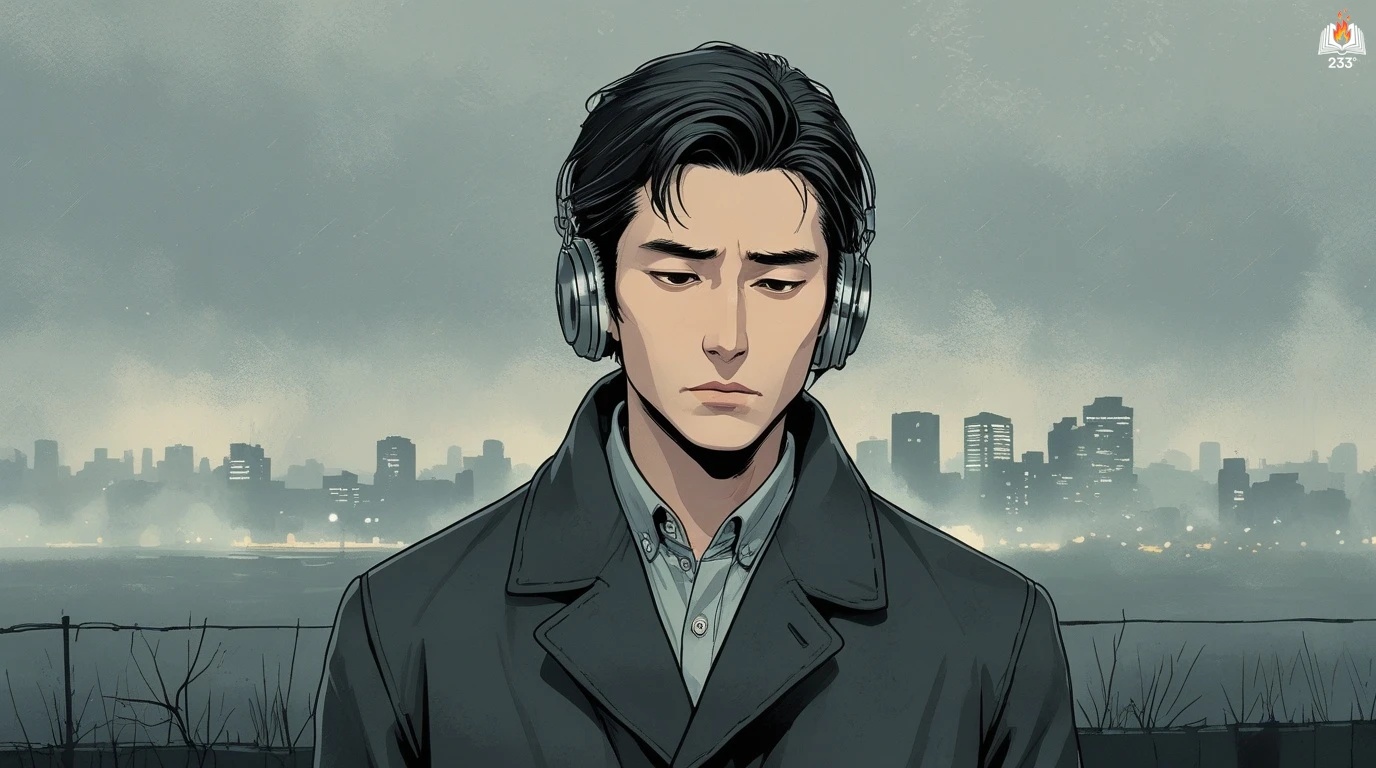
Dawn by Elie Wiesel, published in 1960, is the second installment in Wiesel’s celebrated trilogy that includes Night and Day. Set in British-controlled Palestine before the establishment of Israel, the novel explores the night before a young Jewish Holocaust survivor, Elisha, is ordered to execute a British officer in retaliation for the hanging of a Jewish resistance fighter. This powerful and haunting novel delves into themes of memory, moral ambiguity, and the human cost of political violence.
Plot Summary
As the autumn night deepens over Palestine, the air hangs heavy with dread and anticipation. Elisha, an eighteen-year-old survivor of Buchenwald, stands at a window watching the twilight dissolve into darkness. Somewhere in the house, a child’s cry pierces the hush, and across the street, an old woman closes her shutters. Elisha’s heart pounds under the burden of what awaits at dawn – he has been ordered to execute an English officer, Captain John Dawson, in retaliation for the British decision to hang David ben Moshe, a Jewish resistance fighter.
Elisha was not always a killer. Only months earlier, he was a lost young man in Paris, fresh from the horrors of the camps, his future an empty page. Gad, a charismatic figure, had appeared at his door, speaking of Palestine, of freedom, of a homeland for the Jewish people. Gad’s voice carried the weight of destiny, and soon Elisha, seeking meaning, offered his future to the resistance. He left behind his dreams of studying philosophy, his hopes of finding answers to the tormenting questions left by the war, and took up arms for a cause that promised salvation through sacrifice.
Now, in the stillness of night, Elisha wrestles with the shadow of what he is to become. Around him, comrades prepare for the dawn. Gad, calm and unwavering, reminds him that this is war, that a man must sometimes kill to secure a future. Ilana, the voice of the resistance, speaks words of steel and sorrow over the clandestine radio, soothing and stirring the hearts of fighters and families alike. Joab, the Madman, and Gideon, the Saint, both marked by brushes with death, drift through the house, quiet and tense, each carrying his own burden of memory.
Outside, the British have locked the city under curfew. Inside, time stretches and coils, every tick of the clock an echo in Elisha’s mind. As the night deepens, memories rise to the surface. The beggar from his childhood who had taught him the art of recognizing night by the appearance of a face at a window. The old master’s words on death – a being made entirely of eyes. And Catherine, the woman in Paris who had taught him of love, who had whispered poor boy as if she could see the shadow of death clinging to him even then.
The house holds more than just men and weapons; it holds ghosts. The dead from Buchenwald, his parents, the friends he has lost, all seem to fill the room, their presence thick in the air. Elisha feels them watching, judging, mourning. He imagines the face of John Dawson’s mother across the sea, pacing a room, waiting for dawn with a heart breaking in silence. He imagines David ben Moshe in his cell, steady, defiant, his life slipping away with every passing hour.
Gideon descends to the cellar to bring Dawson a last meal, though Elisha knows no man condemned to die has an appetite. The condemned man’s last meal is an old and cruel joke, a mockery of the life about to be extinguished. Elisha’s thoughts swirl with bitterness, dread, and a strange, hollow empathy. In this waiting, he is both executioner and victim, both survivor and mourner.
The night turns colder. Around the table, they sip tea and share stories of brushes with death. Joab recalls surviving by pretending madness, Gideon by clinging to faith, Gad by forcing British prisoners to choose among themselves which one would die. Ilana, the voice that carries across occupied Palestine, was saved once by a simple cold, her voice too hoarse for recognition. Elisha listens, burdened by the weight of what he is about to do, feeling the weight of lives lost, saved, and now, about to be taken.
Midnight comes, and with it, the gathering of shadows. The hours ahead feel endless, yet dawn approaches with merciless certainty. Elisha drifts in memory to Catherine, to the child he once was, to the man he was meant to be. But the present will not release him. He feels the house close in, the air too thick to breathe, the eyes of the dead too many to bear. He is no longer merely a boy or a soldier – he has become death’s messenger, a vessel for history’s cruelty.
The moment arrives when there is no more waiting. The hours of night have emptied themselves into this single act, and Elisha walks to the cellar, where John Dawson waits. The Englishman, calm in the face of his fate, does not beg, does not curse. The room is cold, the silence heavy. Elisha raises the gun. The world holds its breath.
Outside, the sun rises over a land still locked in struggle, casting its pale light over stone streets and shuttered windows. Somewhere in the distance, the cry of a child fades. In the stillness, Elisha stands, marked forever by the act he has committed, by the life he has taken, by the man he has become. The dawn has come, but the darkness within him lingers, stretching beyond the morning light.
Main Characters
Elisha: An eighteen-year-old Holocaust survivor from Buchenwald, Elisha is haunted by the trauma of his past. Recruited into the Jewish resistance in Palestine, he grapples with profound ethical turmoil when ordered to kill an English hostage. His arc is one of psychological unraveling, as he moves from survivor to executioner, wrestling with memory, guilt, and his place in a world fractured by violence.
Gad: A charismatic and persuasive figure, Gad recruits Elisha into the resistance. Calm under pressure and devoted to the cause, Gad represents the voice of political pragmatism, often repeating “this is war” to justify their actions. His influence over Elisha is both nurturing and manipulative, pushing the young man toward a path of violence.
John Dawson: The British officer held hostage by the resistance, Dawson is a symbol of the “enemy,” though his humanity complicates this role. Though we learn little about him directly, his presence exerts immense pressure on Elisha, making Dawson a mirror for Elisha’s own doubts and fears.
Ilana: The radio voice of the resistance, Ilana’s broadcasts inspire fighters and civilians alike. She is both maternal and melancholic, embodying the sorrow and moral weight of the struggle. Ilana offers emotional grounding to Elisha while herself grappling with the collective grief of their people.
The Old Man: The mysterious leader of the resistance, known only as the Old Man, personifies ideological commitment and strategic coldness. He orchestrates the execution order, standing as the embodiment of the movement’s ruthless logic.
Theme
Moral Ambiguity of Violence: The novel interrogates whether ends justify means, particularly when a people’s survival is at stake. Elisha’s torment reflects the crushing moral complexity of killing for a cause, blurring lines between justice, revenge, and murder.
Memory and the Ghosts of the Past: Haunted by Holocaust memories and the faces of the dead, Elisha embodies the psychological scars of genocide. Wiesel uses memories as living presences, showing how the past shapes present action and identity.
The Struggle for Identity: Elisha’s journey is not only political but existential. As he transitions from victim to soldier to executioner, he wrestles with questions of who he is, what he believes in, and how much choice he has in shaping his destiny.
Night as a Symbol: Nightfall carries heavy symbolic weight, representing moral darkness, introspection, and the liminal space between innocence and guilt. As Elisha waits through the night, the atmosphere thickens with dread, uncertainty, and transformation.
Writing Style and Tone
Elie Wiesel’s writing style in Dawn is lyrical yet spare, suffused with philosophical reflection and psychological depth. His language often blurs the line between poetry and prose, using symbolic imagery and inner monologues to convey Elisha’s tortured psyche. The novel is structured almost like a Greek tragedy, with the bulk of the narrative unfolding over a single night, heightening the tension and claustrophobia of the protagonist’s moral ordeal.
The tone is somber, introspective, and at times, surreal. Wiesel suffuses the story with a profound sense of loss, weaving together the personal and the political into a tapestry of anguish. There’s an almost dreamlike quality to Elisha’s narration, where past and present bleed into each other and the weight of memory looms larger than the physical world. Throughout, Wiesel’s tone remains compassionate yet unflinching, refusing easy answers or sentimentality.
Quotes
Dawn – Elie Wiesel (1960) Quotes
“Night is purer than day; it is better for thinking, loving and dreaming. At night everything is more intense, more true. The echo of words that have been spoken during the day takes on a new and deeper meaning.”
“I needed to know that there was such a thing as love and that it brought smiles and joy in its wake.”
“The silence of two people is deeper than the silence of one.”
“War is like night, she said. It covers everything.”
“It was the beginning of the war. I was twelve years old, my parents were alive, and God still dwelt in our town.”
“Love is this and love is that; man is born to love; he is only alive when he is in the presence of a woman he loves or should love.”
“The night lifted, leaving behind it a grayish light the color of stagnant water. Soon there was only a tattered fragment of darkness, hanging in mid-air, the other side of the window. Fear caught my throat. The tattered fragment of darkness had a face. The face was my own.”
“The silence of two people is deeper than the silence of one. Involuntarily”
“The condemned man’s traditional last meal is a joke,” I said loudly, “a joke in the worst possible taste, an insult to the corpse that he is about to be. What does a man care if he dies with an empty stomach?” The”
“Night is purer than day; it is better for thinking and loving and dreaming. At night everything is more intense, more true. The echo of words that have been spoken during the day takes on a new and deeper meaning.”
“A mn ages hs enemy because he hates his own hate. He says to himself: I hate him not because he's my enemy, not because he hates me, but because he arouses me to hate.”
“when you give bread to a beggar we give him that taste of paradise which only the poor can savor.”
“... hatred is never an answer, and ... death nullifies all answers. There is nothing sacred, nothing uplifting, in hatred or in death.”
“Suddenly he stopped in front of me and asked for a cigarette. I had a package of Players in my pocket and wanted to give them to him. But he refused to take the whole package, saying quite calmly that obviously he didn’t have time to smoke them all.”
“Judge God. He created the universe and made justice stem from injustices. He brought it about that a people should attain happiness through tears, that the freedom of a nation, like that of a man, should be a monument built upon a pile, a foundation of dead bodies...”
“The silence of two people is deeper than the silence of one. Involuntarily I began to talk.”
“man is born to love; he is only alive when he is in the presence of a woman he loves or should love. I”
“Where is God to be found? In suffering or in rebellion? When is a man most truly a man? When he submits or when he refuses? Where does suffering lead him? To purification or to bestiality?”
“The revolver was black and nearly new. I was afraid to even touch it, for in it lay all the whole difference between what I was and what I was going to be.”
“The tragedy of man is that he doesn’t know how to distinguish between day and night. He says things at night that should only be said by day.” He”
“Beggars inspired me with mingled feelings of love and fear. I knew that I ought to be kind to them, for they might not be what they seemed.”
“The absolute quality of hate explains any human action even if it throws something inhuman around it.”
“How are we ever to disarm evil and abolish death as a means to an end? How are we ever to break the cycle of violence and rage? Can terror coexist with justice? Does murder call for murder, despair for revenge? Can hate engender anything but hate?”
“Dawn is purely a work of fiction, but I wrote it to look at myself in a new way. Obviously I did not live this tale, but I was implicated in its ethical dilemma from the moment that I assumed my character’s place.”
“So many questions obsessed me. Where is God to be found? In suffering or in rebellion? When is a man most truly a man? When he submits or when he refuses? Where does suffering lead him? To purification or to bestiality?”
“hatred is never an answer, and that death nullifies all answers. There is nothing sacred, nothing uplifting, in hatred or in death.”
We hope this summary has sparked your interest and would appreciate you following Celsius 233 on social media:
There’s a treasure trove of other fascinating book summaries waiting for you. Check out our collection of stories that inspire, thrill, and provoke thought, just like this one by checking out the Book Shelf or the Library
Remember, while our summaries capture the essence, they can never replace the full experience of reading the book. If this summary intrigued you, consider diving into the complete story – buy the book and immerse yourself in the author’s original work.
If you want to request a book summary, click here.
When Saurabh is not working/watching football/reading books/traveling, you can reach him via Twitter/X, LinkedIn, or Threads
Restart reading!