Lilith by George MacDonald, published in 1895, is a surreal and richly symbolic fantasy novel that delves into profound themes of death, redemption, and self-discovery. The story follows Mr. Vane, a man who inherits a mysterious library and encounters strange apparitions, particularly one of an ancient librarian, Mr. Raven, who leads him on a journey beyond ordinary reality. Through a series of surreal landscapes, spiritual encounters, and philosophical dialogues, Vane confronts both his own identity and existential truths, grappling with the nature of reality and the path to spiritual awakening. MacDonald, a Scottish author whose works influenced C.S. Lewis, J.R.R. Tolkien, and others, embeds Christian allegories and metaphysical inquiries within this visionary story, making Lilith a deeply contemplative yet challenging read.
Plot Summary
Through the shadowy corridors of an ancient library, Mr. Vane, a young scholar recently returned to his inherited home, encounters an apparition—a mysterious old man named Mr. Raven, who appears to be both man and raven. Drawn to the strange happenings around him, Vane follows Mr. Raven deep into the library’s labyrinth, where he enters a realm that is both unsettling and enchanting, a place where reason flickers and illusions ripple as tangibly as the rain-soaked earth underfoot. Mr. Raven, a figure full of riddles, beckons Vane to journey beyond the world he knows, toward truths that tremble beyond comprehension.
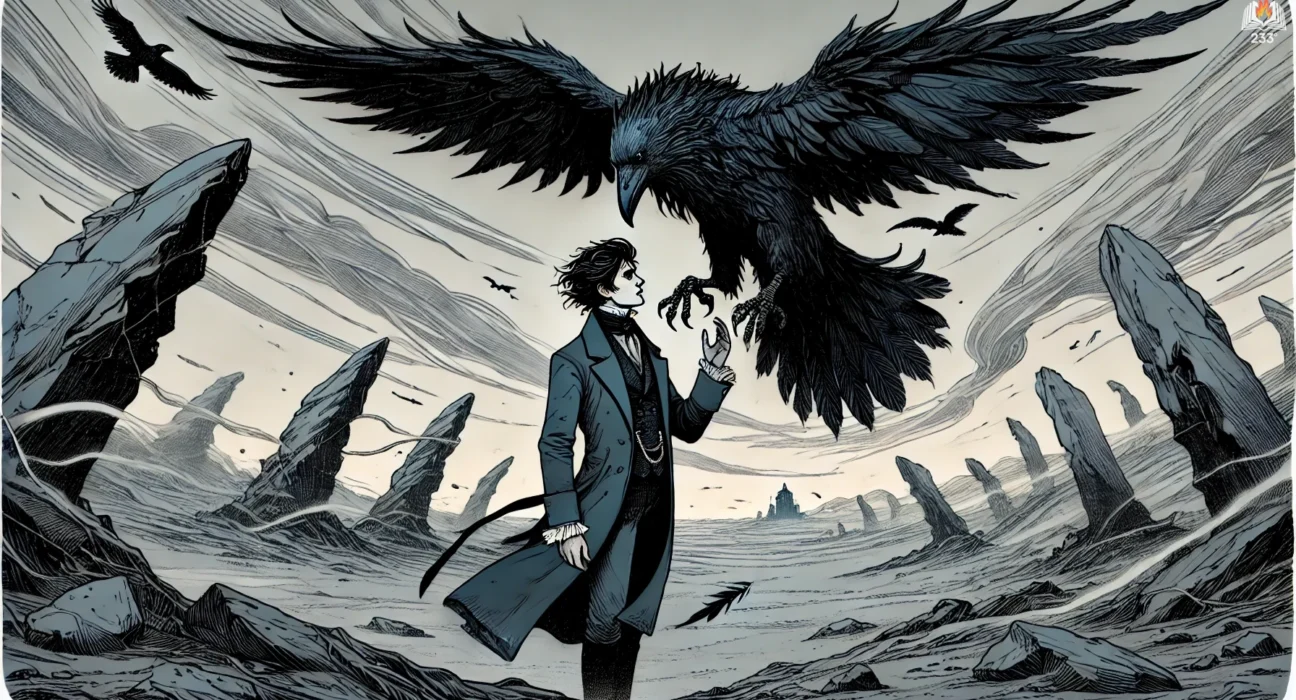
In a moment that defies his senses, Vane stumbles through a mirror, crossing into a desolate land under a gray and oppressive sky. The landscape stretches before him, both barren and charged with latent energy. Here, Vane encounters a great raven, wise and sardonic, who appears to know more about Vane than Vane himself. The raven poses questions, prodding at the young man’s assumptions about life, death, and identity. Vane resists at first, searching for familiar truths, but his words fade in this strange land where language and thought feel less substantial than the oppressive mist all around.
Led onward, Vane soon comes upon an ancient house that seems both refuge and trap. Inside, the figure of a sleeping woman catches his gaze, her beauty ethereal and almost dreadful in its stillness. This figure, he learns, is Lilith—a powerful and prideful spirit whose actions have cast shadows upon countless worlds. Lilith is the embodiment of rebellion, a figure from primordial tales who resisted her fate, choosing exile over submission. In her dormant state, Lilith radiates a beauty that strikes at the heart of Vane’s sense of reason. But she is not wholly asleep; when she awakens, her gaze is piercing, and she challenges Vane’s assumptions with her cold defiance.
Haunted by Lilith’s unsettling presence, Vane continues his journey through the spectral landscape, encountering creatures that seem suspended between life and death, each bound by some half-forgotten truth or an ancient pain. He traverses silent, eerie plains and encounters cities where inhabitants drift like ghosts, lost in shadows of their former selves. Despite these warnings, Vane remains drawn to Lilith’s presence. Again and again, he finds himself on the brink of a dark revelation, the mystery of Lilith deepening with each encounter, though her true nature and the meaning of her silence elude him.
Through this bleak land, Mr. Raven reappears, guiding Vane toward the answer he both dreads and desires: that the real struggle lies within. Mr. Raven encourages Vane to relinquish the illusions of control and logic, suggesting that only by surrendering these illusions can he begin to comprehend himself and the reality he traverses. But this acceptance does not come easily to Vane, who resists the raven’s cryptic wisdom. Amid the scenes of suffering and sorrow, a single question crystallizes: can Lilith herself be redeemed?
One evening, Vane encounters a mystical chamber of sleepers, a vast, echoing hall filled with rows of silent figures lying in serene repose, like stone effigies of some forgotten world. The chamber’s silence fills him with awe and trepidation, for here the boundary between life and death is razor-thin. He feels the weight of eternity pressing upon him, whispering that each figure lies in wait, existing between states of being. With a sudden and chilling realization, he understands that the figures are not dead but suspended, neither fully alive nor truly gone. Among them rests Lilith, bound by her own pride and defiance, held in a state of timeless waiting.
Throughout his journey, Vane wrestles with the ambiguity of identity, the tenuous fabric of reality, and the notion that true redemption lies in surrendering one’s ego. In a final confrontation with Lilith, he offers her compassion and understanding, recognizing that her torments are self-inflicted, her rebellion rooted in an unyielding pride. He understands now that Lilith is the creator of her own suffering, shackled by her own actions and beliefs. Moved by his sincerity, Lilith begins her own harrowing journey toward repentance, though it is a path fraught with sorrow and resistance.
As Lilith confronts the depths of her pride, Vane glimpses a transformation within her—a slow and painful surrender to the light. This act of repentance does not come easily; Lilith’s spirit fights against the humility needed to cast aside her pride. Yet, in this struggle, Vane discerns the glimmer of a possible redemption, not only for her but for himself as well. Through Lilith’s story, he sees his own capacity for growth and change, recognizing that only by relinquishing control can one find true peace.
At last, Vane returns to his own world, though he emerges transformed. The familiar surroundings of his home seem less substantial, mere shadows of the truth he encountered in the strange realm of Mr. Raven. He is no longer the young scholar who once clung to reason and logic, for he has glimpsed a deeper understanding, one that defies words yet fills him with a quiet certainty. As he gazes into the library’s mirror once more, he sees not just his own reflection but the face of someone who has journeyed through realms of mystery, a soul tempered by the trials of self-discovery and the pursuit of wisdom.
With this final revelation, Vane turns from the mirror and walks forward, not into certainty but into the unknown, his heart filled with a new kind of peace.
Main Characters
Mr. Vane: A reflective yet naive young man, Vane inherits a library filled with ancient mysteries that draw him into a fantastical realm. His journey becomes one of introspection and enlightenment as he struggles with concepts of identity, life, and death. His encounters with otherworldly characters force him to question his beliefs, ultimately leading him toward self-discovery.
Mr. Raven: A mysterious and often paradoxical figure who appears as both a raven and a man, Mr. Raven serves as Vane’s enigmatic guide through the spiritual landscape. He challenges Vane’s perception and understanding of life and death, often speaking in riddles that suggest a profound wisdom and depth.
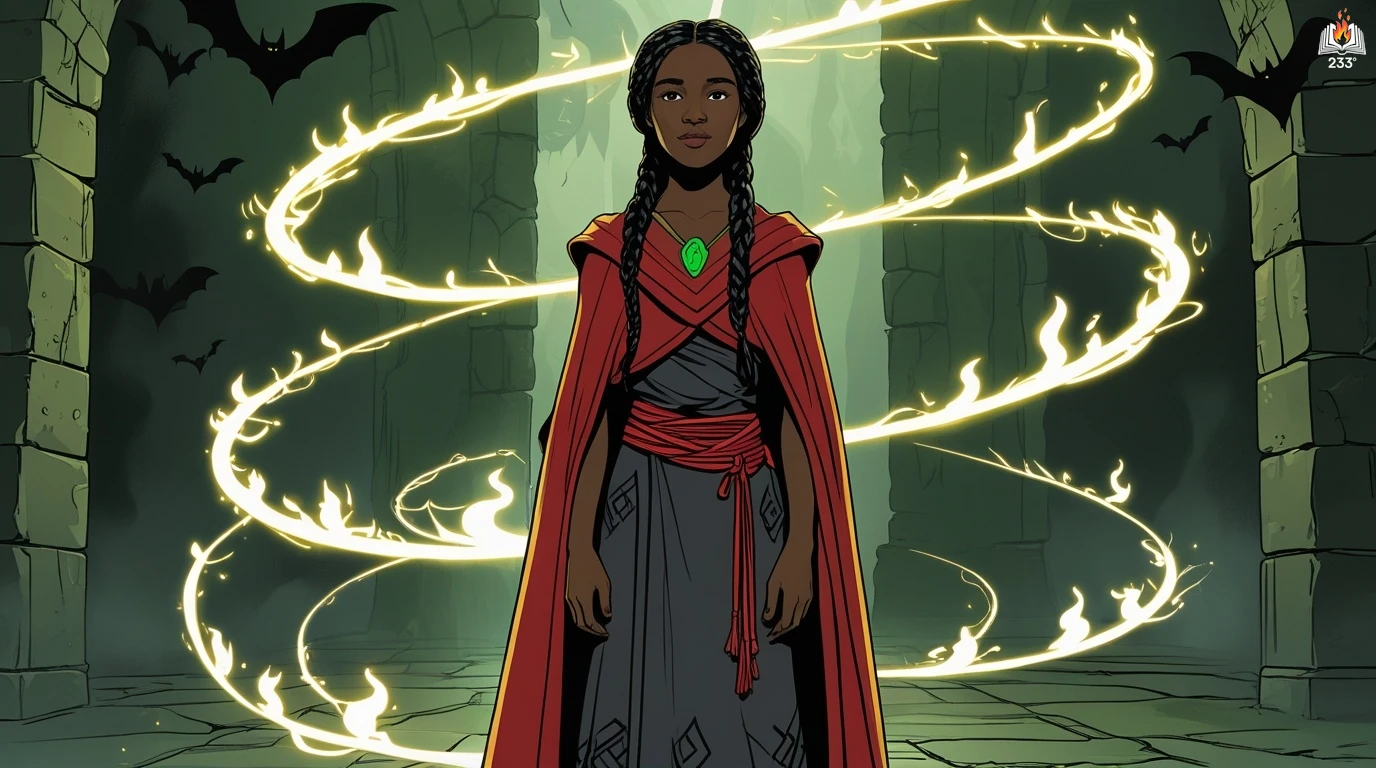
Lilith: The novel’s titular character, Lilith embodies themes of rebellion, sin, and redemption. Portrayed as a fallen, prideful queen, her journey mirrors a descent into self-awareness and repentance, though not without significant internal struggle. Lilith’s character invites readers to contemplate themes of salvation and the nature of evil.
Theme
Life and Death: The story blurs the lines between life and death, suggesting that true life is a journey of spiritual awakening rather than a physical state. This exploration forces Vane and others to confront their mortality and the idea that death is both a transition and a necessary step toward enlightenment.
Identity and Transformation: Vane’s journey is one of self-discovery, where he grapples with questions of who he truly is. Characters in the novel undergo transformations, reflecting MacDonald’s theme of inner change as a necessary aspect of spiritual growth.
Redemption and Forgiveness: Lilith’s journey encapsulates the struggle of seeking redemption. The concept of forgiveness is complex and layered, as characters find it through various forms of suffering and self-realization.
Reality vs. Illusion: Vane’s experiences continually question what is real, as he navigates dreamlike realms and confronts beings who defy the laws of nature. The novel presents reality as subjective and mutable, shaped by inner perception and spiritual insight.
Writing Style and Tone
George MacDonald’s prose in Lilith is dense and richly symbolic, blending descriptive, almost poetic language with dialogue that often feels cryptic and philosophical. The narrative takes on a dreamlike quality, with fluid, surreal transitions that mirror the protagonist’s journey through liminal spaces and altered states of consciousness. This style evokes a sense of wonder and unease, immersing readers in a world where the ordinary and extraordinary converge.
MacDonald’s tone is contemplative and, at times, somber. The novel’s introspective quality invites readers to ponder deep questions about existence, morality, and the human soul. Through allegorical characters and settings, MacDonald encourages reflection on spiritual themes, offering no straightforward answers but rather a complex, imaginative framework for exploring life’s mysteries.
Quotes
Lilith – George MacDonald (1895) Quotes
“A man is as free as he chooses to make himself, never an atom freer.”
“Whose work is it but your own to open your eyes? But indeed the business of the universe is to make such a fool out of you that you will know yourself for one, and begin to be wise.”
“there is no harm in being afraid. The only harm is in doing what Fear tells you. Fear is not your master! Laugh in his face and he will run away.”
“Doubt may be a poor encouragement to do anything, but it is a bad reason for doing nothing.”
“I tell you, there are more worlds, and more doors to them, than you will think of in many years!”
“There is no slave but the creature that wills against its Creator.”
“But there is a light that goes deeper than the will, a light that lights up the darkness behind it: that light can change your will, can make it truly yours and not another's - not the Shadow's. Into the created can pour itself the creating will, and so redeem it!”
“The part of the philanthropist is indeed a dangerous one; and the man who would do his neighbour good must first study how not to do him evil, and must begin by pulling the beam out of his own eye.”
“Those are not the tears of repentance!... Self-loathing is not sorrow. Yet it is good, for it marks a step in the way home, and in the father's arms the prodigal forgets the self he abominates.”
“The only way to come to know where you are is to begin to make yourself at home.”
“I am ready,' I replied. 'How do you know you can do it?' 'Because you require it,' I answered.”
“When a man dreams his own dream, he is the sport of his dream; when Another gives it him, that Other is able to fulfill it.”
“I had chosen the dead rather than the living, the thing thought rather than the thing thinking.”
“Thou art beautiful because God created thee, but thou art a slave to sin... wickedness has made you ugly.”
“Books are but dead bodies to you, and a library nothing but a catacomb!”
“I was a bookworm then, but when I came to know it, I woke among the butterflies.”
“Yes,' he answered; 'and you will be dead, so long as you refuse to die.”
“The darkness knows neither the light nor itself; only the light knows itself and the darkness also. None but God hates evil and understands it.”
“Nobody knows what anything is; a man can only learn what a thing means!”
“Oblige me by telling me where I am." "That is impossible. You know nothing about whereness. The only way to come to know where you are is to begin to make yourself at home.”
“If you know you are yourself, you know that you are not somebody else; but do you know that you are yourself? Are”
“All the days of my appointed time will I wait till my change come.”
“The man who grounds his action on another's cowardice, is essentially a coward himself.”
We hope this summary has sparked your interest and would appreciate you following Celsius 233 on social media:
There’s a treasure trove of other fascinating book summaries waiting for you. Check out our collection of stories that inspire, thrill, and provoke thought, just like this one by checking out the Book Shelf or the Library
Remember, while our summaries capture the essence, they can never replace the full experience of reading the book. If this summary intrigued you, consider diving into the complete story – buy the book and immerse yourself in the author’s original work.
If you want to request a book summary, click here.
When Saurabh is not working/watching football/reading books/traveling, you can reach him via Twitter/X, LinkedIn, or Threads
Restart reading!