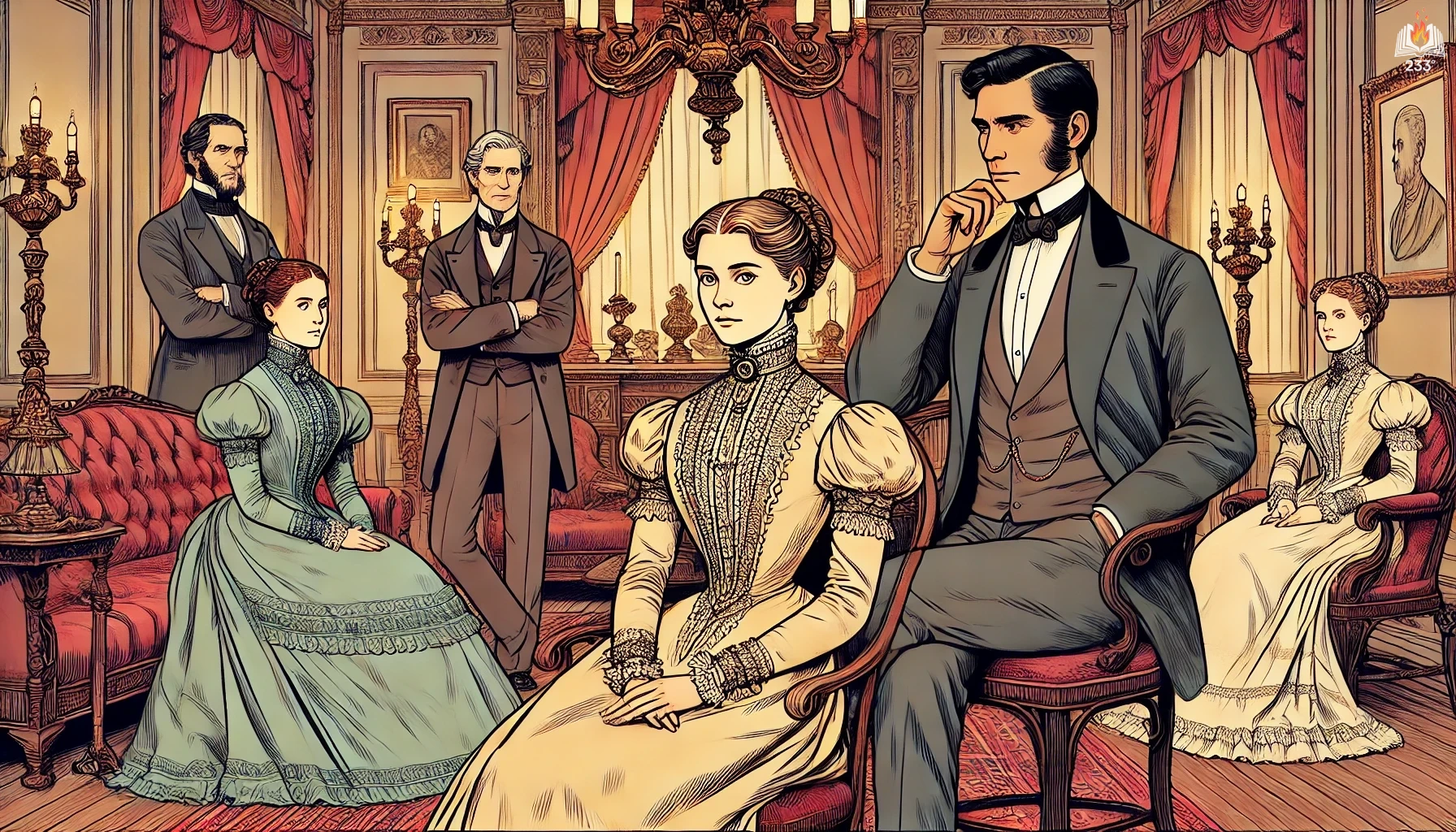
Despair by Vladimir Nabokov, first published in Russian in 1934 and later revised in English in 1965, is a darkly comic psychological thriller that plays with themes of identity, delusion, and artistic manipulation. Written during Nabokov’s European exile period, it blends the philosophical malaise of interwar Europe with the eccentric, erudite prose that would become Nabokov’s hallmark. Though not part of a series, Despair shares thematic and stylistic kinship with Nabokov’s other works like Lolita and Pale Fire, featuring unreliable narrators and metafictional structures.
Plot Summary
In the restless shadows of Berlin in the early 1930s, a man named Hermann Karlovich moves through life with the precise arrogance of someone who believes himself to be not just brilliant, but singular. He is a chocolate manufacturer by trade, but his true passion lies in his own mind – a mind that observes and manipulates the world as though it were a stage, and he the playwright. His life is comfortable, padded with the routines of his middle-class existence, a stifling marriage to the unimaginative Lydia, and the pompous admiration of himself, above all else.
It is during a mundane business trip to Prague that Hermann’s world teeters into the uncanny. Wandering through the outskirts of the city, he stumbles upon a tramp lying beneath a bush, face obscured by a cap. Hermann brushes the cap away with the tip of his shoe and freezes. The man’s face – gaunt, dirty, unconscious – is, to Hermann, a revelation. He sees in this vagabond a reflection of himself, an exact double. The resemblance, which may or may not exist in any real sense, electrifies him with both fear and inspiration. Hermann, who has long harbored the desire to do something grand, something worthy of his own perceived genius, begins to nurture an idea as grotesque as it is artistic.
Felix, the tramp, is simple-minded and unsuspecting. He speaks slowly, shares tales of former gardening jobs, fiddling, and his love for Czech beer. Hermann listens with the fascination of a scientist discovering a rare specimen. The tramp, oblivious to the significance of his existence in the mind of the man beside him, yawns, scratches his head, and asks for cigarettes. To Hermann, Felix is not a man but a tool, the raw material for a masterpiece.
Back in Berlin, Hermann toys with the idea obsessively. Felix, he decides, will be his replacement – his second self. If one could murder a man who looks exactly like oneself and ensure the body is found with evidence pointing to one’s own identity, then the original could vanish into a new life. It would be the perfect crime – not only brilliant in its execution, but beautiful in its conception, a work of art shaped in blood and deception.
Hermann begins laying the groundwork. He sends money to Felix, arranging their rendezvous in the village of Waldau, under the guise of offering him work. There, on a patch of land owned by his wife’s feckless cousin Ardalion, nestled near a pine forest marked by a yellow post, he plans the scene of the performance. The land, overgrown and isolated, becomes the unwitting stage for what Hermann envisions as his magnum opus.
As he prepares, Hermann drifts further from reality. He imagines scenes, rehearses dialogues, drafts letters to himself under Felix’s name, all in service of constructing a narrative so seamless that even the police would applaud its genius. He convinces himself of the plan’s inevitability. He changes his appearance, grows a beard, gathers props. In his mind, he is both author and actor, director and critic.
Felix, once brought to the house in Waldau, is baffled but compliant. Hermann provides him with a bath, shaves him, dresses him in his own clothes, and places a bottle of liquor in his hand. There is something pathetic in Felix’s trust, his willingness to follow Hermann into the woods without question. When Hermann finally strikes – a sudden, brutal attack with a blunt object – the act lacks the elegance he had promised himself. The blood does not flow in poetic rivulets. The body is not a canvas but a dead man slumped awkwardly against the forest floor.
Still, Hermann presses on. He plants evidence, places a wallet with his own identification in Felix’s pocket, and positions the corpse as if in sleep. Then he vanishes, expecting that the discovery of the body will confirm his death and allow him to begin anew under a different name. He drifts through small European towns, sending letters in disguise, waiting for news of the great unveiling.
But something gnaws at the seams of his design. No public announcement is made. No police search is launched. Time passes, and the masterpiece hangs in limbo. Hermann grows anxious, unsure whether the body has even been found. He wanders the cities of southern France in a haze of suspicion and disappointment, trailing his own imagination like a ghost he cannot shake.
Finally, driven by a need to witness the fruits of his labor, he returns to Berlin under a false identity, checks into a hotel, and visits the location of the crime in disguise. There is nothing. The woods stand as they did before – indifferent, unmarked. He picks up a newspaper and reads nothing of the murder he so meticulously orchestrated.
The silence becomes unbearable. He writes letters to the police, posing as an anonymous informant, giving directions to the body. Still, nothing. The crime, for all its effort and grand design, has failed to become the spectacle he imagined. His brilliance has not been recognized. His art has gone unseen.
With paranoia building and money dwindling, Hermann makes one last attempt to ignite the fire. He writes to a film director, offering the story of his crime as a ready-made plot. It is the final act of a man who believes, above all else, in the magnificence of his own narrative. But no reply comes. No audience arrives.
The police do, however.
They come not because they have uncovered a grand mystery, not because the trap of intellect was too cunning to escape, but because Hermann left too many traces, too many fingerprints of madness in his wake. There is no applause. There is no astonished gasp. There is only the quiet approach of a conclusion that feels far less like an ending and far more like the inevitable unraveling of a man who mistook delusion for genius, who saw a masterpiece in murder and found only a mirror that no longer reflected his face.
Main Characters
- Hermann Karlovich – The self-proclaimed genius and narrator of the story, Hermann is a delusional and narcissistic man who fancies himself a master of disguise, logic, and storytelling. His descent into madness is masked by what he believes to be supreme rationality. He perceives a wandering tramp as his doppelgänger and concocts a plan of murder and identity exchange that reveals more about his psychological unraveling than any actual resemblance. His voice is cunning, theatrical, and increasingly unhinged as the story progresses.
- Felix – A vagabond who Hermann encounters in Prague and becomes the object of his obsession. Felix’s physical resemblance to Hermann is questionable, but in Hermann’s mind, he is a perfect double. Felix is aimless, shabby, and indifferent – the mirror Hermann desperately manipulates to fulfill his grotesque fantasy. Though Felix plays a seemingly passive role, his reactions and fate are central to the novel’s twisted climax.
- Lydia – Hermann’s wife, whose simplicity and superstitious beliefs contrast sharply with Hermann’s self-image of intellectual superiority. Lydia is described with contempt and pity by Hermann, though her obliviousness and trust make her an unknowing enabler in his schemes. Her role as a domestic fixture emphasizes Hermann’s control and isolation.
- Ardalion – Lydia’s cousin, a failed painter who occasionally appears as comic relief. His presence underscores the theme of artistic failure and mediocrity, which indirectly mirrors Hermann’s inflated view of his own creative brilliance.
Theme
- Identity and the Doppelgänger: At the heart of Despair is the concept of the double. Hermann becomes obsessed with the idea that Felix is his exact physical twin, a belief that propels the plot into criminal territory. This mirrors classic doppelgänger literature but is uniquely Nabokovian in that the resemblance may be entirely imaginary, revealing more about Hermann’s fractured identity than any true duplication.
- Madness and Unreliable Narration: Hermann’s narration is a masterclass in unreliability. He believes himself to be lucid, brilliant, and artistically gifted, but his delusions betray an encroaching madness. As the novel unfolds, the gap between Hermann’s perception and reality becomes disturbingly clear, turning the reader into a detective of psychological truth.
- Art, Authorship, and Metafiction: Hermann often compares his crime to a work of art, blurring the lines between creation and destruction. His constant interruptions, editorial remarks, and asides to the reader emphasize Nabokov’s interest in metafiction – the novel is as much about storytelling and the limits of language as it is about murder.
- Alienation and Exile: Set in interwar Europe among Russian émigrés, the novel simmers with themes of displacement and cultural disconnection. Hermann, a Russian-German, navigates a fractured identity in a hostile environment, his detachment from others feeding into his grandiose fantasies and moral detachment.
- Deception and Delusion: The novel questions the nature of truth, both personal and perceptual. Hermann lies not only to others but to himself, crafting layers of deception to justify his actions. His crime, rather than being clever or artistic, is botched and senseless, exposing the tragic absurdity of self-deception.
Writing Style and Tone
Nabokov’s style in Despair is rich, flamboyant, and deeply ironic. He writes through Hermann in a baroque, sometimes overwrought voice full of rhetorical flourishes, puns, and sudden shifts in tone. The language is carefully wrought to mimic Hermann’s self-aggrandizing intellect while subtly undermining it. The prose often meanders through philosophical digressions, literary references, and elaborate metaphors that reflect Hermann’s narcissism and delusion.
Despite the grim subject matter, the tone is persistently playful and subversive. Nabokov uses dark humor to deflate the narrator’s pretensions, crafting a work that is as much satire as psychological portrait. The novel teeters between tragedy and farce, creating a sense of unease in the reader. What begins as an intellectual crime story unfolds into a study of madness and futility, all conveyed with Nabokov’s signature linguistic precision and sardonic wit.
Nabokov also embeds textual self-awareness throughout the narrative. The reader is never allowed to forget that they are engaging with a performance. Hermann’s commentary, often addressed to an imagined audience, mimics the devices of theatrical soliloquy and parodic confession, building an atmosphere of claustrophobic self-reference. The style doesn’t merely carry the plot—it is the plot, reflecting the collapse of logic and self-awareness that defines Hermann’s descent.
Quotes
Despair – Vladimir Nabokov (1934) Quotes
“To begin with, let us take the following motto...Literature is Love. Now we can continue.”
“I liked, as I like still, to make words look self-conscious and foolish, to bind them by mock marriage of a pun, to turn them inside out, to come upon them unawares. What is this jest in majesty? This ass in passion? How do god and devil combine to form a live dog?”
“All the information I have about myself is from forged documents.”
“And what is death, if not a face at peace - its artistic perfection.”
“She is a great gobbler of books, but reads only trash, memorizing nothing and leaving out the longer descriptions.”
“Philosophy is the invention of the rich.”
“I was always lonely and I am lonely still.”
“I lied as a nightingale sings, ecstatically, self-obliviously; reveling in the new life-harmony which I was creating.”
“The idea of God was invented in the small hours of history by a scam who had genius; it somehow reeks too much of humanity, that idea, to make its azure origin plausible...”
“It is a singular reaction, this sitting still and writing, writing, writing, or ruminating at length, which is much the same, really.”
“I am an actor, living generally on air, but I have always elastic hopes for the future; they may be stretched indefinitely, such hopes, without bursting”
“Old birds like Orlovius are wonderfully easy to lead by the beak, because a combination of decency and sentimentality is exactly equal to being a fool.”
“You forget, my good man, that what the artist perceives is, primarily, the difference between things. It is the vulgar who note their resemblance.”
“An author’s fondest dream is to turn the reader into a spectator; is this ever attained?”
“I moved on, and at noon, dragging through some village, I decided to halt, since even at such”
“Let me add, just in case, that experts on literary “schools” should wisely refrain this time from casually dragging in “the influence of German Impressionists”: I do not know German and have never read the Impressionists—whoever they are.”
“So I lingered there, pretending, in front of my own self, that I had something to write”
“...my own company being intolerable, since it excited me too much and to no purpose”
“...expecting every moment some awful change, some diabolical sneer to disfigure the dear face bending over you”
“A procession of silver pencils marched down an endless tunnel of corruption.”
We hope this summary has sparked your interest and would appreciate you following Celsius 233 on social media:
There’s a treasure trove of other fascinating book summaries waiting for you. Check out our collection of stories that inspire, thrill, and provoke thought, just like this one by checking out the Book Shelf or the Library
Remember, while our summaries capture the essence, they can never replace the full experience of reading the book. If this summary intrigued you, consider diving into the complete story – buy the book and immerse yourself in the author’s original work.
If you want to request a book summary, click here.
When Saurabh is not working/watching football/reading books/traveling, you can reach him via Twitter/X, LinkedIn, or Threads
Restart reading!