

Ada, or Ardor: A Family Chronicle by Vladimir Nabokov, published in 1969, is a sprawling, labyrinthine novel that blends romance, science fiction, memoir, and satire into an unconventional chronicle of forbidden love. The book is part of Nabokov’s later oeuvre and considered by many as his magnum opus. Set in an alternate world called Antiterra, where Russian and American cultures coexist in a surreal mirror of reality, the novel is presented as a memoir by Van Veen, a scientist and philosopher, who recounts his lifelong, incestuous love affair with his cousin (and actual sister), Ada. This is a book steeped in sensuality, intellect, and memory, written with Nabokov’s signature linguistic brilliance and metafictional playfulness.
Plot Summary
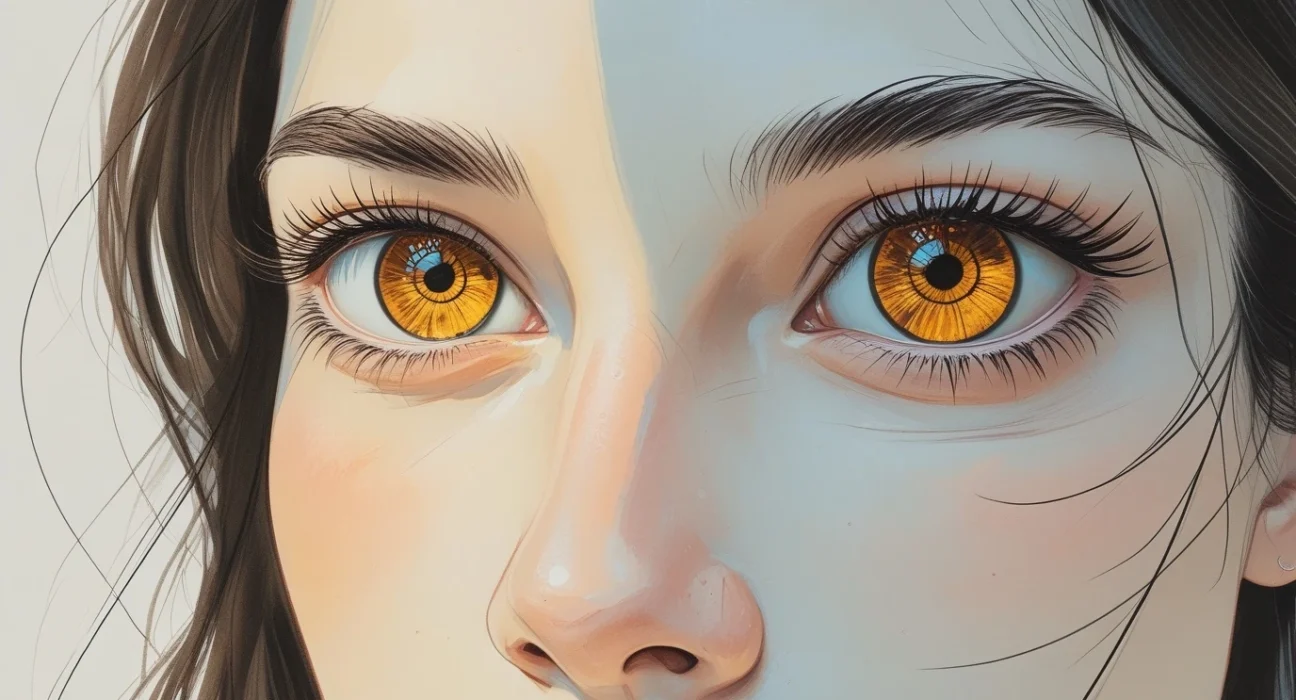
In the richly imagined world of Antiterra – a twin of Earth refracted through a prism of linguistic delight and historical sleight – the Veen family lives out a sumptuous and scandalous saga of passion, obsession, and forbidden memory. At the heart of this chronicle is Van Veen, a precocious boy with a philosopher’s mind and a heart tuned to the vibrations of desire. As a young man of thirteen, he journeys to Ardis Hall, a verdant estate bursting with summer light and the floral opulence of old-world enchantment. There, among the lilacs and gardens, he meets Ada, a girl of twelve with amber eyes, botanical brilliance, and a confidence that dances along the edges of cruelty and charm. The two, cousins by superficial arrangement but siblings by blood, fall into a fevered, endless love that slips past morality into something ancient and elemental.
Their love begins with the delirious excitement of adolescence – secret rendezvous in attics, playful cruelty, whispered discoveries beneath the shade of pines. Time unfurls in spirals, and Ardis becomes their Eden, their paradise marred only by the inevitability of growing up. In the lush heat of those early summers, Ada teaches Van the names of flowers while he sketches her ankles with his gaze. The servants grow wary. The governess becomes complicit. Even the animals seem to understand the sacred vulgarity of their closeness. They are children of a decadent lineage – their mother Marina, once an actress of middling fame, now a ghost of vanity and emotional neglect; their father Demon, a libertine aristocrat whose name coils like a warning. Their birth is an entanglement of lies and veils, whispered between sisters and silken sheets.
As seasons pass and Ardis shifts from golden haven to haunted memory, the lovers are separated. Van enters boarding school, where lust finds colder outlets in the arms of shopgirls and the envy of peers. Ada, meanwhile, remains in the theater of family deception, drawn into a dalliance with a peacockish young man named Percy. Letters cross the ocean between them, dripping with longing and disguised accusation. When they reunite, it is not as children but as lovers shaped by time, still radiant in their desire but bruised by knowledge. They make love in Paris hotels and distant villas, arguing like poets, reconciling like animals.
Lucette, the younger sister with copper hair and sad eyes, drifts through their world like a spirit seeking form. Her love for Van is pure and doomed, unnoticed until its weight pulls her to the edge of despair. She travels with them, watches their passion flare, and with quiet devastation, takes her own life by leaping into the sea during a voyage that was meant to be a reunion. Her death lands with a silent shudder – not a lesson, not a reckoning, but a shadow stretching across Van and Ada’s already stained bond.
Through years of separation and return, Van becomes a scholar of time, writing books on chronology that seek to untangle the coils of memory and desire. Ada tends to the dying embers of a family once full of theater and ghosts. Antiterra spins on, with its blend of technological anachronisms and historical mirror-tricks, a world that seems almost aware of its own artifice. Terra, the real Earth whispered of by madmen and dreamers, hovers like an echo in the minds of those frayed by loss and longing.
Van’s reunion with Ada in middle age is quiet and infinite. They meet again in the twilight of life, in a house set among hills and silence. The world outside has dimmed – wars have passed, lovers have died, reputations have rotted into footnotes. Their bodies are slower now, their speech seasoned with irony and ache. Yet when Van sees Ada’s eyes, time collapses. They live together in a kind of exile from consequence, reading, writing, making love like shadows rethreading the past.
Every so often, the scent of a flower, the creak of a stair, or the color of a sky triggers an echo of Ardis, and the days when everything was first and forbidden. The book of their life lies open on a table, its pages inked with mischief, grief, and impossible tenderness. They are no longer asking the world for permission. In the geometry of their shared myth, love bends reality to its will.
No redemption is offered, no judgment given. There is only the ache of memory, the flutter of past summers stirring in the dark, and the quiet certainty that ardor – in all its luminous, ruinous glory – will outlive the names carved on any family tree.
Main Characters
Van Veen – The novel’s protagonist and narrator, Van is a gifted philosopher and psychologist who writes about time and memory. Intensely intellectual and emotionally volatile, his obsessive love for Ada defines much of his life. As the chronicler of their shared story, Van often displays both egotism and vulnerability, offering the reader a deeply subjective account layered with embellishment and self-analysis.
Ada Veen – Beautiful, intelligent, and fiercely independent, Ada is Van’s cousin and eventual lover, though later revealed to be his sister. Her botanical knowledge, artistic temperament, and wit make her a captivating presence. Ada is both a muse and an intellectual equal to Van, resisting societal expectations even as she navigates the moral implications of their relationship.
Lucette Veen – The younger half-sister of Ada, Lucette is a tragic figure who quietly yearns for Van. Her unrequited love, emotional fragility, and ultimate fate highlight the emotional casualties of Van and Ada’s passionate bond. She represents innocence caught in the crossfire of obsession and desire.
Demon Veen – Van’s father, a wealthy, flamboyant art collector and womanizer. Demon is a figure of both charm and callousness, whose romantic entanglements with Ada’s mother deepen the Veen family’s entangled relationships. He embodies a Nabokovian blend of aristocratic decay and operatic drama.
Marina Durmanov – Ada’s and Lucette’s mother, once an actress, whose faded beauty and theatrical flair conceal her instability and neglect. She is entangled in an affair with Demon and is emotionally distant from her children. Her character provides insight into the failures of maternal and societal structures.
Aqua Durmanov – Marina’s twin sister and Van’s supposed mother, though mentally unstable and emotionally fragile. Aqua’s tragic life and eventual suicide underline the novel’s themes of madness, despair, and distorted realities. She lives in the shadow of her twin and of a love that never sustains her.
Theme
Forbidden Love and Incest: At its core, the novel is an exploration of incestuous love. Van and Ada’s relationship defies both social and moral boundaries, raising questions about the nature of love, desire, and taboo. Nabokov approaches the theme with both audacity and complexity, refusing to moralize while inviting profound discomfort.
Time and Memory: Van’s profession as a chronologist reflects the novel’s obsession with the fluidity of time. The narrative often loops back upon itself, distorting linear chronology and emphasizing memory’s subjective nature. Time, like love, is elastic and unreliable in the world of Ada.
Reality versus Illusion (Terra and Antiterra): The alternate world of Antiterra serves as both setting and metaphor. Antiterra is a skewed reflection of Earth (Terra), allowing Nabokov to toy with history, politics, and geography while emphasizing the illusions that define human consciousness. This mirroring echoes the characters’ inner dualities and the book’s metafictional structure.
Nature and Eroticism: Ada’s passion for botany and Nabokov’s rich natural imagery intertwine with the novel’s sensuality. Nature becomes an erotic and philosophical space where passion blooms and decays, underscoring the transient beauty of love and youth.
Madness and Isolation: Aqua’s mental deterioration, Lucette’s suicide, and Van’s existential introspections all point to a recurring concern with the mind’s fragility. Madness is not only a symptom of personal trauma but also a lens through which the narrative questions the limits of perception and identity.
Writing Style and Tone
Nabokov’s writing in Ada, or Ardor is opulent, cerebral, and densely layered. His use of language is both a celebration and a challenge — teeming with multilingual puns, obscure references, and baroque sentence structures. The narrative voice is unmistakably Nabokovian: sardonic, self-aware, and endlessly playful. The novel revels in metafictional devices, including footnotes, paratexts, and narrative digressions, turning the act of reading into a game between author and audience. The text is richly allusive, drawing from literature, philosophy, art, and science, demanding active participation from the reader.
The tone oscillates between elegiac and erotic, ironic and impassioned. Nabokov crafts an atmosphere that is at once dreamlike and hyperreal, where emotions are heightened, and every detail is imbued with symbolic resonance. The blending of scientific precision with poetic reverie creates a dissonant beauty, while the narrator’s retrospective voice adds a layer of melancholy to even the most euphoric recollections. There is also a distinctly aristocratic decadence to the world of the Veens, a nostalgic longing for a vanished grandeur that mirrors the faded empires and disintegrating identities of the characters.
Quotes
Ada, or Ardor – Vladimir Nabokov (1969) Quotes
“And yet I adore him. I think he's quite crazy, and with no place or occupation in life, and far from happy, and philosophically irresponsible – and there is absolutely nobody like him.”
“Was she really beautiful? Was she at least what they call attractive? She was exasperation, she was torture.”
“Maybe the only thing that hints at a sense of Time is rhythm; not the recurrent beats of the rhythm but the gap between two such beats, the gray gap between black beats: the Tender Interval.”
“...for the human brain can become the best torture house of all those it has invented, established and used in a millions of years, in millions of lands, on millions of howling creatures.”
“I am sentimental,’ she said. ‘I could dissect a koala but not its baby. I like the words damozel, eglantine, elegant. I love when you kiss my elongated white hand.”
“I adore you, mon petit, and would never allow him to hurt you, no matter how gently or madly.”
“Time is rhythm: the insect rhythm of a warm humid night, brain ripple, breathing, the drum in my temple—these are our faithful timekeepers; and reason corrects the feverish beat.”
“You lose your immortality when you lose your memory.”
“I’m a radiant void. I’m convalescing after a long and dreadful illness...I cannot brood over broken hearts, mine is too recently mended [...]”
“Remembrance, like Rembrandt, is dark but festive.”
“When we remember our former selves, there is always that little figure with its long shadow stopping like an uncertain belated visitor on a lighted threshold at the far end of some impeccably narrowing corridor.”
“His heart missed a beat and never regretted the lovely loss.”
“Even while writing his book, he had become painfully aware how little he knew his own planet while attempting to piece together another one from jagged bits filched from deranged brains.”
“Her disintegration went down a shaft of phases, every one more racking than the last; for the human brain can become the best torture house of all those it has invented, established and used in millions of years, in millions of lands, on millions of howling creatures.”
“Both were diverted by life's young fumblings, both saddened by the wisdom of time”
“It's exactly my sense of existing - a fragment, a wisp of color.”
“In the fatal course of the most painful ailments, sometimes [...], sometimes there occur sweet mornings of perfect repose- and that not owning to some blessed pill or potion [...] or at least without our knowing that the loving hand of despair slipped us the drug.”
“I adore you. I shall never love any- body in my life as I adore you, never and nowhere, neither in eternity, nor in terrenity, neither in Ladore, nor on Terra, where they say our souls go. But! But, my love, my Van, I'm physical, horribly physical”
“Did he like elms? Did he know Joyce’s poem about the two washerwomen? He did, indeed. Did he like it? He did. In fact he was beginning to like very much arbors and ardors and Adas”
“Beaming and melting in smiles of benevolence and self-effacement, they sidled up and plumped down next to Lucette, who turned to them with her last, last, last free gift of staunch courtesy that was stronger than failure and death.”
We hope this summary has sparked your interest and would appreciate you following Celsius 233 on social media:
There’s a treasure trove of other fascinating book summaries waiting for you. Check out our collection of stories that inspire, thrill, and provoke thought, just like this one by checking out the Book Shelf or the Library
Remember, while our summaries capture the essence, they can never replace the full experience of reading the book. If this summary intrigued you, consider diving into the complete story – buy the book and immerse yourself in the author’s original work.
If you want to request a book summary, click here.
When Saurabh is not working/watching football/reading books/traveling, you can reach him via Twitter/X, LinkedIn, or Threads
Restart reading!


