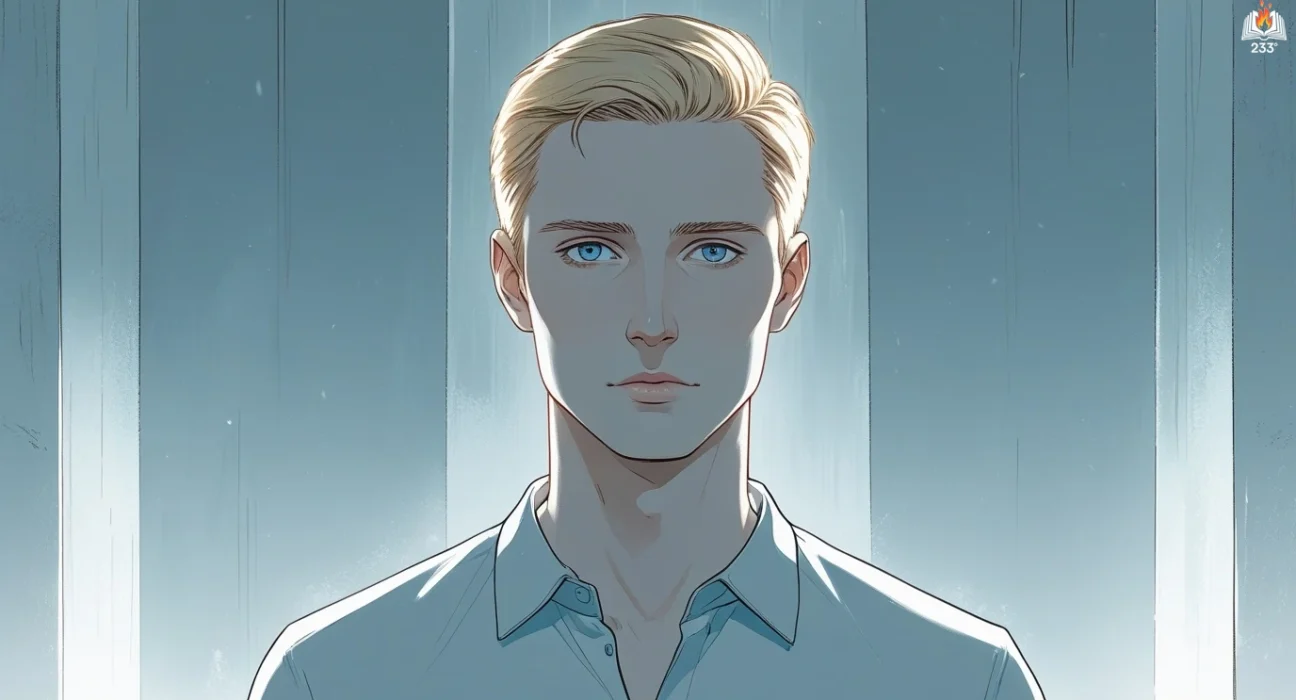
Vicious by V.E. Schwab, published in 2013, is the first installment in the acclaimed Villains series. Set in a world where near-death experiences can unlock superhuman abilities, the novel explores the fine line between heroism and villainy through the lens of two former college friends turned mortal enemies. Anchored in themes of power, revenge, and moral ambiguity, Vicious is a gripping, character-driven story that challenges the reader’s understanding of good and evil.
Plot Summary
Victor Vale walked through Merit Cemetery with a shovel on his shoulder and revenge in his blood. The night was cold, the sky dull and heavy, and the girl beside him – Sydney – looked like a child dragged from a fever dream, her rainbow leggings soaked with winter dew. She’d been shot days earlier. He’d broken out of prison to keep a promise. Together, they were digging up a body. Victor needed to send a message. Eli needed to know that Victor was out.
A decade earlier, Victor and Eliot Cardale had stood side by side at Lockland University. Both brilliant, both ambitious, and both drawn to the dark glimmer of possibility that shimmered between science and the supernatural. They weren’t looking for heroes or monsters. They were looking for answers. The idea had started as a thesis – a study on whether near-death experiences could unlock something buried deep in the body and mind. Eli believed in the theory, believed in it with the fervor of a disciple. Victor believed in Eli, which was far more dangerous.
They tested it.
Victor went first, chasing death with a bottle of whiskey and a handful of pills. When his heart shuddered and stopped, Eli brought him back. What came back wasn’t the same. He could feel pain – everyone’s pain – twist and vibrate around him. And he could control it. Take it, give it. Then Eli followed, dying on a hospital floor only to rise again with the power to heal himself. It should have been a bond. It became the split.
Eli changed. His faith twisted. He decided that ExtraOrdinary people – EOs – were wrong. Unnatural. Dangerous. All but himself, of course. He began to hunt them, cleanse them. It was divine to him, holy work. Victor opposed him, tried to stop him. But Victor wasn’t careful, and when Angie – the girl who had once been caught between them – died, the blame fell on him. Eli let it fall, and Victor was locked away.
Ten years passed inside a concrete cell. Victor watched, waited, and plotted. His cellmate, Mitch, was a hulking man with more intelligence than he let on. Together, they planned a way out. When the break finally came, they vanished into the cold dark, leaving behind broken locks and a trail of silence. It wasn’t long before they found Sydney, soaked and limping along a rainy highway. She was too small, too quiet, and too dead. She had died – shot and left behind by someone she trusted. But Sydney had come back. Now she could raise the dead.
Victor didn’t ask why someone had tried to kill her. He didn’t ask who. She didn’t tell him, and that was enough.
They found Serena – Sydney’s sister – in Merit. Serena had died too, but came back with something worse. Her voice bent people’s will, shaped their choices. She walked through the world like a queen cloaked in silk and lies, and now she was with Eli. They made a beautiful, terrifying pair – the purifier and the seductress – destroying EOs with surgical conviction. Serena knew Sydney was alive. Victor made sure Eli would know too.
The bodies they dug up weren’t for science. They were messages. The people Victor raised were like signals, each one whispering Victor’s name into the night. Sydney hated it. She hated her sister more. But she stayed. Victor was careful with her. He lied gently, spoke kindly. She watched him closely, not knowing if he was a monster or a man. Maybe he was both.
Victor’s plan unraveled slowly, precisely. He tracked Eli, moved through the city with shadows at his back. Each step was deliberate, a counterpoint to the righteous chaos Eli left behind. More EOs were hunted, more blood spilled. Eli didn’t hesitate. Every time Victor tried to move closer, Serena’s voice stood in the way. She twisted minds, bent laws, corrupted every line of defense.
But Victor had built his own small army. Mitch, loyal and steady, followed every move with quiet faith. Sydney learned to control her gift, her fingers trembling less each time she reached into the earth. They weren’t a family, but they were something.
It was Serena who slipped. Her power was vast, but not endless. She let Sydney get close, tried to pull her back into her grasp, but Sydney had already chosen her side. When Serena gave the order to end it – to finish her sister – she expected obedience. What she found was Victor.
The confrontation was brutal. Pain surged through the air like static. Eli’s healing made him nearly untouchable, but Victor was relentless, using every ounce of his control, every trick the last decade had taught him. The fight ended not with a kill, but with a silencing. Victor stopped Serena’s voice forever, and when Eli tried to strike back, Victor made him bleed.
Sydney had the final say.
She stood in the ashes of her sister’s will and chose life. Not forgiveness. Not peace. Just survival. With Serena gone, Eli was vulnerable. The man who saw himself as a god had been undone not by a rival, but by the weight of his own faith. Victor could have killed him. He didn’t. He left him broken, caged, and forgotten – a fate worse than death for a man who believed in divine purpose.
Victor disappeared again, vanishing into the spaces between cities, shadows, and scars. Sydney and Mitch went with him. They weren’t done. The world still turned, still made monsters. And somewhere in its quiet corners, there were still people worth saving. Or at least worth finding.
The grave they had dug at the start had long since been filled. But the message remained, etched not in stone but in memory: Victor Vale had returned, and he had changed the game.
Main Characters
Victor Vale – Highly intelligent, cynical, and driven by a need to prove himself, Victor is a former medical student with a dark past. His obsession with power and control leads him down a morally gray path, culminating in his own near-death transformation into an ExtraOrdinary. Motivated by a personal betrayal, Victor seeks revenge against Eli while protecting the vulnerable with an oddly principled ruthlessness. His dynamic with pain and control defines much of his development.
Eli Ever (Eliot Cardale) – Charismatic, devout, and dangerously idealistic, Eli begins as Victor’s college roommate and evolves into his arch-nemesis. He believes ExtraOrdinaries are abominations and takes it upon himself to rid the world of them – except himself, of course. His self-righteousness masks a chilling detachment from morality, and his descent into fanaticism contrasts sharply with Victor’s measured vengeance.
Sydney Clarke – A twelve-year-old girl with the rare power to raise the dead, Sydney is both innocent and marked by trauma. She forms a surrogate familial bond with Victor, becoming his moral compass and emotional anchor. Her complicated feelings about her sister Serena and the fear of her own abilities underscore the novel’s themes of identity and agency.
Serena Clarke – Sydney’s older sister, Serena possesses the terrifying ability to control people with her voice. Once warm and protective, her resurrection after a near-death experience distorts her personality into something manipulative and cold. Her alignment with Eli creates a powerful and dangerous duo, adding emotional depth and conflict to Sydney’s arc.
Mitch Turner – Victor’s loyal companion, Mitch is a physically imposing man with a gentle nature and a haunted past. Though not an EO, he serves as the group’s backbone, providing strength, tech-savvy skills, and a subtle emotional intelligence. His friendship with Victor and Sydney adds a layer of stability to an otherwise volatile narrative.
Theme
Moral Ambiguity – Schwab constructs a world where heroes and villains are subjective roles, determined by perspective rather than objective morality. Both Victor and Eli commit atrocities, but the narrative consistently asks which man is truly the monster. This tension fuels the plot and invites readers to challenge conventional labels of good and evil.
Power and Corruption – The story examines how power affects individuals, especially when it’s gained through unnatural means. Whether through control over pain, life, or free will, each EO’s ability reflects a core aspect of their psyche. The desire to control others—either through violence or manipulation—reveals how power often corrodes empathy and blurs ethical lines.
Friendship and Betrayal – At the heart of Vicious lies a fractured friendship. Victor and Eli’s descent from friends to enemies is marked by envy, rivalry, and philosophical divergence. Their shared past intensifies their conflict, making their eventual confrontation not just about power but about personal betrayal and wounded pride.
Death and Resurrection – Literal and metaphorical resurrections pervade the novel. Characters physically die and come back changed, while others undergo emotional rebirths. This motif underscores the transformative—and often destructive—impact of trauma and rebirth, suggesting that what survives is never quite the same.
Identity and Isolation – Each character struggles with their place in the world, often in isolation. Whether it’s Victor’s exile, Eli’s self-appointed divinity, or Sydney’s guilt and fear, Schwab portrays identity as fluid and shaped by power, trauma, and relationships. The characters’ powers isolate them as much as they define them.
Writing Style and Tone
V.E. Schwab’s writing is taut and precise, laced with psychological insight and a keen sense of rhythm. Her prose cuts cleanly, favoring short, impactful sentences that mirror the clinical detachment of her protagonists while still offering bursts of lyricism. Chapters are short, often punchy, and alternate timelines to maintain narrative momentum and deepen character backstory without sacrificing pace.
The tone of Vicious is dark and introspective, brooding with tension and a constant sense of foreboding. Schwab avoids melodrama by grounding extraordinary events in sharp emotional realism. Her characters aren’t grandiose supervillains—they’re wounded, intelligent people trying to impose their will on a chaotic world. The novel feels cinematic, but never stylized to the point of artifice. It reads like a noir thriller with philosophical muscle—where every conversation can turn deadly and every quiet moment is laced with menace or vulnerability.
Quotes
Vicious – VE Schwab (2013) Quotes
“Plenty of humans were monstrous, and plenty of monsters knew how to play at being human.”
“When no one understands, that's usually a good sign that you're wrong.”
“He wanted to care, he wanted to care so badly, but there was this gap between what he felt and what he wanted to feel, a space where something important had been carved out.”
“The absence of pain led to an absence of fear, and the absence of fear led to a disregard for consequence.”
“All Eli had to do was smile. All Victor had to do was lie. Both proved frighteningly effective.”
“If Eli really was a hero, and Victor meant to stop him, did that make him a villain? He took a long sip of his drink, tipped his head back against the couch, and decided he could live with that.”
“There are no good men in this game.”
“Because you don't think I'm a bad person," he said. "And I don't want to prove you wrong.”
“Plenty of humans were monstrous, and plenty of monsters knew how to play at being human.”
“Be lost. Give up. Give In. in the end It would be better to surrender before you begin. be lost. Be lost And then you will not care if you are ever found.”
“I want to believe that there's more. That we could be more. Hell, we could be heroes.”
“Victor Vale was not a fucking sidekick.”
“The world resists, when you break its rules.”
“You must make time for that which matters, for that which defines you: your passion, your progress, your pen. Take it up, and write your own story.”
“Did you know that when you take away a person's fear of pain, you take away their fear of death? You make them, in their own eyes, immortal. Which of course they're not, but what's the saying? We are all immortal until proven otherwise?”
“Victor didn't want to run while Eli was busy trying to fly.”
“Picking the best solution really depended on your definition of best.”
“Serena hadn't told Sydney to go home . She hadn't told her to run away . She told her to go somewhere safe . And over the course of the last week, safe had ceased to be a place for Sydney, and had become a person. Specifically, safe had become Victor.”
“You don't understand," gasped Eli. "No one understands." "When no one understands, that's usually a good sign that you're wrong.”
“I watch you, and it's like watching two people.”
“I don’t want to be forgotten.”
“What gives you the right to play judge and jury and executioner?”
“The absence of pain led to an absence of fear, and the absence of fear led to a disregard for consequences.”
“Victor was naturally quiet, but even more so under pressure, which gave his peers the distinct impression he knew what he was doing, even when he didn't.”
“I have a hacker, a half-dead dog, and a child. It’s hardly an arsenal.”
“Like everything was real, but nothing mattered.”
We hope this summary has sparked your interest and would appreciate you following Celsius 233 on social media:
There’s a treasure trove of other fascinating book summaries waiting for you. Check out our collection of stories that inspire, thrill, and provoke thought, just like this one by checking out the Book Shelf or the Library
Remember, while our summaries capture the essence, they can never replace the full experience of reading the book. If this summary intrigued you, consider diving into the complete story – buy the book and immerse yourself in the author’s original work.
If you want to request a book summary, click here.
When Saurabh is not working/watching football/reading books/traveling, you can reach him via Twitter/X, LinkedIn, or Threads
Restart reading!