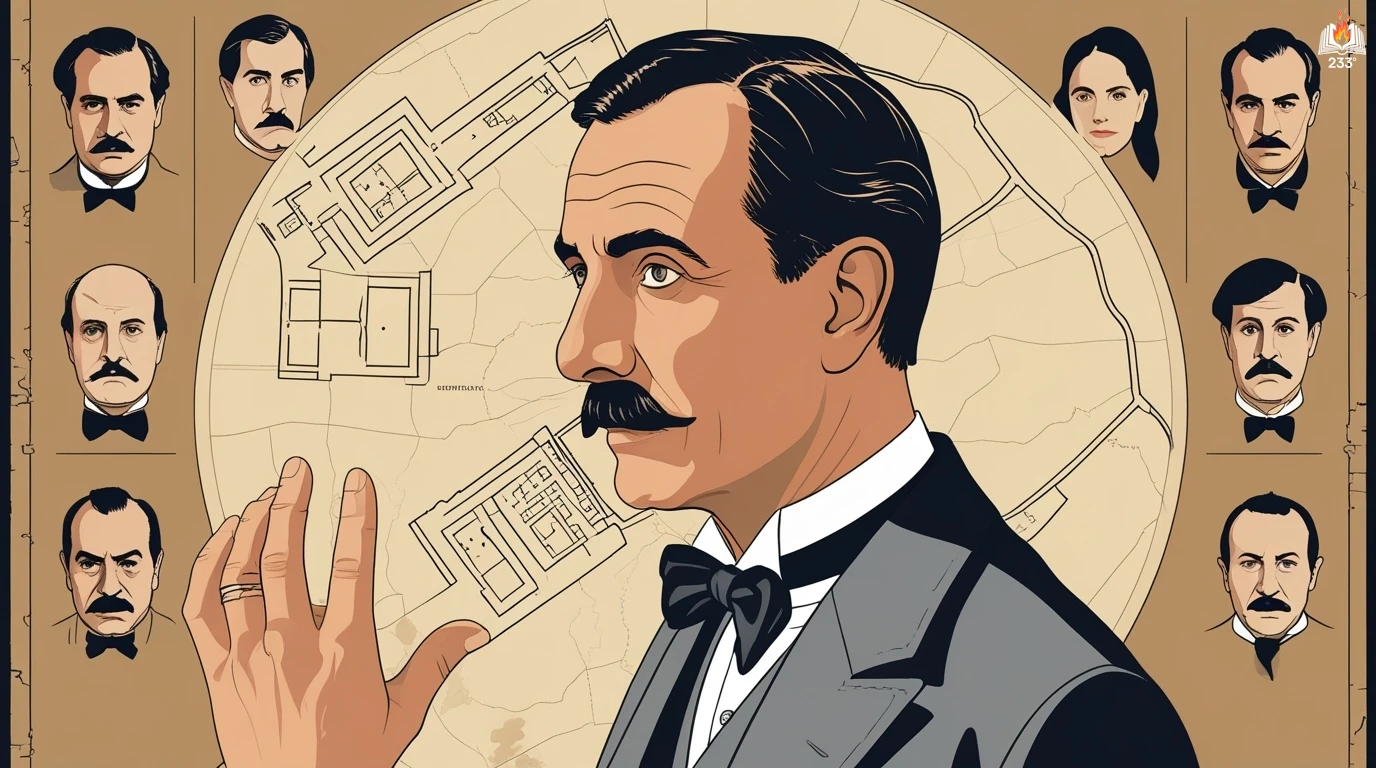


Humiliated and Insulted by Fyodor Dostoevsky was first published in 1861 and marks a pivotal moment in the author’s early literary evolution. Written shortly after Dostoevsky’s return from Siberian exile, this standalone novel introduces many of the psychological and moral concerns that would come to dominate his later masterpieces. Blending elements of Gothic romance, social commentary, and personal confession, the novel is narrated by a struggling writer named Vanya, who finds himself caught in a tangled web of love, betrayal, and redemption in the heart of St. Petersburg.
Plot Summary
On a cold March evening in St. Petersburg, a young writer named Ivan Petrovich encountered an old man and his decrepit dog wandering the streets, both spectral in their frailty. Drawn by an inexplicable pull, Ivan followed them into a coffee house where the old man, silent and solitary, sat for hours as if waiting for life to remember him. When the dog died quietly at the man’s feet, and the man himself passed away that very night in the shadows of an alley, Ivan discovered a name – Jeremiah Smith – and took residence in the old man’s attic, seeking warmth, solitude, and perhaps meaning.
Ivan’s life was already burdened with illness and impending death, yet memories surged with painful clarity. He recalled his childhood spent in the care of the Ikhmenevs – Nikolai Sergeich and Anna Andreyevna – in a quiet countryside estate. Their daughter Natasha had been his inseparable companion, the light of his youth, until he left for St. Petersburg. Years passed, but she never left his heart. When the Ikhmenevs, now ruined by disgrace and betrayal, arrived in the city, the past returned to him with agonizing tenderness.
The Ikhmenevs had once lived honorably as stewards of a wealthy aristocrat, Prince Valkovsky, who had entrusted Nikolai Sergeich with the management of his estate. But the Prince was a man of masks – charming, calculating, and ever in pursuit of personal advantage. Years before, he had sent his son, Alyosha, a delicate and handsome youth, to live with the Ikhmenevs, asking them to teach him virtue. Alyosha and Natasha had fallen in love – innocently, deeply – but when rumors of their affection reached the Prince, he saw danger. A peasant girl for a bride was not what he intended for his son. The Prince unleashed a campaign of slander, accusing Nikolai Sergeich of theft, betrayal, and deceit. The Ikhmenevs were disgraced, stripped of their livelihood, and left to drown in litigation and sorrow.
In the city, Natasha had changed. Her soul still burned with love, but her heart had been wounded by the world. Against her parents’ wishes, she had left home to live with Alyosha, believing in love’s triumph over social tyranny. Yet Alyosha, though sincere in affection, was weak. His father’s manipulations soon wrapped around him again, and a new scheme unfolded – a planned marriage between Alyosha and Katya, the innocent ward of Countess Zinaida, Valkovsky’s lover. The Countess, proud and exacting, agreed to the match, unaware of Alyosha’s prior entanglement. And Katya, who adored Alyosha with pure, youthful fervor, was caught between the warmth of his attention and the shadow of his past.
Ivan, nursing his secret love for Natasha, bore witness to all of this – the gradual disintegration of hope, the tightening grip of Valkovsky’s ambition, and the helplessness of hearts caught in a cruel design. When Natasha sought counsel, Ivan offered comfort, even as it carved deeper wounds in his soul. His devotion was silent, self-effacing, and unshakable. He watched her endure slights and shame, clinging to Alyosha’s faltering promises, while Alyosha, torn and spineless, allowed himself to drift further from her.
Meanwhile, a girl entered Ivan’s life – Nelly, a pale, trembling orphan with wide eyes and a haunted past. He had found her half-dead in a filthy basement, rescued her, and brought her into his fragile household. Her story unfolded like a grim folktale: abandoned by her dying mother, brutalized by her grandfather, the same Jeremiah Smith who had died unnoticed in the street. Nelly’s suffering was vast, yet she bore it with astonishing resilience. She became the heart of Ivan’s existence, a child-martyr who awakened compassion in everyone she touched.
Ivan introduced Nelly to the Ikhmenevs, hoping that their kindness might restore something in the girl – and perhaps in themselves. The old couple, especially Nikolai Sergeich, were deeply moved. They began to love her as their own, even as they remained estranged from Natasha. And Natasha, sensing the small flame of peace that Nelly carried, began to see the ruin of her choices. Her love for Alyosha was not diminished, but she understood the toll it had taken on everyone around her. She had sacrificed her name, her family, and her future to protect a man who no longer had the strength to stand beside her.
Prince Valkovsky’s plan progressed. Alyosha was drawn deeper into his father’s schemes, hesitant yet compliant. But just as the marriage with Katya seemed inevitable, Natasha confronted him with the truth of their past and the betrayal of their love. Alyosha was shattered, torn between obligation and feeling, but still incapable of decisive action. Natasha, with a heavy heart, let him go. She would not chain him to love he could not defend. In that moment, her pride returned, and with it, the last shreds of her innocence.
Katya, overhearing the truth, faced a cruel awakening. The illusion of her engagement was shattered, and her adoration for Alyosha was transformed into sorrow. Yet, remarkably, she did not lash out. In her grief, she showed grace, releasing Alyosha from his promise, understanding that his heart had never truly been hers.
Nelly’s health declined. She died quietly, like a candle in a draft, leaving behind a profound silence. Her death was mourned by all who had touched her life – Ivan, the Ikhmenevs, even Natasha. In her frailty, Nelly had bridged the gap between hearts and reminded them of what love, stripped of pride and ambition, could be.
Prince Valkovsky, triumphant in appearance, was hollow within. He had orchestrated the future he desired, but found no joy in its realization. Alyosha, though free, had lost the noblest parts of himself. Natasha returned to her parents, not with shame, but with weary dignity. She was forgiven, and the family, once broken, began to mend in quiet reconciliation.
Ivan remained the silent witness, his love for Natasha unspoken, his body weakening each day. He had recorded these memories not to seek glory, but to preserve the truth of a time when love and sorrow walked hand in hand through the frozen streets of St. Petersburg, and where dignity could still shine through the faces of the humiliated and the insulted.
Main Characters
Ivan Petrovich (Vanya): The narrator and a young writer, Vanya is sensitive, introspective, and deeply compassionate. His unrequited love for Natasha and his protective instinct for the orphaned Nelly reflect his self-sacrificial nature. Vanya’s reflections and sufferings reveal Dostoevsky’s own existential anxieties and moral idealism.
Natasha (Natalya Nikolayevna): The daughter of the noble yet impoverished Ikhmenevs, Natasha is headstrong and idealistic, having left her family to live with her lover, Alyosha. Her arc is marked by defiance, shame, and tragedy, as she navigates the emotional fallout of her decisions and the burden of her loyalty.
Prince Alyosha (Alexei Petrovich): Young and handsome, Alyosha is the son of Prince Valkovsky. Though gentle and loving, he is indecisive and lacks willpower, which makes him vulnerable to manipulation. His romantic entanglement with Natasha and later with Katya underscores his emotional fragility.
Prince Pyotr Alexandrovich Valkovsky: Alyosha’s father, a calculating and manipulative aristocrat who embodies the novel’s critique of power and egoism. His schemes to secure his son a socially advantageous marriage highlight the social hypocrisies Dostoevsky seeks to expose.
Nikolai Sergeich Ikhmenev: Natasha’s father, a retired landowner, kind-hearted and honorable but crushed by betrayal and social disgrace. His deep love for his daughter endures despite her defiance, and he becomes a symbol of paternal devotion and wounded pride.
Anna Andreyevna: Natasha’s mother, pragmatic and anxious, who oscillates between social propriety and maternal love. Her bitterness and snobbery often contrast with her husband’s warmth.
Nelly (Yelena/Lenochka): A neglected and abused orphan girl whose tragic life parallels the novel’s broader themes of suffering and redemption. Her character is imbued with pathos, and she becomes a spiritual catalyst for Vanya and the Ikhmenevs.
Theme
Humiliation and Dignity: The title itself foregrounds this theme. Nearly every character undergoes some form of humiliation – personal, social, or moral. Dostoevsky probes how pride and shame shape the human psyche and how individuals cling to dignity even amid degradation.
Unrequited Love and Emotional Sacrifice: Vanya’s unreturned love for Natasha and Natasha’s sacrificial loyalty to Alyosha reveal the nobility and suffering inherent in loving without reciprocity. The emotional turmoil of loving others more than oneself underscores the novel’s tragic register.
Family and Filial Bonds: The strained relationships between parents and children – especially Natasha and her father, Alyosha and Valkovsky, and Nelly and her abusive mother – reflect a society in moral crisis, where natural affections are warped by pride, betrayal, and societal expectation.
Power, Manipulation, and Social Class: Prince Valkovsky represents the manipulative use of social power, engineering marriages and breaking relationships for selfish ends. The novel critiques the class system that privileges wealth over love and virtue.
Redemption Through Suffering: A hallmark of Dostoevsky’s works, this theme is present in nearly every character arc. Vanya’s compassion, Natasha’s remorse, and Nelly’s quiet endurance suggest that moral regeneration arises through personal suffering and empathy.
Writing Style and Tone
Dostoevsky’s narrative style in Humiliated and Insulted is deeply emotional, oscillating between lyrical introspection and tense realism. Through the voice of Vanya, he crafts a confessional tone filled with pathos and moral intensity. The narration is subjective, colored by Vanya’s romantic melancholy and philosophical reflections, making the storytelling deeply personal and morally engaged.
The tone of the novel shifts seamlessly between tender sentimentality and psychological torment. Scenes of domestic intimacy are juxtaposed with moments of despair and spiritual anguish. Dostoevsky’s language is rich in metaphors and emotive descriptions, especially when detailing human suffering or expressing the nobility of downtrodden souls. His style here, though less polished than in his later works, brims with sincerity and moral fervor. The Gothic elements – mysterious deaths, sinister aristocrats, tragic orphans – blend with social realism, creating a novel that feels at once intimate and theatrically grand.
Quotes
The Insulted and Humiliated – Fyodor Dostoevsky (1861) Quotes
“If you want to be respected by others, the great thing is to respect yourself. Only by that, only by self-respect will you compel others to respect you.”
“She enjoyed her own pain by this egoism of suffering, if I may so express it. This aggravation of suffering and this rebelling in it I could understand; it is the enjoyment of man, of the insulted and injured, oppressed by destiny, and smarting under the sense of its injustice.”
“I have noticed that in a cramped space one's thoughts too tend to be cramped.”
“Don't be surprised that I value prejudice, observe certain conventions, seek power--it's because I know I live in an empty society.”
“All this time we sat without speaking. I was considering how to begin. It was twilight in the room, a black storm_cloud was coming over the sky, and there came again a rumble of thunder in the distance.”
We hope this summary has sparked your interest and would appreciate you following Celsius 233 on social media:
There’s a treasure trove of other fascinating book summaries waiting for you. Check out our collection of stories that inspire, thrill, and provoke thought, just like this one by checking out the Book Shelf or the Library
Remember, while our summaries capture the essence, they can never replace the full experience of reading the book. If this summary intrigued you, consider diving into the complete story – buy the book and immerse yourself in the author’s original work.
If you want to request a book summary, click here.
When Saurabh is not working/watching football/reading books/traveling, you can reach him via Twitter/X, LinkedIn, or Threads
Restart reading!