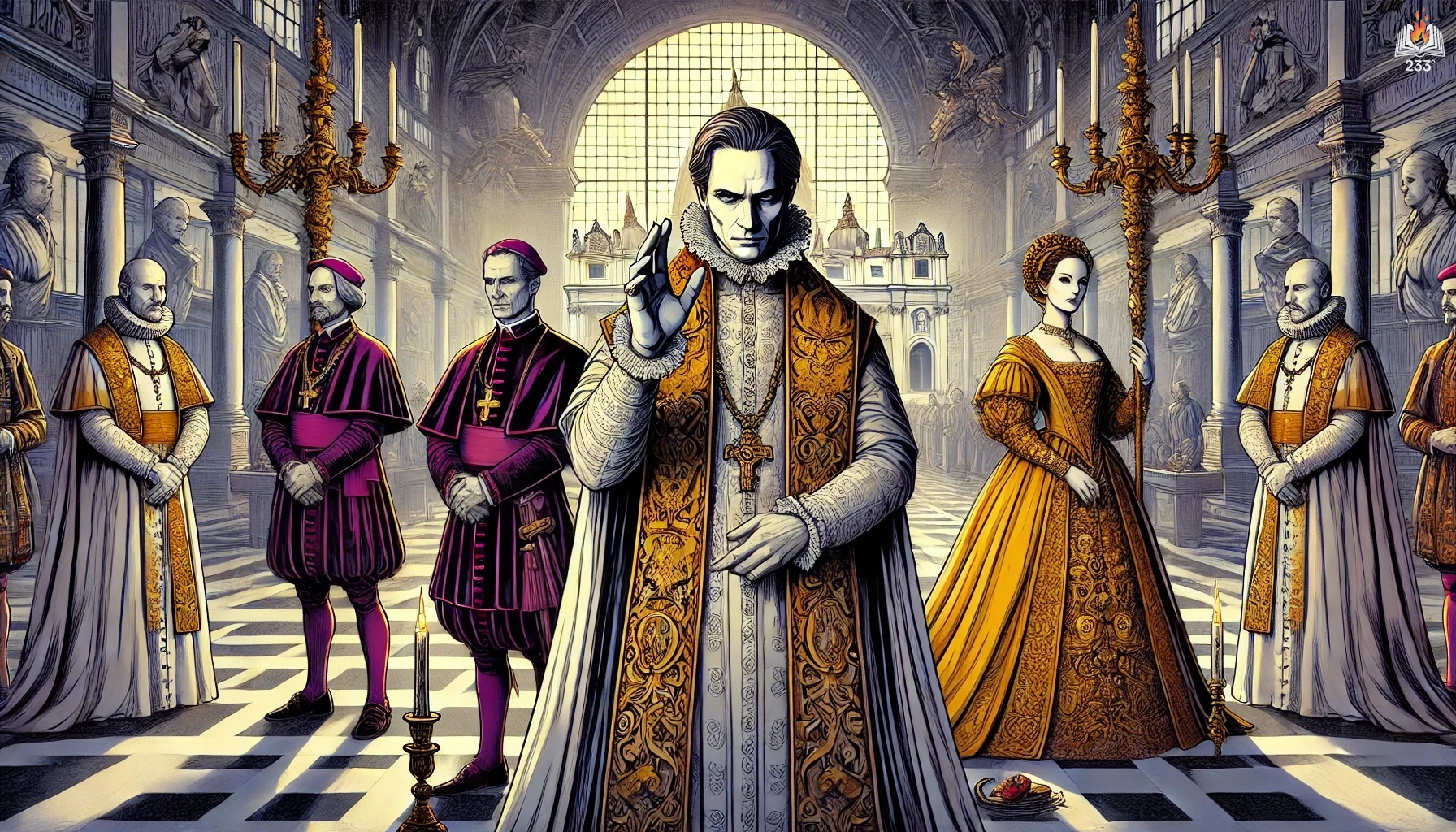
The Village of Stepanchikovo and Its Inhabitants, written by Fyodor Dostoevsky and first published in 1859, is a transitional work that bridges his early satirical narratives and the psychological depth of his later masterpieces. Set in the rural Russian estate of Stepanchikovo, the novel unfolds as a dark comedy of manners, power dynamics, and human folly, centering on a bizarre struggle for control in a provincial household. Though it has often been overshadowed by Dostoevsky’s major novels, this standalone work is an incisive and absurdly humorous exploration of egotism, manipulation, and moral weakness.
Plot Summary
In the countryside estate of Stepanchikovo, a gentle and well-meaning colonel named Yegor Ilyich Rostanev finds his peaceful world overrun by chaos. Having retired from military service, he embraces a life of simplicity and kindness, surrounded by his children, his deceased wife’s memory, and a desire to maintain harmony at all costs. Yet, this desire becomes the very thing that leads to his undoing.
It all begins when the household welcomes a peculiar new figure – Foma Fomich Opiskin, a former dependant in the service of Yegor’s stepfather, the late General Krakhotkin. Once a ridiculous fool and spiritual lackey, Foma has, through mysterious means, become a moral oracle and self-declared sage. The General’s widow, Yegor’s vain and melodramatic mother, idolizes Foma and allows him to rise as the spiritual tyrant of the estate. His influence spreads like mildew through the manor, infecting all with a mixture of false piety, pedantic moralizing, and theatrical acts of righteousness.
Yegor, who is far too soft-hearted for the world he inhabits, surrenders willingly to this impostor’s tyranny. Every insult, every demand, every unreasonable decree is accepted without protest. Foma berates the colonel for imagined slights, accuses him of moral failings, and insists upon his own spiritual superiority. The colonel, convinced of his own inadequacy and eager to prove his devotion, grows increasingly submissive. Even the act of shaving off his beloved side-whiskers is done in obedience to Foma’s patriotic fervor.
Foma’s reach is not confined to the colonel. He dominates the household entirely. The General’s Lady weeps on command and swoons on sofas to draw sympathy, guided by Foma’s manipulation. Her entourage – from the embittered spinster Miss Perepelitsyna to the self-righteous hanger-ons – support the self-proclaimed sage with unthinking loyalty. Within the estate, rational thought has little room. Declarations of love, the calendar itself, even the education of servants become part of Foma’s designs for a utopia that exists only in his mind and at the expense of everyone else’s dignity.
Into this fray arrives Sergey, the colonel’s nephew, summoned under vague pretenses. He comes expecting a tranquil estate and perhaps the promise of a romantic future with Nastenka, a humble and intelligent young governess raised by the colonel. But what he finds instead is a world teetering on the edge of lunacy. Nastenka, far from the center of attention, is persecuted by the household due to suspicions that the colonel may be harboring affections for her. She is scorned and degraded, seen as an obstacle to a more ambitious marriage being orchestrated by Foma and the General’s Lady.
The plan is to marry the colonel to a wealthy and eccentric spinster, Tatyana Ivanovna, who has half a million rubles and a personality that hovers between childlike simplicity and manic outbursts. She is swept into Stepanchikovo under false pretenses, unaware that her presence is meant to serve Foma’s designs. The colonel, ever passive, expresses no love for her, but lacks the will to resist the plan. Meanwhile, Sergey begins to observe the absurdities piling around him, watching helplessly as logic is bent, and kindness becomes servitude.
The more Sergey learns, the clearer it becomes that the household is held hostage by Foma’s delusions and the colonel’s excessive humility. He sees the colonel apologizing for crimes he did not commit, begging forgiveness for acts of imagined cruelty, and tolerating abuse in the name of peace. Nastenka suffers in silence, bearing the indignities with grace, while those around her grow more blind to her worth.
Yet despite the darkness, glimpses of truth begin to flicker. Sashenka, the colonel’s daughter, sees through Foma’s charade and remains fiercely loyal to Nastenka. Even Bakhcheyev, a loud and blustery neighbor with little patience for pretense, becomes an unlikely voice of reason. His disdain for Foma’s pompous rhetoric and moral sermons reflects the mounting frustration of all who are not yet fully ensnared.
As tensions rise, Foma escalates his control. He stages emotional spectacles, delivers philosophical rants, and claims divine inspiration. His vanity becomes more grotesque, his hypocrisy more glaring. The colonel becomes ever more pitiable, caught between duty, affection, and an almost sacred fear of conflict.
But the threads begin to unravel. Tatyana Ivanovna, despite her silliness, has moments of lucidity. Sergey, moved by compassion and indignation, grows bolder in confronting the madness around him. The lies cannot sustain themselves forever. Foma, once revered, begins to expose the limits of his own absurdity.
It is not through confrontation, but through weariness and accumulated farce, that Foma’s grip begins to loosen. The spell breaks not with rebellion but with the slow erosion of credibility. The colonel, recognizing the cost of his passivity, steps away from the path laid for him. He no longer entertains the marriage to Tatyana. He opens his heart, if not with grand declarations then with quiet decisions, choosing sincerity over spectacle.
Nastenka, long humiliated, is finally seen for who she is – not just a governess but the moral center of the household. Her love, tempered with silence and suffering, is reciprocated. Sergey, who once came with fantasies of romance and heroism, sees that true dignity lies in humility, not in performance.
Foma, in the end, is not overthrown but allowed to fade, no longer feared, no longer worshipped. His sermons grow tired, his audience thins, and without the fuel of unquestioning devotion, he becomes what he always was – a ridiculous man grasping at greatness. The estate breathes again. Not with triumph, not with revelry, but with the quiet return of reason, kindness, and love.
Main Characters
Colonel Yegor Ilyich Rostanev – A retired officer and the benevolent master of Stepanchikovo estate. Yegor is endlessly generous, naïve, and emotionally submissive, making him vulnerable to manipulation. His good nature and desire to avoid conflict render him a tragicomic figure, especially under the control of Foma Fomich.
Foma Fomich Opiskin – The tyrannical former sycophant turned household despot. A grotesque embodiment of egotism and sanctimonious manipulation, Foma cloaks his narcissism in moralistic lectures and false martyrdom. His rise from a humiliated dependent to the spiritual and ideological ruler of the estate reflects Dostoevsky’s parody of moral pretenders and self-declared visionaries.
The General’s Lady (Colonel’s Mother) – An arrogant and overbearing matriarch obsessed with social rank and appearances. Despite her absurdities and dependence on others, she blindly worships Foma and supports his rule over her son, contributing to the oppressive atmosphere in the house.
Praskovya Ilyinichna – The Colonel’s meek, unmarried sister, worn down by years of servitude and ridicule. Though unassuming, she plays a central role in the family drama and reflects the novel’s theme of unacknowledged suffering.
Sergey Aleksandrovich (Narrator) – The Colonel’s nephew and a recent university graduate. Invited to Stepanchikovo under mysterious circumstances, he enters as an outsider who gradually unravels the absurd domestic tyranny at play. His observations drive the narrative’s moral clarity.
Nastenka Yezhevikin – A gentle and intelligent young woman, raised by the Colonel and employed as his children’s governess. Though mistreated and humiliated, her quiet strength and dignity provide a moral counterbalance to the farcical cruelty of other characters.
Stepan Alekseyevich Bakhcheyev – A neighboring landowner, irascible and earthy, who detests Foma Fomich’s pompous moralism. His candid disdain for pretension provides comic relief and a blunt critique of the central conflict.
Theme
Tyranny of the Petty Despot: Foma Fomich embodies the absurdity and danger of unchecked power granted to a self-appointed moralist. Dostoevsky mocks how charisma, deceit, and faux spirituality can enslave others, especially the weak-willed or overly kind.
Moral Hypocrisy and False Virtue: The novel satirizes the contrast between outward piety and inward corruption. Foma’s preachings about virtue and morality mask a profound narcissism, exposing how moral language can be weaponized for personal dominance.
Naivety and Moral Weakness: The Colonel’s inability to assert himself, born of an excess of kindness and guilt, highlights the theme of passive complicity in evil. Dostoevsky suggests that virtue unaccompanied by discernment can enable cruelty.
The Absurdity of Social Pretension: The obsession with rank, etiquette, and appearances among the estate’s inhabitants is portrayed with biting irony. The novel underscores how class consciousness can blind individuals to true worth and reduce relationships to farce.
Redemption through Love and Sincerity: Amid the satire, Dostoevsky presents authentic affection—such as that between the Colonel and Nastenka, and the narrator’s compassion—as a redemptive force capable of piercing the fog of delusion and cruelty.
Writing Style and Tone
Dostoevsky employs a sharply satirical tone throughout the novel, blending comedic exaggeration with moral seriousness. His prose here is brisk, ironic, and vividly detailed, particularly in his characterization of the grotesque and the ridiculous. The narration is first-person, delivered by Sergey, who enters the story as a confused but increasingly aware observer, giving the reader both a personal and ironic lens through which to view the escalating absurdity of Stepanchikovo.
Dostoevsky’s style in this work is less digressive and philosophical than in his later masterpieces, focusing more on theatrical interactions and social farce. Yet even amid the humor, a deeper psychological realism emerges, particularly in his depiction of self-deception, emotional dependence, and the hunger for meaning and significance. The tone veers skillfully between absurdist comedy and moral indictment, creating a unique blend of laughter and discomfort that foreshadows the more profound ethical explorations of his mature novels.
We hope this summary has sparked your interest and would appreciate you following Celsius 233 on social media:
There’s a treasure trove of other fascinating book summaries waiting for you. Check out our collection of stories that inspire, thrill, and provoke thought, just like this one by checking out the Book Shelf or the Library
Remember, while our summaries capture the essence, they can never replace the full experience of reading the book. If this summary intrigued you, consider diving into the complete story – buy the book and immerse yourself in the author’s original work.
If you want to request a book summary, click here.
When Saurabh is not working/watching football/reading books/traveling, you can reach him via Twitter/X, LinkedIn, or Threads
Restart reading!