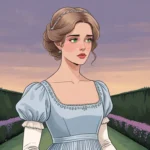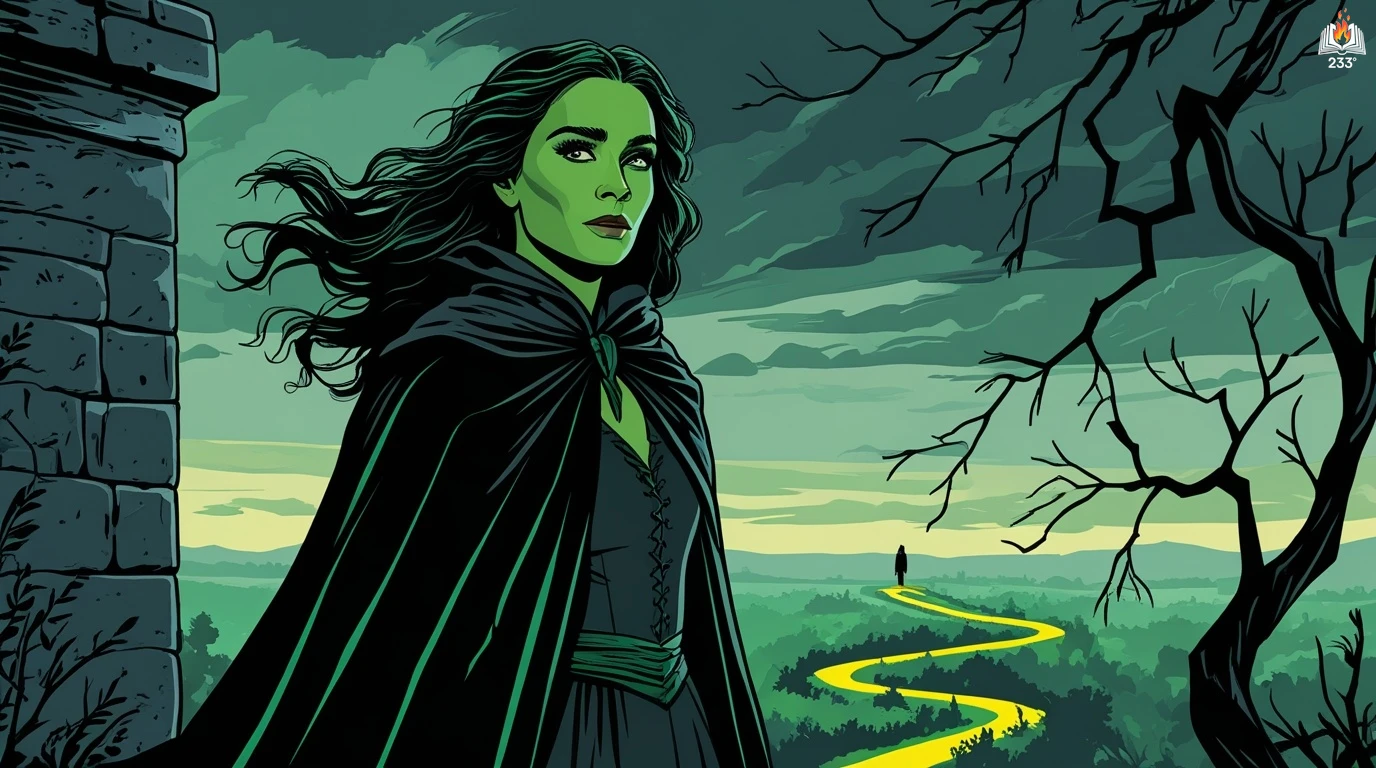
After Alice by Gregory Maguire, published in 2015, is a whimsical and cerebral reimagining of Lewis Carroll’s Alice’s Adventures in Wonderland. As part of Maguire’s trademark style of revisionist storytelling—best known from his Wicked series—this novel explores the world of Wonderland through the eyes of Ada, Alice’s ungainly and rigidly corseted friend, and Lydia, Alice’s older sister left behind in Victorian Oxford. As Alice tumbles down the rabbit hole, so too does Ada, initiating a dual narrative that examines both the fantastical depths of Wonderland and the moral rigidity of the Victorian world above.
Plot Summary
On a peculiar morning in Victorian Oxford, under skies as gray as logic and air thick with theology and reform, a girl named Ada Boyce steps out of the suffocating Vicarage of Saint Dunstan’s. Her spine imprisoned in iron and her mind constrained by decorum, she is dispatched to deliver marmalade to the Croft, home of her only friend, Alice. Ada is not known for imagination, only for obedience, and even that comes haltingly. Alice, as ever, has vanished.
Lydia Clowd, Alice’s older sister, reclines beneath the trees, feigning sleep and pondering Shakespearean comedies assigned by an absent-minded father and a distracted governess. The world outside Lydia’s head is one of curdled ambitions and genteel detachment – Oxford’s dreaming spires shrouded in stone dust and argument, Darwin visiting for tea, and mothers drunk before noon. Lydia, caught between childhood and the curated womanhood expected of her, lets Ada pass with neither malice nor sympathy.
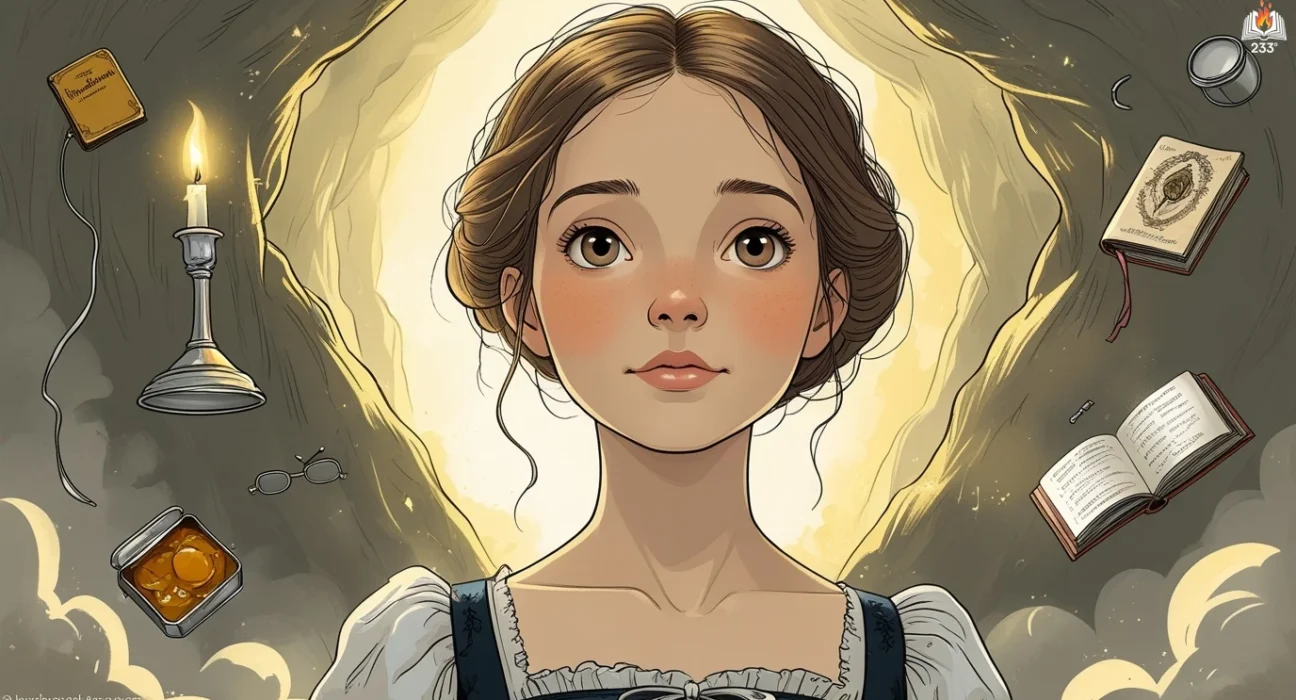
But Ada does not walk far before stumbling, quite literally, into the unknown. Beneath a twin-trunked tree, through a root-veined aperture in the earth, she is swallowed into a shaft of stone and soft light. Her corset bursts apart, her garments flutter loose, and Ada tumbles with the slow grace of someone too astonished to scream. As she descends through the air, she glimpses forgotten relics of her world – discarded books, a lost candle snuffer, and the disquieting volume of The Fairchild Family, its sanctimony and terror familiar. Somewhere in the fall, she sheds the last traces of Ada-the-child-bound and lands, not with a thud but a splash, into briny waters beneath a strange and pallid sky.
Clambering ashore, she encounters two familiar strangers – a Walrus and a Carpenter – their riddles nonsensical and somehow true. They speak in circles and contradictions, as if the air itself were drunk on metaphor. Ada, still soaking and uncertain, follows a beach where roses converse in voices as pointed as their thorns. The blooms bicker about beauty, sorrow, and purpose, revealing more than a schoolroom ever could. A door stands alone in the sand, declaring itself both KEEP OUT and OUT KEEP. Ada does not enter, but she keeps walking, reshaped by the whimsy and menace that trail her like shadows.
Meanwhile, in the world above, Lydia entertains and endures Miss Armstrong, Ada’s governess – a woman stiffened by loneliness and petty authority, mourning the Vicar’s inattention like a cathedral yearning for its congregation. The Vicarage boils with unrest – an infant boy wails, a mother absconds to her bottle, and the staff gnash over brandy and tinctures. Miss Armstrong frets over Ada’s disappearance, her worry tainted by guilt and something older, heavier, and unspoken. She has, perhaps, misplaced more than a child.
As Ada wanders deeper into Wonderland’s oddities, she passes through halls of absurdity – where logic is inverted, creatures speak in riddles, and time folds like linens in an armoire. The White Rabbit appears in brief flashes, clothed in waistcoats and hurry. She observes but does not follow. Unlike Alice, Ada is not chasing; she is simply walking, resisting nothing, a child who has nothing to return to.
She meets a centaur of uncertain philosophy and a museum of curiosities where children float in jars and ideas sleep in glass. Wonderland is no longer the unbridled imagination of a curious girl, but a mirror – cracked, refracted – of Victorian repression and longing. Ada, unburdened of her brace and decorum, begins to question everything she has been told. Authority, sin, propriety – all seem to wilt here like hothouse flowers.
In Oxford, Lydia grows restless beneath her composed exterior. The dream-like warmth of the day presses against her restraint. She speaks with Miss Armstrong, prods her about the Vicar’s affections, and peels away the thin veneer of propriety that binds them both. The conversation teeters between satire and sincerity, but neither woman falls. Lydia, too, is changing – not through Wonderland, but through awakening. The world above is its own sort of burrow.
Ada, in her slow and strange passage through Wonderland, does not find Alice. Instead, she finds suggestion after suggestion of her friend’s presence – a dropped ribbon, a memory caught mid-air. Wonderland itself seems to ripple from Alice’s wake, but Ada is not following. She is becoming. She learns to swim without instruction, to walk without pain. Her body is lighter, her questions heavier.
Eventually, she finds herself upon a ship with a captain who speaks in semantic riddles and whose compass points not to North, but to memory. There are brief encounters with beasts both talking and reticent, and places where dreams drift like pollen. Wonderland teaches by disorientation – a pedagogical tactic unfamiliar to governesses but deeply effective. In the odd logic of this world, Ada begins to understand that falling does not always lead to injury, and that stories – the kind that are not written in gilt-spined volumes but traced in breath and ink and fear – can offer more than sermons.
When Ada and Alice are finally reunited, it is without fanfare. They regard each other not as before – one timid, one fearless – but as travelers returning from different lands. They are quieter now, bound not by friendship but by recognition. Wonderland has not changed them into different people. It has simply uncovered what was already there.
Their return is less a leap and more a settling. Ada comes back not with triumph but with clarity. The corset, the marmalade, the iron rules of Oxford – they remain. But so does the sense of something larger, something that cannot be undone by scissors or scolding. The world above is unchanged, but Ada is not.
Back in Oxford, Lydia looks up from her book. The sun has shifted slightly. She does not know where her sister has gone, nor Ada. She suspects it does not matter. Some departures are not meant to be tracked. Some arrivals do not require applause. Lydia stands, stretches, and walks toward the house, her steps more deliberate than before.
The sky above Oxford remains politely gray, the spires fixed and dreaming. But underfoot, the soil remembers the fall, the burrow, the turn. And though no one speaks of it aloud, something has shifted – in the air, in the girls, in the silence that lingers just behind every proper word.
Main Characters
Ada Boyce – A physically constrained and emotionally repressed young girl, Ada is sent to deliver marmalade and momentarily escapes her stifling household, only to fall into Wonderland. Her arc is defined by gradual transformation as she sheds literal and metaphorical bindings, discovering autonomy, imagination, and self-worth. Her perspective is grounded in logic and limitation, but Wonderland challenges her view of reality.
Lydia Clowd – Alice’s teenage sister, Lydia remains in the real world, wrestling with societal expectations and repressed desires. In her passive musings and ironic observations, she represents the Victorian intellect, aware of the dissonance between appearance and reality, especially for women of her class and age. Lydia’s reflections offer a somber, existential contrast to Wonderland’s whimsy.
Miss Armstrong – Ada’s governess, deeply embittered and emotionally repressed, she symbolizes the crushing force of Victorian propriety and suppressed desires. Though comical in her rigidity, her inner turmoil is revealed in subtle and tragic ways, making her both antagonist and victim.
Alice Clowd – While Alice herself is largely off-stage in this retelling, she is the gravitational center around which others revolve. Seen through others’ eyes, she remains the impulsive, curious girl from Carroll’s original tale, now recontextualized as a symbol of imagination and rebellion.
The Walrus and the Carpenter – Characters borrowed from Carroll’s poem, they serve as absurd, riddling interlocutors who nudge Ada toward greater curiosity and self-awareness, emphasizing the blurred line between nonsense and insight.
Theme
Imprisonment and Liberation: Ada’s iron corset is both a literal medical apparatus and a potent metaphor for the social and physical constraints imposed on young girls in Victorian England. Her journey downward—first into the earth and then into herself—is one of bodily and mental emancipation. Liberation is echoed in the loosening of logic and the dissolving of hierarchies in Wonderland.
Victorian Social Critique: Through Lydia’s observations and Miss Armstrong’s struggles, the novel critiques rigid class structures, gender roles, and religious morality. Oxford is presented as a place of latent upheaval—where Darwin visits and spirituality fractures—mirroring the chaos and flexibility of Wonderland below.
Wonderland as Subconscious: Unlike Carroll’s original playful depiction, Maguire’s Wonderland is tinged with adult melancholy and philosophical inquiry. It becomes a psychological landscape where inner conflicts play out in symbolic form. For Ada especially, Wonderland serves as an unconscious mirror of her own neglected agency and emerging identity.
Story Within Story (Nested Narratives): Drawing inspiration from A Midsummer Night’s Dream and Carroll’s nested storytelling, the novel is a story about stories—exploring how narratives shape identity, escape, and understanding. Lydia’s readings and daydreams form an intricate parallel to Ada’s literal journey.
Grief, Mortality, and Growing Up: There is a dark undercurrent of death and decay—most notably in Ada’s morbid fascination with Dante’s Inferno and Victorian death culture. Wonderland here is not only a place of fantasy but a reflection on growing up, and what must be left behind.
Writing Style and Tone
Gregory Maguire’s prose in After Alice is ornate, densely allusive, and rich with irony. He writes in a Victorian pastiche, deliberately mimicking the cadence and lexicon of 19th-century literature while imbuing it with postmodern reflection. His syntax is baroque—at times playful, at others ponderous—with long, curling sentences that reflect the novel’s themes of entrapment and expansion. Wordplay, philosophical musing, and narrative asides are frequent, often interrupting the forward motion to probe deeper truths or to revel in absurdity. This stylistic approach mirrors Wonderland itself—where structure is constantly being undermined by whimsy.
The tone fluctuates between satirical and somber. While the absurd dialogues and characters from Wonderland inject humor, they are often tinged with sadness or existential curiosity. The world above, anchored by Lydia’s cynicism and Miss Armstrong’s repression, is far more emotionally restrained, marked by cold propriety and internal longing. The interplay of tones—sardonic, whimsical, mournful—creates a layered narrative that feels both fantastical and deeply human.
Quotes
After Alice – Gregory Maguire (2015) Quotes
“In order to remember who you are, you have to have known it in the first place.”
“The world pauses for royalty and deformity alike, and sometimes one can’t tell the difference.”
“Sooner or later we grow into deserving our own deaths, somehow.”
“History is a long time in the making.”
“As for dreams, they are powered by urgent desire, even if that desire is only to escape the quotidian.”
“She found her regard for Mr. Winter turning to something like suspicion—though notice how often we lower suspicion upon others to avoid putting ourselves under scrutiny. Now”
“Winter still comes after autumn though you may have died over the summer.”
“Marmalade has to make its own way in life, like the rest of us, she thought.”
“It’s my belief that our lives are stolen from us. Ornamented with pinnate leaves and colored frills, we exist only as a consolation for others. I don’t feel fulfilled. Indeed, some days I scarcely feel at all.”
“You lost your copper as well as your faith in wishes, and prayers.”
“Some realities are too onerous to be borne by nations, let alone by children.”
“There is a limit to the nonsense even a dream can attempt.”
“All of life hinges on what one does next, until finally one makes the wrong choice.”
“After all is said and done,” said the Dormouse, “there is nothing to be done. Or said.”
“Our private lives are like a colony of worlds expanding, contracting, breathing universal air into separate knowledges. Or like several packs of cards shuffled together by an expert anonymous hand, and dealt out in a random, amused or even hostile way.”
“You know our Alice. She plays hide-and-seek but sometimes forgets to ask someone to look for her.”
“Don’t take the advice of anyone you meet here. We’re all mad.”
“Night is brushed aside like so much cobweb. The day is wound up and begins even before the last haunted dreams, the last of the fog, those spectral and evanescent residues, have faded away.”
“We all have our shortcomings, it seems, though some are less visible than others.”
“So Oxford, at its inception a huddle of theologicians and divines, grew into a city of dreams, and much good may come of that. Little surprise that Middle-earth and Narnia were both discovered here.”
“Those who are roped into bed at night often fall into delusions of flight.”
“Only, sometimes, in the text of a book here and there, we tap the page with a finger and say, “This is what my lost days were like. Something like this.”
“He spoke in one of the American accents; Lydia couldn’t distinguish among them. To her they all sounded dry and tinny. Almost quack-like.”
“The master is bringing Darwin through to examine lower life-forms, Rhoda. Straighten your spine or you’ll be mistook for a mollusk.”
“Lot of talky-talk in there, they had to open the windows to let the words out,”
“The day is wound up and begins even before the last haunted dreams, the last of the fog, those spectral and evanescent residues, have faded away.”
We hope this summary has sparked your interest and would appreciate you following Celsius 233 on social media:
There’s a treasure trove of other fascinating book summaries waiting for you. Check out our collection of stories that inspire, thrill, and provoke thought, just like this one by checking out the Book Shelf or the Library
Remember, while our summaries capture the essence, they can never replace the full experience of reading the book. If this summary intrigued you, consider diving into the complete story – buy the book and immerse yourself in the author’s original work.
If you want to request a book summary, click here.
When Saurabh is not working/watching football/reading books/traveling, you can reach him via Twitter/X, LinkedIn, or Threads
Restart reading!