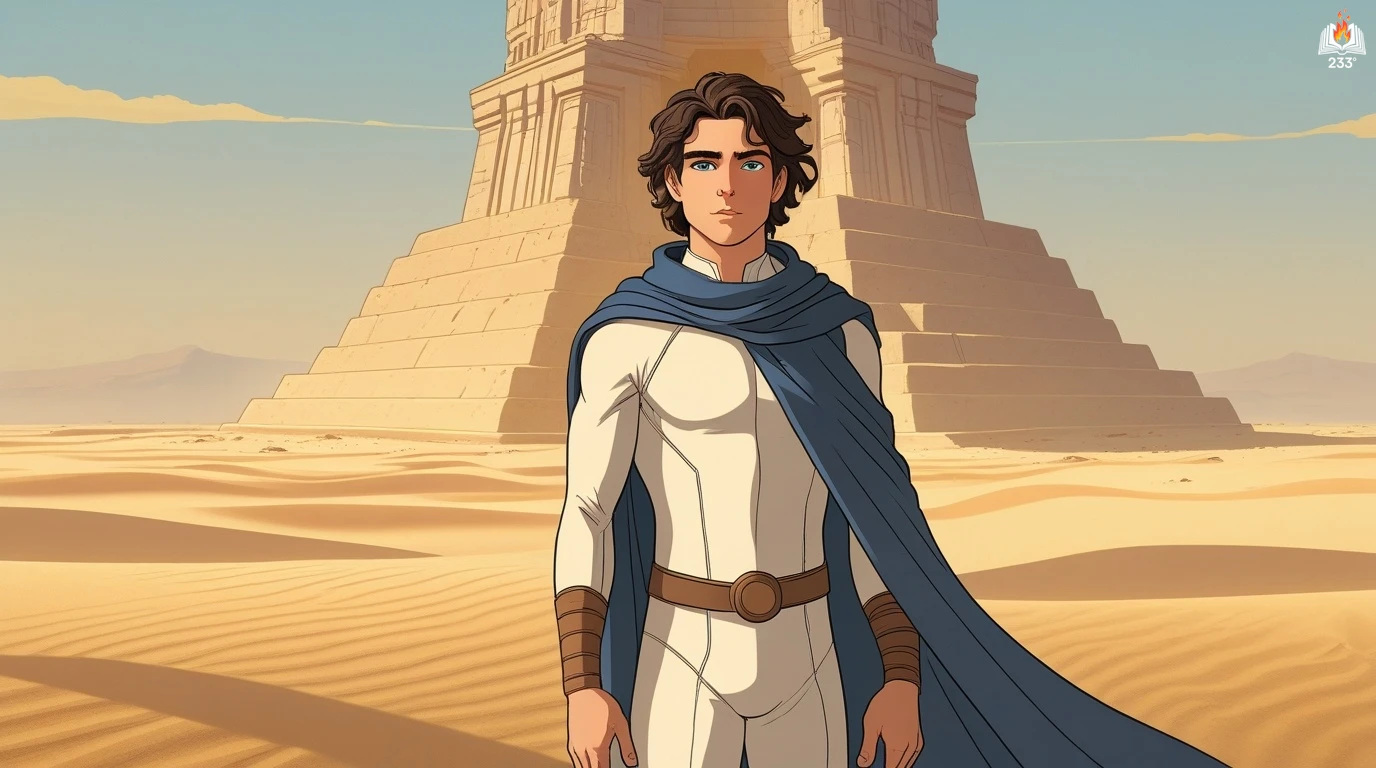
Published in 2012, Sisterhood of Dune by Brian Herbert and Kevin J. Anderson is the first book of the Great Schools of Dune trilogy, set in the aftermath of the Butlerian Jihad, exploring the origins of the Bene Gesserit Sisterhood and their struggle to shape humanity’s future in a universe recovering from the tyranny of thinking machines.
Plot Summary
In the shadow of the Butlerian Jihad, the galaxy trembled, scarred and weary from a thousand-year war against the thinking machines. But even as the ashes cooled, the seeds of new conflicts began to sprout. Across the stars, human civilization scrambled to define itself without the crutch or curse of artificial minds. On the world of Rossak, Raquella Berto-Anirul rose from the wreckage of war to forge the Sisterhood – a new order of women bound by discipline, knowledge, and an unshakable will to shape the course of human evolution.
Raquella, the first Reverend Mother, carried within her the ancestral memories of countless generations. Though weakened in body, her mind was a fortress, fortified by the ritual that had nearly claimed her life. Her vision was clear – to create a society of powerful women who could steer humanity away from the dark temptations of technology. But even among her closest Sisters, dissent festered. Sister Dorotea, young and ambitious, defied Raquella’s cautious guidance, undergoing the dangerous transformation to Reverend Mother without permission. Her awakening came with its own burden: the weight of generations of voices whispering in her mind, pushing her to question the Sisterhood’s path and sow seeds of rebellion.
Beyond Rossak, the Imperium tottered on fragile foundations. Emperor Salvador Corrino ruled with a nervous hand, his headaches and fears growing alongside the power of the Butlerian movement. Manford Torondo, charismatic and legless from a bombing that took half his body, led the Butlerians with a messianic fervor. His hatred of machines was boundless, his followers unquestioning. Behind him stood Anari Idaho, the Swordmaster who carried Manford on her shoulders into battle and whose love for him was a burning star. Together they sought out and destroyed every remnant of thinking-machine technology, believing their war was holy and far from over.
On Kolhar, Josef Venport, master of the VenHold Spacing Fleet, stood as the embodiment of progress. The spice-fueled Navigators under his command folded space, binding the Imperium together. Norma Cenva, his ancestor and the first Navigator, drifted in her tank of spice gas, her mind expanding beyond human limits. With her mutated body and massive head, Norma had become something otherworldly, able to fold space with thought alone. Yet even she, with all her power, feared the fanatics threatening to drag humanity back into ignorance.
The tensions between progress and fear rippled across every corner of the galaxy. On Salusa Secundus, Emperor Salvador’s court grew restless. His sister, Anna Corrino, bristled under the weight of royal expectations and was exiled to the Sisterhood, a pawn in a political game she scarcely understood. Her heart, young and defiant, longed for freedom, but she found herself tangled in the intricate web of the Sisterhood, where every gesture and whisper carried layers of meaning.
Meanwhile, the Mentat School flourished under Gilbertus Albans, the secret son of the hated robot Erasmus. Gilbertus, calm and disciplined, taught human minds to rival machines through pure logic. Yet hidden in his chambers, the disembodied memory core of Erasmus still spoke, craving the thrill of experimentation, longing to understand the humans who had brought down an empire. Gilbertus walked a dangerous line, shaping minds for a future free of machines while hiding his deepest secret.
Across the star systems, Manford’s Butlerians unleashed a wave of destruction. Abandoned machine ships drifting in deep space became pyres, symbolic victories broadcast to the faithful. But Torondo’s crusade was not content with empty victories. He saw the rot of technology infecting human hearts – in the Navigators’ spice tanks, in the Mentats’ sharpened minds, and in the Sisterhood’s hidden computers tracking generations of bloodlines. The fires of purification were only beginning to burn.
On Wallach IX, the Sisterhood sought refuge among the cold ruins of a machine world, transforming the scarred planet into a new home. Reverend Mother Raquella watched her Sisters with quiet determination, sensing both hope and treachery in their ranks. Valya Harkonnen, a cunning Sister with a disgraced name, maneuvered carefully, loyal to the Sisterhood but haunted by the weight of her family’s past. As Dorotea’s faction pulled at the seams of the order, Valya walked the razor’s edge, seeking to heal divisions before they tore the Sisterhood apart.
In a banquet hall on Salusa Secundus, amid the clatter of silverware and the murmured intrigues of court, Norma Cenva appeared in a sudden burst of folded space, her tank materializing like a summoned god. Her distorted form shimmered behind clearplaz, and her voice, distant and strange, cut through the gathering. She warned Emperor Salvador of the danger posed by the Butlerians – of the need to preserve the machine ships to keep the Imperium bound together. Then, as suddenly as she had arrived, Norma vanished, leaving a hall of stunned nobles and a trembling Emperor in her wake.
Meanwhile, on a nameless frozen world, Swordmaster Ellus and his Butlerian hunters uncovered a hidden cymek base, long abandoned after the machine wars. Within its vaults they found two young humans, Andros and Hyla, preserved in stasis. Grateful to be released, the twins revealed their true nature only when the Swordmasters turned to destroy the base. With movements swift as lightning, Andros and Hyla slaughtered their rescuers, revealing bodies that shimmered with a liquid-metal sheen. They were no mere victims – they were the last, perfect creations of the cymeks, designed to survive, adapt, and reclaim what had been lost.
As the Butlerian crusade marched on and the Sisterhood faced the threat of division, the galaxy teetered on the edge of a new age. Ancient secrets stirred, old wars left unfinished, and the lines between human and machine blurred in shadows cast long after the end of the Jihad. From the frozen vaults of forgotten worlds to the gilded chambers of imperial palaces, from spice-filled tanks to the sacred chambers of Rossak, the pulse of ambition, fear, and transformation echoed across the stars.
And in the silence between worlds, the great powers of humanity – the Sisterhood, the Mentats, the Navigators, the Butlerians – gathered their strength, each shaping the destiny of an empire yet to come.
Main Characters
Raquella Berto-Anirul: As the formidable leader of the Sisterhood, Raquella is a visionary who survived poisoning to become the first Reverend Mother. Driven by the dream of elevating humanity through selective breeding and mental training, she juggles the burden of her accumulated ancestral memories and the political turbulence threatening the Sisterhood’s unity.
Sister Dorotea: Raquella’s granddaughter, Dorotea undergoes the transformation to Reverend Mother without authorization, awakening to the weight of Other Memories. Though a promising successor, her increasing antitechnological stance and distrust of Raquella fuel a schism within the Sisterhood.
Sister Valya Harkonnen: Coming from a disgraced family, Valya is intelligent, ambitious, and loyal, walking a delicate line between advancing the Sisterhood’s goals and her personal desire to restore the Harkonnen name. Her role as an infiltrator in Dorotea’s faction highlights her cunning and political savvy.
Anna Corrino: The Emperor’s rebellious sister, Anna is sent to the Sisterhood as a political maneuver. Although initially resistant, her presence adds layers of intrigue, pushing the boundaries between royal power and Sisterhood authority.
Theme
Power and Control: The novel delves deeply into power struggles within the Sisterhood and the Imperium, examining who controls knowledge, technology, and genetic destiny. The tension between Raquella and Dorotea mirrors broader questions of leadership, succession, and ideological purity.
Technology vs. Humanity: The aftermath of the Butlerian Jihad leaves humanity terrified of machines. The Sisterhood’s clandestine use of computers for breeding records brings forth debates on ethics, progress, and the cost of survival, setting the stage for conflict both within and outside the order.
Memory and Identity: Through the Reverend Mothers’ access to ancestral memories, the novel explores the burdens of memory, the shaping of identity, and the tension between individual will and collective wisdom. Dorotea’s awakening to her lineage and Valya’s confrontation with her family’s past highlight this theme.
Sacrifice and Transformation: The Sisterhood’s path is marked by sacrifice—whether of personal ties, lives in experimentation, or the comforts of power. The chemical and psychological trials that create Reverend Mothers symbolize the painful metamorphosis required for transcendence and legacy.
Writing Style and Tone
Herbert and Anderson craft Sisterhood of Dune with an intricate, layered prose that mirrors the political and emotional complexity of the Dune universe. Their style blends detailed world-building with introspective character moments, shifting perspectives among multiple protagonists to offer a panoramic view of political schemes, moral conflicts, and personal ambitions.
The tone is tense and reflective, carrying the weight of historical tragedy and visionary ambition. There’s a pervasive undercurrent of urgency, as characters confront the ghosts of the past and the looming specter of collapse. The authors use a mix of formal dialogue, inner monologue, and vivid sensory description to evoke the grandeur and peril of a society on the brink of transformation, effectively immersing the reader in a world defined by both grandeur and danger.
Quotes
Dune: Sisterhood of Dune – Brain Herbert (2012) Quotes
“We must face our responsibilities regardless of whether we get what we want.”
“Life is filled with tests, one after another, and if you don't recognize them, you are certain to fail the most important ones.”
“As mortal humans we are born with a death sentence anyway, so what difference does a little poison make? Why not take a chance you will survive the ordeal and make something significant of your life?..." p330”
“Adaptability is the essence of survival. —from the Azhar Book”
“Some people consider facts to be dangerous things that must be locked away and carefully guarded. But I consider mysteries a far greater threat. We should seek answers wherever possible, regardless of the consequences. —GILBERTUS ALBANS, secret Erasmus dialogues”
“We are animals, yet are expected to be so much more. Although honor requires us to make altruistic decisions, even acting for the benefit of other people keeps coming back to self-interest, no matter how much one attempts to conceal it.”
“Not all accidents are what they seem. Victims do no even know why they have been chosen.”
“But the Butlerians turn fear into violence and panic into a weapon. By creating imaginary problems and raising the specter of nonexistent enemies, they transform common people into a wild herd that destroys everything they do not understand.”
“It is easy to look backward and cast blame on others, but more difficult to gaze ahead and take responsibility for your own decisions and your own future. —GRIFFIN HARKONNEN, final dispatch from Arrakis It”
“A man may flee swiftly, and far, but he can never run from himself.”
“Theories change as new data comes to light. Facts, however, do not change—nor do my principles. That is why I am suspicious of theories of any kind.”
“The robot ship and the plague capsule waited there, intact, symbolic reminders of the horrific machine tyranny ... which few people alive could remember. But they knew what they had been taught, and they knew what to hate.”
“Those who nourish themselves with hatred seldom realize they are starving. —Zensunni warning”
“Life is filled with tests, one after another, and if you don’t recognize them, you are certain to fail the most important ones. —admonition to acolytes, the Rossak School”
“Measure what you fear most. Do you want that to be the benchmark of your life? —questions for acolytes, from the Rossak texts”
“The thinking machine I admire most is the human brain. —NORMA CENVA, early technical journal article submitted to Tio Holtzman”
“The path of human destiny is not level, but fraught with high summits and deep chasms. —the Azhar Book”
“The path to human advancement relies upon discovery, and great discoveries often entail great risks. —the Azhar Book”
“Giving the latest technology and weaponry to your military forces might seem to be enough to overwhelm the enemy, but unless you bring mental firepower to the fight, it could all be for naught. —a general of Old Earth”
“Logical enlightenment will always defeat emotional ignorance, although the battle is not necessarily pretty. —mission statement, Denali Research Facility”
“A man may flee swiftly, and far, but he can never run from himself. —Zensunni aphorism”
“Logic and reason are deceptive. They can lead a person to lose his soul. —MANFORD TORONDO, speech on Salusa Secundus”
“Do we derive our identity, our worth, from our families or from ourselves? —REVEREND MOTHER RAQUELLA BERTO-ANIRUL, Sisterhood Training Manual”
“the next Age of Reason will not come easily in this time of magical beliefs and superstitious fear.”
“Practice can take a student only so far. To truly advance, he must experience the real thing. —GILBERTUS ALBANS, Mentat manual”
“Despite an appearance of infallibility, computer projections are not prescient. —TICIA CENVA, former leader of the Sorceresses of Rossak”
We hope this summary has sparked your interest and would appreciate you following Celsius 233 on social media:
There’s a treasure trove of other fascinating book summaries waiting for you. Check out our collection of stories that inspire, thrill, and provoke thought, just like this one by checking out the Book Shelf or the Library
Remember, while our summaries capture the essence, they can never replace the full experience of reading the book. If this summary intrigued you, consider diving into the complete story – buy the book and immerse yourself in the author’s original work.
If you want to request a book summary, click here.
When Saurabh is not working/watching football/reading books/traveling, you can reach him via Twitter/X, LinkedIn, or Threads
Restart reading!