The Lazarus Effect (1983), co-authored by Frank Herbert and Bill Ransom, is the third installment in the Pandora Sequence series, following The Jesus Incident. Set on the water-covered planet Pandora, the novel explores a world where genetically altered humans and sentient kelp struggle to coexist after ecological catastrophe, weaving a complex narrative of survival, politics, and the rebirth of consciousness.
Plot Summary
The twin suns of Pandora cast their relentless light over a world of endless sea, where only the floating Islands and the depths below offer refuge to a fragile humanity. The surface is ruled by the Islanders, drifting communities living on organic rafts, while beneath, the Mermen shape a submerged civilization, determined to tame the chaotic sea. The memory of the sentient kelp, Avata, still haunts the planet – a living intelligence once spread across the oceans, now reduced to inert green beds, awaiting rebirth.
Amid this uneasy balance floats Duque, a mutant child with a twisted body but an extraordinary gift. His existence is tied to Vata, the massive, half-human, half-kelp being who lies submerged in the heart of Vashon, the largest of the Islands. Vata slumbers, her mind touching the edges of awareness, whispering through the thoughts of Duque, her satellite and voice. To the people of Pandora, they are more than flesh and bone – they are relics, vessels of Ship, the absent god who brought humanity to this world and left them to wrestle with their sins.
Duque’s days are marked by flashes of terror and wonder. On the night of catastrophe, as the last rocky islands collapsed beneath the sea, Duque was saved from death by Ellie, the neighbor woman, who carried him through fire and chaos. But Ellie perished, and Duque was taken to safety, cradled in the arms of strangers and bound forever to Vata, their minds fused through shared kelp genes. Through Vata, Duque becomes a repository of memory – the past of Pandora, the vanished kelp, the promise of something more.
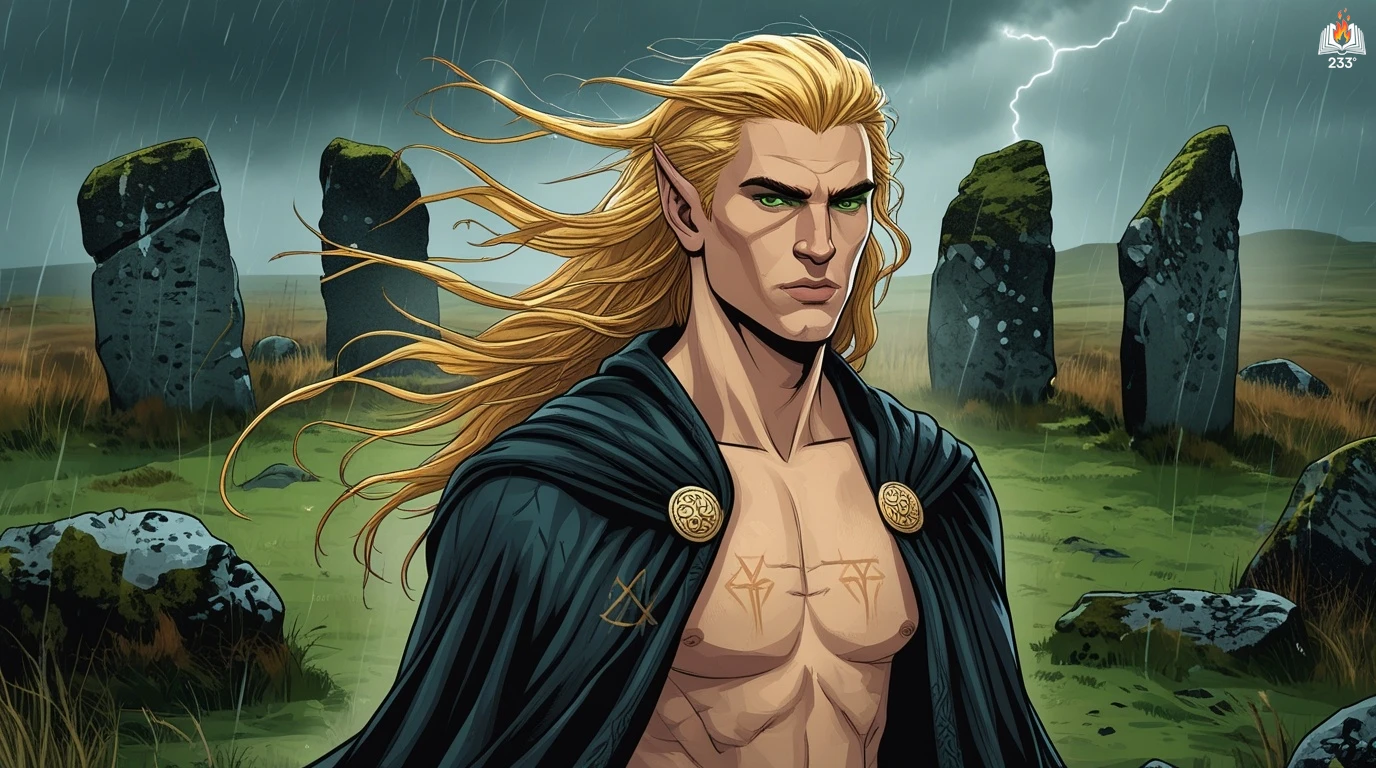
In the depths, the Mermen plot. GeLaar Gallow, a striking figure with golden hair and ambition to match, navigates the politics of the undersea world. Alongside Kareen Ale, a diplomat and doctor with her own tangled loyalties, Gallow oversees missions to the surface, where the Islanders drift in crowded, precarious peace. The Mermen’s goal is nothing less than the resurrection of the kelp, to stabilize the sea and reclaim lost lands. Yet power and control shimmer behind every move, and even the Mermen’s charity comes wrapped in calculation.
On the surface, Queets Twisp, a fisherman with mutant-long arms, hauls his nets alongside Brett Norton, a restless adolescent searching for meaning in the shifting tides. Their small boat becomes the stage for a sudden confrontation with death, as they pull a tangled Merman from the sea, only to lose him to a pack of dashers – the lethal predators that roam the waves. Twisp’s weary pragmatism and Brett’s hungry defiance reveal the tension within the Islanders, torn between resignation and the need to assert control over their fate.
Within Vashon’s administrative chambers, Ward Keel, Chief Justice and chairman of the Committee on Vital Forms, wrestles with the terrible weight of his decisions. He determines which lives are worth preserving, which mutations will strengthen or doom the fragile human future. Every petition, every plea, is a glimpse into humanity’s gamble with survival. Keel’s judgments carry echoes of Ship’s own silence, the lingering question of whether humanity was meant to endure on Pandora at all.
Iz Bushka, an Islander historian, gazes longingly at the undersea world, yearning for access to the Merman archives and the mysteries of the Redoubt, the last remnant of a drowned continent. His encounter with Gallow and Ale opens a door to dangerous truths. The Mermen, it seems, have been launching sondes and rockets into the heavens, seeking to recover the orbiting hyb tanks left by Ship – tanks rumored to hold animals, plants, and even unaltered humans from long-lost Earth. For the Islanders, raised on faith and myth, the revelation threatens to shatter their most sacred beliefs.
The chaplain-psychiatrist, Simone Rocksack, presides over the spiritual life of the Islanders, guarding the delicate boundary between faith and despair. In her prayers to Ship, in her careful shepherding of the community’s hopes, she embodies the tension between old belief and the raw force of survival. The Islanders’ rituals, the blessing of the sonde launch, the reverence for Vata and Duque, all reveal a people clinging to meaning in the face of cosmic indifference.
The kelp itself stirs in secret. Though lifeless to most eyes, beneath the waves its tendrils twitch, its ancient memory kindled by scattered genes in human flesh. Vata’s presence, enormous and still, hums with the possibility of awakening. Through her, the kelp waits, observing the movements of those above and below, preparing for a moment when consciousness may rise again from the deep.
As Twisp and Brett return to Vashon, empty-handed but alive, the horizon flickers with the silhouette of the floating city. The Islanders’ survival is measured not in triumphs but in endurance, in the quiet recalibration of loss and hope. Meanwhile, in the Merman depths, Bushka is offered a chance to cross the threshold, to join the undersea society and confront the truths locked within the Redoubt’s archives. The prospect is both exhilarating and perilous, as it threatens to unravel the fabric of Islander belief.
The Committee on Vital Forms weighs the fate of new life, measuring deformity against usefulness, testing the boundaries of mercy. A petition from a desperate Merman and his blind mate lays bare the cruel arithmetic of survival, as Keel is forced to pass judgment on a life doomed by its own cellular construction. His decision reverberates through the chambers, a reminder that on Pandora, life itself is a contested resource.
Above all, the quiet heartbeat of the planet continues. Duque, curled beside Vata, dreams kelp dreams, his thoughts drifting through oceans of memory. The Islanders drift, the Mermen scheme, the kelp waits. Across the sea and under it, life persists in a thousand forms, some conscious, some only on the edge of awakening. And in the sky, the hyb tanks circle, silent, patient, holding the seeds of futures yet to be chosen.
In the end, Pandora is a world poised on the cusp of renewal or collapse. Its inhabitants cling to faith, ambition, memory, and love, their lives braided together in a vast, uncertain weave. Whether Ship will return, whether the kelp will rise to awareness, whether the fragments of humanity will mend or break – all remains balanced on the shifting currents of sea and soul.
Main Characters
Duque: A child-like mutant with a misshapen body but profound psychic connection to the kelp. Despite his physical vulnerability, Duque carries the burden of memory and awareness for both himself and Vata, becoming a symbol of connection between human and planetary consciousness.
Vata: A massive, partially human, partially kelp entity submerged in a nutrient pool at the heart of the Island. Though she rarely shows conscious thought, Vata’s presence is central – she embodies the past and potential future of Pandora, linking human survival to the planet’s rebirth.
Ward Keel: The Chief Justice and chairman of the Committee on Vital Forms, Keel wrestles with moral dilemmas as he judges which lifeforms are allowed to survive, reflecting the human cost of adaptation and the tension between ethics and survival.
Queets Twisp: A mutant fisherman with unusually long arms, Twisp balances pragmatism and loyalty, guiding younger characters like Brett while grappling with the dangers of the sea and the moral complications of survival.
Brett Norton: A sixteen-year-old Islander who struggles to prove himself in the harsh maritime world. His journey represents the coming of age and the quest for identity in a fractured society.
Iz Bushka: An Islander historian fascinated by Merman culture, Bushka’s curiosity about the past and desire for integration into the underwater Merman society makes him a bridge between divided cultures.
GeLaar Gallow: A powerful Merman figure, physically striking and politically shrewd, Gallow maneuvers for dominance, embodying the themes of control, ambition, and the perils of leadership.
Kareen Ale: A Merman diplomat and doctor, Ale balances beauty, intelligence, and political acumen, navigating the intersection of science, diplomacy, and power.
Theme
Survival and Adaptation: The novel is suffused with tension around survival — whether it’s genetic mutation, social restructuring, or ecological restoration. Pandora’s inhabitants constantly confront change, and survival often demands painful adaptation.
Human and Planetary Interdependence: The rekindling of the sentient kelp highlights the interconnectedness between human life and planetary health. The destruction and hoped-for resurrection of the kelp symbolize a fractured but essential symbiosis.
Religion and Faith: Faith in “Ship” (a godlike presence from the earlier novels) and the concept of “WorShip” shapes human behavior and decision-making, reflecting on how belief systems sustain or hinder societies in crisis.
Identity and Otherness: From the genetically engineered mutants to the social divisions between Islanders and Mermen, the novel probes what it means to be human and how difference both divides and enriches communities.
Memory and Collective Consciousness: The kelp’s potential rebirth into awareness recalls the lost era of planetary consciousness, raising questions about memory, history, and the possibility of transcendent unity.
Writing Style and Tone
Frank Herbert and Bill Ransom employ a dense, layered prose style, weaving philosophical reflection, vivid sensory detail, and socio-political commentary into the narrative. The style is both poetic and cerebral, inviting readers to reflect deeply on the implications of each scene, conversation, and inner monologue. The text moves fluidly between intimate character moments and sweeping world-building, creating a richly textured experience.
The tone oscillates between tension and wonder. It is often somber, reflecting the characters’ struggles with ecological disaster, moral complexity, and survival, yet it is punctuated with moments of beauty, transcendence, and cautious hope. There’s a pervasive atmosphere of uncertainty – the characters’ small victories are set against the immense, unknowable forces of nature and history. Through this, the novel delivers both a cautionary tale and a glimmer of optimism for renewal.
Quotes
The Lazarus Effect – Frank Herbert (1983) Quotes
“Survival is staying alive one breath at a time. p. 251”
“Life is not an option, it is a gift. Death is the option.”
We hope this summary has sparked your interest and would appreciate you following Celsius 233 on social media:
There’s a treasure trove of other fascinating book summaries waiting for you. Check out our collection of stories that inspire, thrill, and provoke thought, just like this one by checking out the Book Shelf or the Library
Remember, while our summaries capture the essence, they can never replace the full experience of reading the book. If this summary intrigued you, consider diving into the complete story – buy the book and immerse yourself in the author’s original work.
If you want to request a book summary, click here.
When Saurabh is not working/watching football/reading books/traveling, you can reach him via Twitter/X, LinkedIn, or Threads
Restart reading!