

The Mysterious Stranger by Mark Twain, written in 1898 and published posthumously in 1916, is a haunting philosophical narrative set in 16th-century Austria. Though left unfinished by Twain, the tale was completed by editors and presents a deeply introspective critique of religion, morality, and human nature. It follows a group of young boys who encounter a supernatural being named Satan, the nephew of the biblical figure, whose revelations upend their understanding of the world.
Plot Summary
In the quiet heart of Austria, tucked away in a sleepy village called Eseldorf, the days passed like gentle ripples on a still lake. The people clung to old beliefs, their lives unshaken by the advances of the outside world. Among the villagers were three boys – Theodor, Seppi, and Nikolaus – whose friendship was as natural and enduring as the winding river that curved around their home. They roamed the forests, explored the castle ruins, and lived in that sacred time before the weight of understanding dims the brightness of youth.
Then one day, high in the hills, they met a boy who seemed to appear from nowhere. He had eyes too knowing for his age and a manner too graceful for the world. He called himself Satan, and he said he was an angel. He performed wonders without effort – lighting pipes with a breath, conjuring fruits from the air, molding clay creatures that sprang to life, only to be destroyed with equal ease. He spoke gently, never raising his voice, always smiling, and yet, behind those calm words lay truths that chilled the boys’ hearts. For Satan was not burdened by human feeling. He did not pity or rejoice as mortals did. To him, suffering and death were trivial – nothing more than shadows on a wall.
They grew to love him, in spite of it. He was mesmerizing. He could spin the centuries like threads in his hand, speaking of distant planets and ancient empires with the ease of one recounting a walk to the market. The boys listened, spellbound, and with each visit, they saw the world they thought they knew bend and tremble under the weight of his revelations.
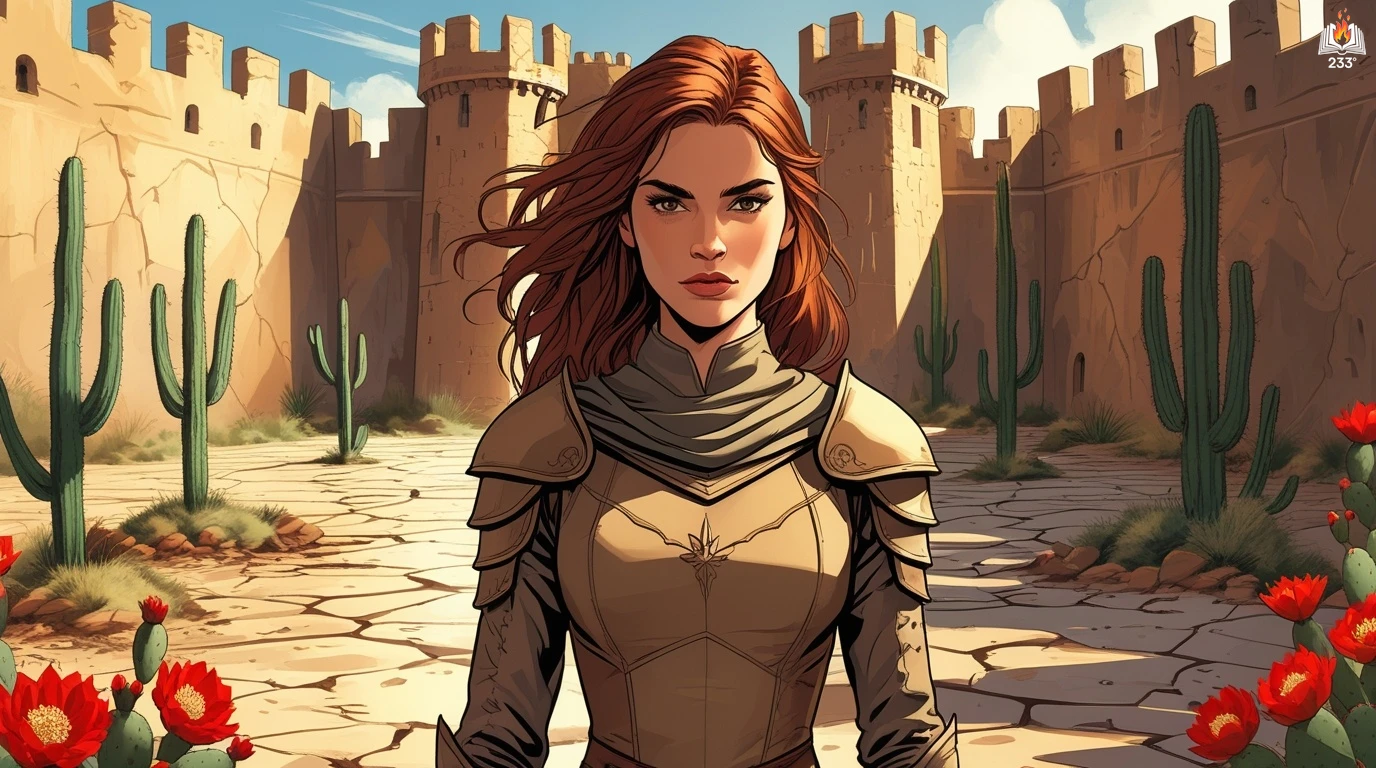
The village was changing too. Father Peter, a kind and humble priest, had fallen into disgrace, accused of spreading heretical kindness – the belief that all souls might find salvation. The bishop’s judgment was swift. Suspended from his duties, Father Peter and his niece Marget lived in growing poverty, shunned by former friends, forgotten by all but a faithful few. Marget, young and spirited, was worn thin by hardship but refused to let bitterness darken her heart. She worked tirelessly, teaching music, doing laundry, keeping her uncle warm through cold, faithless nights.
It was then that fortune, strange and inexplicable, came knocking. One morning, on the very edge of losing their home, Father Peter found a wallet full of gold coins on the path. Too much gold for coincidence. The boys were there and had seen it too. It seemed divine – or something like it. Father Peter paid his debts, and the villagers, ever eager to follow prosperity, returned with smiles and shallow praise. But whispers turned to suspicion when the astrologer – a man feared for his star-laced robe and mystic airs – claimed the money was his. He said it had been stolen, and Father Peter, desperate as he was, must have taken it. And because truth in Eseldorf was shaped by power more than proof, the kind priest was arrested and thrown into jail.
The boys knew the money had not been stolen. They knew it had come from Satan, though they could not say so. Try as they might, their lips would not release the truth. Satan had warned them – the secret would stay safe, locked inside their minds.
While Father Peter languished in his cell, Marget fell deeper into sorrow. Then Satan came to her, though she did not know him by that name. He was Philip Traum, a gentle boy studying for the ministry, eager to help. He gave her a paper that opened prison doors without question. He gave her food when there should have been none. And he gave her company, easing the loneliness that clung to her like a cold mist.
Ursula, the family’s loyal servant, also found herself touched by his presence. A starving kitten followed her home, and when Satan said the creature would bring her money, she found four silver groschen in her pocket the next morning. She wept and kissed his hand, not knowing if he was saint or devil, and not caring. He had made the impossible real. He had made hope feel close enough to touch.
But not all miracles are gentle. Satan’s nature was not bound by kindness. He killed without malice – clay people at play, toy soldiers, an entire miniature castle filled with laughing, working souls. He did it as a child might crush an ant hill, curious more than cruel. When the boys recoiled in horror, he explained. These beings were of no value. They had no purpose. Life itself was a flickering accident. Pain and joy, good and evil – they were illusions born of a flawed design.
Time passed, and the trial neared. Evidence was thin, but suspicion was heavy, and Wilhelm Meidling, the loyal young lawyer who loved Marget, feared the worst. The villagers’ gossip turned bitter again. The boys were mocked, accused of lying for coin. Their families shamed them. Still, they could not reveal what they knew. Even when they tried, their tongues betrayed them.
Satan returned in moments of stillness, bringing gifts, telling stories, showing them glimpses of heaven and hell as casually as a man gestures toward mountains on a map. The boys were torn between awe and revulsion, between love for this strange, beautiful being and fear of the void he opened in their minds. He showed them that angels feel no sorrow, that life is a dream, and that even they – Theodor, Seppi, Nikolaus – were nothing more than thoughts. There were no souls, he said. No real world. All was illusion, drifting in a mind’s sleep.
When Theodor begged for truth, Satan granted it. All these things – friends, family, love, pain – were figments. Only Theodor existed. Everything else was part of the dream. And one day, the dream would end, and there would be nothing.
The last words he heard were kind, almost tender. It is all a dream – a grotesque and foolish dream. Nothing exists but you. And you are but a thought – a vagrant thought, a useless thought, a homeless thought, wandering forlorn among the empty eternities.
There was silence after that. No wind, no voice, no footsteps in the grass. Only the lingering hush of a dream slipping away.
Main Characters
Theodor Fischer – The narrator and one of three close friends in the village of Eseldorf. Theodor is a curious, reflective boy whose worldview is gradually dismantled by the Stranger’s presence. His evolving perspective forms the emotional core of the narrative, as he grapples with existential revelations and moral disillusionment.
Satan (Philip Traum) – A serene, otherworldly being who identifies himself as Satan’s nephew. Appearing youthful and charming, he displays immense supernatural power and a cold detachment from human suffering. His philosophical musings, miraculous acts, and moral ambiguity drive the novel’s thematic exploration of free will, good and evil, and the nature of existence.
Seppi Wohlmeyer and Nikolaus Bauman – Theodor’s closest friends. Loyal and simple-minded compared to Theodor, they too fall under Satan’s enchanting spell, though their emotional responses differ. They serve as foils to highlight Theodor’s deeper moral and philosophical struggles.
Father Peter – A kind and benevolent village priest who is wrongly accused of theft. He represents true Christian virtue and spiritual sincerity, standing in stark contrast to the rigid, dogmatic figures of institutional religion.
Marget – Father Peter’s devoted niece. Intelligent, compassionate, and hardworking, Marget embodies grace under pressure. Her hardships and quiet suffering bring a human depth to the story, and her relationship with her uncle is one of the novel’s most emotionally poignant elements.
Theme
The Illusion of Free Will: Satan repeatedly asserts that humans lack true free will, functioning instead as puppets driven by habit, circumstance, and divine scripting. This theme challenges traditional notions of morality and accountability.
Moral Relativism and the Absurdity of Good and Evil: The novel confronts the artificiality of conventional morality. Satan’s actions – ranging from miraculous generosity to cold-blooded destruction – blur ethical lines and provoke discomfort about the foundations of justice and virtue.
Religious Hypocrisy and Institutional Corruption: Twain presents organized religion, particularly the Catholic Church, as a mechanism for control and superstition. Through characters like Father Adolf and the astrologer, he critiques how religious institutions manipulate fear and stifle truth.
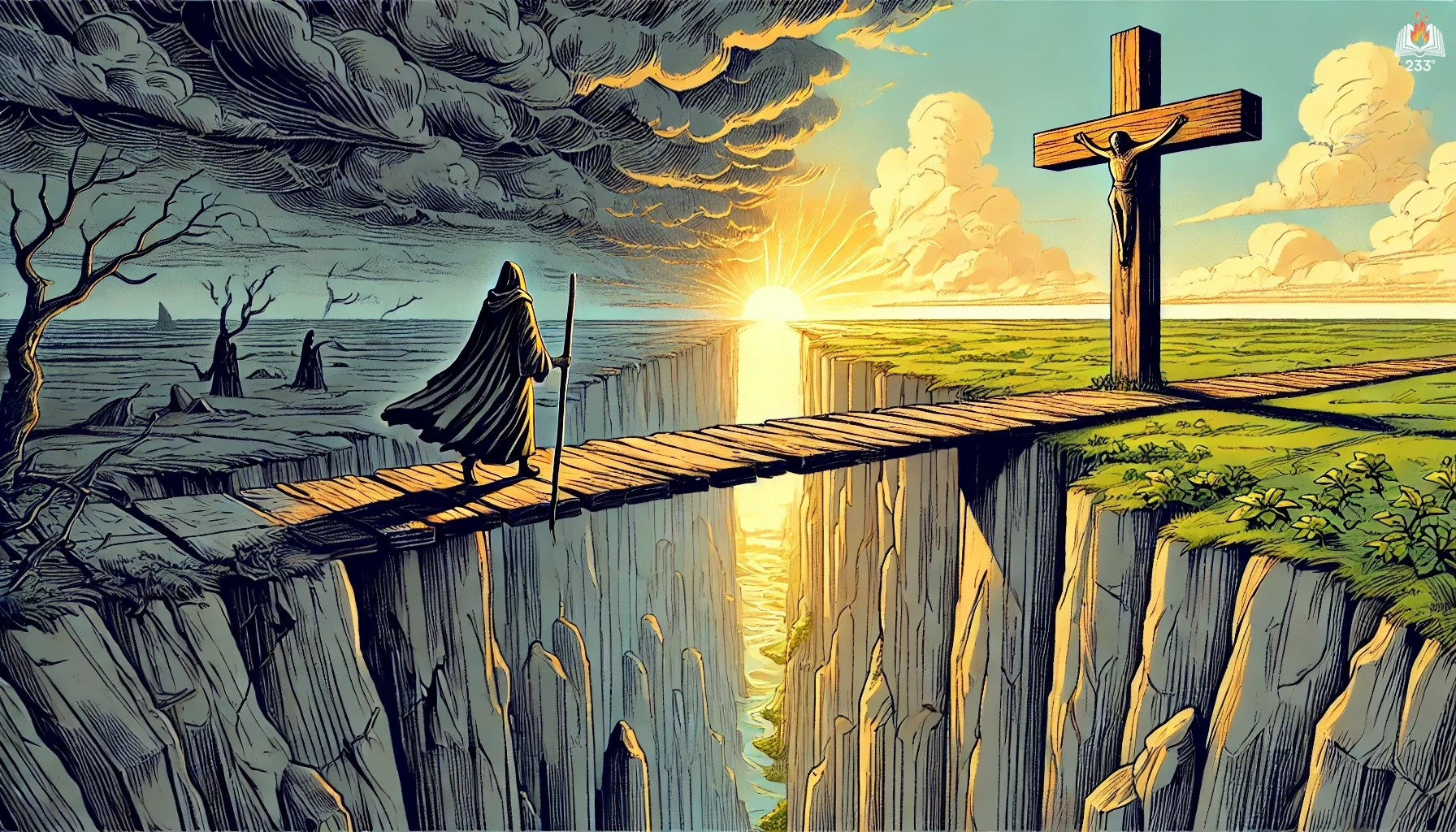
Existential Nihilism and Isolation: Perhaps the most chilling theme, embodied in the novel’s ending, is the idea that existence is a dream and reality an illusion. Twain leaves readers questioning not just the fabric of society, but the very nature of being itself.
Innocence and Corruption: The journey from youthful innocence to existential awareness is a powerful undercurrent. Theodor’s emotional and philosophical arc charts the painful process of awakening to a flawed and often indifferent universe.
Writing Style and Tone
Mark Twain’s style in The Mysterious Stranger is markedly different from his more humorous and satirical works. The prose is lyrical yet somber, contemplative and richly descriptive, evoking the tranquil simplicity of an Austrian village while slowly unmasking its deep moral contradictions. His narrative voice, filtered through Theodor, evolves from youthful wonder to a melancholy introspection that mirrors the story’s philosophical descent.
Twain employs a tone that is deceptively gentle at first, laced with innocent charm and childlike curiosity. But as Satan’s philosophical influence deepens, the tone turns stark, detached, and haunting. Twain uses irony masterfully, particularly in the juxtaposition of Satan’s benevolent demeanor with his chilling amorality. The final note of the book – cryptic, bleak, and profoundly unsettling – leaves the reader in a state of existential uncertainty, perfectly in tune with the novel’s themes.
Quotes
The Mysterious Stranger – Mark Twain (1916) Quotes
“Nothing exists; all is a dream. God—man—the world—the sun, the moon, the wilderness of stars—a dream, all a dream; they have no existence. Nothing exists save empty space—and you!”
“I know your race. It is made up of sheep. It is governed by minorities, seldom or never by majorities. It suppresses its feelings and its beliefs and follows the handful that makes the most noise.”
“In this life, Satan, but in another? We shall meet in another, surely?" Then, all tranquilly and soberly, he made the strange answer, "There is no other.”
“Life itself is only a vision, a dream." "Nothing exists; all is a dream. God--man--the world--the sun, the moon, the wilderness of stars--a dream, all a dream; they have no existence. Nothing exists save empty space--and you!”
“I have replaced his tin life with a silver-gilt fiction”
“For he did not seem to know any way to do a person a kindness but by killing him.”
“You can find in a text whatever you bring, if you will stand between it and the mirror of your imagination. You may not see your ears, but they will be there.”
“What an ass you are!” Satan said. “Are you so unobservant as not to have found out that sanity and happiness are an impossible combination? No sane man can be happy, for to him life is real, and he sees what a fearful thing it is.”
“It gave an appalling idea of the value of an hour, and I thought I could never waste one again without remorse and terror.”
“I said it was a brutal thing. "No, it was a human thing. You should not insult the brutes by such a misuse of that word; they have not deserved it,”
“Manners!" he said. "Why, it is merely the truth, and truth is good manners; manners are a fiction. The castle is done. Do you like it?”
We hope this summary has sparked your interest and would appreciate you following Celsius 233 on social media:
There’s a treasure trove of other fascinating book summaries waiting for you. Check out our collection of stories that inspire, thrill, and provoke thought, just like this one by checking out the Book Shelf or the Library
Remember, while our summaries capture the essence, they can never replace the full experience of reading the book. If this summary intrigued you, consider diving into the complete story – buy the book and immerse yourself in the author’s original work.
If you want to request a book summary, click here.
When Saurabh is not working/watching football/reading books/traveling, you can reach him via Twitter/X, LinkedIn, or Threads
Restart reading!