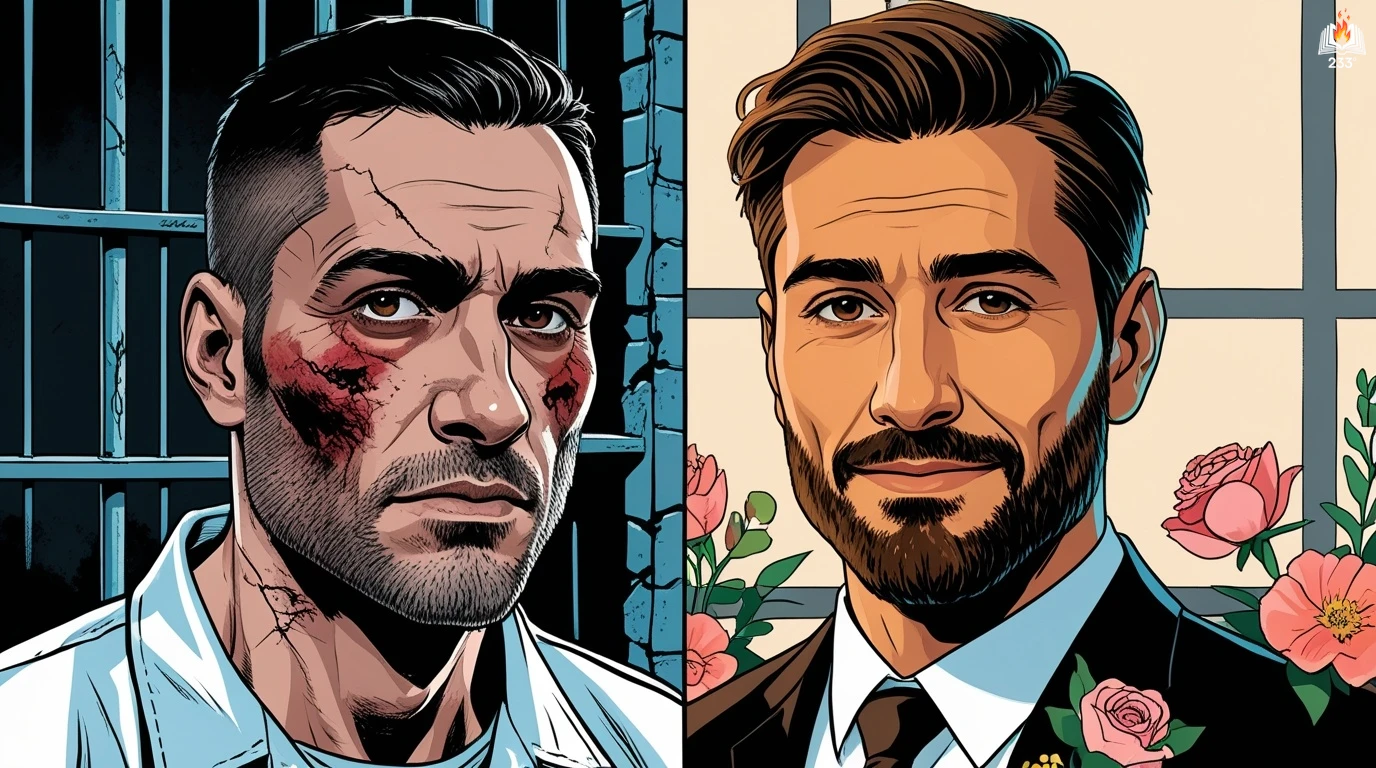
A History of Loneliness by John Boyne, published in 2014, is a deeply moving novel set against the backdrop of Ireland’s clerical abuse scandals. Told through the voice of Father Odran Yates, a priest whose life unfolds over several decades, the novel offers a piercing exploration of complicity, memory, guilt, and silence within the Catholic Church. The narrative jumps through time, chronicling pivotal moments in Ireland’s social and political evolution while anchoring its emotional core in personal tragedy and moral ambivalence.
Plot Summary
In the stillness of a January evening in Dublin, Father Odran Yates arrived at his sister’s home with the chill of a new millennium clinging to his coat and the weight of unspoken regrets warming his chest. Hannah, distracted and scattered, greeted him without remembering the invitation she had extended only days before. Her son, Jonas, a quiet, bookish boy, drifted between the kitchen and the shadows, his presence elusive, his thoughts deeper than his years revealed. The house bore the silence of loss – Kristian, Hannah’s husband, long gone, Aidan, their eldest, estranged in another country, and Odran himself, an infrequent visitor in the lives he once called his own.
Outside, the world turned. George W. Bush had just been sworn in as the President of the United States, and Ireland was still stumbling under the weight of secrets long buried beneath vestments and veils. Odran, ever nostalgic, clung to memories of simpler times – bus rides through Dublin with Hannah, cream cakes at Bewley’s, the faded echoes of a family that once seemed whole. But something about the visit unsettled him. Hannah spoke of Kristian in the present tense, mistaking the dead for the living, and her mind wandered with eerie detachment. Later, at a Marian shrine in Inchicore, Odran witnessed a priest collapsed in grief and his mother nearby, both howling silently at some unseen shame. He left without speaking to them, preferring silence over confrontation, distance over discomfort.
Years slipped by like mist over the Liffey. Odran’s life was defined by quiet repetition – morning Masses, English classes, the discipline of routine at Terenure College, a boys’ school where rugby was king and privilege reigned. For twenty-seven years he had stayed hidden behind its walls, watching generations pass through, never once questioning why he had not been reassigned like others. He was content, or so he believed.
But then came the call from Archbishop Jim Cordington. Odran was to leave Terenure, to return to parish life. A Nigerian priest, young and popular, would take his place. The Church was shrinking, vocations were vanishing, and the old ways could no longer sustain the new world. The conversation felt cordial, but beneath the smiles and whisky, something festered. Cordington was afraid – not of God, but of the newspapers, the judges, the mounting allegations against priests like Miles Donlan. Donlan, Odran’s colleague, had just been sentenced for crimes that haunted the Church and sickened the nation. Odran insisted he had known nothing, heard nothing, but even in that, there was guilt – guilt for never asking questions, guilt for not seeing what was hidden in plain sight.
He was sent to a new parish in Dublin, where he replaced Tom Cardle, his oldest friend. Tom had been with him from the first days at seminary, a boy from Wexford with grief in his eyes and a calling forced upon him by family and silence. Odran remembered the cold dormitories, the shared Bible, the whispered fears in the dark. They had entered together, bound by the same vow, but Tom had always carried a heavier burden. Rumors had followed him for years. The altar boys at his last parish had called him Satan, though whether out of fear, cruelty, or something darker, no one dared to say.
Odran took Tom’s place uneasily, inheriting the duties, the gossip, the boys. He went through the motions – Sunday sermons, hospital visits, confessions – all while the world outside grew louder with accusations and revelations. Each newspaper carried another name, another child, another priest. The scandals were no longer secrets whispered in sacristies; they had become part of the air, heavy and unavoidable.
At home, Jonas had grown into a young man, a writer now, his first stories finding space in newspapers and his voice reaching further than his uncle’s ever had. His relationship with Odran was strained but still intact, stitched together by shared memories and cautious respect. But Jonas saw what Odran refused to – the rot beneath the robes, the cost of silence, the damage left behind when no one speaks.
As Odran’s days in the parish turned to months, he was confronted by victims, by angry parents, by former parishioners who remembered things differently than he did. A woman came to him with a trembling voice, remembering her son, now grown and broken, once an altar boy under Tom. She asked if Odran had known, and he could only offer evasions. His innocence, he believed, lay in not having done harm himself. But innocence built on ignorance is a fragile thing.
And then came the public reckonings – the tribunals, the official apologies, the television broadcasts where bishops squirmed and priests wept. Odran watched as his faith cracked under the weight of it. He returned often to Inchicore, to the shrine, to the memory of the mother and son who had wept in the moonlight. He remembered their anguish as a foreshadowing of what was now everywhere – grief, betrayal, and shame.
When Hannah’s mind finally slipped entirely, Odran became her caretaker, feeding her, washing her, watching the woman who had once defended him become a stranger. Her confusion mirrored his own – about the world, about his Church, about himself. In her moments of lucidity, she asked about Kristian, about Aidan, about times that no longer existed. Odran, unable to face the truth even then, nodded and smiled, comforting her with lies because the truth hurt too much.
Jonas published a book that touched on abuse, on complicity, on men of faith who failed to protect. Odran read it in silence, recognizing fragments of himself in the characters, though never admitting it aloud. When asked at a family gathering whether he ever wished to live life differently, he answered with practiced calm – that his choices brought clarity and meaning. But inside, clarity was fading. Meaning had become murky.
One night, standing before his mirror, the white collar removed, he no longer recognized the man looking back. He had once believed that a life of devotion was a life of goodness. But devotion without courage, without confrontation, had led to complicity. He had never raised a hand, never touched a child. But he had heard whispers and chosen not to listen. He had seen signs and turned away.
There were no confessions left. Only silence. The same silence that had protected monsters, ruined families, and robbed him of absolution. And in that silence, he finally understood what he had been a part of – not by what he had done, but by what he had allowed.
Main Characters
Father Odran Yates: The central figure and narrator, Odran is a priest who views himself as an innocent bystander to the horrors committed within his Church. Quiet, introspective, and often passive, he is burdened by a long history of denial and complicity. His narrative is colored by nostalgia and self-justification, making him a compelling yet unreliable witness to both his life and the institutional failings around him.
Tom Cardle: Odran’s lifelong friend and fellow seminarian. Tom is a more complex and emotionally wounded character who hints at deep personal trauma. He is darker and more cynical than Odran, and as the story progresses, his role becomes increasingly ambiguous, touching on themes of secrecy, coercion, and pain.
Hannah Yates: Odran’s sister, who suffers from mental decline later in life. She represents both familial affection and fragility. Her subtle emotional unraveling parallels the broader collapse of trust in the Church and institutions they both relied on.
Jonas Ramsfjeld: Odran’s introspective and intelligent nephew, who ultimately becomes a writer. Jonas’s quiet resilience and independence sharply contrast with Odran’s passive obedience. He serves as a mirror to the younger generation, one no longer willing to ignore uncomfortable truths.
Kristian Ramsfjeld: Hannah’s late husband, a Norwegian and a stabilizing figure in the family’s past. Though deceased for much of the book, his presence lingers in memory and conversations, acting as a reminder of loss and change.
Archbishop Jim Cordington: A former peer turned ecclesiastical superior, Cordington represents the institutional face of the Church, full of denial, condescension, and damage control. His interactions with Odran reveal the systemic pressures to remain silent.
Theme
Silence and Complicity: A central theme, silence in the face of evil becomes the defining moral failure in Odran’s life. He repeatedly chooses not to act, not to question, and not to confront, framing inaction as innocence, which ultimately becomes his most damning trait.
Faith and Doubt: The novel intricately explores the tension between religious devotion and moral blindness. Odran’s steadfast belief in the Church is eroded by personal and collective revelations, creating an internal crisis of faith that reflects a national one.
Guilt and Redemption: Guilt seeps through the narrative – not only for what is done but for what is allowed to happen. Odran struggles with his own accountability, searching for redemption in small gestures that are often too little, too late.
Memory and Selective Truth: Boyne structures the novel non-linearly, mimicking how memory functions under emotional distress. The way Odran recalls his past reveals the layers of self-deception and the fragile comfort of selective remembrance.
Abuse of Power: Both spiritual and institutional power are scrutinized. The clergy’s unchecked authority over vulnerable populations—especially children—is dissected, not just through the perpetrators but through those who protected or ignored them.
Writing Style and Tone
John Boyne’s prose is intimate, confessional, and unflinchingly honest. The first-person narration gives readers deep access to Odran’s conflicted inner world, marked by digressions, rationalizations, and moments of piercing self-awareness. The style often mimics the cadence of a priestly sermon – measured, contemplative, sometimes evasive – but it’s precisely this restraint that makes the emotional ruptures so devastating.
The tone of A History of Loneliness oscillates between wistful nostalgia and mounting dread. Boyne masterfully layers emotional complexity into everyday scenes, allowing ordinary moments to carry the weight of impending catastrophe. There is a mournful quality to the narrative – an elegy not just for a lost faith, but for a nation’s innocence, or at least its illusions. By the end, the tone sharpens into a quiet, bitter reckoning, where denial collapses under the weight of truth.
Quotes
A History of Loneliness – John Boyne (2014) Quotes
“How can something still feel so painful after twenty-eight years, I asked myself. Is there no recovery from the traumas of our youth?”
“The sensation that for the world to exist with an object of such beauty in it—and for that object to be unattainable—was the very sweetest kind of pain imaginable.”
“I have always been a lover of the sun, even if, through spending a lifetime in Ireland, I have had little personal connection with it.”
“But then I didn’t know what I was giving up until it was already gone. No one ever does, do they?”
“I didn’t know what I was giving up until it was already gone. No one ever does, do they?”
“the Modh Coinníollach,”
“I knew that by staying silent, I was as guilty as everyone else...”
“Remember, my young friend, life is easy to chronicle, but bewildering to practise.’ He winked at me. ‘Forster.”
“...the priests said that food was not there to be enjoyed but simply to keep us alive. Simplicity of diet was important.”
We hope this summary has sparked your interest and would appreciate you following Celsius 233 on social media:
There’s a treasure trove of other fascinating book summaries waiting for you. Check out our collection of stories that inspire, thrill, and provoke thought, just like this one by checking out the Book Shelf or the Library
Remember, while our summaries capture the essence, they can never replace the full experience of reading the book. If this summary intrigued you, consider diving into the complete story – buy the book and immerse yourself in the author’s original work.
If you want to request a book summary, click here.
When Saurabh is not working/watching football/reading books/traveling, you can reach him via Twitter/X, LinkedIn, or Threads
Restart reading!