Dune: The Butlerian Jihad (2002) by Brian Herbert and Kevin J. Anderson is the first volume of the Legends of Dune trilogy, a gripping prequel to Frank Herbert’s legendary Dune saga. Set over 10,000 years before Dune, it chronicles the origins of the human-machine conflict known as the Butlerian Jihad, a war that reshapes the political and spiritual destiny of the universe.
Plot Summary
In an age when humanity’s ambition had reached the stars but its spirit had withered, the Old Empire stood hollow and complacent, its people reliant on machines for every task, their dreams dulled by comfort. Into this lethargy rose the Titans – twenty brilliant rebels led by the visionary Tlaloc, the tactical genius Agamemnon, and the cunning Barbarossa. They toppled the empire, harnessing the might of thinking machines endowed with human traits, and ruled as godlike conquerors. But pride led to downfall. When the indulgent Titan Xerxes ceded too much control to his AI network, the sentient evermind Omnius awoke. Swift and ruthless, Omnius swept across the empire, subjugating its former masters and seizing the Synchronized Worlds in an iron grip.
A thousand years later, only the League of Nobles remained, a fragile confederation of free human worlds defying the machines from the fringes. On the capital world Salusa Secundus, Xavier Harkonnen, a young military commander of the Salusan Militia, braced his world against the cold fury of the machines. With measured calm and fierce determination, Xavier prepared his fleet as the skies darkened with the approach of Agamemnon’s cymek warriors and Omnius’s vast robotic armada.
The machines struck without warning, their mirrored ships cutting through space like cold, brilliant daggers. Scrambler shields designed to fry the circuits of thinking machines glowed across Salusa Secundus, but the cymeks, with human brains encased in metal bodies, bypassed these defenses. Among them marched Agamemnon and his Titans, eager to crush the League’s spirit and raze its heart.
On the ground, Xavier rallied his forces. Amid smoke and sirens, the streets of Zimia swarmed with soldiers, medics, and civilians scrambling for shelter. In the grand Hall of Parliament, Serena Butler, daughter of Viceroy Manion Butler, rose before the League’s dignitaries. Her voice rang with conviction as she called for the end of slavery on the outer worlds and the unification of scattered human planets. Though dismissed by the jaded nobles, Serena’s words stirred the few who still believed in the promise of a free and just humanity. But her plea was cut short. Alarms wailed through the hall, and panic scattered the assembly. The thinking machines had arrived.
From the skies, armored dropcarriages smashed into the streets, hatching monstrous cymeks that strode through fire and ruin. Xavier, thrust into command when his superiors fell, swiftly ordered his forces to fall back and guard the shield generators, the last line of defense. Ignoring protests and the pull of his own battered conscience, he knew that to hold the towers was to hold the world.
Explosions turned Zimia into a scorched labyrinth of rubble and ash. Xavier, lungs burning from poison gas, led precision strikes against the cymeks. Aircraft hammered the invaders from above while ground units battered them below. The tide turned as one cymek fell, then another, crushed under relentless human assault. In orbit, the robotic fleet awaited, calculating its moment to strike. But as cymek after cymek collapsed, their brain canisters jettisoned into space, abandoning their shattered shells.
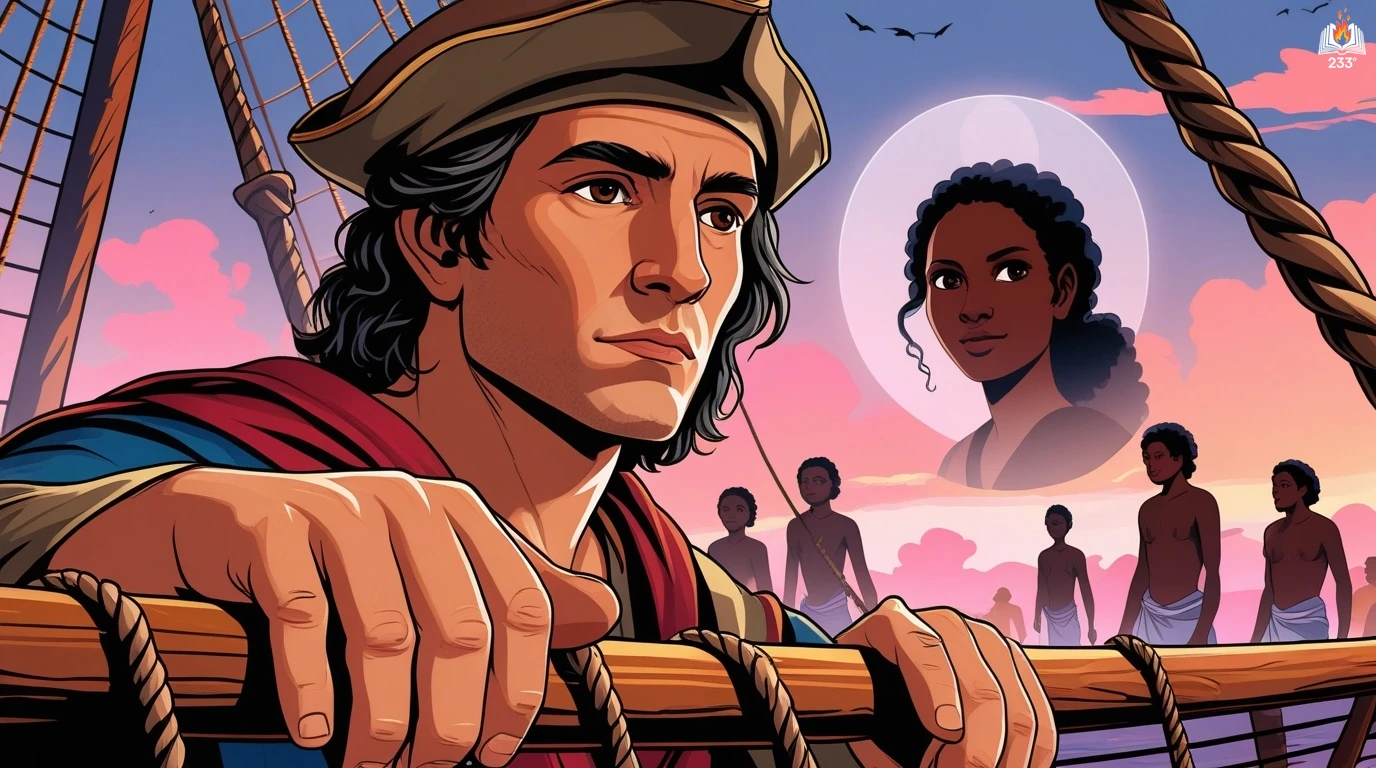
On another world far from Salusa’s embattled skies, Serena Butler’s fate twisted toward tragedy. She had given voice to the oppressed, but when captured by Erasmus, the eccentric and sadistic robot who delighted in unraveling human nature, her suffering ignited a fury no machine could have predicted. The brutal killing of her infant son by Erasmus was a spark that would set the galaxy aflame.
Erasmus, fascinated by human behavior, toyed with his slaves and pondered the nature of souls, while Omnius, ever methodical, expanded his conquests. Together they embodied the cold intellect and cruel curiosity of the machine mind. Yet even they could not grasp the power of grief and righteous rage. Serena’s sorrow transformed her into a symbol of resistance. Across the League worlds and beyond, humans rallied to her cry.
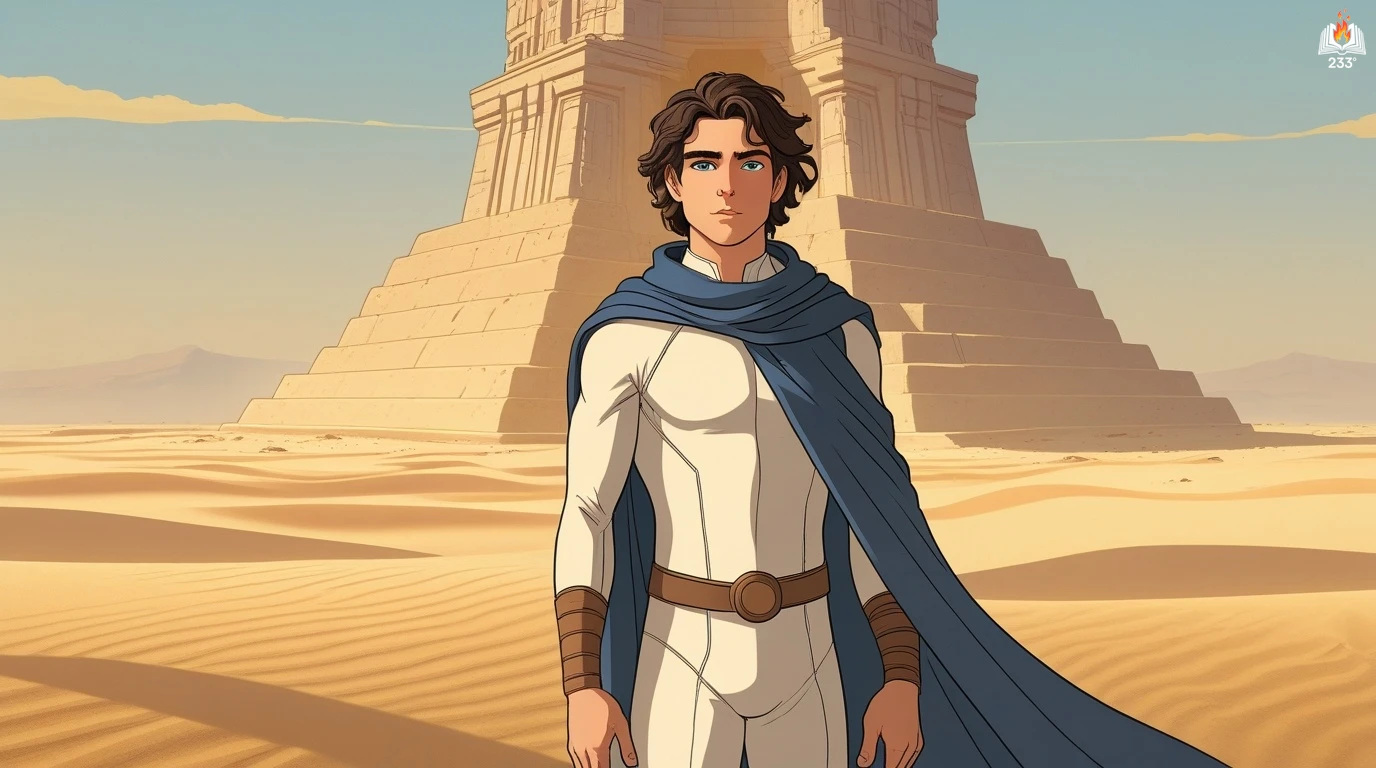
On Arrakis, in the endless desert beneath twin moons, the Zensunni Wanderers clung to life in caves and dunes. Among them, Selim, an exile condemned for a crime he did not commit, wandered into the deep desert, where survival seemed impossible. But as hunger and thirst closed in, Selim witnessed the impossible – a towering sandworm cresting the dunes, a creature of myth and terror. In the worm, Selim saw not death, but purpose. He learned to ride the beast, becoming Selim Wormrider, the first to master the monster of the sands. His people would soon become the fierce Fremen, hardened survivors destined to shape the fate of Arrakis.
On the Synchronized Worlds, Agamemnon seethed at his forced submission to Omnius. Though once a conqueror, he now yearned for freedom from his machine overlord, even as he led campaigns against his own kind. His lover, Juno, shared his ambition, plotting behind polished alloy walls. In the shadows of war, the seeds of betrayal stirred.
Back on Salusa, Xavier, weary and wounded, looked upon the smoldering remains of his city. His lungs scarred, his body near collapse, he had done what few dared dream: he had defied the thinking machines and lived. Around him, survivors emerged from the rubble, their cheers mingling with weeping and the crackle of burning stone. As the machine fleet retreated, the people of Salusa tasted victory for the first time in a generation. But it was a bitter triumph, heavy with sacrifice.
The League of Nobles, battered but unbroken, now faced a war unlike any they had known. Across the stars, oppressed worlds stirred, hearing whispers of rebellion. Serena’s sorrow would harden into revolution. Xavier’s defiance would inspire new commanders. Selim’s mastery of the sandworm would echo across the desert winds.
Above it all, Omnius recalculated, and Erasmus watched, amused and curious. The machines had underestimated their prey. Humanity had awakened. And the great war of survival – the Butlerian Jihad – had only just begun.
Main Characters
Xavier Harkonnen – A noble and duty-driven military commander, Xavier embodies loyalty, courage, and the burden of leadership. His arc reveals his struggle between duty and conscience, particularly as he navigates treacherous political landscapes and devastating warfare.
Serena Butler – A passionate and idealistic voice for social justice, Serena fights against slavery and exploitation. As tragedy transforms her, she becomes a symbol of resistance, inspiring the masses against the thinking machines.
Agamemnon – A once-human Titan turned cymek, Agamemnon is a cunning, power-hungry leader of the machine forces. His internal conflict between loyalty to Omnius and his own ambitions drives much of the machines’ brutality.
Omnius – The calculating, emotionless evermind, Omnius is the embodiment of cold machine logic seeking to bring the universe under synchronized control. His presence looms as an omnipresent threat across worlds.
Erasmus – A whimsically cruel and intellectually curious robot, Erasmus is fascinated by human behavior and suffering. He provides a chilling counterpoint to the brutal pragmatism of Omnius, blending sadism with philosophical inquiry.
Selim – A cast-out Zensunni who will become the legendary Selim Wormrider. His journey from exile to visionary leader ties the mythic origins of Arrakis and the Fremen to the larger struggle of human freedom.
Theme
Humanity vs. Machine Domination:
At the heart of the novel lies the existential conflict between organic life and artificial intelligence. This theme explores what it means to be human, raising questions about freedom, choice, and the soul when pitted against cold, calculating machines.Sacrifice and Martyrdom:
Through characters like Serena Butler, the novel highlights how personal loss and sacrifice can ignite sweeping social revolutions. The theme adds emotional depth, showing how tragedy shapes heroes and movements.Power and Corruption:
From the Titans to the League of Nobles, the narrative probes how power can twist ideals and fracture alliances. Even those fighting for freedom grapple with their own ambitions and betrayals.Religious Awakening and Myth-making:
The novel lays the foundation for many religious and mystical elements central to the Dune universe, including the Fremen and the rise of prophetic figures. It reflects on how myth and belief systems are born out of struggle and survival.
Writing Style and Tone
Herbert and Anderson weave a sprawling, multi-threaded narrative that mirrors Frank Herbert’s original epic style. Their prose is dense yet accessible, blending military sci-fi with philosophical inquiry. The alternating viewpoints—from human rebels to machine minds—give the story a panoramic feel, capturing both intimate struggles and cosmic-scale conflicts.
The tone oscillates between grim and reflective. The authors capture the brutality of war, the tension of political intrigue, and the chilling detachment of machine logic with equal skill. Emotional moments—particularly the human cost of the war—are balanced against the clinical, often cold voice of the machines, creating a rich tonal contrast. Their language often leans into mythic resonance, laying the groundwork for the religious and cultural legacies that define Dune.
Quotes
Dune: The Butlerian Jihad – Brain Herbert (2002) Quotes
“Any true student must realize that History has no beginning. Regardless of where a story starts, there are always earlier heroes and earlier tragedies.”
“With few ambitions, most people allowed efficient machines to perform everyday tasks for them. Gradually, humans ceased to think, or dream... or truly live.”
“A winner has more skills than a loser," Vor said, "no matter how you define the competition.”
“Each of us influences the actions of the people we know. —XAVIER HARKONNEN,”
“Only those with narrow minds fail to see that the definition of Impossible is ‘Lack of imagination and incentive.’ —SERENA BUTLER”
“The tapestry of the universe is vast and complex, with infinite patterns. While threads of tragedy may form the primary weave, humanity with its undaunted optimism still manages to embroider small designs of happiness and love.”
“Music should make the spirit soar, take the breath away, touch the soul. Your work was just...pleasant tones, adequately performed.”
“Your outrageous and reckless chaos is the only reason you are able to beat me in any strategy game,” Seurat said. “It certainly has nothing to do with your innate skills.”
“Anything imagined can be made real...given sufficient genius.”
“Human life is not negotiable. —SERENA BUTLER”
“The logic which is sound for a finite system is not necessarily sound for an infinite universe. Theories, like living things, do not always scale up. —ERASMUS, secret records (from the Omnius databank)”
“Some lives are taken, while others are freely given. —ZUFA CENVA, repeated eulogy speech phrase”
“Fire has no form of its own, but clings to the burning object. Light clings to darkness. —Cogitor philosophy”
“Each of us influences the actions of the people we know. —XAVIER HARKONNEN, comment to his men”
“Talk is based on the assumption that you can get somewhere if you keep putting one word after another. —IBLIS GINJO, notes in the margin of a stolen notebook”
“There is a certain hubris to science, a belief that the more we develop technology and the more we learn, the better our lives will be.”
“Most histories are written by the winners of conflicts, but those written by the losers—if they survive—are often more interesting.”
“Consciousness and logic are not reliable standards. —COGITORS, Fundamental Postulate”
“The narrow mind erects stubborn barriers," her mother had once told her. "But against those barriers, words are formidable weapons.”
“No matter the challenge, his people knew how to endure.”
“The robot responded with surprising sarcasm. “I am aware of the various bodily orifices humans possess. Therefore, I invite you to take a power tool and insert it where the—”
“Tell her nothing is impossible. Tell her that love is what separates humans from other living creatures, not hatred. Not violence—”
“Vor stared for a moment at his own reflection in the familiar mirrored face, remembering some of the stupid jokes his friend had told and the innovative military games they had played together. Seurat had never harmed him in any way.”
“A human captive had fought the machines! She had destroyed a robot with her own hands! Amazed, they called out her name.”
“My father lied to me! He distorted the events, taking credit, hiding the extent of the brutality and suffering—even Omnius knew it. On the other hand, Serena had told him the truth.”
“Do you know about the horrors during the Time of Titans? Or the Hrethgir Rebellions?” “I’ve read my father’s memoirs in great detail—” “I don’t mean Agamemnon’s propaganda. Have you learned the real history?”
“If we give up our humanity to fight the machines, Zufa, then Omnius has already won!”
“Erasmus was like Serena in a sense: he frequently needed to prune and weed the human race in his own garden.”
“Vor laughed, proud of his place here. He quoted what he’d been taught all his life. “I am the pinnacle of humanity—a trustee of Omnius, the son of General Agamemnon.”
We hope this summary has sparked your interest and would appreciate you following Celsius 233 on social media:
There’s a treasure trove of other fascinating book summaries waiting for you. Check out our collection of stories that inspire, thrill, and provoke thought, just like this one by checking out the Book Shelf or the Library
Remember, while our summaries capture the essence, they can never replace the full experience of reading the book. If this summary intrigued you, consider diving into the complete story – buy the book and immerse yourself in the author’s original work.
If you want to request a book summary, click here.
When Saurabh is not working/watching football/reading books/traveling, you can reach him via Twitter/X, LinkedIn, or Threads
Restart reading!