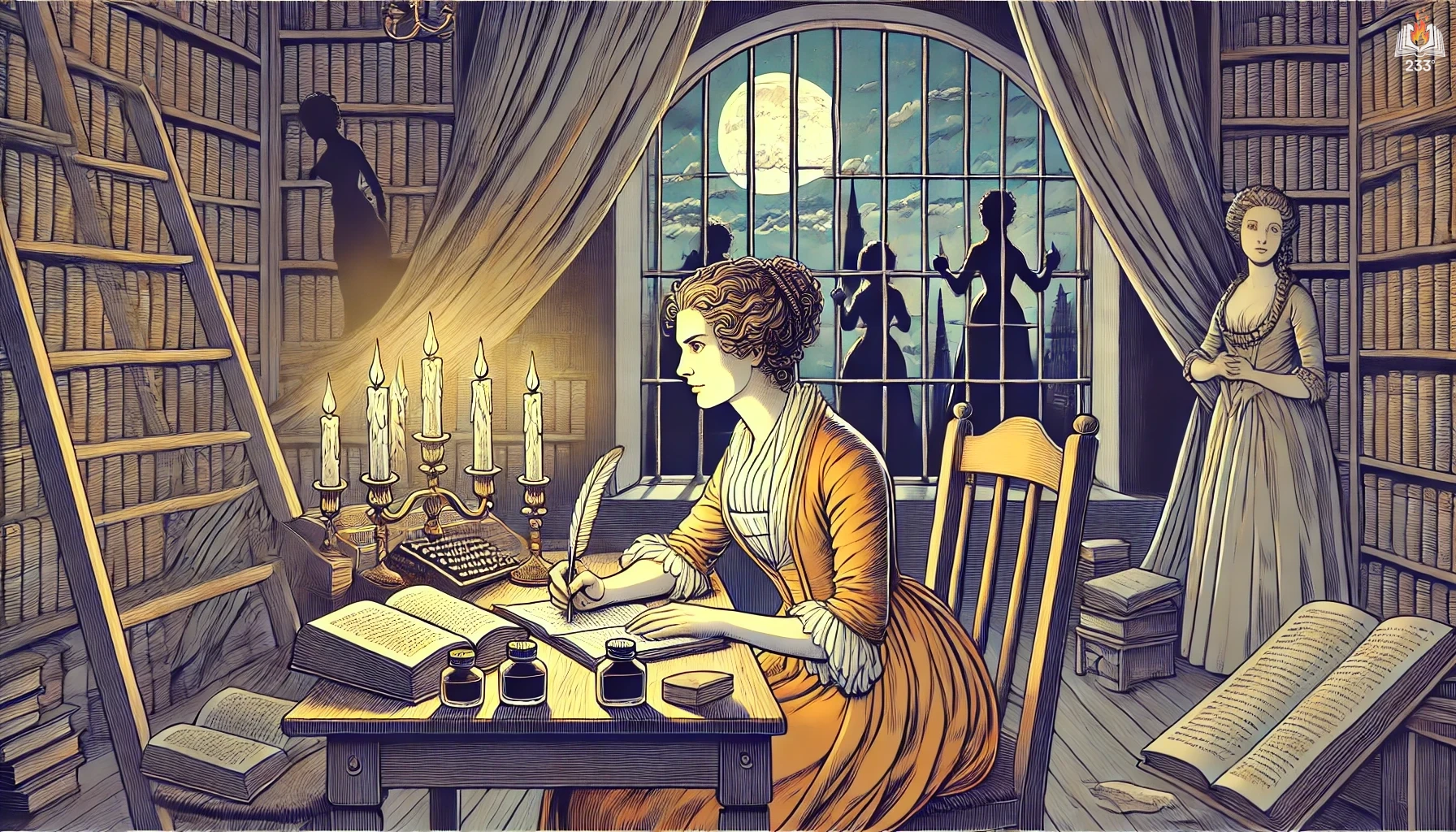
Cat Among the Pigeons by Agatha Christie, published in 1959, is a masterful blend of murder mystery and international intrigue, set in the prestigious Meadowbank School for Girls. As one of Christie’s beloved Hercule Poirot novels, it combines espionage, jewel smuggling, and murder in a gripping plot that moves from a Middle Eastern revolution to the refined world of an English boarding school.
Plot Summary
In the shimmering heat of the Middle East, revolution stirred beneath a surface of luxury and power. Prince Ali Yusuf, ruler of Ramat, understood too late that his country’s discontent could not be pacified with hospitals and schools. As his palace walls closed in, the young prince entrusted his British pilot, Bob Rawlinson, with a bag of precious jewels worth a fortune – a last desperate bid to preserve something from the wreckage. Bob, scrambling for a plan, turned to the only person he trusted: his sister, Joan Sutcliffe, staying at a hotel with her daughter Jennifer. Unbeknownst to Joan, Bob concealed the jewels within her luggage, leaving a casual note before vanishing into history. As the prince’s plane plunged into the mountains, Ramat fell to chaos, and the jewels slipped quietly into England.
At Meadowbank, England’s most prestigious girls’ school, the summer term opened under the watchful eye of Miss Bulstrode. A woman of towering presence and keen intelligence, she had built the school into a bastion of excellence and refinement. Beside her stood Miss Chadwick, her lifelong friend and co-founder, whose warmth and loyalty ran deep even as age began to chip away at her sharpness. The school brimmed with the energy of returning students, the chatter of mothers, the rustle of uniforms, and the quiet competence of Ann Shapland, Miss Bulstrode’s poised secretary.
Among the new arrivals was Princess Shaista, niece of the late Prince Ali Yusuf, draped in glamour and carrying an air of entitlement that fascinated and unsettled the English girls. Julia Upjohn, sharp-eyed and spirited, watched the princess with a mixture of curiosity and skepticism. Meadowbank thrived on discipline wrapped in charm, but beneath its orderly surface, unseen forces were slipping into place.
On the grounds, a young, dark-haired gardener worked quietly, cutting hedges and observing much more than flowers. Adam Goodman, sent undercover by British intelligence, had been placed at the school to keep watch over Shaista and the whispers of international intrigue. For soon after the term began, strange events unfolded. A mysterious foreigner lurked near the gates. Miss Springer, the new games mistress with a sharp temper, was discovered late one night in the sports pavilion, only to be found dead the next morning, shot through the heart.
Shock rippled through Meadowbank. The police arrived, questions were asked, but the mystery only deepened. Miss Vansittart, the efficient deputy head, followed Miss Springer to the grave not long after, leaving behind a chilling atmosphere that gripped staff and students alike. Fear crept into the dormitories and staff rooms, and Miss Bulstrode, though outwardly composed, knew her kingdom trembled on a knife’s edge.
As chaos simmered within, outside forces closed in. A woman watched the school from a distance, her eyes calculating. Letters arrived, cryptic and unsettling. Yet amid the confusion, it was Julia Upjohn who noticed the oddities no one else saw – the misplaced objects, the unfamiliar faces, the subtle shift of tension in the air. While adults spoke in guarded tones, Julia’s youthful daring propelled her toward the truth.
When Julia discovered a hidden compartment in her mother’s luggage, left untouched since their journey from Ramat, she found a glittering hoard of jewels wrapped in innocent-looking bundles. The pieces fell into place. Julia, quick of mind and undaunted in spirit, took it upon herself to seek help, and she knew only one man would do – Hercule Poirot.
Poirot, the master of deduction, entered the world of Meadowbank with the quiet confidence of a man familiar with the darkest corners of human nature. With his meticulous manner and sharp eye, he listened more than he spoke, drawing out truths from a tapestry of half-lies and concealed motives. He understood the power struggles between teachers, the simmering jealousies, and the quiet desperation that can twist a person into betrayal.
While Poirot set his traps, danger loomed ever closer. Ann Shapland, the seemingly impeccable secretary, revealed a double life. A foreign agent posing as an English professional, Ann had been embedded in Meadowbank not for the sake of education but to retrieve the hidden jewels for her employers. It was she who had prowled the grounds in the dark, who had listened at doors, who had pulled the trigger on Miss Springer when discovery loomed. Calm and cold-blooded, she had calculated her moves with care – until Poirot entered the scene.
Poirot gathered the players in Miss Bulstrode’s sitting room, his eyes gentle yet unwavering. Piece by piece, he laid out the truth, weaving together the fall of Ramat, the smuggling of the jewels, the murder of two women, and the ruthless determination of a spy who had gambled everything. As Ann’s calm cracked and panic flared in her eyes, the mask of efficiency fell away to reveal the ruthless agent beneath. The jewels, glittering and cold, had brought death and destruction across continents, but in Poirot’s hands, they marked the end of the hunt.
With the storm passed, Meadowbank settled into its quiet rhythm once more. Miss Bulstrode faced the future with a heavy heart, her faith in those around her shaken but not broken. She saw clearly now the strength and vulnerability of her domain, the cost of leadership, and the sacrifices made in silence. Julia returned to her lessons, her place among the girls forever changed, her bravery a quiet legend whispered through the corridors.
For Poirot, there was the quiet satisfaction of a mystery resolved, of justice restored in a world that so often teetered on the edge of chaos. As the last threads were gathered, and the school bell rang over the green lawns of Meadowbank, life resumed its course – but with the faint shimmer of danger always waiting, just beyond the hedges.
Main Characters
Hercule Poirot: The renowned Belgian detective, meticulous and brilliant, arrives later in the story to untangle the complex web of murder and hidden motives at Meadowbank. With his sharp intellect and eye for human psychology, Poirot elegantly unravels the layers of deception.
Miss Bulstrode: The formidable headmistress of Meadowbank, Miss Bulstrode is wise, firm, and charismatic. Her deep care for the school and its students anchors her as the moral center, and her authority is both respected and occasionally resented by those around her.
Miss Chadwick: Co-founder of the school, Miss Chadwick is loyal and kindhearted but increasingly fragile, haunted by feelings of obsolescence and declining capability. Her vulnerability adds poignancy to the school’s tensions.
Ann Shapland: Miss Bulstrode’s competent and efficient secretary, Ann projects an image of cool professionalism. Beneath her poised surface, however, she conceals secrets that become critical to the unfolding mystery.
Julia Upjohn: A sharp, observant student, Julia becomes an unlikely heroine. Her courage and cleverness help reveal hidden clues, placing her at the heart of the investigation and drawing Poirot’s admiration.
Princess Shaista: A glamorous Middle Eastern royal, Shaista’s arrival at Meadowbank stirs excitement. Her presence brings danger as she becomes a pawn in a deadly game tied to the stolen jewels from her homeland.
Bob Rawlinson: A brave pilot caught in Middle Eastern political turmoil, Bob’s fateful decision to smuggle jewels into England sets the mystery in motion. His actions ripple through the novel, even after his death.
Theme
Power and Responsibility: The tension between leadership and personal sacrifice is embodied in Miss Bulstrode, who balances authority with care. The novel questions what it means to wield power justly, both in politics and education.
Deception and Identity: Almost every character wears a mask, from the undercover agents to the school staff hiding personal secrets. Christie masterfully explores how appearances can deceive, both in political intrigue and personal relationships.
Coming of Age and Agency: Julia’s transformation from an ordinary schoolgirl into a resourceful young detective highlights themes of growth, independence, and the empowerment of young women.
International Intrigue and Political Upheaval: The revolution in the fictional country of Ramat provides the novel’s backdrop, reflecting Cold War anxieties. Christie uses espionage not just as a plot device but as a commentary on global instability infiltrating domestic spaces.
Writing Style and Tone
Agatha Christie’s prose in Cat Among the Pigeons is crisp, elegant, and layered with dry wit. Her understated yet vivid character descriptions allow personalities to emerge naturally through dialogue and behavior. Christie excels at creating an atmosphere of unease, blending the familiar comfort of an English boarding school with creeping menace, and she draws readers into the mystery through a precise, almost surgical narrative pace.
The tone oscillates between lighthearted observation and dark suspense. Christie balances the school’s charming rituals and social dynamics with the cold brutality of murder and espionage. Her use of multiple viewpoints deepens the intrigue, offering readers shifting perspectives that invite them to play detective alongside Poirot. The novel’s tension is subtly built, relying not on sensationalism but on the careful unspooling of clues, culminating in Poirot’s signature reveal that is both surprising and satisfyingly logical.
Quotes
Cat Among the Pigeons – Agatha Christie (1959) Quotes
“Everybody always knows something," said Adam, "even if it's something they don't know they know.”
“No sign, so far, of anything sinister—but I live in hope.”
“But Aunt Maureen makes smashing omelettes." Julia Upjohn. "She makes smashing omelettes." Poirot's voice was happy. He sighed. "Then Hercule Poirot has not lived in vain, he said. It was I who taught your Aunt Maureen to make an omelette.”
“Miss Bulstrode had another faculty which demonstrated her superiority over most other women. She could listen.”
“The thing people don't seem to want anywhere nowadays...is anyone who's got a bit of ordinary common sense...but I often think that that's the only thing the world really needs-just a bit of common sense.”
“Don't you know, you idiot, that that is what every fool of a woman says about her child? Miss Bulstrode's thoughts.”
“She could be attractive when she wanted to be but life had taught her that efficiency and competence often paid better results and avoided painful complications.”
“Well,” said Adam, as Poirot went out. “First girls’ knees, and now draughtsmanship! What next, I wonder!”
“They knew, none better, the havoc caused by a good-looking young man to the hearts of adolescent girls.”
“And, frankly, I don’t like murder. It’s the sort of thing that’s fun to read about in the paper or to read yourself to sleep with in the way of a nice book. But the real thing isn’t so good.”
“Everybody always knows something," said Adam. "Even if it's something they don't know they know.”
“Snapshots were handed round. The menace of coloured transparencies was in the offing. All the enthusiasts wanted to show their own pictures, but to get out of being forced to see other people's.”
“If she’d been born in an African tribe she might have been a witch doctor.”
“You seem to have explanations for everything, Mr. Poirot.” “That’s his speciality,”
“You can’t hold on to the past. A certain amount of tradition is good but never too much. A school is for the children of today. It’s not for the children of fifty years ago or even of thirty years ago.”
“Fine bit of building,” said Kelsey, looking at it. “It cost us a pretty penny,” said Miss Bulstrode, “but we can afford it,” she added serenely.”
“Oh, democracy—” Bob waved his pipe. “That’s a word that means different things everywhere. One thing’s certain. It never means what the Greeks originally meant by it.”
“The thing people don't seem to want anywhere, nowadays," said Bob, "is anyone who's got a bit of common sense. I've never been a brainy chap_well, you know that well enough, Ali_but I often think that that's what the world really needs_just a bit of common sense.”
“But democracy_' began Ali. 'Oh, democracy_' Bob waved his pipe. 'That's a word that means different things everywhere. One thing's certain. It never means what the Greeks originally meant by it.”
“I’ve never had any chance at displaying my talents as a sleuth. I think I might be rather good at it.”
“You never really get caught up in things, do you, Ann?" “No,” said Ann thoughtfully, “I don’t think I do. I think I’m one of those people who is a born observer. More like a commentator on the radio.”
“Not that Miss Bulstrode would have allowed herself to be commanded if she had not wished to do so.”
“I rather think we’ve all got a bit of savage in us
We hope this summary has sparked your interest and would appreciate you following Celsius 233 on social media:
There’s a treasure trove of other fascinating book summaries waiting for you. Check out our collection of stories that inspire, thrill, and provoke thought, just like this one by checking out the Book Shelf or the Library
Remember, while our summaries capture the essence, they can never replace the full experience of reading the book. If this summary intrigued you, consider diving into the complete story – buy the book and immerse yourself in the author’s original work.
If you want to request a book summary, click here.
When Saurabh is not working/watching football/reading books/traveling, you can reach him via Twitter/X, LinkedIn, or Threads
Restart reading!