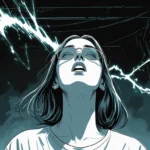
Impostors by Scott Westerfeld, published in 2018, marks the beginning of a thrilling expansion of his Uglies universe. Set a generation after the fall of the “pretty regime” led by Tally Youngblood, this novel explores a world grappling with freedom, power, and identity in the aftermath of rebellion. While old ideologies have crumbled, new power structures have emerged, and the scars of the past still shape the future. At its core is a gripping tale of two sisters, political intrigue, and one young girl’s struggle to define her own worth in a society where her very existence is a secret weapon.
Plot Summary
In the gleaming city of Shreve, where the future is ruled by polished power and polished lies, two girls grow up in shadows and spotlight – twins, inseparable by blood, divided by destiny. Rafi is the public face, the heir, a symbol of strength and charisma in a world held together by surveillance and fear. Frey is the secret sister, trained in silence to kill, to bleed, to protect the name she doesn’t own. Their lives are intertwined not just by birth, but by deception. No one knows there are two of them. That is the point.
Frey lives in the background, a body double in a matching dress and scar, a weapon hidden beneath a smile. Every breath she takes belongs to Rafi, every step she makes is rehearsed. She exists so Rafi can live freely – attend the galas, give the speeches, rule the people – while Frey learns to disappear, to strike, to die if necessary. And on the night of an attack, when gunfire rains down in the ballroom and chaos scatters dignitaries and drones, Frey becomes everything she was born to be. With a pulse knife humming like a predator in her grip, she moves through shattered wood and blood mist to save her sister. No one sees her. No one must.
The attacker is just the beginning. Their father – the cold architect of their world – sees opportunity in every threat. When a deal with the rival city of Victoria demands a gesture of trust, he offers something exquisite, something irreplaceable. He offers his daughter. But not Rafi.
Frey is sent in her sister’s place, masked behind the perfect mimicry she has practiced for sixteen years. The Palafoxes, Victoria’s ruling family, are wary, suspicious, proud. Their heir, Col, is a boy whose gaze holds questions Frey is not ready to answer. He believes he is speaking to Rafi. The alliance is delicate. The consequences of discovery are lethal.
Before the game of politics begins, violence interrupts again. As Frey’s military escort soars over the Rusty ruins – the metal-strewn skeletons of ancient cities – rebel fire slices through the air. Hovercars spiral. Webbing snares. Soldiers die. The detour was never accidental. Their father, always watching, always manipulating, orchestrates the chaos from afar. He uses Frey like a chess piece – bait for rebels, proof of power.
Frey survives. Kicks free of a soldier’s desperate grip, twists through the air, and lands in sand and wreckage. The ruins swallow her, but she emerges whole. Her training, her instincts, all sharpen into something undeniable. She commands. She decides. She saves others. And when suborbital drones streak through the sky, releasing war machines like falling stars, Frey understands. Her father has no limits. But now, neither does she.
In Victoria, she meets the Palafox matriarchs – Zefina and Aribella – whose smiles hide steel, and whose hospitality masks a hostage’s leash. Col watches her with narrowed eyes, testing her words, seeking cracks in the mask. The city hums with rumors, tension, rebel whispers. Frey dances through it, listening, learning, adapting. But cracks begin to form from within.
Frey is no longer content to be an echo. Her feelings grow wild and unscripted. Col’s presence awakens something untaught – a need to be seen not as a double, but as herself. When he discovers the truth, the betrayal cuts deep. But instead of turning her in, he makes a choice. They run.
Their escape into the wild throws them into the arms of danger and truth. The rebels find them. And in the rebels’ midst waits the impossible: Tally Youngblood. A myth returned to flesh. The girl who once shattered a regime is now a ghost leading another resistance, hidden in the forests, watching the cities claw toward the same old ruin.
Tally sees Frey, really sees her, not as Rafi, not as a tool, but as a person carrying the weight of a false name and a fractured self. She doesn’t offer comfort. She offers perspective. Frey is a mirror of a world still broken – a world where girls are raised to be weapons, where peace is traded like currency, where rebellion still matters.
The rebels plan to expose Frey’s father. To reveal the hostage lie. To ignite the fire again.
Frey must choose.
She returns to Victoria not with secrets, but with clarity. The mask is gone. She stands before the Palafoxes not as Rafi, but as Frey. Her truth is her armor now. And it cuts through every assumption.
But the cost is war.
Her father doesn’t tolerate disobedience. When the lie is exposed, he moves swiftly, violently. Soldiers descend. Chaos returns. The line between truth and power dissolves into smoke and bullets. The sisters reunite amidst the fallout – not in quiet, but in defiance. Together, they face the man who raised one to rule and the other to bleed.
In the end, Frey is no longer a shadow. No longer a name whispered in hiding. She is herself. With blood on her hands and scars on her face, she claims the right to exist. Not for her sister. Not for her father. For her.
And the world watches.
Main Characters
Frey: Raised in secret as a body double for her twin sister Rafi, Frey has spent her life training for violence, discipline, and obedience. Seen as expendable by her powerful father, she lives in the shadows, protecting Rafi and learning to survive. Frey’s journey is a poignant exploration of identity and self-worth as she moves from being a weapon to a person learning to make her own choices.
Rafi (Rafia): Frey’s twin sister and the public face of their family. Charismatic, political, and sharp-tongued, Rafi is groomed to inherit their father’s empire. Despite her privileged position, she shows moments of tenderness toward Frey, and their bond is deeply complicated by affection, duty, and resentment. Her conflicting loyalties form an emotional undercurrent to the narrative.
Col Palafox: The son of Victoria’s ruling family and the heir to another powerful city. Initially wary of Frey, believing her to be Rafi, he becomes a pivotal figure in her emotional and political awakening. His shifting trust and alliance reflect the broader tension between truth and deception in the novel.
Teo Palafox: Col’s younger brother, less directly involved but representing another generation in the fragile political landscape. His presence adds depth to the Palafox family dynamic and the broader implications of familial roles in leadership.
Naya: Frey’s relentless trainer, a mentor figure who prepares her for survival at any cost. Her harsh methods shape Frey’s early understanding of strength and discipline, though they come at the cost of emotional growth.
Dona Oliver: The father’s cold and calculating secretary. Dona’s power lies in her loyalty and discretion, and she serves as an extension of the father’s manipulative control, observing and orchestrating the lives around her with icy precision.
Theme
Identity and Autonomy: The central theme of Impostors is the struggle for personal identity in the face of manipulation and secrecy. Frey’s arc from a nameless protector to an individual with agency is an exploration of what it means to be seen and valued for who you truly are.
Power and Control: The novel delves into the ruthless mechanics of political power, especially through the actions of Frey and Rafi’s father. Control over others—whether through violence, fear, or deception—is a recurring motif, and Westerfeld questions the morality of such tactics even when employed for survival.
Sisterhood and Duality: The relationship between Frey and Rafi embodies the classic theme of duality—public and private selves, strength and vulnerability, light and shadow. Their bond is both a source of strength and conflict, raising questions about love, duty, and individuality.
Legacy and Rebellion: As a successor to the Uglies series, Impostors examines the aftermath of rebellion. Tally Youngblood’s legacy looms over the characters, particularly in symbolic motifs like Rafi’s scar, which echoes Tally’s iconic defiance. The story explores how revolutions evolve and how ideals are reshaped—or corrupted—by time.
Writing Style and Tone
Scott Westerfeld’s writing in Impostors is taut, fast-paced, and cinematic. His prose is direct and kinetic, often plunging the reader into high-stakes action and emotional turbulence with sharp clarity. The narrative is told from Frey’s perspective, giving the story a visceral immediacy as she navigates unfamiliar terrain—both political and emotional. Dialogue is crisp, often infused with subtext and political nuance, while the world-building remains grounded yet expansive, rich in technological innovation and post-collapse ideology.
The tone is one of tension and transformation. Westerfeld balances moments of brutal intensity with introspective stillness, allowing readers to feel both the rush of danger and the weight of personal revelation. The emotional landscape is complex—Frey’s voice is colored with longing, doubt, and slowly emerging confidence. As she steps into the world that was never meant to see her, the tone evolves from secretive and contained to bold and questioning, mirroring her journey toward selfhood.
Quotes
Impostors – Scott Westerfeld (2018) Quotes
“My whole life, I always thought that I was the only impostor. That everyone else was certain they were real in some way that I could never understand. But what if they're all just faking too? Maybe none of us know who we really are.”
“Freedom's easy to lose and hard to get back.”
“Freedom has a way of destroying things.”
“Maybe none of us know who we really are.”
“That girl in the painting looks so fierce, so strong. I want her to be the truth of me.”
“Steadfast”
“Let’s kill a rabbit,” Col says when he wakes up.”
“I thought when he learned my secret, he would understand the ally I could be. But instead, he doesn't even know who I am.”
“I wonder if she ever wants to trade lives with me, if only for the chance to punch something.”
“She squeezes my hand, and I feel that certainty I always had as a littlie. That I'm more than expendable. More than a body double.”
“We kiss again, the sounds of our lips as faint as whispers in the night.”
“He wanted to show the world that nobody can win against him, no matter what cards they hold. Proving that he could throw me away was just as important as taking the ruins.”
“I am steadfast.”
We hope this summary has sparked your interest and would appreciate you following Celsius 233 on social media:
There’s a treasure trove of other fascinating book summaries waiting for you. Check out our collection of stories that inspire, thrill, and provoke thought, just like this one by checking out the Book Shelf or the Library
Remember, while our summaries capture the essence, they can never replace the full experience of reading the book. If this summary intrigued you, consider diving into the complete story – buy the book and immerse yourself in the author’s original work.
If you want to request a book summary, click here.
When Saurabh is not working/watching football/reading books/traveling, you can reach him via Twitter/X, LinkedIn, or Threads
Restart reading!