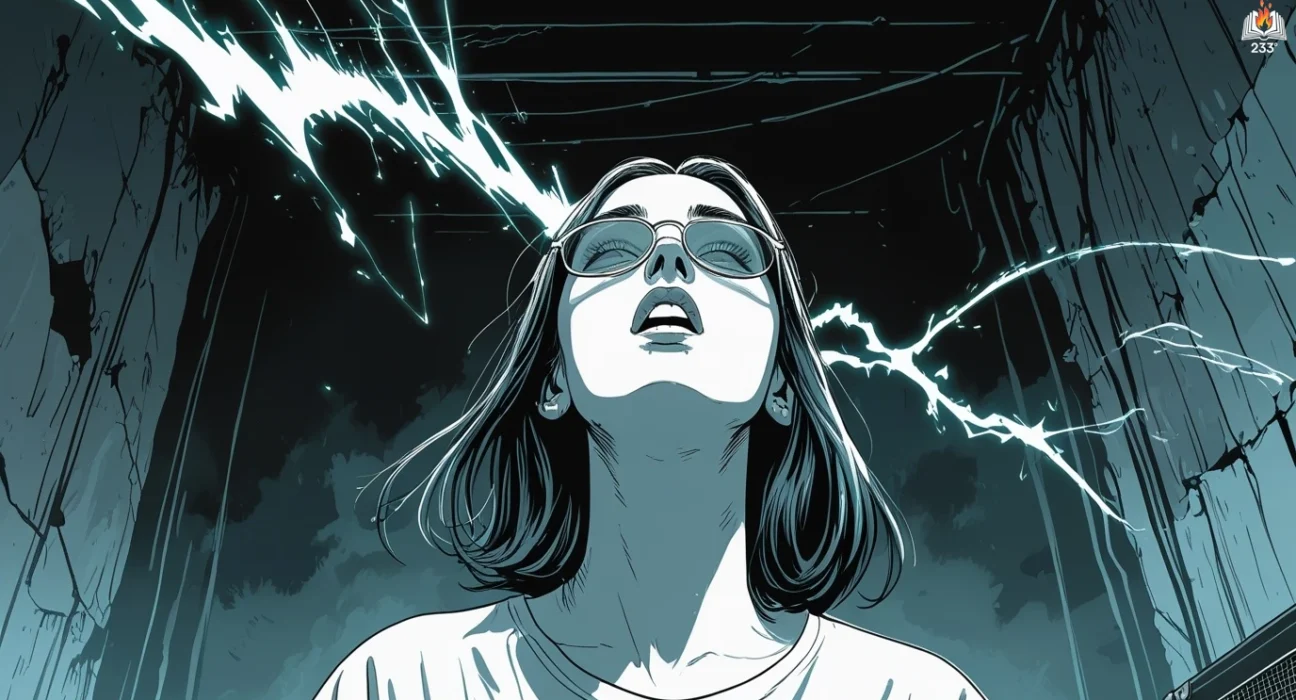
The Last Days by Scott Westerfeld, published in 2006, is a gripping urban fantasy novel set in a gritty, heat-drenched New York City on the brink of collapse. As a spiritual companion to Westerfeld’s Peeps, the novel shares its post-apocalyptic world and explores the darker edges of human evolution and supernatural transformation. In The Last Days, five teens form a band not merely to chase stardom, but to survive an unraveling world steeped in madness, monsters, and music. Blending horror, satire, and youth rebellion, Westerfeld crafts a story that is as much about the end of the world as it is about finding one’s voice amid chaos.
Plot Summary
Beneath the sweating skyline of New York City, something old and sick is crawling to the surface. The city pulses with heat and tension – garbage rots in the streets, rats scurry in broad daylight, and an eerie sense of absence thickens the air. People vanish. Institutions flicker and falter. Strange music swells in hidden places. And while the world seems to rot from the inside out, five teenagers build something beautiful in the wreckage.
Moz stumbles into the collapse. He spends his nights trudging through the city’s greasy heat, strumming his guitar into oblivion with Zahler, his loyal but underwhelming bandmate. Their world has shrunk to late-night riffs and restless boredom, until a television crashes from a window like an omen. From the third floor, Minerva, pale and shattered, rains her life into the street. Among the debris is a guitar – a perfect Stratocaster – and beside it, Pearl, sharp-eyed and fire-willed. Together, they save the instrument and unknowingly strum the first note of something impossible.
Pearl sees the potential instantly. While others flinch from the city’s decay, she gathers energy from it. Music, she believes, is not an escape – it’s the answer. She begins pulling the band into form with ruthless precision, using Moz’s obsession, Zahler’s loyalty, and Minerva’s whispered songs to shape something raw and powerful. Each member brings a fragment of rhythm and discord. Zahler shifts from guitarist to bassist with grudging humility. Moz finds himself haunted by Minerva’s voice and by the hunger in her silence. Minerva, wrapped in sunglasses and rumors of madness, brings not just vocals, but a voice that can shift the air itself.
They find Alana Ray pounding rhythms against the city’s skin. She lives on the edge of reality, twitching, seeing patterns no one else can. Her drumming isn’t learned – it’s channeled. She doesn’t speak often, but when she plays, the world bends toward her. Pearl recruits her like a general drafting a seer, and the band begins to rehearse – early morning sessions before the sun can burn away the fragile newness of their sound.
Each session unearths more. Minerva’s condition, once dismissed as eccentricity or illness, proves deeper. She has been infected with something primal. A parasite lives within her, something ancient and alien, something that responds to rhythm and sound. Her voice cracks the air and summons what should not be seen. The band’s music, shaped by Pearl’s arrangements, Alana’s mathematical beats, and Moz’s obsession, becomes a conduit. They are not playing songs. They are calling out.
Pearl feels the change. The city itself responds to them – shadows tighten, animals watch from alleys, and the subways hum with secrets. Still, she pushes forward. A name is coming, she insists, fame is near. She believes they can save Minerva by turning her into a star. The logic is absurd and holy – if the music is killing her, let it do so onstage. If the city is collapsing, let them go out with amplifiers blazing.
Zahler, faithful and frustrated, watches from the margins. He walks dogs through alleys crawling with eyes, sees rats move like soldiers and cats command silence with stares. He doesn’t understand what’s happening, only that the band is changing them. He sees Moz falling deeper into Minerva’s pull, Pearl burning herself on the ambition she wields like a weapon. He wonders where he fits – a backup in a band that no longer plays backup songs.
Astor Michaels finds them next – sleek, strange, predatory. He’s a scout for Red Rat Records, a man who collects broken things and makes them shine for a moment before they’re devoured. Pearl dresses herself like a flame and goes to him. She drops their music, pulsing from her chest like a heartbeat, into his hands. He smiles with teeth that don’t quite belong, and she sees it too late – this is not just a contract. It’s a summons.
Minerva leaves her old life behind with nothing more than two suitcases and her cat. Astor gives her a new home, a sleek apartment free of mirrors and memories. She welcomes the absence. Luz, her healer, had warned her that the parasite would hunger if fed too long without control. But Minerva doesn’t want control anymore. She wants to sing. Moz, who has been swallowing tinctures and garlic to keep his own infection at bay, follows her without question.
Rehearsals intensify. Their songs crackle with invisible static. Minerva’s words – incoherent, primal, divine – fill the spaces between instruments like prophecy. Alana Ray begins to tap rhythms against the walls when she isn’t drumming, trying to hold the chaos in check. The music becomes ritual. Each performance, even in private, pushes further into something that is not music anymore. It is a message. A warning. A weapon.
They book their first show.
The venue is a pressure cooker of broken air conditioners, scattered fans, and expectant bodies. The crowd doesn’t know what it’s waiting for. The band steps into position. Moz tunes his guitar like a priest polishing relics. Zahler counts his fingers again and again. Alana Ray’s sticks hover. Pearl meets Minerva’s gaze – one final calibration.
And then the music begins.
Minerva sings.
The city responds.
Something deep beneath the asphalt stirs. Rats swarm through sewers with purpose. Lights dim. The music rises and tears the air like fabric. Her voice is no longer a voice – it is the echo of every hunger left unspoken, every scream swallowed by order. People don’t dance. They freeze. Cry. Fall to their knees. Not everyone survives the sound.
But the song ends.
And for the first time, there is silence.
Not death. Not collapse. But a breath held in stillness.
The band doesn’t stop playing. They go on. Astor’s machines whir and blink. The city shakes but does not fall. For now.
They have bought time. Or summoned something. Perhaps both.
Above them, the stars flicker.
Below, the dark listens.
Main Characters
Moz (Mozzie): A passionate guitarist haunted by his limitations and his longing for connection. Moz starts the story drifting musically and emotionally, but his obsession with music – and a mysterious girl named Minerva – drives his transformation. His evolution from confused bystander to key player in a metaphysical war gives the novel its emotional pulse.
Pearl: Intelligent, ambitious, and the de facto leader of the group, Pearl is a musical genius who sees patterns where others see chaos. She orchestrates the formation of the band, motivates rehearsals, and has a calculated plan for stardom. Beneath her control lies vulnerability, especially in her feelings for Moz and her struggle to maintain normalcy amid the surreal.
Zahler: Moz’s best friend and the band’s original guitarist, Zahler is loyal but insecure. His self-doubt and lack of musical prowess put him at odds with Pearl’s vision, but his friendship, perseverance, and innate rhythm ultimately anchor the band. His journey involves confronting personal inadequacy and redefining his place through a shift to bass.
Minerva: Once a bright young singer, now nearly mute and reclusive, Minerva’s transformation under a mysterious illness makes her a vessel of otherworldly power. Her presence in the band is both catalyst and conduit – her voice, when unleashed, opens dimensions and communicates with creatures far beyond human understanding.
Alana Ray: A savant drummer with signs of neurodivergence, possibly autism or Tourette’s, Alana Ray provides not just rhythm but prophecy. Her unspoken understanding of pattern, time, and energy makes her eerily attuned to the cosmic disturbances threatening the city. She exists on the fringe of communication but at the center of the story’s spiritual force.
Theme
Music as Salvation and Destruction: Music is not just a metaphor but a literal force in The Last Days. It can open portals, heal minds, or summon ancient horrors. The band’s music becomes a way to battle darkness, underscoring themes of harmony, chaos, and the transformative power of sound.
Madness and Infection: The book explores the blurred line between mental illness and supernatural transformation. The “illness” infecting characters like Minerva symbolizes societal breakdown but also new forms of evolution. Westerfeld examines how fear of contagion can isolate and stigmatize, while also hinting at liberation.
Friendship and Loyalty Under Pressure: As the band contends with external and internal pressures, their bonds are tested. The characters must navigate ego, unrequited feelings, and clashing ambitions. True loyalty emerges not in perfection but in persistence, sacrifice, and adaptability.
The Collapse of Civilization: Westerfeld paints a city crumbling under its own weight – garbage strikes, missing students, cryptic disappearances. Through Pearl’s interactions at school and Ellen’s somber outlook, we see a world where classical culture is giving way to improvisational survivalism. The breakdown of infrastructure mirrors the characters’ internal fragmentation.
Identity and Coming of Age: The teens’ journey is as much personal as it is supernatural. Each struggles with questions of self-worth, legacy, and potential. Who they are, who they pretend to be, and who they might become are central tensions driving their growth and decisions.
Writing Style and Tone
Scott Westerfeld adopts a rotating first-person narrative style, allowing each chapter to be voiced by one of the five core band members. This approach injects intimacy and psychological depth, letting readers inhabit each character’s thoughts, insecurities, and perspectives. The language varies between narrators – Zahler’s casual sarcasm, Pearl’s calculated logic, Moz’s lyrical angst, Minerva’s fragmented consciousness, and Alana Ray’s surreal insight – creating a textured mosaic of voice.
The tone blends dark urban fantasy with sardonic humor. Westerfeld captures the suffocating heat and filth of New York’s decay while layering supernatural eeriness over real-world grit. His prose oscillates between the poetic and the punk, often fusing the sacred with the profane. Sentences are tight and rhythmically aware, echoing the musical structure that defines the plot. Emotionally, the novel surges between elation and dread, mirroring a city dancing on the edge of revelation or ruin.
Quotes
The Last Days – Scott Westerfeld (2006) Quotes
“I'd watched too many schoolmates graduate into mental institutions, into group homes and jails, and I knew that locking people up was paranormal - against normal, not beside it. Locks didn't cure; they strangled.”
“Sometimes you can’t choose what you love.”
“Nature can blow me.”
“I swallowed my screams whole. They went down my throat as sharp-cornered and cold as ice cubes.”
We hope this summary has sparked your interest and would appreciate you following Celsius 233 on social media:
There’s a treasure trove of other fascinating book summaries waiting for you. Check out our collection of stories that inspire, thrill, and provoke thought, just like this one by checking out the Book Shelf or the Library
Remember, while our summaries capture the essence, they can never replace the full experience of reading the book. If this summary intrigued you, consider diving into the complete story – buy the book and immerse yourself in the author’s original work.
If you want to request a book summary, click here.
When Saurabh is not working/watching football/reading books/traveling, you can reach him via Twitter/X, LinkedIn, or Threads
Restart reading!