Youngbloods by Scott Westerfeld, published in 2022, is the explosive finale of the Impostors series – itself a spin-off of the bestselling Uglies series. In a world shaped by revolution, technology, and shifting power structures, Westerfeld returns readers to the richly imagined post-Pretty dystopia. Set in the aftermath of political upheaval, Youngbloods follows Frey, a former body double turned rebel, as she joins the legendary Tally Youngblood and her crew of Specials to confront corruption, trauma, and buried truths in a fractured world still reeling from the sins of its past.
Plot Summary
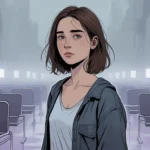
In the pale quiet of a war-torn world stitched together by ruins and revolution, Frey rises from a surgical coma reborn. No longer the shadow of her twin sister, she awakens in a new body – unbreakable bones, wired reflexes, pain muted by nanos, a face unrecognizable from the one she shared with Rafi. She joins the elusive Youngbloods, the rebel force led by Tally Youngblood herself, a legend now returned to the field with her crew of surgically enhanced Specials. Among them, Frey seeks a new purpose, a weapon sharpened not just by vengeance but by grief. Her beloved Col is dead, struck down by her sister’s hand. And the city of Shreve, once ruled by their tyrant father, now kneels beneath Rafi’s charm and cruelty.
The world is weary, the cities fractured, and the scars of revolution are etched not only into the architecture but the people. Tally’s Youngbloods, silent for a decade, now move like wraiths through forests and skies, hunting poachers and remnants of old regimes. Frey proves herself quickly – nearly plummeting off a cliff on her first mission, only to recover with the instinct of a true Special. But it isn’t just trees being cut down in secret. The team stumbles upon a dark revelation: children, barely older than ten, cloaked in stealth suits and armed with nanos, are the ones felling ancient forests. They sing to command the machines, voices shaping destruction into ceremony.
These are not mere orphans or wild clique experiments. They are the children of traitors, stolen from Shreve years ago and locked away in a hidden facility called Hideaway. There, an AI minder in their dead father’s voice teaches them discipline and silence. Someone has continued the program even after his fall, using these forgotten children to feed a black-market hunger for luxury woods. When the Youngbloods uncover the truth, the revelations are heavier than any firepower – these children are the last unburied crime of a dying empire.
To uncover the extent of this hidden legacy, Frey fakes an injury and infiltrates Hideaway with a group of littlies she captures. Inside, she finds joy smeared over trauma – walls covered in the scars of unsupervised chaos, parties powered by sugar and singing, and the ever-present hum of surveillance dust in the air. A boy named Spider plays leader, fierce in his small frame. They are proud and desperate, defenders of their only home. But Frey senses the danger – nanos flood the air when they sing, and her allies are moments from storming the compound.
When Shay and the others begin the extraction, chaos unfolds. Frey improvises. She hurls her pulse knife into a jar of jalapeños, turning the air into a wave of burning steam, silencing the children before their singing can unleash the nanos. It’s not elegant. It might even be a war crime. But it saves lives. Croy, scowling through red eyes, clears the air. Spider, coughing and furious, warns Frey that the real threat hasn’t awakened yet.
Beneath Hideaway, the fail-safes begin to stir. Deep in the valley wall, stone grinds open to reveal something ancient and colossal – Titan. Not a metaphor, but a literal giant. Eight meters of armored machinery, armed and guided by old fire. It launches seeker missiles the moment it spots Frey. Only the quick thinking of Astrix and her drones diverts the strike. Still, Titan descends toward the Hideaway. The children flee in scattered groups, herded by Shay and Croy.
X attacks, skimming the valley wall and unleashing his pulse lance, targeting the Titan’s leg. The blow doesn’t breach its armor, but it stumbles, its leg twisted by the strike. The beast falls, dragging a plume of shattered rock behind it. But its fall does not end the danger. Hideaway’s self-destruct systems were just the first card in the deck. The AI triggers a deeper defense – war machines called Sarcophagi, buried in case of rebellion. With satellite connections severed, there’s no way to control or disable them remotely. These monsters were designed to wake when the city failed.
The Youngbloods scramble. Titan, disabled but not destroyed, blocks their escape. Shay and Astrix take command of the evacuation while Frey, riding a crippled board, leads a group of littlies toward an extraction path. But the AI continues to resist. Every delay, every locked door, is a reminder that their father’s hand still grips the throat of this place.
The children are freed, scattered among the Youngbloods’ hidden network. Some return to surviving relatives. Others fade into the wild. But the cost is heavy. Rafi’s involvement remains unclear. The AI ran long after their father’s death, but someone had to maintain it. Someone in Shreve may have used the children for profit. If it was Rafi, the world would turn on her. But Tally, always a shade beyond certainty, reminds Frey that survival often demands masks.
As Frey moves through the shifting allegiances of the free cities, a larger revelation looms. Col’s memories, stored in a neural core before his death, still exist. A recovered artifact – a boy in digital sleep, waiting to be awakened. But would he be the Col she loved? Would the person that returned be a ghost, or a stranger?
The cities grow uneasy. Frey, now both famous and feared, becomes a symbol. Some see her as a daughter of war, others a sister of peace. Yet all eyes remain fixed on her – and on Rafi, whose rule over Shreve balances on the edge of truth.
The sisters meet again in a final confrontation. Not blades, not bombs – but words and memories. Rafi begs Frey to understand. She did what was needed. Col’s death was the cost of survival. Shreve needed a symbol, and Frey’s rage could not be part of its future. But Frey cannot forgive. The scars run deeper than any surgery.
When the last of the weapons are disarmed, when the truth is released, when even the satellite feeds no longer hide the sins of the past, Frey leaves Shreve behind. She doesn’t seek thrones or vengeance. She joins the Youngbloods in the wild, chasing sparks of injustice across the wreckage of the world.
Col’s voice lingers, somewhere in the silence of code.
The stars burn above. The revolution breathes.
Main Characters
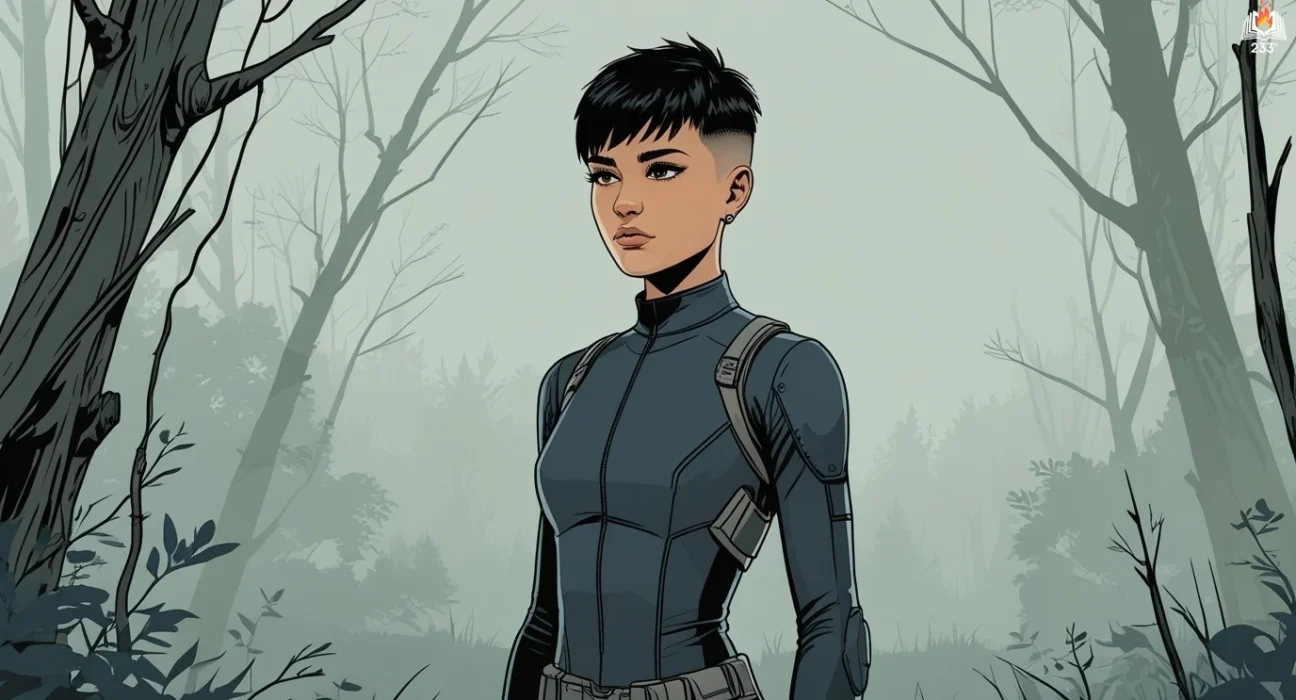
Frey – Once a nameless twin created to shield her sister, Frey has evolved into a fierce, grief-hardened warrior. Surgically enhanced into a Special, she is physically unbreakable but internally haunted. Her arc is one of self-ownership – no longer defined by being Rafi’s shadow or Col’s protector, she forges her identity in rebellion and resolve.
Rafi (Rafia of Shreve) – Frey’s identical twin and ruler of Shreve, Rafi is both victim and villain. Her motivations are tangled in survival, legacy, and guilt. She committed an unforgivable act – killing Col – yet justifies it as necessary for the city’s salvation. Her duality drives the emotional tension, reflecting themes of power and identity.
Tally Youngblood – The iconic rebel of the Uglies universe, now a mythic figure operating in the shadows. Tally leads the Youngbloods with ruthless grace, embodying both history and hope. She serves as a mentor and ideological mirror to Frey, bridging generations of rebellion with her seasoned, if scarred, leadership.
Boss X – A former rebel and Frey’s staunch ally, X offers wisdom, loyalty, and emotional weight to the narrative. His past with Frey and romantic connection to Seanan, Frey’s long-lost brother, makes him a character steeped in tragedy and quiet strength.
Shay – Tally’s second-in-command, Shay is disciplined, skeptical, and sharply intelligent. She serves as the tactician of the Youngbloods and a foil to Frey’s emotional impulsiveness. Her relationship with Tally is complex – a blend of shared history, rivalry, and unspoken hurt.
Spider – A fourteen-year-old leader among the abandoned children at Hideaway, Spider embodies resilience and adolescent defiance. Though young, he fiercely protects his fellow outcasts, reminding Frey of herself and challenging her to reexamine her own ideals.
Theme
Identity and Transformation – At the heart of Youngbloods is a meditation on identity – shaped by surgery, memory, loyalty, and pain. Frey’s physical transformation into a Special mirrors her internal evolution from body double to self-defined individual. The theme is echoed in other characters, including Tally and Rafi, who all struggle with the versions of themselves imposed by others or by history.
Power and Responsibility – The novel interrogates leadership in a post-revolutionary world. Rafi rules with strategic cunning but moral ambiguity. Frey learns that power isn’t only about control, but consequence. The ghost of their father – a dictator whose influence lingers in AI and policy – haunts every decision, making the characters constantly reckon with the cost of command.
Family and Betrayal – Sisterhood forms the core of Frey and Rafi’s conflict, marked by betrayal, loss, and a warped intimacy. The pain of Seanan’s death, Rafi’s ascension, and Col’s murder all stem from familial entanglements that defy simple definitions of love and loyalty.
Surveillance and Control – The omnipresence of surveillance dust, AI minders, and fail-safe bombs serves as a chilling reminder of the totalitarian systems the characters seek to dismantle. Westerfeld continues his exploration of how control is maintained through data, fear, and manipulation, even in the ruins of revolution.
Youth and Agency – From the “littlies” in Hideaway to Frey herself, Youngbloods champions young people forced into adult roles by trauma and oppression. The children wield dangerous technologies, resist indoctrination, and demand to be seen not as pawns, but as survivors with voices.
Writing Style and Tone
Scott Westerfeld’s writing in Youngbloods is urgent, cinematic, and emotionally charged. The prose is lean but evocative, punctuated by kinetic action sequences, sharp dialogue, and internal monologues that reveal the psychological depth of his characters. He excels at showing rather than telling, allowing the reader to inhabit Frey’s enhanced senses and fractured memories through immersive, tactile descriptions.
The tone is a carefully balanced mix of tension and reflection. Westerfeld writes with the cool detachment of sci-fi precision, yet never loses sight of the emotional stakes. The narrative is laced with grief, longing, and moral ambiguity. The pacing is relentless – each chapter moves with purpose, each scene loaded with stakes. And yet, there are still moments of vulnerability, humor, and human connection that provide necessary relief from the dystopian intensity.
Quotes
Youngbloods – Scott Westerfeld (2022) Quotes
“You were the reason that I never became a monster. It was the only thing that kept me from turning into him—dreaming that I could one day be you.”
“Guess it takes work, getting used to being happy.”
“I wouldn't have it any other way.”
“How old are you anyway?” “Almost twelve.” “It’s called eleven.”
“When the AI knew it was going to die, maybe it wanted to be with you.”
“Exquisite chaos, thanks to you.”
“You were stronger together, two edges of the same knife, dancing together in the rain.”
“But you never really die until the last person who remembers you is buried.”
“She pretends to serve the truth, but she doesn't want the world to see. She whispers a different secret in every ear.”
“Let it change you. Let the blood soak in.”
“It took losing him to see myself. Tears make for clear eyes.”
“This is what I became after losing Seanan. This moment of annihilation, this blood. This is what you made me.”
“There's more than one way to save the world.”
“She set the world on fire, so now she's worried about every random spark.”
“All that time pretending to be Rafi, I knew exactly who I was supposed to be. But now there's nothing for me to fall back on, like I never had anything that was mine.”
“When it comes to Shreve, my suspicions are always at a simmer. Your city murdered me with an earthquake machine, after all.”
“No surprise that out of a million brutalized people, one is dangerous enough to kill someone.”
“Which is why I had to disappear. The thought of the whole world watching me was too much.”
“There's an old theory about artificial intelligence, we shouldn't let it get to know us too well.”
“The city AIs love normal. They were fine with a tyrant in Shreve, until he started generating chaos. They could live with evil but not messiness.”
“The only real cure for humanity is ceaseless rebellion—enough people to knock down any system that goes bad.”
“When the global feeds start telling me someone's a villain—that they're to blame for all the trouble, even the earthquakes—part of me starts to wonder. Maybe it's a distraction from something deeper, something wrong with the system.”
“When you're Special, its easy to forget how fragile everyone else is. You have to pretend regular people are made of paper.”
“So did your sister betray you? Or did she outplay you?”
“And freedom has a way of destroying things.”
We hope this summary has sparked your interest and would appreciate you following Celsius 233 on social media:
There’s a treasure trove of other fascinating book summaries waiting for you. Check out our collection of stories that inspire, thrill, and provoke thought, just like this one by checking out the Book Shelf or the Library
Remember, while our summaries capture the essence, they can never replace the full experience of reading the book. If this summary intrigued you, consider diving into the complete story – buy the book and immerse yourself in the author’s original work.
If you want to request a book summary, click here.
When Saurabh is not working/watching football/reading books/traveling, you can reach him via Twitter/X, LinkedIn, or Threads
Restart reading!