Afterworlds, written by Scott Westerfeld and published in 2014, is a genre-bending young adult novel that skillfully interlaces two narratives: one of a teenage writer navigating the real-world publishing industry and another of her fictional creation, a girl who slips into a supernatural realm. Westerfeld, known for popular series like Uglies and Leviathan, constructs a clever metafictional format where the boundaries between fiction and reality blur, immersing readers in both a coming-of-age story and a chilling paranormal thriller.
Plot Summary
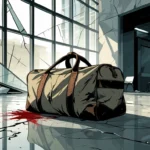
In the thick hush of midnight, amid the cold fluorescent lights of an airport terminal, a girl named Lizzie Scofield wandered, texting her mother and shuffling past shuttered shops. The place was quiet, almost suspended. Then the air fractured. Gunfire erupted – too loud, too sudden – and Lizzie found herself swept into chaos, bodies falling, screams rising. A terrorist attack had begun. One moment she stood in panic, the next she was sprawled on the floor, feigning death at the instruction of a calm 911 operator. With blood on her brow and breath held still, she convinced the world she was no longer among the living.
But in doing so, she slipped through a veil.
The world around her shifted. The colors drained, and the airport transformed into a liminal realm thick with mist and silence. In this place – the afterworld – Lizzie met a young girl named Yami, gray-skinned and knowing, and then her brother Yamaraj, glowing with life and warmth. They told her she had crossed over, not by death, but by thought – by a deep, desperate will to survive. Lizzie, bewildered and breathless, realized she stood on the edge between worlds.
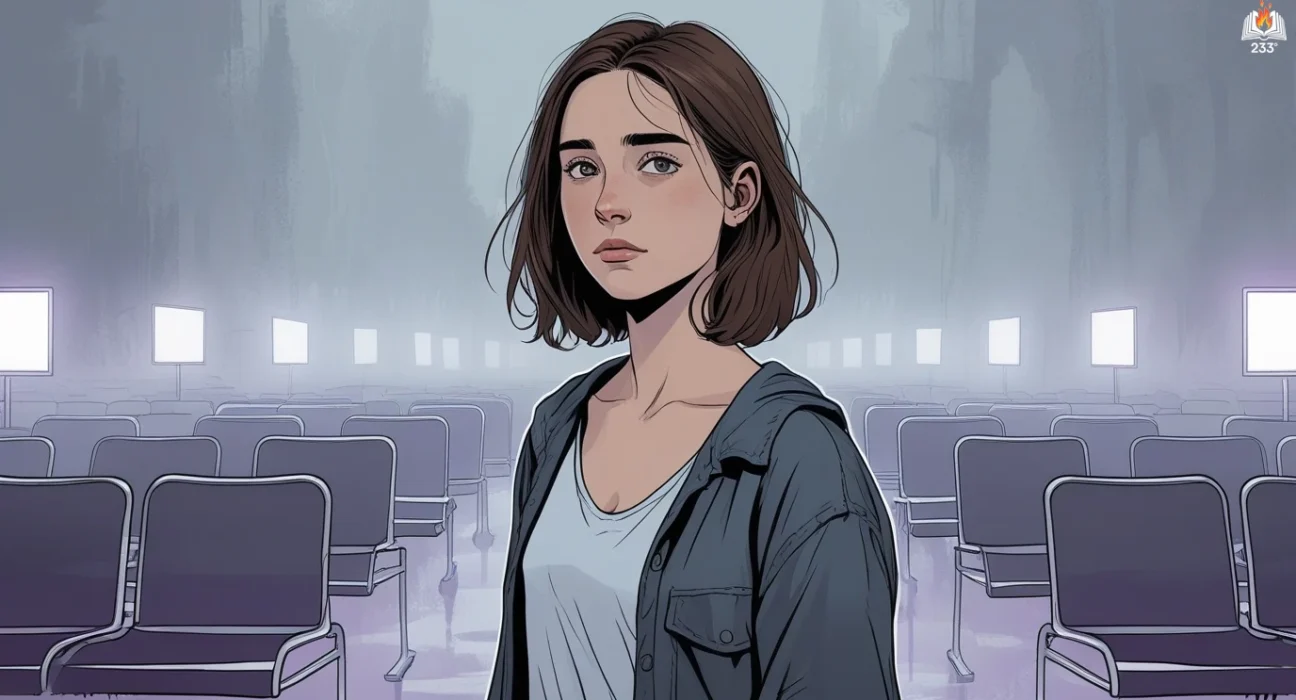
Yamaraj, a gentle guide with eyes full of centuries, led her through the haze, away from gunmen and into a quieter part of the realm. There, amidst rows of spectral chairs and fading screens, he explained the rules of this strange layer beneath the living. She wasn’t dead. Not yet. But she had tapped into something rare and ancient – the power to slip into the space of spirits, where belief shaped reality and ghosts waited to be guided.
As the aftermath of the attack played out in the overworld, Yami gathered the dead, shepherding them into darkness, while Lizzie watched – the lone survivor, the only one left among the fallen. Yamaraj warned her: belief was dangerous. This world, once seen, could not be forgotten. But Lizzie’s memory proved stubborn. Even after Yamaraj returned her to her body with a parting kiss that reignited her frozen heart, even after she awoke zipped into a body bag under fluttering police tape, she remembered.
Her breath returned with a shudder. Paramedics stared in disbelief. Hospital lights hummed above her, bright and indifferent. Everyone told her it was a miracle. No one asked where she had been.
Far from the trauma and blood-soaked tiles of Lizzie’s world, Darcy Patel stood at the beginning of a different kind of transformation. At eighteen, she had written a book in thirty days – a feat born from inspiration, impulse, and obsession. Her manuscript caught the eye of a top literary agency. A contract arrived, thick with clauses and promises. With trembling hands, she signed. Darcy, daughter of cautious parents and the older sister of a sharply intelligent Nisha, chose to skip college, deferring Oberlin for the siren call of New York City. She was determined to become a writer, not just on paper but in life.
Darcy’s journey unfolded in the strange in-between of reality and the imagined. As she stepped into the glittering chaos of the city, she encountered the intimidating world of publishing – editors, agents, contracts, and revisions. She met Imogen, a brilliant, older writer with sharp insight and a quiet allure. What began as admiration deepened into love, entangling Darcy in a relationship that both inspired and unmoored her.
While Darcy revised her book – the same tale of Lizzie and the afterworld – she struggled with questions of truth and creation. How much of herself had she woven into Lizzie? Where did fiction end and life begin? As deadlines loomed and promotional duties mounted, Darcy found herself in a strange kind of limbo, not unlike Lizzie’s. She was alive, yes, but torn between worlds – the imagined and the real, the romantic and the practical, the old self and the self yet to be.
Back in Lizzie’s thread, the ghosts never truly left. She began to see them – even outside the airport memory, even in her own home. A little boy named Tom, soaked from a rain that had never fallen, visited her hospital room. And when she returned home, she could no longer ignore the whispers and shadows. Her friend Mindy grew concerned. Her father, aloof and distant, offered distraction but not comfort. Lizzie sought out Yamaraj again, unwilling to forget what she had seen.
Their connection deepened. He told her about his role – a psychopomp, a guide for the dead – and warned her again of the cost of belief. But Lizzie, shaped now by grief and wonder, could not turn back. She began to help the dead, easing their passage, confronting the horrors that lingered. One spirit in particular, a girl named Betty who had been murdered decades ago, haunted her with unfinished pain. Lizzie’s efforts to help her stirred something darker – a thirst for vengeance.
As Lizzie descended further into this spirit work, the afterworld responded. Her reflection vanished from mirrors. Her sleep grew thin. The border between life and death thinned around her. She confronted the man who had murdered Betty, and in doing so, tasted justice – and its poison. The encounter left her changed, heavier, burdened. Yamaraj, watching from the edge, warned her again: this path was irreversible.
Darcy, meanwhile, waded through her own complications. Her relationship with Imogen strained under the weight of secrets and insecurity. Imogen, it turned out, had ghostwritten more than one of her own published works. The revelation cracked something inside Darcy, who had believed in the purity of the written word, in authorship as identity. The rupture mirrored her own doubts. Was she truly an author? Or just a girl who had typed quickly in November?
As Darcy neared her final draft, her grip on Lizzie began to waver. The girl in the book had grown more defiant, more independent. She wasn’t content to be a pawn of narrative. Lizzie made choices Darcy hadn’t foreseen, took risks she might not have written. And perhaps that was the greatest measure of Darcy’s growth – the realization that creation meant letting go.
In the afterworld, Lizzie’s reflection returned. Yamaraj, ever distant, remained a flicker in her thoughts – a symbol of another life, another path. Lizzie had changed. She had stepped into the space between life and death, not to flee, but to lead.
And in New York, Darcy closed her manuscript, her fingers sore, her heart full. She wasn’t certain if she had captured everything. She wasn’t certain if she ever could. But she had written something true – and that was enough.
Main Characters
Darcy Patel – An ambitious and introspective eighteen-year-old Indian-American who lands a lucrative book deal after writing a paranormal novel during NaNoWriMo. She moves to New York City to rewrite and promote her novel, grappling with imposter syndrome, cultural expectations, love, and independence. Her character arc centers on self-discovery, artistic integrity, and the tension between fantasy and adulthood.
Lizzie Scofield – The protagonist of Darcy’s novel Afterworlds, Lizzie survives a terrorist attack by slipping into the “afterworld,” a liminal realm where ghosts dwell. Her journey from trauma-stricken teen to a spirit guide explores mortality, grief, and the supernatural. She’s brave, deeply empathetic, and increasingly altered by her interactions with the afterlife.
Yamaraj – A mysterious and ethereal boy from the afterworld, Yamaraj becomes Lizzie’s guide and romantic interest. Inspired by Vedic mythology, he’s a psychopomp – one who guides spirits. His serene demeanor and cryptic wisdom ground Lizzie, but his warnings about the dangers of belief foreshadow deep consequences.
Yami – Yamaraj’s ghostly sister who died long ago, Yami leads the dead to peace. She’s eerie, blunt, and emotionally detached, a stark contrast to Lizzie’s emotional turmoil. Her presence underscores the haunting permanence of death.
Nisha Patel – Darcy’s witty and precocious younger sister who provides comic relief and pragmatic wisdom. Nisha is Darcy’s confidante and support system, offering clever strategies and challenging her to be bold.
Theme
The Power of Storytelling – At its core, Afterworlds celebrates the act of writing and the significance of stories. Darcy’s journey parallels Lizzie’s, illustrating how fiction can mirror life, offer escape, and process trauma. The novel highlights how writers imbue pieces of themselves into their creations.
Life, Death, and the In-Between – Through Lizzie’s story, Westerfeld explores what it means to live after experiencing death, both metaphorically and literally. The afterworld is a space of reflection, justice, and reckoning, challenging the finality of death.
Coming of Age and Identity – Darcy’s narrative is a classic bildungsroman. She faces adult responsibilities, romantic complexities, and cultural tensions while trying to define herself as an artist and as a young woman. The story probes what it means to grow up while clinging to imaginative roots.
Cultural Duality and Expectations – As an Indian-American teen, Darcy negotiates traditional parental expectations with her desire to live independently and write full-time. Her dual identity adds depth to her choices and fears, showcasing the universal tension between familial duty and personal ambition.
Belief and Consequence – In the afterworld narrative, belief is a literal force – powerful, transformative, and dangerous. Yamaraj warns Lizzie that belief can change her, suggesting that once someone acknowledges the supernatural, they can never return unchanged. It’s a commentary on how accepting truths – especially difficult ones – reshapes identity.
Writing Style and Tone
Scott Westerfeld employs a dual narrative structure that alternates between Darcy’s real-world experiences and Lizzie’s fictional afterlife journey. This technique creates a layered reading experience, inviting readers to compare the process of writing with the process of living. Darcy’s chapters are grounded, contemporary, and tinged with dry humor, capturing the hopeful anxiety of a teenage debut author. Lizzie’s chapters are more lyrical, suspenseful, and atmospheric, reflecting the dark allure of paranormal fiction.
Westerfeld’s tone shifts deftly between the pragmatic and the poetic. Darcy’s sections are filled with dialogue-driven introspection and insider glimpses into the publishing world, often satirical or bittersweet. In contrast, Lizzie’s story unfolds in haunting prose, with vivid sensory detail and a tone that wavers between eerie wonder and creeping dread. The contrast in tone not only enhances the narrative structure but also amplifies each protagonist’s emotional stakes. Together, they reflect the journey of an author discovering her voice and a character discovering her fate.
Quotes
Afterworlds – Scott Westerfeld (2014) Quotes
“What did a happy ending even mean in real life, anyway? In stories you simply said, 'They lived happily ever after,' and that was it. But in real life people had to keep on living, day after day, year after year.”
“Being an author sucks, doesn't it? It's like telling a joke and nobody laughs for two years.”
“Real life doesn’t have many happy endings. Why shouldn’t books make up the difference?”
“You don't know what it's like, when your best friend disappears.”
“Hiding from the truth was worse than being lied to.”
“The best way to know a city is to eat it.”
“You don't think happy endings are stupid anymore?" "Your question is irrelevant," Imogen said. "This isn't the end.”
“Just remember, the things we write, they aren't always really us.”
“First love is amazing and wonderful, but a kind of panic underlies it, a sense of not knowing what you're doing.”
“Being fathomed was even better than being flattered, it turned out.”
“Sleep is a little slice of death.”
“The universe is math on fire.”
“Blurbs don’t work anymore!” was another. “You should make sure that the quotable lines of dialogue in your book never exceed a hundred and forty characters!” seemed at best debatable.”
“Looking for a thousand years is worth it, if in the end you find what you need.”
“For me, writing's the only thing that's always real. I've never regretted a day I wrote a good scene, whatever else I screwed up that day. That's what's fucking real.”
“Adulation is like rain. You can only get so wet.”
“Nice concept. But is it a trilogy or a tweet?" "I can't tell any more.”
“More lies, but maybe lies were better than the truth.”
“Mindy had explained that a lot of things had ghosts, not just people. Animals, machines, even things as vast as a paved-over forest or as humble as the smell of good cooking could leave traces of themselves behind. The world was haunted by the past.”
“The scent of a faraway place lay on my skin.”
“Maybe that was the point of truth-you could erase it all you wanted, and it was there was to be discovered again.”
“It’s just . . . it feels like someone’s going to ask me for ID. Like, writer ID.” The”
“the things we write, they aren’t always really us.”
“Your book is smart and beautiful. I want to have its sequels.”
“Being an author sucks, doesn’t it? It’s like telling a joke and nobody laughs for two years.”
“The opening chapter was the book's unique selling point, the singular idea that had carried Darcy through last November, and Coleman had just come up with it off the top of his head.”
“I'm here to learn. And what you have taught me is to avoid love as long as possible.”
“Maybe that was the point of truth--you could erase it all you wanted, and it was there to be discovered again”
We hope this summary has sparked your interest and would appreciate you following Celsius 233 on social media:
There’s a treasure trove of other fascinating book summaries waiting for you. Check out our collection of stories that inspire, thrill, and provoke thought, just like this one by checking out the Book Shelf or the Library
Remember, while our summaries capture the essence, they can never replace the full experience of reading the book. If this summary intrigued you, consider diving into the complete story – buy the book and immerse yourself in the author’s original work.
If you want to request a book summary, click here.
When Saurabh is not working/watching football/reading books/traveling, you can reach him via Twitter/X, LinkedIn, or Threads
Restart reading!