

Nexus (published in 2017), the climactic finale to the Zeroes trilogy by Scott Westerfeld, Margo Lanagan, and Deborah Biancotti, dives deep into a world where teenagers possess strange, crowd-based powers that are both gifts and curses. Building upon the events of Zeroes and Swarm, this final volume brings the group back together for one last, desperate mission – a high-stakes confrontation against a force threatening to tear apart the fragile society they’ve tried to protect.
Plot Summary
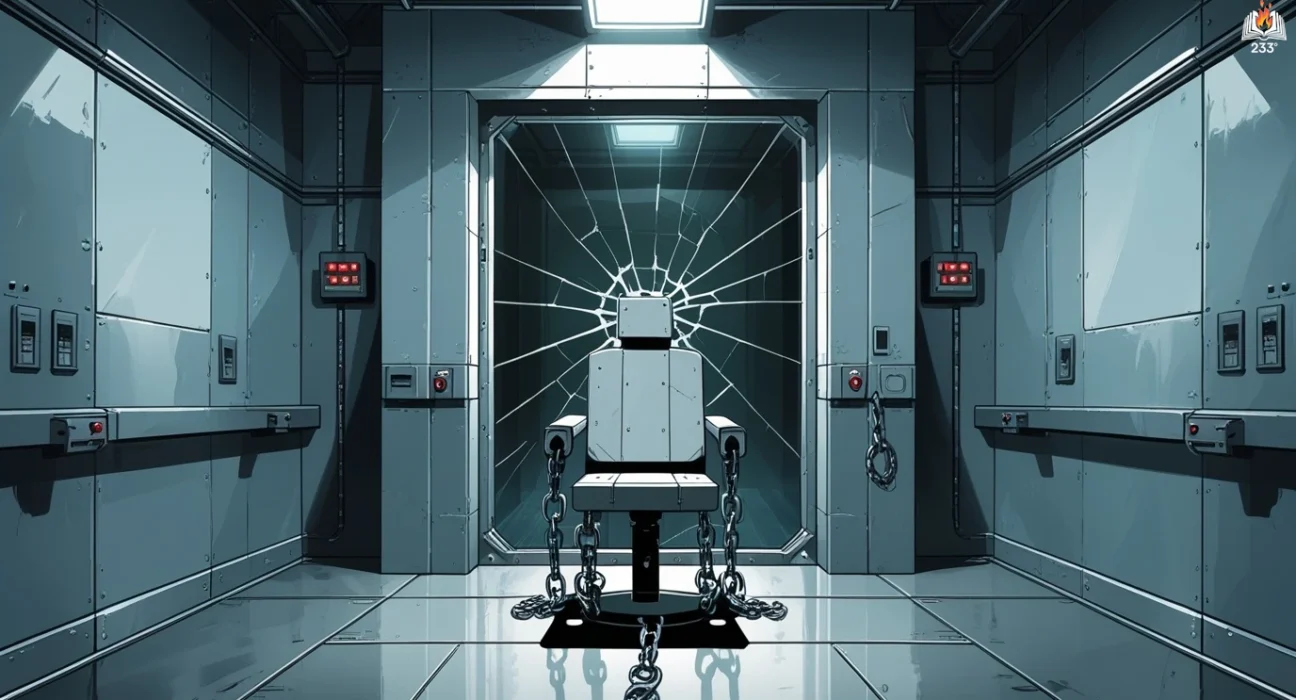
In a concrete labyrinth built to sever all connection, Nate – once Bellwether, the magnetic orchestrator of the Zeroes – sat shackled, starving for the attention his power needed to survive. The sterile silence of the supermax prison clawed at his senses until his interrogators arrived. But their questions weren’t about him. They were about Kelsie. About Crash. About the others. About what had happened in Eureka.
The Feds had brought someone new – Verity, a Zero who could tear truths from minds like bandages. Nate tried to play the game, spin lies into misdirection, but her stare shredded his defenses. The others were close. He could feel it. Crash had blacked out an entire town. The power pulsing through the prison whispered of her presence. And Nate knew – they were coming for him.
Outside, Chizara wrestled with the architecture of the prison like a symphony, crashing what needed to be broken, preserving what must hold. Flicker led the team, her vision borrowed from the eyes of others, always aware, always watching. Scam, voice sharpened into commands that bent reality, pushed them past locked gates and wary guards. Kelsie swayed to trance beats, weaving Mob’s influence through corridors thick with fear and control. Together, they slipped through the fortress like water through cracks.
As they approached Nate’s cell, Verity’s questions grew sharper. The Feds had his notes. They knew about the Petri Dish, about Crash’s powers, about the Zeroes’ tangled past. Nate resisted, but even without using her power, Verity saw too much. She was like him – but turned inside out. And he couldn’t lie to her.
The others burst in, blowing through protocol and armed guards with bluff and bravado. Nate, despite the chains on his wrists, reassembled himself in their presence. Glorious Leader, once again. But the shackles were designed to mute Crash’s ability, and with reinforcements closing in, the escape stalled.
Nate turned to Chizara, weaponizing her guilt. He pressed on memories of loss, of failure – the time she’d lost control and freed dangerous prisoners, the death of Officer Bright. It worked. Her grip faltered. The lights flickered. The prison trembled with electricity on the edge of collapse. The mirror separating them from the observing agents groaned under pressure. The crowd stirred. Phan, the calculating agent, caved. He ordered the key retrieved. Nate was free.
The Zeroes ran, the guards closing in. Spotlights blinked past them. Sirens wailed. But then Nate changed. He reached into something deeper, an inversion of his usual power. A hush fell over them. The snipers stopped seeing them. The eyes lost interest. The Zeroes became shadows. They weren’t escaping – they were forgotten. They were nothing.
This was the other half of Bellwether. Nate had become what Thibault once was – Anonymous. The group moved undetected through the perimeter, passed the fence, across the concrete killing field. Only when they reached the van did the spell break. They exhaled as one.
But something else broke. Flicker clutched at her wrist. A name surfaced. Thibault. He had been part of them. A friend. A love. The boy who was always forgotten. And now they remembered – and the pain of that forgetting nearly undid them.
Back at a safe house, the Zeroes processed the impossible. They’d all forgotten Anon. Not because he had died, but because that was his gift – to be unseen, unheld in memory, unless anchored intentionally. In the chaos of fleeing Cambria, Thibault had slipped from their thoughts like mist through fingers. Only Nate remembered. Because he had seen Anon pull the trigger on Swarm. The burden of that act had fused Thibault into Nate’s conscience.
Elsewhere, a boy drifted northward. No name on his tongue, no presence in others’ eyes. He walked through redwoods and fog, stealing sleep in attics and half-empty hotels, moving like a ghost. At a tide pool, he saw his reflection and didn’t flinch. He was nothing. Yet a memory stirred – a driftwood bat and a beach. A friend who’d once seen him. Something pulled him forward through the cold mist.
Meanwhile, Verity returned to the agency. But her alliance had frayed. Nate had offered her a choice. The seed was planted.
Nate stood before the others, no longer trying to lead. He confessed. They had forgotten Thibault the day of Swarm’s death. But he didn’t tell them the full truth – that Thibault had disappeared with guilt in his heart and blood on his hands. Nate carried that alone. He had to. Because what loomed next was bigger.
In New Orleans, strange things were happening. Rumors circled a name – Piper. Powers were surfacing faster, growing stronger. The balance of Zeroes and society was shifting. As the group prepared for what lay ahead, cracks remained. Chizara’s trust in Nate wavered. Kelsie held onto her music like a lifeline. Scam fidgeted under the weight of unwanted fame. Flicker clung to memory.
And far away, on a fog-wrapped coast, the boy with no name knocked stones into the sea with a driftwood bat. He didn’t know why he remembered the game. He only knew that someone had once cared enough to teach him. And that, perhaps, was enough to keep walking.
Main Characters
Nate (Bellwether/Nothing): Formerly the charismatic leader of the Zeroes, Nate begins the story imprisoned, stripped of his power’s utility and questioning his morality. He evolves from manipulative strategist to someone more introspective, discovering a hidden facet of his power that embodies anonymity and humility. His arc revolves around guilt, redemption, and letting go of dominance.
Flicker (Riley): Blind but able to see through the eyes of others, Flicker takes on a strong leadership role in Nate’s absence. As the most emotionally grounded of the group, she becomes the moral compass and central force holding the Zeroes together. Her relationship with Thibault (Anon) carries emotional weight, especially after realizing she forgot him entirely.
Chizara (Crash): Able to manipulate electronics, Chizara wrestles with the temptation and trauma of her own destructive capabilities. She’s the tactical backbone of the group, but the stress of controlling complex systems and the moral cost of her power makes her one of the most emotionally volatile characters.
Kelsie (Mob): She can manipulate crowds’ emotional states, absorbing and amplifying collective moods. Kelsie battles inner demons from her past association with the villainous Swarm, constantly resisting the temptation to exploit her powers. Her inner conflict is a lens through which we see the dangerous allure of power and the strength of choice.
Ethan (Scam): Ethan’s “voice” says what others want to hear, often bypassing his own will. His power’s uncontrollability makes him both comical relief and deeply tragic. He’s the most self-aware about his failings, constantly trying to harness or suppress his voice in dire situations.
Thibault (Anon): Though absent for much of the narrative, Anon’s influence is enormous. His power erases people’s ability to remember or notice him, rendering him invisible to memory and presence. His erasure from the group’s memory creates one of the novel’s most powerful emotional arcs and meditations on identity.
Verity: A new Zero who forces people to tell the truth, Verity is conscripted by the government to interrogate Nate. Young, sharp, and conflicted, she presents a foil to the older Zeroes. Her interactions with Nate add tension and depth to the exploration of ethics and authority.
Agent Phan: The primary federal antagonist, calm and collected, Phan embodies institutional power attempting to control superpowered youth. He plays a psychological game against Nate, acting more as a chessmaster than brute force.
Theme
Power and Responsibility: Central to Nexus is the exploration of power’s burden. Each Zero must reckon with how their ability affects others, whether for manipulation, destruction, or redemption. The novel challenges the superhero myth by showing how power isolates, corrupts, and demands accountability.
Identity and Memory: Thibault’s power drives the novel’s emotional core, questioning what it means to be remembered. When the Zeroes realize they’ve forgotten someone they loved, it reveals how identity is shaped not only by self-perception but by the reflections of others.
Redemption and Forgiveness: Nate’s transformation from Bellwether to Nothing mirrors his journey toward redemption. Having wielded influence manipulatively, his willingness to embrace invisibility symbolizes contrition and growth. The group’s ability to forgive, especially in the case of Crash and Flicker, deepens the emotional resonance.
Collective Emotion and Crowd Dynamics: The novel frequently investigates the psychology of groups, both in literal powers (Mob, Bellwether) and societal responses to fear and crisis. Mob’s power, in particular, becomes a metaphor for how public mood can be manipulated, weaponized, or healed.
Control versus Chaos: The supermax prison sequence and the looming threat in New Orleans present the constant battle between structure and entropy. Whether it’s governments trying to impose order or Zeroes breaking free, the line between chaos and control remains dangerously thin.
Writing Style and Tone
Scott Westerfeld and his co-authors craft Nexus in a tight, fast-paced style marked by rotating points of view that mirror the interconnectedness of the Zeroes’ powers. Each chapter is labeled with the narrator’s codename, giving the story a mosaic quality that immerses the reader in distinct perspectives while building a cohesive narrative arc. The prose balances introspective inner monologues with high-energy dialogue and cinematic action sequences. This approach gives both emotional depth and adrenaline-fueled momentum.
The tone of Nexus is dark, urgent, and emotionally complex. While the narrative maintains a pulse-pounding pace, it’s layered with themes of trauma, regret, and fragile hope. There’s a pervading sense of youth grappling with the consequences of abilities they never asked for, creating a tone that oscillates between empowerment and vulnerability. The characters are not glorified heroes but broken young people doing the best they can in a world increasingly shaped by fear and misunderstanding.
Quotes
Nexus – Scott Westerfeld (2017) Quotes
“This beauty would remain whether he was here to see it or not.”
We hope this summary has sparked your interest and would appreciate you following Celsius 233 on social media:
There’s a treasure trove of other fascinating book summaries waiting for you. Check out our collection of stories that inspire, thrill, and provoke thought, just like this one by checking out the Book Shelf or the Library
Remember, while our summaries capture the essence, they can never replace the full experience of reading the book. If this summary intrigued you, consider diving into the complete story – buy the book and immerse yourself in the author’s original work.
If you want to request a book summary, click here.
When Saurabh is not working/watching football/reading books/traveling, you can reach him via Twitter/X, LinkedIn, or Threads
Restart reading!