The Hundred Secret Senses, written by Amy Tan and published in 1995, continues her poignant exploration of cultural identity, family bonds, and the spiritual connections between generations. Renowned for her previous work The Joy Luck Club, Tan here dives into the lives of two half-sisters, Olivia and Kwan, navigating the tangled intersections of American modernity and Chinese mysticism. While the narrative unfolds in contemporary San Francisco and later in rural China, it is deeply rooted in a duality of perception – the Western belief in logic and the Eastern reverence for the unseen. Ghosts, memory, and history infuse the present, as Tan masterfully blends realism and the supernatural.
Plot Summary
In the fog-laced streets of San Francisco, a woman named Olivia Bishop drifts between two worlds. One, rooted in sleek modernity and hard-edged pragmatism. The other, shimmering with ghosts, dreams, and the boundless stories of her Chinese half-sister, Kwan Li. Olivia, born to an American mother and a Chinese father, grows up resisting the pull of her ancestry. Her father dies when she is just a child, and from a distant past in China, Kwan is brought to live with the family – exuberant, odd, and speaking only Chinese.
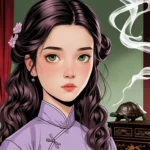
Kwan claims to have yin eyes – a mystical gift that allows her to see and communicate with ghosts. To Olivia, this is an embarrassment, something to hide from friends and schoolmates. Kwan is too loud, too foreign, too sincere. Yet she clings to Olivia with the ferocity of an older sister determined to fulfill her purpose. She watches over Olivia like a guardian spirit, telling her stories of long-dead people, of a China that dances somewhere between memory and myth. Olivia, skeptical and weary, pushes her away again and again, never realizing that every tale Kwan tells is stitched into her bones.
Time passes. Olivia becomes a commercial photographer, sharp-eyed and reserved. She marries Simon, a man with a heart tethered to the memory of a woman he once loved and lost. Their marriage is heavy with silence, a ritual of shared space but not shared selves. Eventually, it dissolves under the weight of unspoken needs. But Kwan refuses to accept this. She insists that Simon still loves Olivia. She spins dreams of reconciliation and destiny, dragging Olivia into her vision of fate.
Then comes the journey to China – Kwan’s idea, of course. A trip to Changmian, the village of her youth. She wants Olivia and Simon to come with her. She says it is for an article Olivia must write, for the photographs she must take. But Kwan’s intentions lie deeper, threaded with secrets and ghosts only she can see. Olivia, reluctantly, agrees. Simon, quietly, does too.
In the hills of southern China, the past rises like mist. Kwan becomes luminous, speaking the language of her homeland with ease, recounting tales of past lives as if they were recent events. She tells of Miss Banner, an American missionary who lived in China in the 1800s, and of a one-eyed girl named Nunumu – a young Hakka rebel who saw spirits and fought with the Taiping rebels. Kwan says she was that girl. And she says Olivia was Miss Banner, the one who once betrayed her.
The stories tumble out like riverwater – of rebellion and love, of betrayals that echo into the present. Kwan says the ghosts remember. That they still wait to see what the living will choose. Olivia listens, half-mocking, half-mesmerized. Simon listens too, quieter than before, the sorrow in him surfacing like smoke through stone.
In Changmian, strange things begin to happen. People seem to recognize Kwan, though she has not returned in decades. There are whispers, sightings, a mood of waiting. Kwan brings Olivia and Simon to a crumbling house she calls the Ghost Merchant’s house. It is a place of secrets, where memories pulse like living things. Kwan speaks of a promise made between her and Miss Banner, long ago, to carry the memory of the fallen and to keep their stories alive.
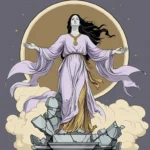
The villagers speak of a place beyond the mountain – the Valley of Statues – where time swirls like mist and the spirits are thick. Kwan insists they go. Olivia refuses at first, angry at her sister’s stubborn grip on fantasy. But when Kwan goes missing, vanishing in the hills without a trace, Olivia is forced to reckon with the weight of their connection.
She and Simon search. Days stretch out, filled with waiting and worry. Eventually, they find her. Kwan is bruised but smiling, as if she has been touched by something holy. She says the spirits led her back. That she knows what must happen.
A funeral follows. Not for Kwan, but for someone else – a final gesture in a ghost’s long-forgotten tale. Olivia does not understand it all, not completely. But something in her softens. She starts to see through Kwan’s eyes, just a little. Not the ghosts, not the dead, but the fierce devotion that threads through lifetimes. She sees Kwan not as an embarrassment, but as a woman who has carried the burden of memory so others would not have to.
On their return to San Francisco, the city feels altered. Or perhaps it is Olivia who has changed. She speaks to Simon more gently now. There are no promises, but there is a quiet understanding, like a thread re-woven.
Kwan, ever luminous, continues her tales. She says Miss Banner is at peace. That the ghosts are quiet now. That the hundred secret senses – the feelings that whisper between this world and the next – have been heard.
And though Olivia still rolls her eyes, still scoffs at talk of yin eyes and spirits, she keeps listening. Because sometimes, at the edge of sleep, she hears voices calling softly. Not in English. Not in Mandarin. But in that shared language of memory, love, and loyalty that belongs to sisters bound across worlds.
Main Characters
- Olivia Yee Bishop (“Libby-ah”): The story’s narrator, Olivia is pragmatic, skeptical, and emotionally guarded, shaped by her American upbringing and her estrangement from her Chinese heritage. Throughout the novel, she struggles with unresolved feelings about love, family, and identity. Her narrative voice is infused with both biting humor and aching vulnerability. Olivia’s emotional arc sees her shift from dismissing her sister Kwan’s mysticism to slowly embracing its truths and meanings, culminating in a more integrated sense of self.
- Kwan Li: Olivia’s half-sister from her father’s first marriage in China, Kwan is exuberant, eccentric, and spiritually attuned, believing she has “yin eyes” – the ability to see and converse with ghosts. She embodies a deep-rooted connection to ancestral knowledge and memory, acting as both a comic figure and a profound spiritual guide. Kwan’s devotion to Olivia is unshakable, and her persistent optimism and loyalty become the emotional bedrock of the story.
- Simon Bishop: Olivia’s estranged husband, Simon is a gentle, introspective man still haunted by the tragic death of a former lover. His unresolved grief strains his relationship with Olivia. Through their journey to China, Simon also undergoes a subtle transformation, rediscovering parts of himself and reevaluating his relationship with Olivia.
- Miss Banner (in past-life stories): A character from Kwan’s ghost stories and alleged past-life memories, Miss Banner is a Western missionary in 19th-century China. Her complex relationship with Kwan in those tales serves as a symbolic mirror to the present-day bond between Kwan and Olivia, underscoring themes of loyalty, misunderstanding, and forgiveness.
Theme
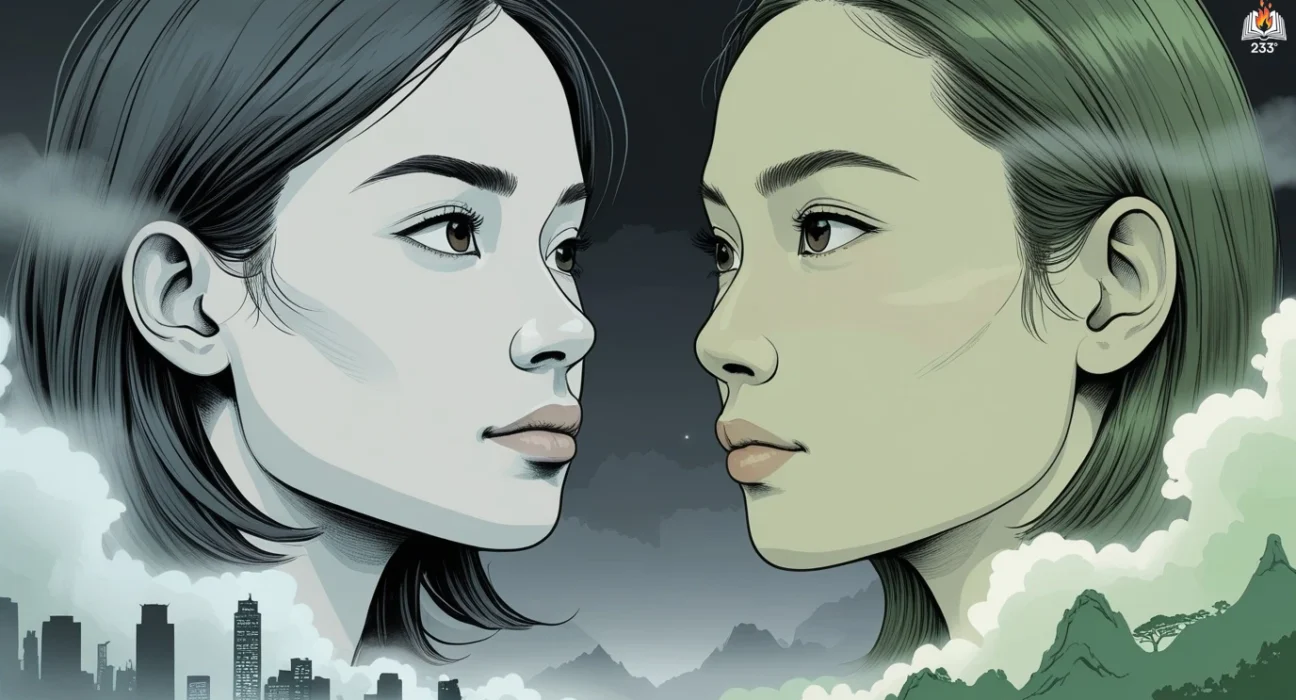
- Cultural Identity and Hybridity: The novel explores the friction and fusion between American and Chinese cultural values. Olivia’s Western skepticism clashes with Kwan’s mystical Chinese worldview, but through shared experiences and stories, these seemingly opposing cultures gradually harmonize. This theme questions what it means to belong to a place or heritage.
- Sisterhood and Loyalty: The bond between Olivia and Kwan, despite misunderstandings and resentment, forms the emotional core of the novel. Kwan’s unwavering loyalty to Olivia, despite past betrayals, highlights the redemptive power of unconditional love. Sisterhood becomes a vehicle for self-discovery and healing.
- Life, Death, and the Spiritual World: Tan blurs the boundary between the living and the dead, incorporating ghosts and reincarnated souls into the everyday. Kwan’s “yin eyes” and her stories of past lives challenge Western notions of death as final, suggesting a continuum where the spiritual realm deeply informs the physical world.
- Memory and Storytelling: Through Kwan’s elaborate tales of her past life in 19th-century China, the novel delves into how stories shape reality and identity. These tales, though seemingly fantastical, hold emotional truths and serve as bridges between the past and present, self and other.
- Betrayal and Redemption: Olivia’s betrayal of Kwan as a child leads to trauma and institutionalization. However, their journey together becomes one of redemption and mutual healing, illustrating how love and memory can mend even the deepest wounds.
Writing Style and Tone
Amy Tan’s prose in The Hundred Secret Senses is rich, lyrical, and infused with humor, irony, and deep emotional resonance. She writes with a voice that balances Olivia’s cynical, matter-of-fact narration with Kwan’s whimsical, almost mythic storytelling. This interplay of voices creates a layered narrative, echoing the dual cultural perspectives that define the novel. Tan often uses vivid imagery, particularly when Kwan recounts her ghost stories or ancestral visions, drawing the reader into dreamlike sequences that feel both ancient and urgent.
The tone of the novel shifts gracefully between lighthearted and profound. Olivia’s sarcastic internal monologue provides comic relief, while Kwan’s sincerity and spiritual insight lend gravitas. Tan employs a conversational tone to draw readers close to her characters’ inner worlds. Through subtle yet powerful emotional cues, she captures the ache of displacement, the confusion of identity, and the bittersweet nature of love and forgiveness. The use of magical realism never feels forced but emerges naturally from the cultural and emotional contexts Tan evokes with precision and empathy
Quotes
The Hundred Secret Senses – Amy Tan (1995) Quotes
“We dream to give ourselves hope. To stop dreaming - well, that’s like saying you can never change your fate.”
“Everyone must dream. We dream to give ourselves hope. To stop dreaming - well, that's like saying you can never change your fate. Isn't that true?”
“Sure I loved him - too much. And he loved me, only not enough. I just want someone who thinks I'm number one in his life. I'm not willing to accept emotional scraps anymore.”
“I love and am loved, fully and freely, nothing expected, more than enough received.”
“too much happiness always overflowed into tears of sorrow.”
“Don't think too much. That makes you believe you have more choices than you do. Then you mind becomes confused.”
“Whenever I'm with my mother, I feel as though I have to spend the whole time avoiding land mines.”
“It was a distorted form of inverse logic: If hopes never come true, then hope for what you don't want.”
“When you already believe something, how can you suddenly stop? When you are a loyal friend, how can you no longer be one?”
“Being able to restrain my emotions isn’t a great victory—it’s the pitiful proof of lost love.”
“It isn't that i consider them brave, they are reckless, unpredictable, maddeningly unreliable. But like rogue waves and shooting stars, they also add thrills to a life that otherwise would be as regular as the tide, as routine as day passing into night.”
“Life's always a big fucking compromise. You don't always get what you want, no matter how smart you are, how hard you work, how good you are. That's a myth. We're all hanging in the best way we can.”
“A few times I invited Ba to visit me from the World of Yin. But other yin friends tell me he is stuck somewhere else, a foggy place where people believe their lies are true.”
“I think Kwan intended to show me the world is not a place but the vastness of the soul. And the soul is nothing more than love, limitless, endless, all that moves us toward knowing what is true.”
“I imagine a hundred Chinese Icaruses, molding wings out of earwax. You can't stop people from wishing.”
“I now believe truth lies not in logic but in hope, both past and future. I believe hope can surprise you. It can survive the odds against it, all sorts of contradictions, and certainly any skeptic's rationale of relying on proof through fact.”
“I ask myself, How can I relax? How can I let go of everything that's happened? You need complete trust to do that.”
“And all that talk about the breakup being good for us- who am I trying to fool? I'm cut loose, untethered, not belonging to anything or anybody.”
“Too much happiness always overflows into tears of sorrow.”
“But to pretend that all was right with the world, I first had to know what was wrong.”
“You want to know what the real problem is? You use Elza as a scapegoat for all your insecurities. You've made her a bigger deal in your life than she ever was in mine. You never even knew her, but you project every doubt about yourself onto her..." [Said Simon to Olivia]”
“But my main motivation is fear of regret. I worry that if I didn’t go, one day I’d look back and wonder, What if I had?”
We hope this summary has sparked your interest and would appreciate you following Celsius 233 on social media:
There’s a treasure trove of other fascinating book summaries waiting for you. Check out our collection of stories that inspire, thrill, and provoke thought, just like this one by checking out the Book Shelf or the Library
Remember, while our summaries capture the essence, they can never replace the full experience of reading the book. If this summary intrigued you, consider diving into the complete story – buy the book and immerse yourself in the author’s original work.
If you want to request a book summary, click here.
When Saurabh is not working/watching football/reading books/traveling, you can reach him via Twitter/X, LinkedIn, or Threads
Restart reading!