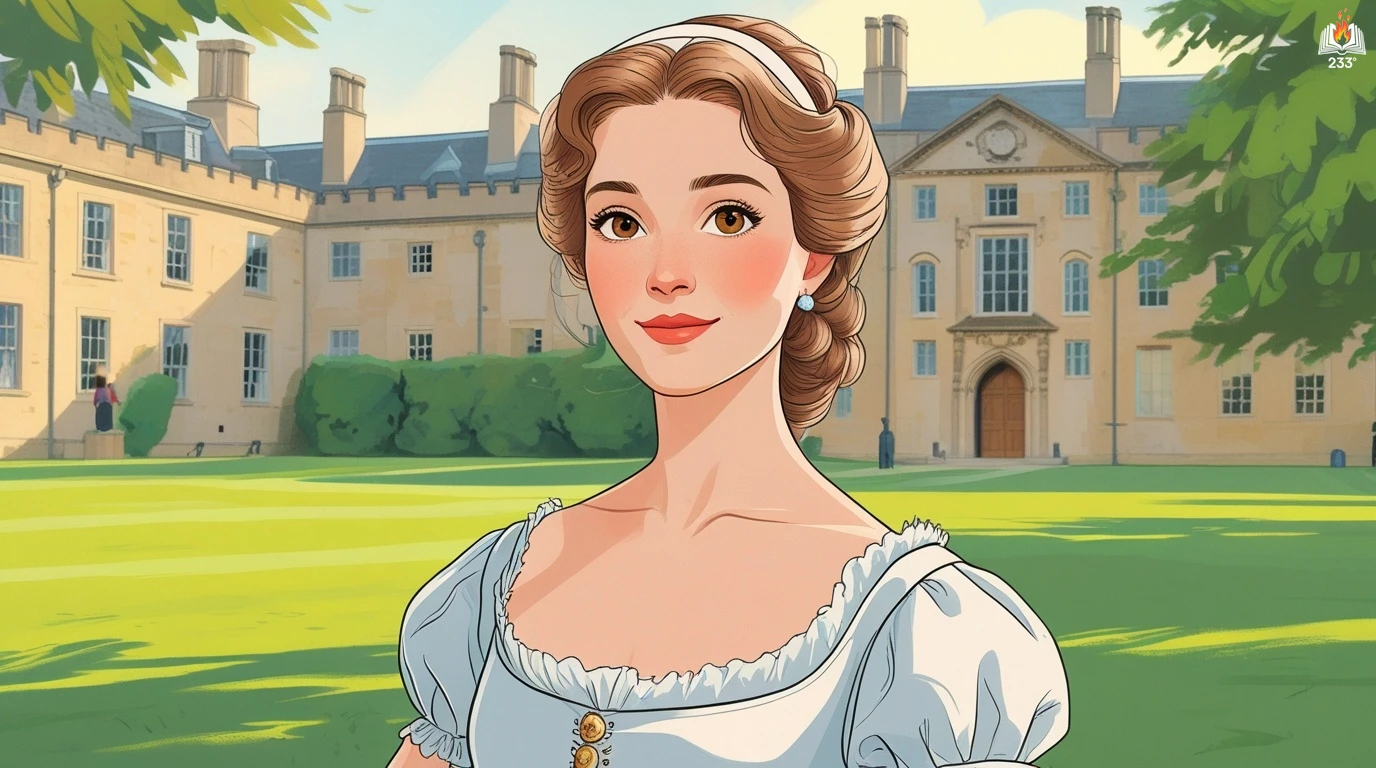

The Secrets of Sir Richard Kenworthy by Julia Quinn, published in 2015, is the final installment in the beloved Smythe-Smith Quartet, a Regency-era romance series set in the same universe as the Bridgerton novels. The story follows the unassuming and sharp-witted Iris Smythe-Smith, a perennial wallflower thrust into an unexpected whirlwind romance with the enigmatic Sir Richard Kenworthy. Set amidst the glittering backdrop of London’s social season, Quinn weaves a tale of hidden motives, reluctant passion, and the delicate unraveling of secrets that threatens to undo a hastily arranged marriage.
Plot Summary
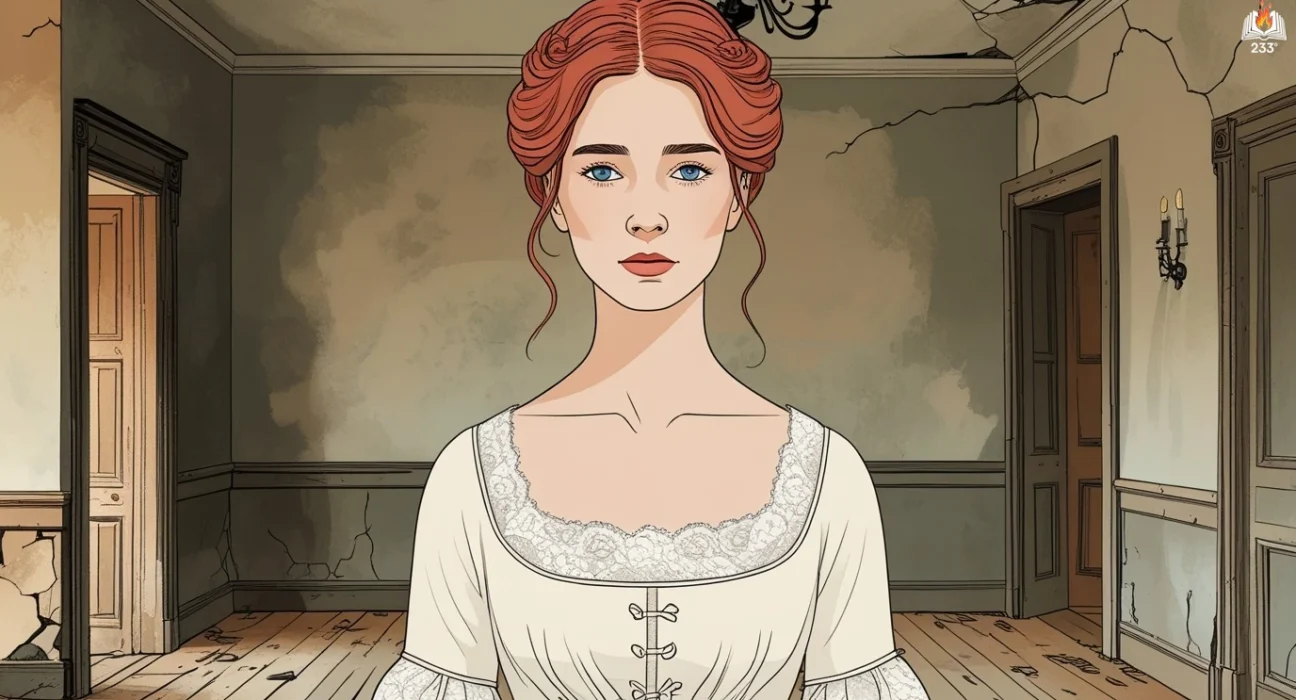
Beneath the glinting chandeliers of Pleinsworth House, the annual Smythe-Smith musicale groaned to life with its usual cacophony of mismatched strings and misplaced bravado. Hidden behind a cello nearly as large as herself, Iris Smythe-Smith endured the evening with quiet composure, her pale complexion and red-tinged hair offering little in the way of spectacle to the glittering eyes of the ton. She had performed this ritual before, the musical humiliation masked by polite applause and the delusions of adoring mothers. What she hadn’t expected was the gaze – steady, unreadable – of a dark-haired gentleman in the fifth row.
Sir Richard Kenworthy had no time to waste. With secrets coiled beneath his composed exterior, he required a wife within a fortnight. Not for love or companionship, but for a reason he refused to speak aloud. When his eyes met Iris’s, her stillness among the chaos, her awareness of the absurdity around her, he recognized something more valuable than beauty – discretion, intelligence, and perhaps the vulnerability he could most easily exploit.
Their first meeting was orchestrated through his friend Winston Bevelstoke, whose irreverent humor and social clout smoothed introductions in the drawing rooms of London. Richard charmed Iris with calculated flattery, praising her cello playing with just enough conviction to make her question whether he truly heard her over the dreadful din. Iris, ever skeptical, met his attention with caution. Yet even her sharp instincts could not pierce the true reason behind his pursuit.
Within days, he maneuvered his way into her presence again, this time under the guise of paying a morning call. Daisy, Iris’s younger sister, fluttered at Winston like a butterfly, while Iris maintained a reserved distance from Richard. But when he proposed a walk in Hyde Park, and Iris agreed, the dance began.
Their conversation unfolded with surprising ease – the kind that slips past defenses. She questioned him about his home, Maycliffe, nestled in the northern wilds of Yorkshire. He deflected her inquiries with humor, revealing only hints of a struggling estate, two younger sisters under his guardianship, and a need for stability that went unspoken. Still, he was drawn to her clear eyes, her sly wit, and the fierce intelligence she tried to hide beneath a veil of propriety.
When Richard proposed marriage, it came as a shock to everyone, Iris most of all. Her mother, stunned into silence for once, accepted on her behalf with barely restrained enthusiasm. Iris hesitated. She had only known him for a matter of days. But his manner, so seemingly earnest, and his assurance that his affection was genuine, led her to say yes. She hoped, perhaps foolishly, that she might be wanted for herself.
The wedding was arranged with unseemly speed, the whispers in society barely quelled by Richard’s impeccable manners and title. Iris entered the union with quiet resolve, determined to make the best of it. But from the moment she arrived at Maycliffe, something felt wrong.
The house bore the marks of neglect – shuttered wings, dust-laced rooms, a family portrait with the mother’s face turned to the wall. Richard’s sisters, Fleur and Marie-Claire, were charming yet guarded, and Iris sensed at once the weight they carried. Richard, once attentive, grew evasive. He avoided her bed, offering vague excuses about timing and propriety. Each night passed with growing tension, a marriage unconsummated and riddled with silence.
Iris, no stranger to observation, began to piece the puzzle together. There was something wrong, deeply wrong, and it was not about money or scandal. It was about protection. She confronted him, her voice calm but steely, demanding the truth. And at last, he broke.
Fleur, his beloved sister, was pregnant. The child’s father had fled, and Richard – bound by duty and shame – had concocted a plan so desperate it left no room for morality. He had needed a wife quickly, one who could feign a pregnancy in time, deliver the child as her own, and preserve Fleur’s reputation. That was why he had chosen Iris. Not for love, not even for kindness, but because she seemed the type to keep a secret and endure the fallout.
The betrayal seared through her. Iris had not dreamt of romance, but she had hoped for decency. Now she was asked to erase herself, to become a living lie. She retreated into herself, refusing to help, refusing even to speak more than necessity required. Richard begged her forgiveness, no longer the confident baronet but a man drowning in guilt. He admitted he had begun to care for her, truly care, but that only made his deceit more unbearable.
In the weeks that followed, the house grew colder. Fleur’s pregnancy advanced, hidden from the world behind locked doors and elaborate excuses. Iris, meanwhile, found solace in the quiet strength of her own conscience. She did not betray Fleur’s trust, but neither did she consent to the plan. Instead, she waited. For Richard to act as a man, not a coward.
The turning point came in a letter – a plea from Fleur to Iris, not for salvation, but for understanding. It was raw, filled with the terror of disgrace and the ache of remorse. Iris read it once, then again, and slowly, the hard edges around her heart softened. Fleur, too, had been a pawn in circumstance, and Richard – though guilty – had tried to shoulder the impossible.
At last, Richard did what he should have done from the beginning. He confessed everything to his solicitor and arranged for Fleur to be sent quietly to the countryside to give birth. The child would be raised in discretion, not hidden in shame. And Iris, who had shown more strength than he ever deserved, would be given the choice to leave.
But Iris stayed.
Not because duty demanded it, or society expected it, but because, through the ruin, something real had taken root. Richard, stripped of pretense, was no longer the man who had lured her into marriage. He was the man who stood beside her now – ashamed, humbled, and finally worthy.
She chose him, and he, this time, asked her not as a schemer, but as a man in love.
Main Characters
Iris Smythe-Smith – Intelligent, observant, and deeply underestimated, Iris is the quiet member of the infamous Smythe-Smith musical quartet. Hidden behind her cello and often overlooked in social circles, she’s far from the demure figure she appears to be. Beneath her pale exterior lies a woman with biting wit, a sense of honor, and a fierce yearning for honesty and authenticity. Her journey is one of asserting her worth, confronting betrayal, and learning to trust her instincts in love.
Sir Richard Kenworthy – A baronet with urgent obligations and a tormented conscience, Sir Richard enters the London marriage mart with a tight deadline and a secret that governs his every move. Though outwardly charming and seemingly principled, he manipulates circumstances to secure Iris as his bride. His character arc is one of internal conflict, guilt, and eventual vulnerability, as he comes to terms with the consequences of his deception and grapples with genuine affection for the woman he wronged.
Winston Bevelstoke – A rakish yet loyal friend of Richard, Winston provides comic relief and a skeptical commentary on Richard’s choices. Though not central to the romantic plot, Winston’s interactions offer insight into Richard’s past and provide a grounding presence that highlights Richard’s moral dilemmas.
Daisy Smythe-Smith – Iris’s younger sister, vivacious and naïvely self-absorbed, Daisy embodies the frivolity and vanity of the debutante world. Her confidence and lack of self-awareness serve as a foil to Iris’s quiet depth, while their dynamic captures the tension between societal expectations and personal worth.
Theme
Deception and Revelation – Central to the narrative is the tension between appearances and truth. Richard’s secret motive for marrying Iris creates the foundational conflict of the story. As layers are peeled back, characters are forced to confront uncomfortable truths about themselves and each other, raising questions about trust, intent, and moral compromise.
Duty vs. Desire – Both Richard and Iris wrestle with societal and familial obligations that clash with personal longing. Richard’s rush to marry is driven by loyalty to his sisters, while Iris must weigh her dignity and hopes for love against the pressures to accept a socially advantageous match. Their choices explore the cost of duty when love is at stake.
The Invisibility of Quiet Women – Iris embodies the archetype of the overlooked woman in society – pale, reserved, not conventionally beautiful. The novel challenges this trope by showcasing her inner strength, wit, and keen perception. Her evolution symbolizes the reclamation of voice and agency in a world that values flash over substance.
Forgiveness and Redemption – As Richard’s manipulation is revealed, the story pivots toward themes of remorse and forgiveness. Quinn explores the pain of betrayal and the possibility of healing, emphasizing that love born of honesty can endure even the deepest of wounds.
Writing Style and Tone
Julia Quinn’s prose in The Secrets of Sir Richard Kenworthy is witty, conversational, and emotionally nuanced. She employs sharp dialogue, inner monologue, and free indirect speech to give readers direct access to the characters’ thoughts and emotional states. Quinn is known for her humor, and it’s on full display here—especially in the form of banter and ironic observations that cut through the otherwise sentimental tone. The balance between light-hearted social satire and serious emotional introspection allows the narrative to be both entertaining and heartfelt.
The tone of the novel is both whimsical and contemplative. Quinn crafts a world where love is tangled in misunderstandings and well-meaning lies, but she imbues each scene with emotional sincerity. Even the most comedic moments are underscored by authentic human longing, and the pacing—both brisk and immersive—allows readers to feel every heartbeat of the slow-building romance. Her storytelling remains intimate, focusing not just on grand gestures, but on the subtle, transformative shifts in character and relationship.
Quotes
The Secrets of Sir Richard Kenworthy – Julia Quinn (2015) Quotes
“Maybe she was a wallflower. There was no shame in that. Especially not if one enjoyed being a wallflower.”
“If he hadn’t married Iris, he’d want her for a friend”
“He didn't know if there was a word to describe what he felt in that moment, how he saw the lines of his own heart when her eyes met his.”
“You are a treasure, Iris Kenworthy,”
“Iris is not pleasant to live with when she is in ill humor and Daisy is not pleasant to live with when she is in good humor.”
“I find her stories quite diverting,” Iris admitted. It was true. They were not terribly well written, but there was something about them that was impossible to put down.”
“Waistlines were dropping in the capital; the forgiving billows of the Regency style were giving way to something far more structured and uncomfortable. By 1840, Iris predicted, women would be corseted into nothingness.”
“They sat in silence for several minutes, Richard downing his glass of whiskey while Iris carefully sipped hers. She liked it, she decided. It was hot and cold at the same time. How else could one describe something that burned until it made you shiver?”
“Richard saw red. “Do not speak to her in that tone of voice.” “How do mean, like she’s family?”
“barouche?”
“It was easy to be oneself when the stakes were low.”
“If one was always at the eye of the proverbial storm, could one discern the slant of the rain, feel the bite of the wind? Maybe she was a wallflower. There was no shame in that. Especially not if one enjoyed being a wallflower.”
“Thank you,” she said. Because sometimes it was best not to question a gift. Sometimes one simply had to be glad for it without knowing why.”
“It was late. Had he gone out in the dark? Just to pick her a flower? “Thank you,” she said. Because sometimes it was best not to question a gift. Sometimes one simply had to be glad for it without knowing why.”
“And besides that,” her mother continued, “gentlemen find pleasure in the act that ladies do not.” She cleared her throat uncomfortably. “Depending on your husband’s appetites—” “Appetites?” There would be food?”
We hope this summary has sparked your interest and would appreciate you following Celsius 233 on social media:
There’s a treasure trove of other fascinating book summaries waiting for you. Check out our collection of stories that inspire, thrill, and provoke thought, just like this one by checking out the Book Shelf or the Library
Remember, while our summaries capture the essence, they can never replace the full experience of reading the book. If this summary intrigued you, consider diving into the complete story – buy the book and immerse yourself in the author’s original work.
If you want to request a book summary, click here.
When Saurabh is not working/watching football/reading books/traveling, you can reach him via Twitter/X, LinkedIn, or Threads
Restart reading!