The Lost Duke of Wyndham by Julia Quinn, published in 2008, is a historical romance novel that forms part of the “Two Dukes of Wyndham” duology. Set in Regency England, it explores themes of identity, legitimacy, and love against a backdrop of aristocratic tradition and social constraint. With her signature wit and warmth, Quinn crafts a captivating tale of a highwayman who might be a duke, a lady’s companion who dreams of more, and a dowager duchess who upends everyone’s expectations.
Plot Summary
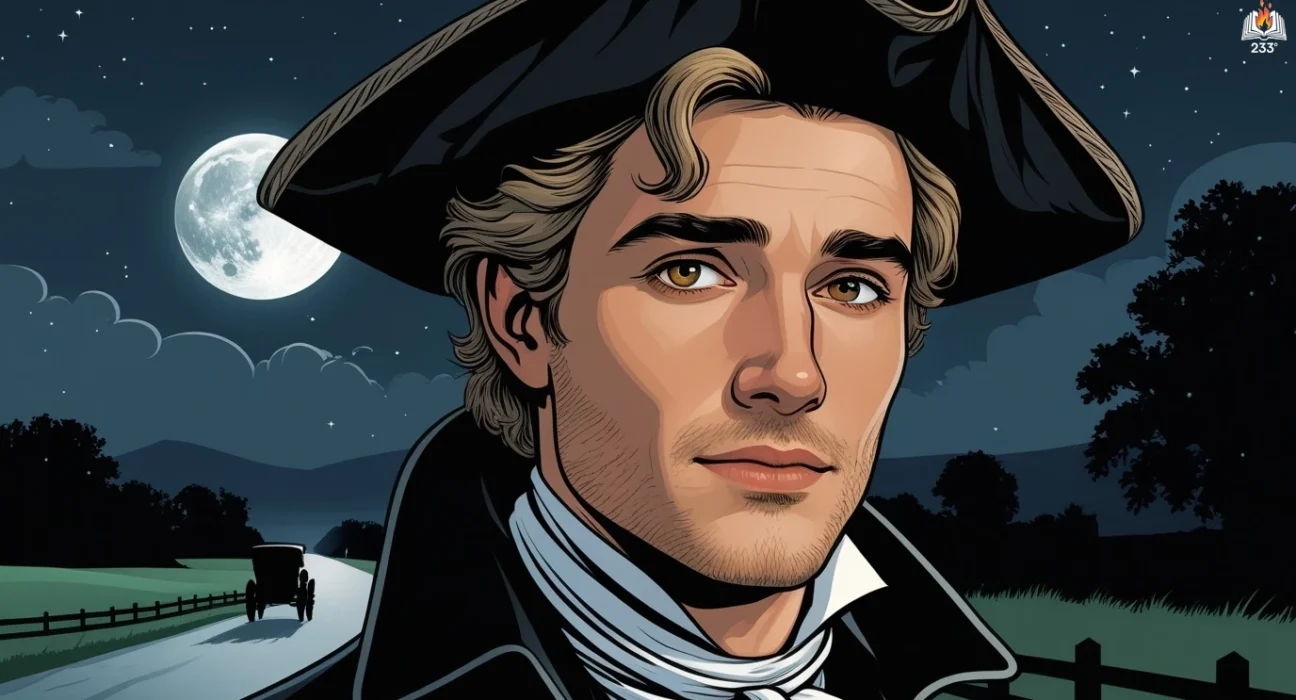
On a quiet country road in Lincolnshire, a luxurious carriage glided through the night, carrying Grace Eversleigh, companion to the formidable dowager Duchess of Wyndham. Grace, still humming with joy from the evening’s assembly, was startled from her thoughts by a sudden jolt – gunshots in the dark, a lurching halt, and the appearance of a masked highwayman. With dangerous charm and unsettling politeness, the thief demanded their valuables. But as he stepped into the moonlight, the dowager turned pale, struck by the eerie resemblance between the highwayman and her long-dead son.
What began as a robbery unraveled into something far more unsettling. The dowager, clutching a miniature of her son, implored the highwayman to look closely. His features, his voice, even the way he smiled – all whispered of John Cavendish, her lost son who had perished decades ago. The man denied it, laughing off the resemblance, but his hands trembled, and Grace, held gently in his arms under the guise of hostage, sensed something shift within him.
His name, he finally revealed, was Jack Audley. But long ago, it had been John Augustus Cavendish. A coincidence, perhaps. Or fate.
Back at Belgrave Castle, Grace found herself wrestling with more than exhaustion. The dowager, uncharacteristically shaken, sent her scurrying about the house in the middle of the night, demanding portraits and keepsakes of her lost son. The dowager’s conviction that the highwayman was her grandson took root with terrifying speed. Grace, though practical and cautious, could not forget the moment Jack whispered in her ear that his name had once been Cavendish.
The following day, the castle stirred with uneasy energy. The dowager remained locked in her chambers, clinging to old letters and fading memories. Grace attempted to resume her duties, but her thoughts drifted constantly to the masked man with the devilish smile. Meanwhile, Thomas Cavendish – the current Duke of Wyndham and the dowager’s legal heir – returned from a trip to Stamford to find his household in disarray. The possibility of an unknown, possibly legitimate heir threatened his title, his inheritance, and the life he had always known.
Jack, for his part, lingered in Lincolnshire, drawn not just by the dowager’s words, but by the strange ring he had taken during the robbery – a ring identical in design to the one he had worn since childhood. Raised in Ireland by his aunt, he had always been told his father was a gentleman named John Augustus Cavendish. Now, the pieces were falling into place far too easily.
At the dowager’s insistence, Thomas and Grace tracked Jack down and brought him to Belgrave. Bound by obligation and suspicion, Thomas greeted him with cold civility. Jack, never one to shrink from conflict, responded with biting wit. Yet beneath the verbal sparring, an uneasy respect began to grow. Jack, once a captain in the army and now a highwayman by necessity, did not ask for a title. But he could not deny the truth in the dowager’s eyes – or the familiarity of the portrait that now hung in her chambers.
As days passed, the question of Jack’s legitimacy took center stage. If his parents had been married, he was the rightful Duke of Wyndham. Thomas, noble and restrained, did not protest, but tension simmered beneath his calm. Grace, caught between them, struggled with her loyalty to the dowager and her growing feelings for Jack. The ease of their conversation, the memory of his kiss, the way he looked at her like she was more than a companion – all of it threatened to upend the quiet life she had built at Belgrave.
Jack, too, found himself changed. At first, he had no desire for a title, no interest in returning to a family that had never known him. But Grace – steady, warm, and endlessly sensible – made him wonder if he could belong. She saw through his bravado, challenged his recklessness, and stirred a longing for roots he had never admitted to craving.
To resolve the question of inheritance, they traveled to Ireland, seeking the truth of his birth. There, in a quiet chapel tucked near the sea, they discovered the marriage record of John Cavendish and Louise Galbraith. Jack was legitimate. The dowager’s instincts had not failed her. And with that truth, the balance of power shifted. Jack became the Duke of Wyndham, and Thomas – proud, disciplined Thomas – found himself displaced.
But it was not just titles that changed hands. In returning to Belgrave, Jack chose to take responsibility for the estate, the people, and the name he had never known he wanted. He also chose Grace. He asked not as a duke seeking a suitable match, but as a man in love with a woman who had once thought her life limited to servitude and silence.
Grace, trembling with uncertainty, did not answer him at once. The life he offered was grand, overwhelming. But Jack promised her not a crown, not a title – only love, laughter, and the kind of partnership her parents once shared. And so she said yes, not to the duke, but to the man who had stolen a kiss under a moonlit sky and never quite returned it.
Thomas, for all he had lost, found clarity. No longer trapped by duty or expectation, he looked anew at Amelia Willoughby, the woman he had long overlooked. With time, perhaps their own story would take shape, free of inherited burdens.
At Belgrave, the dowager stood tall once more, her world righted by the return of a son’s memory and a grandson’s name. Grace walked beside Jack not as a companion, but as his equal, her hand in his, her place secure.
And somewhere beyond the castle walls, the road stretched on – long, winding, and no longer a path for escape, but one that always led home.
Main Characters
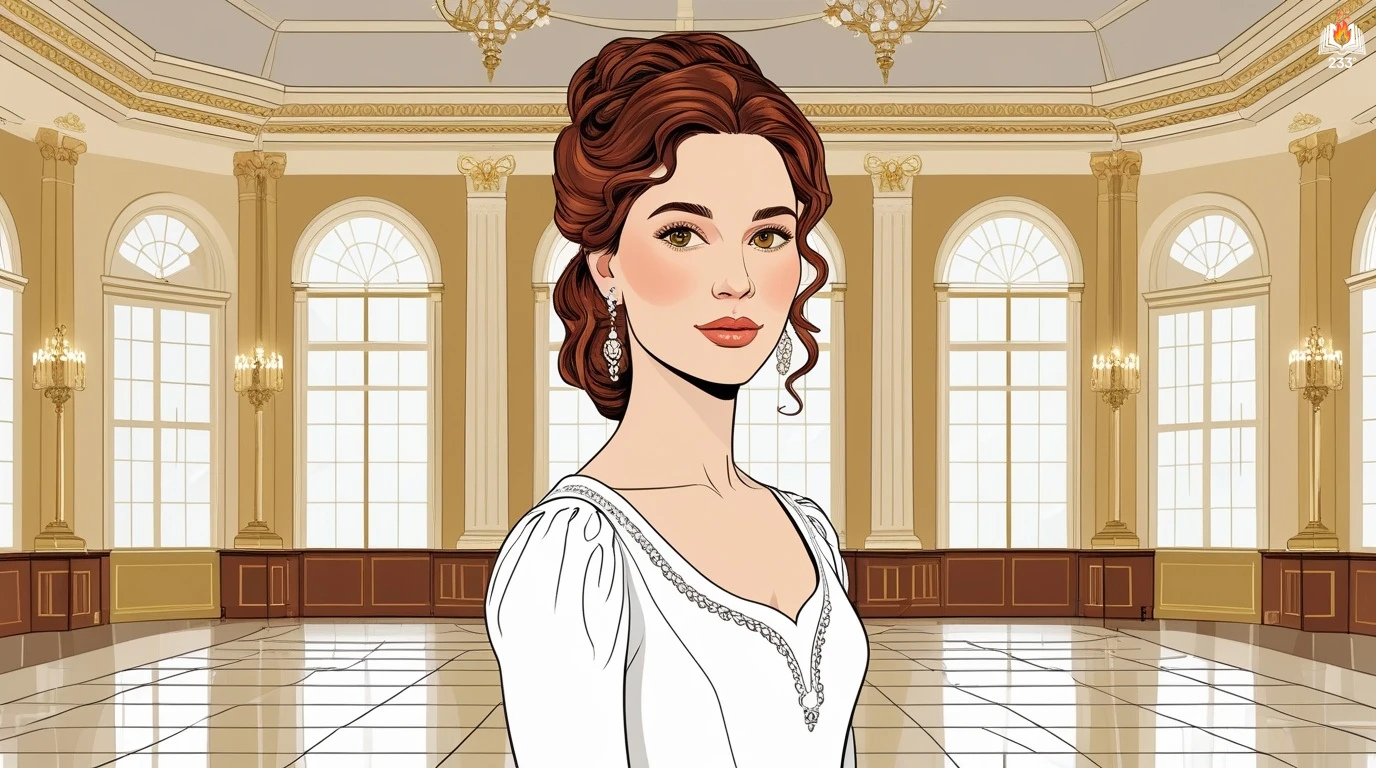
Grace Eversleigh – Grace is the intelligent, loyal, and emotionally resilient companion to the dowager Duchess of Wyndham. Her tragic past—losing her parents and being cast out by her cousin—has shaped her into a woman who finds quiet dignity in servitude. Despite her precarious social position, Grace retains a sharp wit, gentle strength, and unwavering kindness. Her inner conflict between duty and desire is central to the novel, especially as she navigates her growing feelings for Jack.
Jack Audley (John Augustus Cavendish) – Jack begins as a charming and disarmingly witty highwayman with a soldier’s past and a rogue’s heart. But when a robbery gone awry reveals a possible noble heritage, Jack is forced to confront his true identity. Beneath his flippant facade lies a complex man torn between freedom and responsibility, uncertainty and honor. His evolution from roguish thief to potential heir makes him both a romantic and introspective figure.
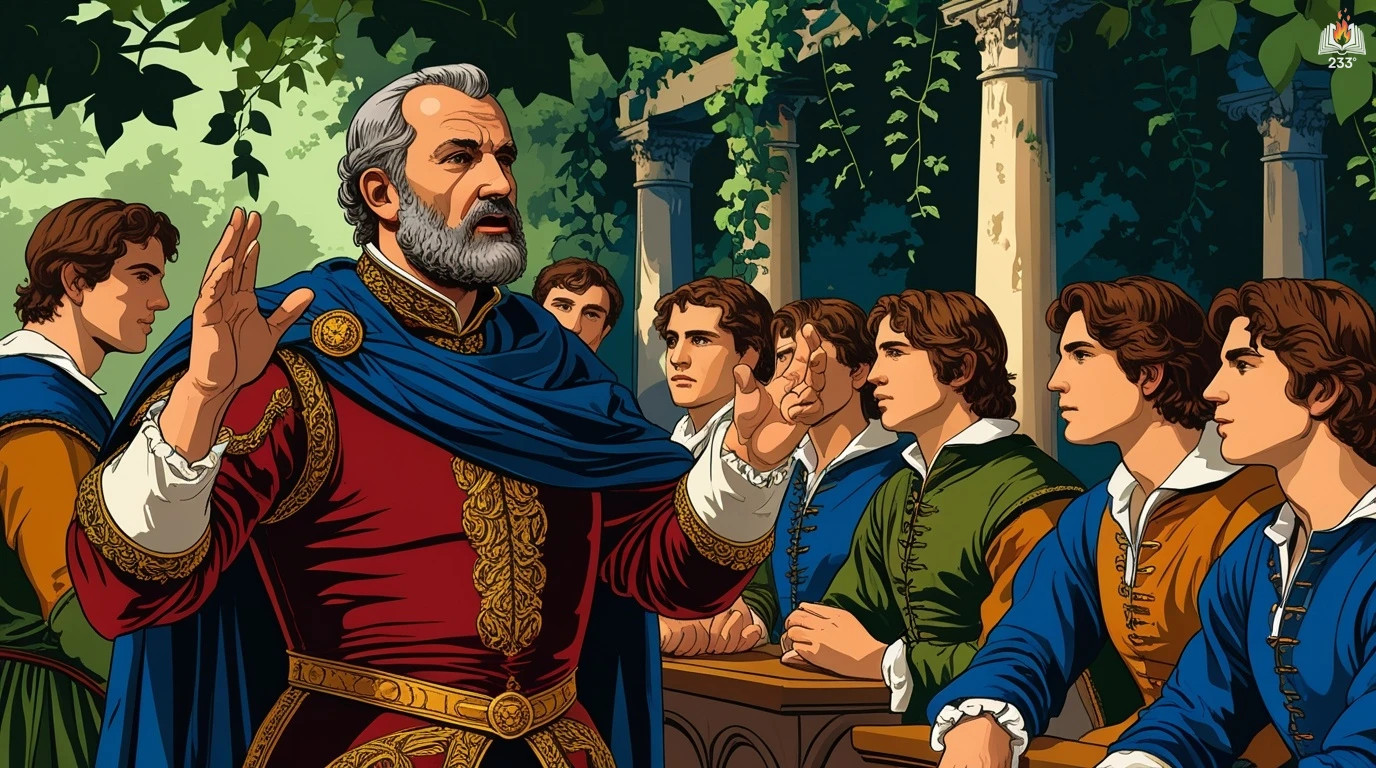
Augusta Cavendish, Dowager Duchess of Wyndham – Regal, sharp-tongued, and unrelenting, Augusta is a formidable presence in the story. She is not sentimental or particularly likable at first, but her actions—particularly her desperate hope that Jack is her long-lost grandson—reveal a buried grief and a deep, if prideful, love for family. Her relationship with Grace and Jack evolves from one of rigid superiority to reluctant respect.
Thomas Cavendish, Duke of Wyndham – The current duke and Augusta’s grandson, Thomas is proud, dutiful, and emotionally restrained. His place in the world is threatened by Jack’s sudden emergence, challenging both his inheritance and identity. His interactions with Grace reveal a quieter complexity, and while he may seem aloof, his protective nature and inner conflict play a crucial role.
Amelia Willoughby – Betrothed since infancy to Thomas, Amelia is a well-bred, demure young woman burdened by tradition and expectation. Although kind and loyal, she lacks the passion and spark found in Grace, making her a subtle but effective foil. Her uncertain future adds emotional tension to the unfolding drama.
Theme
Identity and Legitimacy: The heart of the novel lies in the question of who Jack Audley really is – a common thief or a duke by blood. This theme probes the nature of aristocratic identity, examining how lineage, legality, and self-worth intertwine. Jack’s struggle with legitimacy questions the very foundations of privilege and social order.
Freedom vs. Duty: Jack embodies personal freedom, living by wit and whim, while Thomas represents the burden of responsibility. Grace, caught between servitude and desire, also navigates these tensions. The characters must each decide what they owe to themselves and to others, and whether love can exist without sacrifice.
Class and Social Mobility: Grace’s fall from gentle upbringing to servitude and Jack’s potential rise from rogue to duke highlight the rigid structures of Regency society. Julia Quinn explores how merit, character, and love can challenge the status quo, albeit within the boundaries of romantic convention.
Love and Self-Discovery: Romance in The Lost Duke of Wyndham isn’t just about attraction—it’s a journey of self-discovery. Grace and Jack must learn to see themselves as worthy of love and happiness, while those around them come to terms with change, loss, and acceptance.
Writing Style and Tone
Julia Quinn’s writing sparkles with charm, wit, and a keen sense of timing. Her dialogue is sharp, often laced with humor that brings levity to dramatic moments without undermining their emotional weight. She skillfully balances romantic tension and character introspection, allowing readers to fall in love alongside the protagonists while deeply engaging with their personal dilemmas. Her character-driven storytelling ensures that emotional stakes are never lost, even amid the banter and balls.
The tone of the novel is a refined blend of romantic whimsy and emotional sincerity. There is a persistent undercurrent of longing, both for connection and identity, threaded through scenes of lively conversation, stolen kisses, and aristocratic drama. The narrative voice is accessible yet elegant, evoking the historical period while staying true to Quinn’s modern sensibilities. Subtle irony, warmth, and a deep understanding of character motivations infuse the story with life, making it as humorous as it is heartfelt.
Quotes
The Lost Duke of Wyndham – Julia Quinn (2008) Quotes
“She needed him to be him. Even if he could not be hers.”
“I didn't think I should die but I did not know how I would Live.”
“He would not give her up,he could not.For the first time in his life he'd found someone who filled all the empty spaces in his heart”
“It wasn_t even desire. It was far more than that. It was love. Love. With a capital L and swirly script and hearts and flowers and whatever else the angels
“Grace-" He scowled, then laughed. "What the devil is your middle name?" "Catriona." she whispered. "Grace Catriona Eversleigh," he said, loud and sure, "I love you.”
“In this room,in this minite,she was his everything”
“I don_t know what to say,” she whispered. “Normally, I_d advise „thank you,_ but as I am the one thanking you, a mere „You are a prince among men_ would suffice.”
“Five years with the dowager - Good God, she ought to be given a title in her own right as a penance for such as that. No one had done more for England.”
“She should have been relieved that she did not do something she was sure to regret. But she wasn't. She wanted her regrets. She wanted them desperately. She wanted to do something she knew she should not, and she wanted to lie in bed at night letting the memory keep her warm.”
“One would think her tired mind would go utterly blank, but the opposite was true. She could not stop thinking about the highwayman. And his kiss. And his identity. And his kiss. And if she would meet him again. And that he'd kissed her. And-”
“He just wanted to see it. From afar. To see what might have been, what he was glad hadn't been. But maybe should have been.”
“It_s not your fault you had no siblings,” he told her. “You have no experience in intrafamilial squabbles. Trust me, it all works out in the end. I predict we shall manage to get all four to adulthood with at least fifteen of their major limbs intact.”
“Cit,”
“dowager grumbled a bit about that, using the same peevish”
“The trip to Ireland...' her father was saying. 'Is to determine his legitimacy,' Wyndham confirmed. And then, with a morbidly jolly expression, he continued, 'It's going to be quite a party. Even my grandmother is going.”
“As she walked slowly down the hall, she could hear them arguing - nothing violent, nothing impassioned. But then, she'd not have expected that. Cavendish tempers ran cold, and they were far more likely to attack with a frozen barb than a heated cry.”
“There was a very slight lilt to it, too, attesting to a childhood spent far from Lincolnshire, and Grace felt herself sway, as if she could fall forward, lightly, softly, and land somewhere else. Far, far from here.”
We hope this summary has sparked your interest and would appreciate you following Celsius 233 on social media:
There’s a treasure trove of other fascinating book summaries waiting for you. Check out our collection of stories that inspire, thrill, and provoke thought, just like this one by checking out the Book Shelf or the Library
Remember, while our summaries capture the essence, they can never replace the full experience of reading the book. If this summary intrigued you, consider diving into the complete story – buy the book and immerse yourself in the author’s original work.
If you want to request a book summary, click here.
When Saurabh is not working/watching football/reading books/traveling, you can reach him via Twitter/X, LinkedIn, or Threads
Restart reading!