Mr. Cavendish, I Presume by Julia Quinn, published in 2008, is a historical romance that forms part of the popular “Two Dukes of Wyndham” duology. This Regency-era novel explores the complications of long-standing engagements, duty-bound nobility, and unexpected love. Centered on Lady Amelia Willoughby and Thomas Cavendish, the Duke of Wyndham, the novel reimagines aristocratic expectations with Quinn’s signature charm, wit, and emotional insight. The narrative runs parallel to The Lost Duke of Wyndham, offering a new perspective on the same romantic entanglements.
Plot Summary
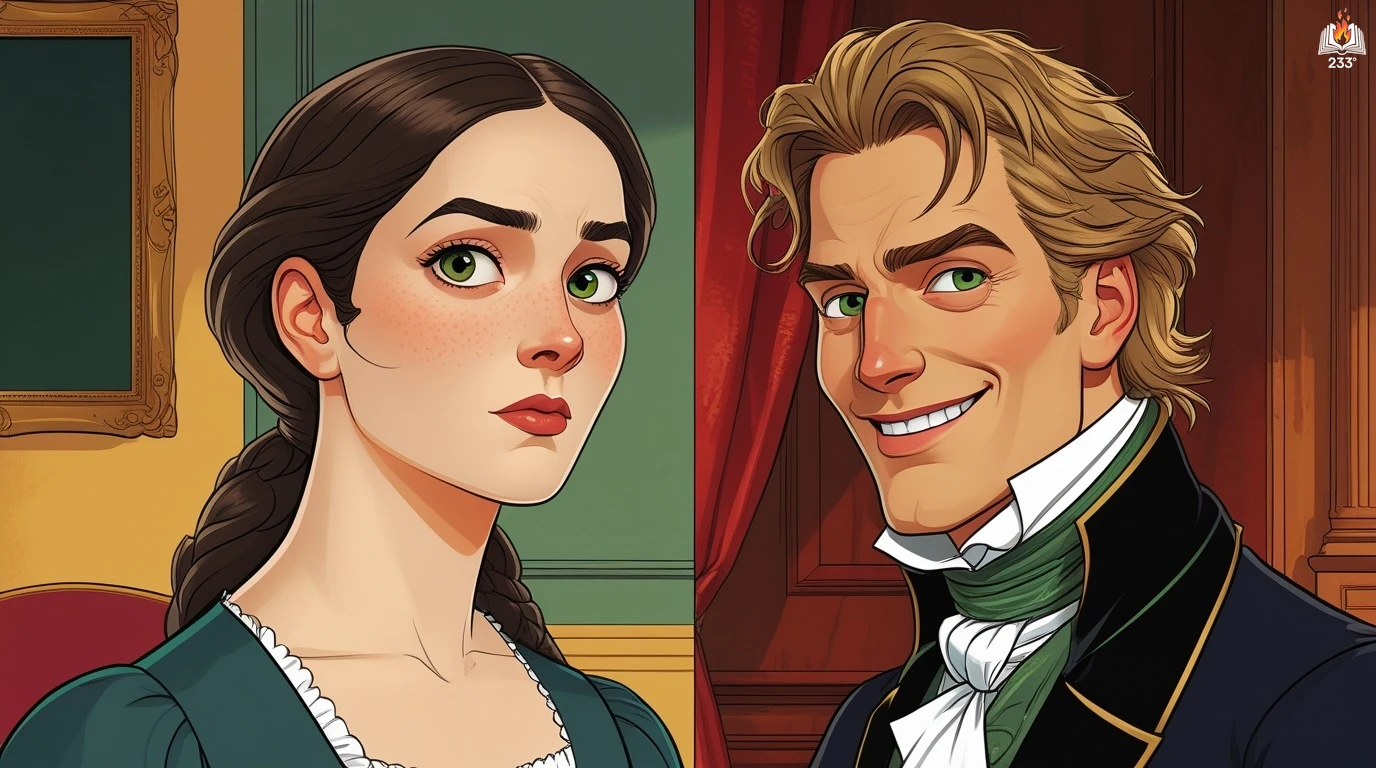
In the quiet lanes of Lincolnshire, Lady Amelia Willoughby awaited a future written before she could walk. Betrothed in infancy to the Duke of Wyndham, her destiny had always belonged to another’s design. It was a crime, according to her mother, that she remained unmarried at one-and-twenty, but Amelia bore the burden with grace and a surprisingly sharp sense of humor, hidden neatly beneath years of decorum. She knew her fiancé from a distance – Thomas Cavendish, proud and polished, the most eligible bachelor in the land. He was tall, commanding, and decidedly uncurious about the woman he was meant to marry.
Thomas, for his part, honored duty with the same ease that others wore fine gloves. Handsome, wealthy, and secure in his title, he saw Amelia as an obligation neatly wrapped in social expectations. He was not cruel, nor was he unkind – simply indifferent. The dowager Duchess, his formidable grandmother, urged the match with iron insistence, and Thomas complied, though without enthusiasm. He planned to marry Amelia eventually, of course. Someday. When it suited him.
But someday stretched endlessly, and Amelia had grown tired of waiting. At the Lincolnshire Assembly, surrounded by the stares of mothers and whispers of debutantes, she declined his offer to dance. Not with malice, but with a smile. It was a small rebellion, but it sent ripples through the crowd like a stone into still water. For once, Amelia was not the placid bride-to-be. She was something else entirely – herself.
Thomas was stunned. No woman had ever dismissed him so lightly, and certainly not one contractually bound to be his wife. He watched her retreat, watched the gasps, the shifting eyes, and felt a strange twist in his chest. It was not love. Not yet. But it was something.
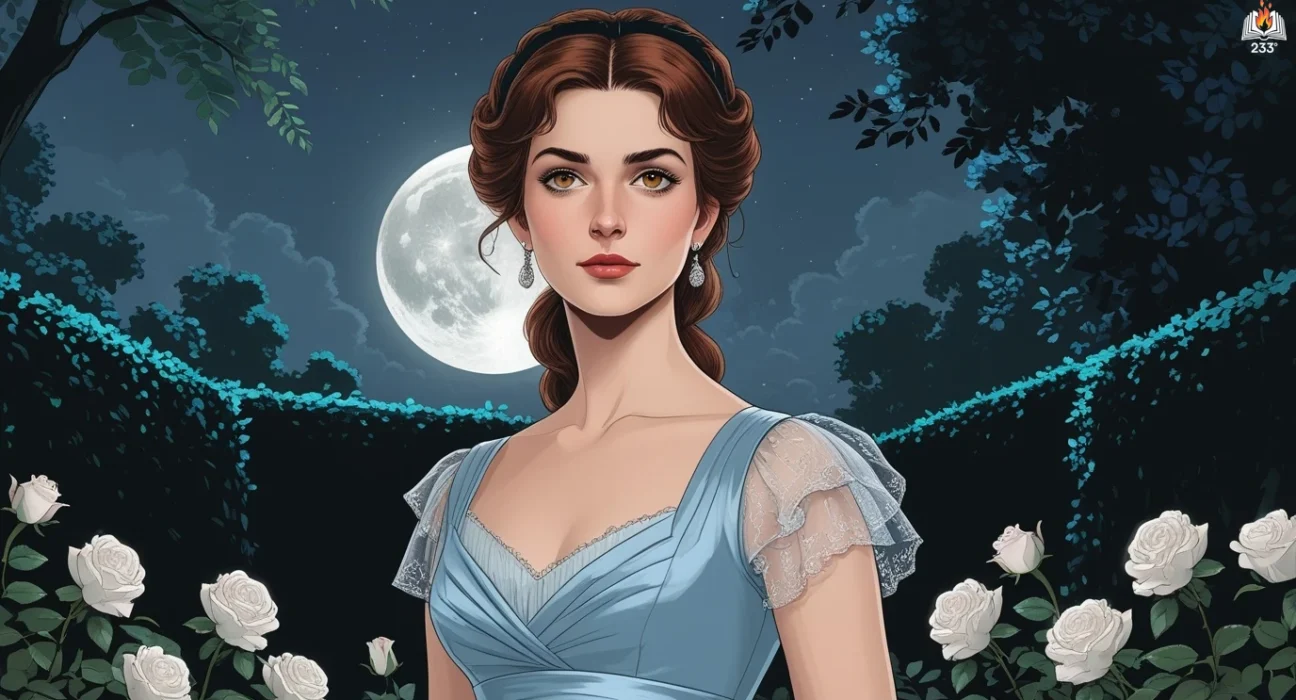
Amelia found herself in the garden, seeking air and quiet, only to be discovered again by the very man she had fled. He followed her not to scold, but to intrigue. With uncharacteristic charm, he offered apologies, even flattery. They danced beneath the stars, not in the light of chandeliers but in the hush of the garden. He kissed her – gentle, deliberate, stirring. For a moment, she was not Lady Amelia Willoughby, reserved and prepared. She was a woman being seen. Touched. Desired.
But Thomas did not understand his own actions, nor their effect. He had wanted to remind her who held control, but the kiss shifted something within him. Amelia, though flustered, saw through it. He had not kissed her from affection but from strategy. Still, it lingered.
Days passed, and shadows lengthened over Belgrave Castle. The dowager, returning from a harrowing carriage robbery with her companion Grace Eversleigh, grew increasingly agitated. She insisted on retrieving an old painting of her son John, long dead, once her favorite, now a ghost on canvas. Her demands, though dismissed by Thomas as eccentric, hinted at secrets too heavy to remain buried.
Grace, loyal and perceptive, watched the unraveling. She had served the dowager dutifully for years, but found herself in the midst of a family drama beyond her role. She had always been close with Amelia’s sister Elizabeth, but now her quiet presence became a source of calm for Thomas as well. Their conversations, layered with subtle tension, did not go unnoticed.
Amelia saw the way he looked at Grace – truly looked. And she hated that she noticed. Jealousy was a foreign feeling, one she tried to dismiss with dignity. But it festered. Not because she loved him – not yet – but because she wanted to be known, to matter.
Then came the storm. A man arrived claiming to be the true Duke of Wyndham – the son of John, the dowager’s favored son, long thought to have died unmarried. The man, Jack Audley, was bold, roguish, and unmistakably Cavendish by blood. The resemblance was unnerving. The dowager embraced the possibility instantly. Thomas, suddenly unsure of his entire identity, was thrust into chaos.
As the legal mess unfolded, Thomas found himself hollowed by uncertainty. If Jack’s claim proved true, he would lose everything – his title, his inheritance, his future. Amelia, too, would lose the marriage contract that had shaped her life. But what began as fear bloomed into something unexpected – freedom.
Thomas and Amelia were thrown together more than ever, not by expectation but by circumstance. With titles in flux and futures unmoored, they began to speak as two people, not symbols. He discovered her wit, her intelligence, her longing. She saw his vulnerability, his humanity, his slow unraveling of pride.
Yet Grace remained at the edge of it all, a constant presence in Thomas’s thoughts. Amelia noticed. And then she stopped caring. Because one day, Thomas looked at her – really looked – and the weight of years collapsed in a single breath. He wanted her. Not the contract. Not the alliance. Her.
Still, doubt crept in. Jack, the man who might be duke, was charming, kind, and far less burdened by arrogance. He and Amelia shared conversations that fluttered between flirtation and friendship. But Jack was not hers, and she was not his. Their paths were too different, their hearts not aligned.
As the truth of Jack’s legitimacy hovered in legal limbo, Thomas made a decision. He would marry Amelia, regardless of title. Whether as duke or gentleman, he wanted her. She, who had once been a name on a paper, had become his anchor. He proposed again, not with duty, but with devotion.
The wedding came quietly, without pomp, before the court could decide on the dukedom. Thomas might be stripped of his birthright, but he had gained something more rare – a woman who had chosen him freely, even after knowing the man behind the title.
Amelia entered marriage not as a girl fulfilling a promise, but as a woman who had been seen, wanted, and loved. She had fought for herself, quietly, gracefully, and in the end, won not a title, but a man who finally saw her.
The duke was never just a title. And love was never just a contract. In the end, it was choice that mattered most.
Main Characters
Lady Amelia Willoughby – Betrothed since infancy to the Duke of Wyndham, Amelia is clever, independent-spirited, and quietly rebellious beneath her decorous exterior. Though society views her as fortunate, she longs for a genuine connection rather than a marriage of obligation. Her arc evolves from patient resignation to self-assertion, culminating in her refusal to remain passive in a relationship dictated by status.
Thomas Cavendish, Duke of Wyndham – Aristocratic, proud, and emotionally reserved, Thomas is bound by duty but resistant to intimacy. While he honors the engagement to Amelia, his affections appear elsewhere, especially toward Grace Eversleigh. Thomas begins the story as a man in control of his world, but the discovery of an alternate heir—and Amelia’s unexpected defiance—shakes the foundation of his certainty, compelling growth and vulnerability.
Grace Eversleigh – Companion to the Dowager Duchess and a close friend to Amelia’s sister Elizabeth, Grace is wise, composed, and often underestimated. Though her social standing is humble, she is integral to the story’s emotional fabric. Her presence subtly shifts the dynamic between Amelia and Thomas, and she unknowingly becomes the mirror against which Amelia measures her own significance.
The Dowager Duchess of Wyndham – A formidable matriarch with sharp opinions and a rigid sense of legacy, the Dowager is devoted to preserving the Cavendish lineage. Her favoritism, manipulations, and stubborn pride both uphold and unravel the family’s future, making her a central force in the power struggles throughout the narrative.
Theme
Duty vs. Desire – The novel pits personal happiness against social and familial obligation. Both Amelia and Thomas are prisoners of a childhood engagement, and their journey challenges whether duty should triumph over authentic emotional connection.
Identity and Self-Worth – Amelia’s transformation hinges on her demand to be seen and valued beyond her title and marital contract. This theme explores how women, especially in the Regency era, sought to define themselves in a rigidly patriarchal society.
The Nature of Love – What begins as a relationship of convenience evolves into one of genuine intimacy. The story probes whether love can grow from familiarity and expectation, or whether it must spring from spontaneous affection and shared vulnerability.
Power and Social Structure – Titles, lineage, and wealth are constant forces in the characters’ lives, shaping every decision. Quinn uses this backdrop to critique the superficiality of aristocracy while also honoring the humanity within its rigid framework.
Writing Style and Tone
Julia Quinn’s writing style in Mr. Cavendish, I Presume is delightfully conversational, laced with wry humor, sharp banter, and poignant introspection. Her prose balances period authenticity with a modern sensibility, making Regency dialogue accessible without compromising its charm. Quinn masterfully blends internal monologue with external action, offering deep emotional insight, especially through Amelia’s quietly simmering frustration and Thomas’s stoic unraveling.
The tone fluctuates between light-hearted and emotionally earnest, echoing the romantic tension and societal stakes at play. Quinn infuses the narrative with a sense of quiet rebellion — particularly through Amelia — that allows readers to connect with the heroine’s yearning for autonomy. Even as the novel adheres to genre conventions, it subverts expectations through its exploration of emotional distance, quiet passion, and the quiet revolution of choosing oneself.
Quotes
Mr Cavendish, I Presume – Julia Quinn (2008) Quotes
“There was a huge difference between dislike and disregard.”
“What is there not to like about cupids?" "You don't find them rather dangerous?" "Chubby little babies?" "Carrying deadly weapons.”
“You're twisting my words." "I think you are doing a fine job of twisting them yourself.”
“He was discovering that may be there was more him than his name. And may be, when all was said and done, he'd still be whole.”
“We plan to avoid cupids," Mr. Audley said. "Cupids?" Amelia echoed. Good heavens, he did move from topic to topic. He shrugged. "I have discovered that I am not fond of them." How could anyone not be fond of cupids?”
“ Amelia, do meet my cousin. Your cousin? Indeed. He might be the duke. Then who are you? Excellent question. ”
“I was upstairs,” she continued, “and it was stuffy, and hot. Only it wasn’t hot, but it felt like it should be.” It was the damnedest thing, but he understood.”
“The captain said that crossing from Liverpool to Dublin is often more difficult than the entire passage from the West Indies to England.”
“For all their recent rapprochement,”
“The one before her was some sort of study, with a wall of books, all leather-bound and smelling like knowledge.”
We hope this summary has sparked your interest and would appreciate you following Celsius 233 on social media:
There’s a treasure trove of other fascinating book summaries waiting for you. Check out our collection of stories that inspire, thrill, and provoke thought, just like this one by checking out the Book Shelf or the Library
Remember, while our summaries capture the essence, they can never replace the full experience of reading the book. If this summary intrigued you, consider diving into the complete story – buy the book and immerse yourself in the author’s original work.
If you want to request a book summary, click here.
When Saurabh is not working/watching football/reading books/traveling, you can reach him via Twitter/X, LinkedIn, or Threads
Restart reading!