Diary by Chuck Palahniuk, published in 2003, is a psychologically unnerving novel told in the form of a “coma diary” written by Misty Wilmot, a failed artist turned hotel waitress on the eerie, insular Waytansea Island. A hybrid of gothic horror, social satire, and metaphysical thriller, the novel explores the haunting aftermath of her husband Peter’s suicide attempt and the dark legacy she inherits. Set against the backdrop of a seemingly quaint island, Diary unfolds a tale of repression, exploitation, and artistic possession, drenched in paranoia and existential dread.
Plot Summary
On the longest day of the year, Misty Marie Wilmot receives a voicemail from a furious man in Long Beach claiming his bathroom is missing. The next day, another caller says her linen closet has vanished. A week later, someone else’s kitchen has disappeared. All of them had hired Misty’s husband, Peter Wilmot, to remodel their homes. Now Peter lies in a coma after a failed suicide attempt, and Misty – failed painter, hotel waitress, and exhausted wife – is left with only his debts, his daughter, and his secrets.
Waytansea Island stretches across the water like a fish skeleton – head at the ferry dock, tail at the woods – and Misty, once a bright young art student, had married into its belly. She came from a trailer park in Georgia with a mind full of imagined mansions and painted coastlines, and Peter had been her promise of escape, of belonging, of finally becoming someone. But art gave way to housework, and brushstrokes turned into linen orders and drunken nights in the Wood and Gold Dining Room of the Waytansea Hotel. Peter remodeled houses. Then he sealed off rooms and scrawled hate in the walls.
Now, Misty begins her own scrawl – a coma diary, just like Peter’s mother, Grace, suggested. A record, in case he wakes up. A voice in the dark, in case he can still hear. But it’s not just Peter’s body that’s rotting. The island is too. The once-quiet paradise of cedar and slate has become a tourist carnival of pierced noses, littered beaches, and loud voices demanding window seats and soy lattes. The locals are bitter, old blood diluted by summer wealth and corporate trash. And the Wilmot house on East Birch Street – all sixteen acres of lawn and ancestral rot – is being lost to the Catholic church, piece by piece, as Misty drinks and the rent runs out.
Grace continues cleaning. Tabbi, Misty’s daughter, becomes distant, pale, French-speaking. The names of Wilmot children are still carved into the doorframe of the house. And Misty, under Grace’s needling smiles and hints, starts to paint again. Compulsively. Mysteriously. Like she’s possessed. Like the hand guiding her isn’t her own. Each painting is a masterpiece. Each painting is a memory she doesn’t remember having.
A mainland man named Angel Delaporte finds one of Peter’s sealed rooms behind a dining room wall. On the walls, Peter had painted wild, angry messages – threats, prophecies, curses. Warnings to run from the island. That they’ll kill all of God’s children to save their own. Misty tries to explain it away. Peter had a brain tumor. He was sick. But the handwriting loops through house after house. Always the same message. Always hidden inside new drywall.
And then, she finds the name Maura Kincaid. An old island artist, long dead, whose paintings now hang in the island’s homes like ancestral spirits. Misty sees it under a dining table. On scraps. On a note telling her to choose any book in the library. She picks one – a graphology manual. Handwriting analysis. The book that Maura Kincaid might have read. Or written.
Peter had invited her to the island. So had every Wilmot man before him. So had every Seymour and Burton and Carlyle. Waytansea was a paradise. It had to be. Because it was a trap.
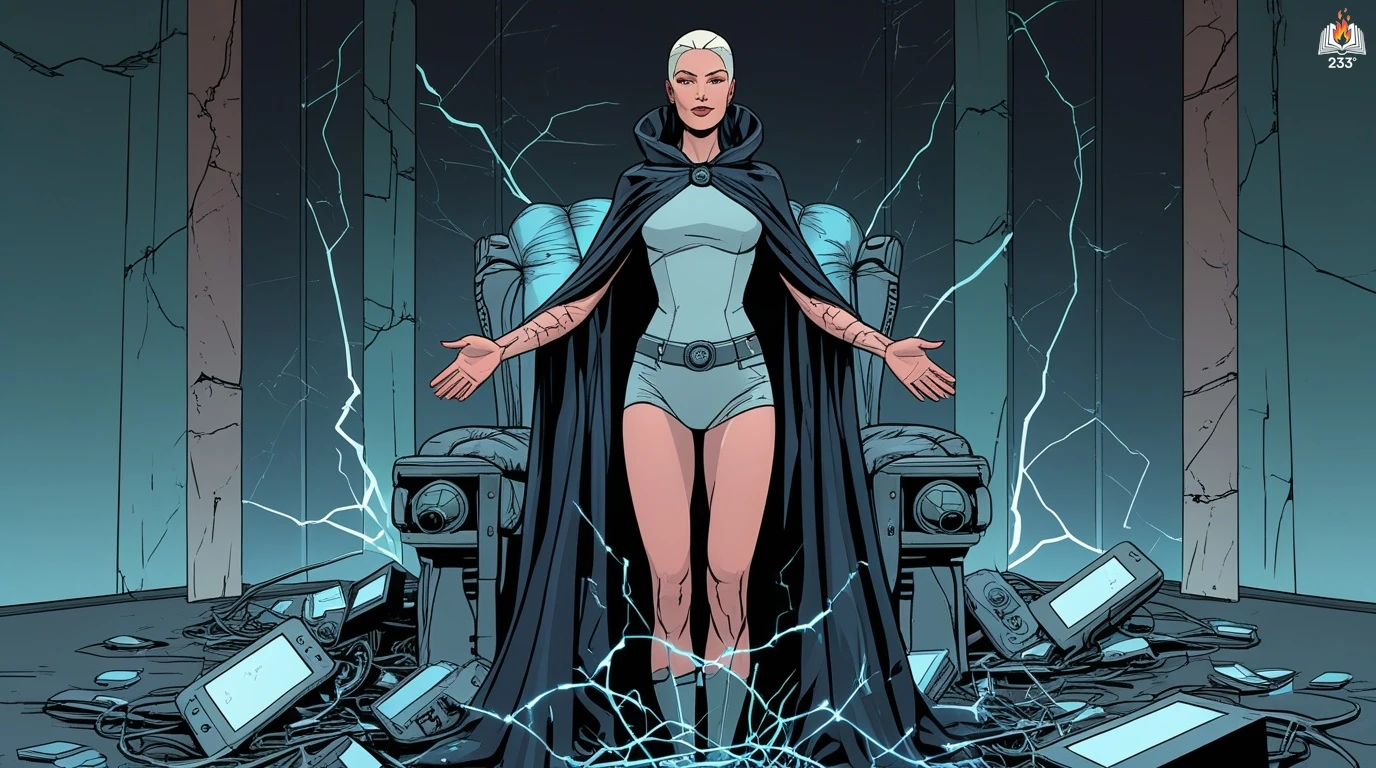
The truth doesn’t come all at once, but it doesn’t wait long either. Misty is not just Misty. She is Maura reborn, brought back by the island to paint once more. It’s not a gift. It’s a ritual. Every few generations, when the bloodlines run dry and the tourists swarm like a virus, the island finds a new host – a new vessel for Maura. They bring her in from outside. They charm her. Marry her. Impregnate her. And when the time comes, they take everything from her except her talent.
Misty paints landscapes. Not of what she sees, but of what is lost. Streets and houses that no longer exist. Buildings sealed up and forgotten. Her work grows darker, more powerful. People weep looking at them. Tourists line up for commissions. Grace beams with quiet triumph. The hotel displays the canvases like holy relics.
Then Misty tries to run. But the ferry doesn’t run often. The hospital won’t release Peter. Grace and the locals close in around her, always smiling, always polite. Her dreams are filled with fire and drowning and names she shouldn’t know. She stops sleeping. Stops eating. She keeps painting. She is a slave to it now.
Delaporte uncovers more rooms. More warnings. He tells Misty she’s in danger. But he doesn’t understand. The island doesn’t need to kill her. It just needs to break her. Make her into something else. Something useful. Something beautiful.
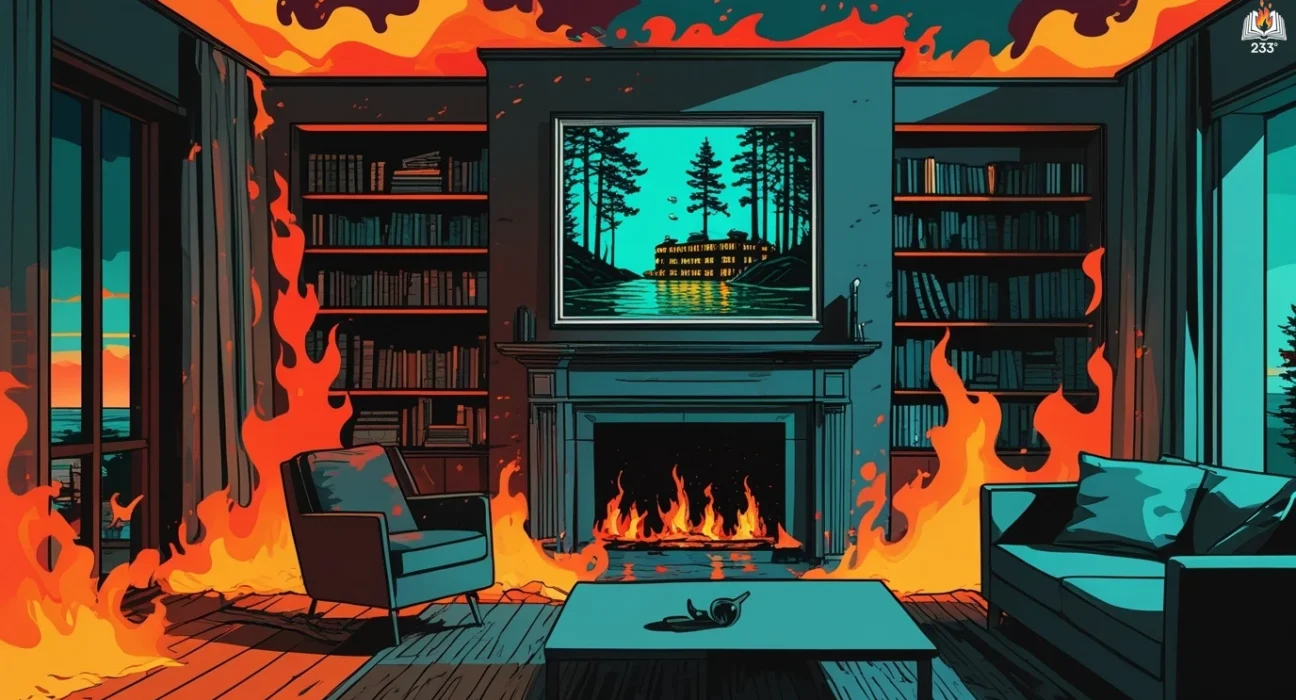
Grace finally tells her the rest. Misty is pregnant. Her daughter, Tabbi, is nearly thirteen. The right age. The paintings will be auctioned off, bought by rich tourists who think they’re acquiring a piece of island charm. But they’re buying death. Misty’s paintings will be hung in homes across the mainland. And those homes will burn. One by one. Each painting a beacon. Each fire a sacrifice.
It’s how Waytansea stays untouched. It’s how they keep the mainlanders out. Every few decades, a painter returns. A holy artist. They lure her in, drain her dry, and spread her work like a plague. Then the deaths begin. Quiet, tragic, untraceable. And the island sleeps easy again.
Misty finishes the last painting. Her masterpiece. It shows the island underwater. The trees submerged. The hotel sinking. The church bells silent under the sea. It’s beautiful. It’s perfect.
Peter dies in the hospital. Or maybe Misty kills him. Maybe she just pulls the plug.
Tabbi becomes silent, wise, smiling like the old island mothers. She takes her place.
The ferry arrives. A new man steps off. A woman behind him. She holds a sketchbook. She’s never seen the ocean before.
And on the longest day of the year, Waytansea Island opens its mouth again.
Main Characters
Misty Marie Wilmot – Once a hopeful art student with dreams of creative greatness, Misty has settled into a numb, exhausted existence as a hotel waitress and failed artist. She is sarcastic, weary, and increasingly unraveling as her husband’s coma and the island’s sinister expectations chip away at her. Through the diary she writes, Misty becomes both a chronicler and a captive, descending into a fugue of lost identity, forced artistry, and repressed memory. Her transformation from reluctant wife to possessed muse is chilling and tragic.
Peter Wilmot – Misty’s husband, a builder who attempts suicide and ends up in a coma, becomes a spectral presence through the diary. Before his collapse, he sealed off rooms in clients’ homes and scrawled cryptic, apocalyptic messages on the walls, pointing to an ancient conspiracy. Peter is both a victim and a facilitator of the island’s dark rites, leaving behind layers of secrets for Misty to decode.
Grace Wilmot – Peter’s overbearing mother, Grace is a relic of the old island families and a keeper of tradition. She manipulates Misty under the guise of maternal guidance, pushing her toward painting again while concealing her true motives. Grace represents the insidious power of community and bloodline, draped in civility but teeming with menace.
Tabitha “Tabbi” Wilmot – Misty and Peter’s precocious daughter, Tabbi is increasingly aligned with the island’s old ways. She begins speaking French and behaving with eerie maturity, reflecting the intergenerational continuity of the island’s rituals and the subtle estrangement from her mother.
Angel Delaporte – A vacationing mainlander and victim of Peter’s remodeling sabotage, Angel serves as both comic relief and grim observer. Through him, Misty begins to uncover the broader scope of Peter’s actions and the horrifying truths hidden behind the island’s genteel façade.
Theme
Art as Possession and Exploitation – A central theme is the abuse of artistic talent for communal ends. Misty’s reawakening as a painter isn’t a triumph but a coerced ritual, as she’s manipulated into channeling a spirit artist. Palahniuk critiques the commodification of creativity and the erasure of the artist’s agency.
Female Identity and Madness – Misty’s gradual psychological breakdown mirrors a gothic tradition of female characters losing autonomy and sanity under patriarchal and institutional forces. The diary format amplifies her isolation and unreliability, evoking classic themes of gaslighting and descent into hysteria.
Cycles of History and Repetition – The island’s gruesome history repeats through Misty’s life, highlighting the inescapability of fate and tradition. The notion of reincarnation, especially through art and ancestry, permeates the story, suggesting a deterministic universe shaped by hidden hands.
Class, Tourism, and Cultural Cannibalism – Palahniuk dissects the grotesqueries of vacation culture and the parasitic relationship between mainlanders and insular communities. The summer visitors, oblivious to the island’s dark history, mirror a larger pattern of exploitation, both cultural and economic.
Writing Style and Tone
Chuck Palahniuk employs a raw, disjointed, and fiercely cynical style in Diary. The novel’s voice is acerbic and bitter, shaped entirely through Misty’s first-person diary entries, which vacillate between sarcasm, grief, contempt, and surreal introspection. The writing mimics a descent into madness – fragmented, repetitive, and punctuated with clinical anatomical descriptions, stream-of-consciousness rants, and distorted memories. The diary format gives the book an unrelenting intimacy, compelling readers to experience Misty’s unraveling from inside her head.
The tone is both bleakly humorous and deeply unsettling. Palahniuk weaponizes banality—everyday routines, hotel shifts, ferry schedules—to contrast the creeping dread of Misty’s awakening. His prose is laced with dark irony, and his repeated phrase “Can you feel this?” serves as a thematic dagger, piercing through artifice and evasion. The story reads like a gothic fairy tale filtered through grunge aesthetics and existential terror, making Diary a chilling meditation on how the past survives by devouring the present.
Quotes
Diary – Chuck Palahniuk (2003) Quotes
“It's so hard to forget pain, but it's even harder to remember sweetness. We have no scar to show for happiness. We learn so little from peace.”
“We all die. The goal isn't to live forever, the goal is to create something that will.”
“Just for the record, the weather today is calm and sunny, but the air is full of bullshit.”
“All the effort in the world won't matter if you're not inspired.”
“Just for the record, the weather today is partly suspicious with chances of betrayal.”
“Just for the record, the weather today is bitter with occasional fits of jealous rage.”
“your handwriting. the way you walk. which china pattern you choose. it's all giving you away. everything you do shows your hand. everything is a self portrait. everything is a diary.”
“You're always haunted by the idea you're wasting your life.”
“Everyone's in their own personal coma.”
“Just for the record, she still loves you. She wouldn't bother to torture you if she didn't. ”
“Leonardo's Mona Lisa is just a thousand thousand smears of paint. Michelangelo's David is just a million hits with a hammer. We're all of us a million bits put together the right way.”
“For the record, knowing when people are only pretending to like you isn't such a great skill to have.”
“You have endless ways you can commit suicide without dying dying.”
“Maybe it's just a daughter's job to piss off her mother.”
“Angel says that rich people don't like to tolerate much. Money gives you permission to just walk away from everything that isn't pretty and perfect. You can't put up with anything less than lovely. You spend your life running, avoiding, escaping.”
“There is nothing special in the world. nothing magic. just physics.”
“What you don't understand you can make mean anything.”
“The truth is, wherever you choose to be, it's the wrong place.”
“The weather today is partly angry, leading to resignation and ultimatums.”
“Stanislavski was right, you can find fresh pain every time you discover what you pretty much already know.”
“If you're not drunk and half naked by this point, you're not paying attention.”
“Of all the priceless objects left behind, this is what we rescue. These artifacts. Memory cues. Useless souvenirs. Nothing you could auction. The scars left from happiness.”
“If emotion can create a physical action, then duplicating the physical action can re-create the emotion.”
“According to Plato, we don't learn anything. Our soul has lived so many lives that we know everything. Teachers and education can only remind us of what we already know.”
“How you're still always trapped. How your head is the cave, your eyes the cave mouth. How you live inside your head and only see what you want. How you only watch the shadows and make up your own meaning.”
“Just for the record, being smeared with shit and naked in the wilderness, spattered with pink vomit, this does not necessarily make you a real artist.”
“Any time some well-meaning person forces you to demonstrate you have no talent and rubs your nose in the fact you're a failure at the only dream you ever had, take another drink.”
“Where every day doesn't start with an alarm clock and end with the television.”
We hope this summary has sparked your interest and would appreciate you following Celsius 233 on social media:
There’s a treasure trove of other fascinating book summaries waiting for you. Check out our collection of stories that inspire, thrill, and provoke thought, just like this one by checking out the Book Shelf or the Library
Remember, while our summaries capture the essence, they can never replace the full experience of reading the book. If this summary intrigued you, consider diving into the complete story – buy the book and immerse yourself in the author’s original work.
If you want to request a book summary, click here.
When Saurabh is not working/watching football/reading books/traveling, you can reach him via Twitter/X, LinkedIn, or Threads
Restart reading!