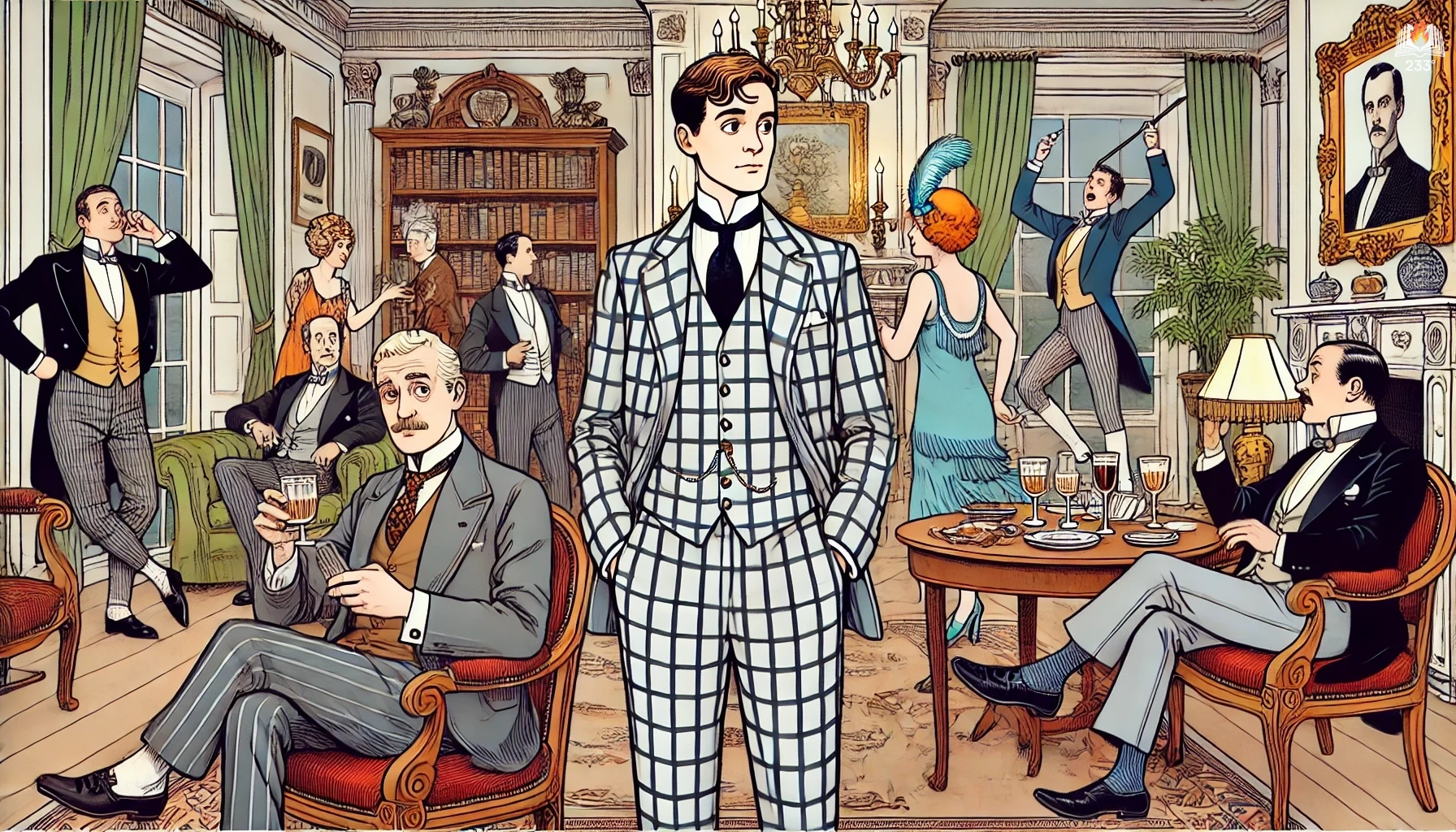
The Adolescent by Fyodor Dostoevsky was first published in 1875 and stands as the fourth of his five major mature novels, written after Notes from Underground and before The Brothers Karamazov. Also known as A Raw Youth, it is part of Dostoevsky’s late literary peak, yet often overshadowed by his more widely discussed works. Presented as a personal memoir, the novel explores the psychological, moral, and spiritual growth of a 19-year-old narrator in a chaotic and fragmented society. Written in the first person, The Adolescent is Dostoevsky’s only full-length novel told entirely from the perspective of a young protagonist, giving it a unique tone of unfiltered naivety, restless intellect, and raw self-examination.
Plot Summary
In the dim corridors of St. Petersburg, amid flickering gaslight and fog, a young man barely nineteen arrives with a burning idea stitched into his coat and his conscience – the “Rothschild idea”, a vision of wealth, autonomy, and cold invulnerability. His name is Arkady Dolgoruky, the illegitimate son of a nobleman and a former serf, yet he bears the proud surname of Dolgoruky without a princely title to protect it. From the start, he is plagued by contradiction – a thinker who mistrusts thinking, a dreamer obsessed with power, a son searching for a father he cannot forgive.
Raised far from the tangled world of his family, Arkady returns to confront the man who fathered him, Andrei Petrovich Versilov, a once-noble figure now worn by disappointment and philosophical despair. Versilov, cultured and charismatic, holds a strange magnetism over those around him, including Arkady’s mother, Sofya Andreevna, who has remained with him in ambiguous devotion despite the shame of their past. Versilov is a man of ideals but lacks faith; he believes in universal unity but fails to unify even his own household. He is a wanderer of the soul, torn between Orthodox mysticism and Catholic temptation, equally repelled and drawn by European modernity.
Arkady is filled with contempt for the man whose blood runs through him, yet he yearns for acknowledgment and, secretly, love. He believes himself above Versilov’s world – above his philosophical games, his romantic humiliations, his emotional chaos. The youth clings to his Rothschild idea like a shield: to acquire immense wealth, remain detached, live alone, and never owe anyone anything. Power, for him, is purity. Connection, especially love, is a trap.
But the world into which Arkady throws himself is neither pure nor simple. He stumbles into a web of half-truths, hidden histories, and shifting allegiances. His half-sister Liza, quietly suffering and drawn toward the young and sickly Prince Sokolsky, becomes one of the few anchors of honesty in his life. Meanwhile, he circles Katya Akhmakov, a young widow of aristocratic grace and mystery, who has also captivated Versilov. She represents to both father and son a mirror of their hidden desires – for beauty, for dominance, for understanding.
Lambert, a school friend turned blackmailer, appears with a knowing grin and a cruel hand. He recognizes the fragility beneath Arkady’s proud exterior and tempts him with a document – a piece of paper that could bring down Versilov, could expose his father’s past sins, and elevate Arkady in revenge and triumph. This document becomes Arkady’s talisman and torment, a symbol of the very power he craves and the moral corruption that power demands.
The document is not the only mystery. There are whispers of scandal, suicides hidden beneath polite silence, and a strange little girl named Olya whose death weighs like a ghost over her mother, Darya Onisimovna, a woman wrecked by grief and by society’s indifference. The city presses inward, with revolutionaries debating the meaning of freedom while they quietly destroy it, and aristocrats clinging to forgotten rituals in drawing rooms lit by chandeliers and secrets.
In this landscape of disorder, Arkady is forever acting, always performing, until even he begins to question the roles he plays. He crashes through confrontations – with Versilov, with Katya, with himself – and stumbles into humiliations that strip his pride to its raw nerve. He is called a fool, and he acts foolishly; he believes he is strong, and yet his strength shatters at the simplest gesture of kindness or pain.
Versilov, that broken prophet of modern Russia, offers cryptic reflections and confesses past wounds but refuses full explanations. He speaks in riddles, turns truth into irony, and hides behind his eloquence. Arkady longs to judge him, but judgment slips through his fingers like water. What is sin, when all things are permitted? What is love, when even love is tainted by past betrayal?
And there, walking quietly through the storm, is Makar Ivanovich, the old peasant who gave Arkady his name. Once dismissed as an obsolete figure, Makar returns like a parable, offering no argument, no ideology – only simplicity, dignity, and a strange, luminous peace. He carries stories from monasteries and dusty roads, stories that speak of a different Russia, a different soul. In Makar’s presence, Arkady feels a reverence he does not understand, a longing for something clean and incorruptible.
Days pass like storms. The document becomes less an instrument of revenge and more a chain, weighing down the boy who sought freedom. Katya proves elusive, her affections shifting like shadows. Lambert tightens his grip, and Versilov descends into a feverish madness, declaring universal salvation and despair in the same breath. Everything Arkady believed solid – truth, will, pride – begins to dissolve.
Then, like a clearing after long rain, something changes. Not with triumph or revelation, but with silence. Arkady begins to listen. He sees the sorrow in his mother’s face not as weakness, but as strength. He understands that Versilov’s contradictions are not evasion but the wreckage of a soul too broad for coherence. He sees in Makar not stupidity, but a depth untouched by words.
He burns the document.
Not in fury, but in stillness.
It is an act that no longer seeks power, but release.
In the quiet that follows, he steps away from the Rothschild idea. Not in defeat, but in transformation. The dream of solitary power yields to something unexpected – connection, vulnerability, the possibility of love. He has failed to become the man he imagined, but in that failure, he becomes something better.
A year later, Arkady reflects on all he has written. His notes, scattered with contradictions, embarrassment, even folly, contain something truer than any idea. They contain a soul learning to be honest, a youth becoming a man. He sees his past not as a chain, but as a foundation. He begins again.
And the world, full of disorder and yearning, continues to turn.
Main Characters
Arkady Makarovich Dolgoruky – The titular adolescent and narrator, Arkady is a brilliant but impulsive and insecure youth. Illegitimate son of the aristocrat Versilov and a peasant woman, his identity crisis drives the narrative. He seeks power and independence through his “Rothschild idea” – a scheme to amass wealth before making moral decisions. His erratic journey through Petersburg’s ideological and emotional labyrinth becomes a deep psychological exploration of modernity and selfhood.
Andrei Petrovich Versilov – Arkady’s natural father, a charismatic, conflicted aristocrat embodying the spiritual confusion of Russia’s intellectual elite. Versilov is alternately noble and egotistical, a man torn between Western ideals and Orthodox Christian longing. He is both Arkady’s rival and his model, and their turbulent relationship forms the emotional core of the novel.
Makar Ivanovich Dolgoruky – Arkady’s legal father, a former serf and wandering ascetic. He represents a vision of spiritual humility and traditional Russian piety. Though largely absent, his character profoundly influences Arkady’s evolving moral compass and becomes a symbolic counterpoint to Versilov.
Sofya Andreevna – Arkady’s mother, a former serf entangled in a complex emotional and social triangle with her two husbands. Her quiet dignity and suffering reveal Dostoevsky’s deep sympathy for the overlooked strength and virtue of women in Russian society.
Tatyana Pavlovna Prutkov – A sharp-tongued, loyal family friend who provides both comic relief and moral clarity. She watches over the family with vigilance and affection, often serving as a stabilizing force amid the chaos.
Katerina Nikolaevna Akhmakov (Katya) – A beautiful and enigmatic widow who becomes an object of obsession for both Arkady and Versilov. She plays a central role in the power dynamics and psychological tensions of the plot.
Maurice Lambert – Arkady’s unscrupulous school friend, who exploits Arkady’s insecurities and entices him into a blackmail scheme. Lambert represents the dangers of materialism, manipulation, and the misuse of ideological fervor.
Theme
The Search for Identity and Selfhood
Arkady’s internal struggle to define himself is the primary thread of the novel. His “Rothschild idea” symbolizes a desperate need for autonomy in a world of dependency and illegitimacy. His evolving self-awareness reflects Dostoevsky’s larger philosophical exploration of the fragmented modern soul.Fathers and Sons
The dual paternal figures – Versilov and Makar – symbolize opposing worldviews. One embodies rationalism and European liberalism, the other traditional Orthodox humility. Arkady’s navigation between them mirrors Russia’s broader identity crisis during the 19th century.Spiritual Crisis and Redemption
The novel examines moral disintegration and the yearning for spiritual wholeness. Characters like Makar offer glimpses of redemptive simplicity, while others, like Versilov, are trapped in intellectual paralysis. Arkady’s spiritual maturation is incremental but vital.Power, Pride, and Isolation
Arkady’s desire for control, wealth, and detachment are reflections of adolescent pride and fear. His yearning for solitude, coupled with disdain for societal hypocrisies, aligns him with Dostoevsky’s “underground” archetype but offers a path to transformation.The “Accidental Family” and Social Disintegration
Through the mismatched and illegitimate familial bonds, Dostoevsky presents a disordered Russian society where traditional structures have collapsed. The family becomes a microcosm for the broader social and moral chaos of post-emancipation Russia.
Writing Style and Tone
Dostoevsky employs a confessional, first-person narrative that captures the inner chaos and impulsivity of youth. Arkady’s narration is sprawling, full of digressions, contradictions, and raw emotion. This stylistic choice lends authenticity to his voice but also constructs a fragmented, nonlinear storytelling method that mirrors Arkady’s own psychological volatility. The prose oscillates between intense introspection and farcical social observation, creating a dynamic rhythm that is both challenging and deeply revealing.
The tone of The Adolescent is notably more ironic and comedic than Dostoevsky’s other major novels. While retaining the philosophical gravity of Crime and Punishment or Demons, this novel injects moments of absurdity and adolescent folly. Arkady’s obsession with appearing dignified or powerful often results in foolish blunders, which Dostoevsky uses to gently satirize both youthful arrogance and the moral ambiguity of Russian intellectual life. Despite the humor, the novel maintains a serious undertone, probing into spiritual decay and the search for meaning with unwavering psychological intensity.
Quotes
The Adolescent – Fyodor Dostoevsky (1875) Quotes
“How does it come about that what an intelligent man expresses is much stupider than what remains inside him?”
“Silence is always beautiful, and a silent person is always more beautiful than one who talks.”
“I was especially happy when, going to bed and covering myself with a blanket, I began, alone now, in the most complete solitude, with no people moving around and not a single sound from them, to re-create life in a different key.”
“A fool is always pleased with what he says, and, besides, he always says more than he needs to.”
“Never mind a little dirt, if the goal is splendid!”
“Reality alone justifies everything.”
“How can you tell a man there’s nothing to do? I can’t imagine a situation in which there could ever be nothing to do! Do it for mankind and don’t worry about the rest. There’s so much to do that a lifetime won’t be enough, if you look around attentively.”
“I've already warned you that the simplest ideas are the hardest to understand; I'll now add that they are also the hardest to explain.”
“Is it not I myself who am to blame, instead of them?”
“What if, when this fog scatters and flies upward, the whole rotten, slimey city goes with it, rises with the fog and vanishes like smoke.”
“Not everything can be told in words, certain things it's better never to tell.”
“I never found anything in the company of people, however I tried, and I did try; at least all my peers, all my comrades to a man, proved to be inferior to me in thinking; I don't remember a single exception.”
“You have to be all too basely in love with yourself to write about yourself without shame.”
“Quick understanding is only a sign of the banality of what is understood.”
“I passed by your lodging just now, and thought: 'I'll go in to him; he is kinder than any of them, and he was there at the time.' Forgive a poor creature who's no use to anyone; i'll go away directly; I'm going....”
We hope this summary has sparked your interest and would appreciate you following Celsius 233 on social media:
There’s a treasure trove of other fascinating book summaries waiting for you. Check out our collection of stories that inspire, thrill, and provoke thought, just like this one by checking out the Book Shelf or the Library
Remember, while our summaries capture the essence, they can never replace the full experience of reading the book. If this summary intrigued you, consider diving into the complete story – buy the book and immerse yourself in the author’s original work.
If you want to request a book summary, click here.
When Saurabh is not working/watching football/reading books/traveling, you can reach him via Twitter/X, LinkedIn, or Threads
Restart reading!