The Man Who Laughs, written by Victor Hugo and first published in 1869, is a haunting, gothic romance that combines adventure, tragedy, and political satire. Set in 17th and 18th century England, the novel follows the life of Gwynplaine, a boy disfigured by the Comprachicos – a secretive group who mutilate children for profit – and abandoned to fend for himself in a cruel, hierarchical world. The story is a scathing indictment of social injustice, exploring the interplay between appearance, identity, and morality through a melodramatic yet philosophically rich narrative.
Plot Summary
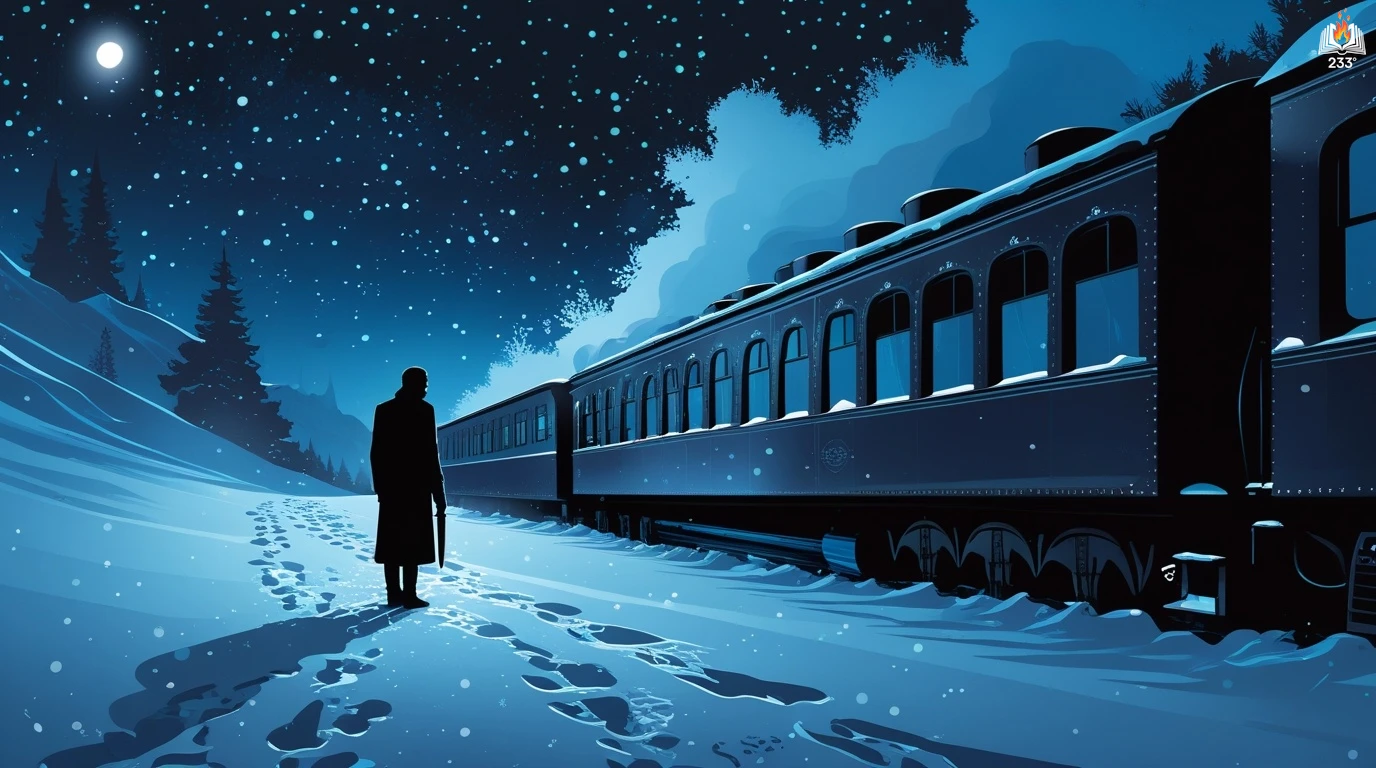
In the bitter winter of 1690, the Comprachicos – dealers in human deformity – sailed away from England’s shores, casting off one last piece of living merchandise. Left behind in the snowstorm, a child wandered the blinding white wilderness. His face, carved into a perpetual grin, was a mockery of joy, a grim token of the cruel artifice wrought upon him. This child was Gwynplaine, a boy with no past, no future, and a face that condemned him to spectacle.
Through the snow and silence, the boy trudged, encountering frozen corpses hung in cages, relics of justice’s terror. In the white oblivion, he heard the soft moan of an infant and found a baby girl, blind and alone, nestled against her dead mother. He took the child into his arms and stumbled into the glow of a strange little van. There lived Ursus, a wandering philosopher, cynic, healer, and ventriloquist, who shared his life with a wolf named Homo. Surprised but compelled by the children’s pitiful condition, Ursus took them in.
The years passed. Gwynplaine and Dea – for so Ursus named the girl – grew into adolescence beneath the makeshift roof of the van, nourished by potato stews, laughter, and Ursus’s cranky affection. Gwynplaine, hideous to the world but beloved by Dea, became the star of their roadside performances. His grin, a grotesque mask of amusement, drew crowds that laughed at what they could not understand. Dea, blind to the physical world, saw only his soul. She adored him with pure reverence, finding in him a presence of light and truth. Their affection was tender, solemn, and untouched by the world’s mockery.
From town to town, their little troupe wandered. Ursus, bitter and wise, dispensed remedies to the sick, spoke in parables, and loathed humanity with the commitment of one too often wounded. Homo guarded the van with lupine fidelity. And Gwynplaine, the Laughing Man, danced and spoke and bowed beneath the stares of men and the coins of children.
But destiny does not leave her handiwork untouched. Far from the wandering performers, the aristocratic Lady Josiana – illegitimate but powerful – heard of the Laughing Man and summoned him to perform. She saw not a clown but a creature of exquisite horror, a sublime contradiction of man and monster. Her fascination stirred a cruel lust, and she sent him a letter, riddled with desire and disdain. Gwynplaine was shaken. For the first time, he saw how his body, his face, his wound, could awaken passion and power.
Yet a shadow had already taken root in the vaults of the court. Barkilphedro, a deformed and venomous flatterer, had unearthed a secret buried in the archives. Gwynplaine, he discovered, was not merely a mountebank. He was the son of Lord Linnaeus Clancharlie, a noble who had defied King James II and paid with exile and disgrace. The Comprachicos had bought his child, mutilated him, and erased his name. But blood, however buried, seeps upward.
Summoned to the House of Lords, Gwynplaine found himself draped in fine fabrics, seated among the powerful, heir to titles and lands. But his grin remained. When he rose to speak, he offered the truth as his weapon. With fiery eloquence, he condemned their hollow pride, their blind laws, their scorn of suffering. His words fell like thunder upon deaf ears. The House laughed – not at his arguments, but at his face.
He fled, burning with shame and despair, yearning not for titles but for Dea. Back at the Green Box – their humble theater – he found silence. Dea was gone. Taken aboard a ship preparing to sail for the Continent, she lay dying, her health broken by separation and grief. Gwynplaine found her just in time to take her hand, to kiss her lips, to offer her the one gift he had always withheld: the truth of his love.
She smiled, radiant with the peace of one who had always seen clearly. Then, softly, without struggle, she slipped from the world. Gwynplaine, his soul emptied, followed. As the ship floated in moonlit silence, he stepped into the sea. No splash echoed. No cry rang out. Only the dark water received him, quietly, like an open grave.
In the quiet that followed, Ursus remained, his heart fractured, clasping the wolf Homo as one would clasp the last breath of a vanished life. The cart rolled no more. The laughter was stilled. The philosopher sat alone.
Main Characters
Gwynplaine: A child victim of the Comprachicos, Gwynplaine is left with a permanent grin carved into his face, which makes him a spectacle for others’ amusement. Beneath this grotesque appearance lies a deeply sensitive, intelligent, and moral soul. His internal conflict – between public ridicule and private nobility – shapes the core tragedy of the story. Gwynplaine’s journey from sideshow performer to nobleman to tragic outcast is marked by profound suffering and stoic dignity.
Dea: A blind girl adopted alongside Gwynplaine by the itinerant philosopher Ursus. Dea embodies innocence, spiritual purity, and unconditional love. Her blindness allows her to “see” Gwynplaine beyond his physical deformity, offering him genuine human connection. Her fragile health and tragic fate lend emotional weight and poignancy to the narrative.
Ursus: A misanthropic yet compassionate philosopher and traveling doctor who becomes the guardian of Gwynplaine and Dea. Cynical, wise, and resourceful, Ursus provides comic relief and profound insight, acting as both a mentor and a social commentator. His relationship with the wolf Homo, his surrogate family, further highlights his eccentric humanity.
Homo: A domesticated wolf with the heart of a loyal companion, Homo serves both as comic device and symbol of loyal instinct. His bond with Ursus and protective presence around Gwynplaine and Dea represents the enduring power of unjudging affection.
Josiana: A libertine duchess and illegitimate member of the royal family. Josiana is both amused and erotically intrigued by Gwynplaine’s grotesque beauty. Her role in the story challenges social hypocrisy and the fluid boundaries between lust, cruelty, and power.
Barkilphedro: A venomous court flatterer and spy, Barkilphedro is one of Hugo’s most sinister creations. His manipulations are driven by resentment and servility, embodying the danger of sycophancy in corrupt power structures.
Theme
The Tyranny of Appearances: At the heart of the novel lies the contrast between outward deformity and inner virtue. Gwynplaine, forever mocked for his grin, symbolizes how society judges by appearance rather than character, condemning those who look different regardless of their moral worth.
Social Injustice and Class Hypocrisy: Hugo critiques the English aristocracy and their obsession with bloodlines, wealth, and privilege. Through Gwynplaine’s rise and fall within this system, the novel exposes the emptiness of noble titles and the cruelty inflicted upon the poor and voiceless.
The Duality of Human Nature: Characters such as Barkilphedro and Josiana illustrate the dual faces of humanity – capable of both amusement and cruelty, sensuality and sadism. Hugo explores how power, untempered by conscience, can deform the soul even more than knives deform the body.
Love Beyond the Physical: The bond between Gwynplaine and Dea highlights the purity of love untethered from physical appearance. Their connection offers a spiritual counterpoint to the world’s material and superficial values.
Fate and Identity: The novel frequently questions how much of our lives are shaped by fate versus free will. Gwynplaine’s identity is determined without his consent, and his struggle is one of reclaiming dignity in a world that defines him by his scars.
Writing Style and Tone
Victor Hugo’s prose in The Man Who Laughs is elaborate, poetic, and deeply symbolic. He blends vivid descriptions with philosophical reflection, often using long, rhetorical sentences to build mood and momentum. His language is rich with metaphor and allusion, layering historical detail with visionary critique. The style combines Romantic excess with Gothic atmosphere, making the narrative as lush as it is unsettling.
The tone oscillates between tragic grandeur and biting satire. Hugo imbues even grotesque scenes with a sense of beauty, evoking both horror and sympathy. His moral outrage against injustice is palpable, but so too is his compassion for the marginalized. Through irony, drama, and melancholy lyricism, Hugo crafts a world where sorrow is profound, love is redemptive, and laughter – especially when forced – is a mask for suffering.
Quotes
The Man Who Laughs – Victor Hugo (1869) Quotes
“The paradise of the rich is made out of the hell of the poor.”
“He who is not master of his own thoughts is not accountable for his own deeds.”
“He had slipped, climbed, rolled, searched, walked, persevered, that is all. Such is the secret of all triumphs.”
“By degrees, however, they began to hope again. Such are our insubmergable mirages of the soul! There is no distress so complete but that even in the most critical moments the inexplicable sunrise of hope is seen in its depths.”
“If one could only get out of a grief as one gets out of a city!”
“Knowledge is a weight added to conscience.”
“To speak out aloud when alone is as it were to have a dialogue with the divinity which is within.”
“Of a disposition at once unsociable and talkative, desiring to see no one, yet wishing to converse with some one, he got out of the difficulty by talking to himself.”
“Memory is a gulf that a word can move to its lowest depths.”
“I am come to warn you. I am come to impeach your happiness. It is fashioned out of the misery of your neighbour. You have everything, and that is composed of the nothing of others... As for me, I am but a voice. Mankind is a mouth, of which I am the cry. You shall hear me!”
“Nothing is so logical and nothing appears so absurd as the ocean.”
“Water! pretending to be pure, thou resemblest false friends. Thou art warm at the top and cold at bottom.”
“Let misery hide itself in silence, otherwise it becomes treason.”
“It was said of him that he had once been for a short time in Bedlam; they had done him the honour to take him for a madman, but had set him free on discovering that he was only a poet. This story was probably not true; we have all to submit to some such legend about us.”
“When infinity opens to us, terrible indeed is the closing of the gate behind.”
“It combined corrupt simplicity with delicate ferocity, a curious variety of civilization; a tiger with a simper.”
“It is very fortunate that kings cannot err. Hence their contradictions never perplex us.”
“The bowed frame of an old man is the settlement in the architecture of life. Nature had formed him for sadness.”
We hope this summary has sparked your interest and would appreciate you following Celsius 233 on social media:
There’s a treasure trove of other fascinating book summaries waiting for you. Check out our collection of stories that inspire, thrill, and provoke thought, just like this one by checking out the Book Shelf or the Library
Remember, while our summaries capture the essence, they can never replace the full experience of reading the book. If this summary intrigued you, consider diving into the complete story – buy the book and immerse yourself in the author’s original work.
If you want to request a book summary, click here.
When Saurabh is not working/watching football/reading books/traveling, you can reach him via Twitter/X, LinkedIn, or Threads
Restart reading!