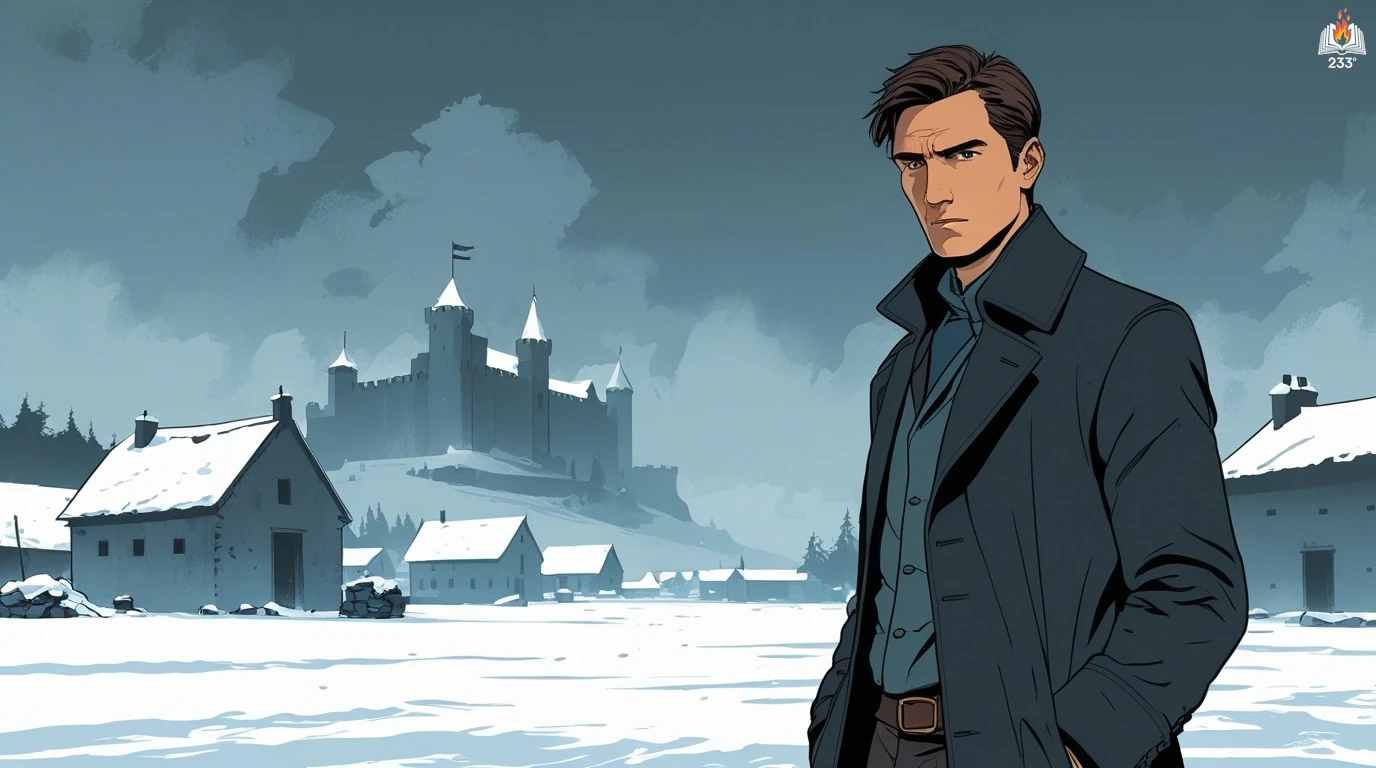


The Last Day of a Condemned Man by Victor Hugo, published in 1829, is a harrowing and introspective novella that captures the psychological torment of a man sentenced to death by guillotine in 19th-century France. Through this fictional memoir, Hugo mounts a powerful critique of capital punishment, stripping away the context of the crime and focusing entirely on the universal experience of awaiting execution. Written in a confessional, first-person narrative, the book plunges the reader into the claustrophobic and existential reflections of a nameless prisoner in his final hours, giving voice to the voiceless and condemned.
Plot Summary
In the cold gray light of a Bicêtre prison cell, time no longer obeys the clock. Days dissolve into restless thoughts and slow hours. A man waits for his fate, nameless, faceless to those who hold the key to his future. What matters his name, when the only certainty left to him is the guillotine? He has been condemned to death, and now each breath is tethered to the slow crawl of time, each beat of his heart a closer step to the blade.
He does not remember the exact moment when death first became real. The sentence had already been passed, the judgment already read aloud by a calm voice. Since then, he has lived in a world reduced to walls, iron bars, and the distant echo of keys. Time has grown into a monster. He counts the days, then the hours, and then even those slip through his fingers like sand. The fear is not sharp, but suffocating, constant – a shadow that darkens every corner of his thoughts.
They permit him to write, to reflect, to fill his final days with words that will never reach beyond these stone walls. It is a strange mercy. His mind latches onto fragments of memories, pieces of freedom now beyond reach. A morning sun on the Seine, the laughter of a child, the rustle of leaves in a spring breeze. These become wounds, more painful than the certainty of the scaffold. He thinks often of his daughter – Marie – who believes her father is already dead. She is too young to understand execution. Perhaps it is better that way. Her image haunts him more than the executioner ever could.
The world beyond his prison is distant, disinterested. The guards bring him food, watch over him, say little. They do not look into his eyes. They have seen too many like him, and will see many more. The priest arrives with the warmth of comfort, but the man is too far gone into the realm of fear to find solace in scriptures. He cannot pray. God seems very far away.
There are moments when he watches the routine of the prison and tries to pretend he is simply a spectator, someone who will leave eventually. But the illusion never lasts. He is moved from one cell to another. He feels it each time like a death in miniature – one less familiar wall, one more step closer. The cruelest torment is not the guillotine, but the waiting, the not knowing when. A reprieve seems like a dream. At first, hope flickers. Perhaps they will forget him. Perhaps a pardon will arrive. But time is a slow executioner, and hope begins to rot.
Each night, he listens to the city from the sliver of a window – Paris, alive and oblivious, as though his death were not impending, as though the world were not about to lose one more soul. He thinks of the crowd that will come to see him die. He knows they will gather, laughing, jeering, eating, as if his last breath were a spectacle. This is the custom – death as entertainment. He has no name, but they will see a man die. That will be enough for their amusement.
Transferred to the Conciergerie, the final threshold before death, he begins to understand the full cruelty of anticipation. Every sound echoes like a summons. Every footstep outside his door might be the one that comes for him. The hours are leaden. He watches the moon shift across the sky, the shadows move on the walls, the breath of time passing like wind through a dying tree.
When the judges come to speak with him, they are not men – they are stone faces, reading from parchment, their voices clean, unemotional. They confirm what he already knows: there will be no reprieve. He must prepare. The priest walks with him again. There are prayers, but they feel hollow. He does not resist. He walks as if in a dream, unable to scream, unable to run.
They let him write once more, perhaps thinking it will give him peace. He writes not to survive, but to mark the fact that he once lived. These pages are his only grave. In them, he recalls moments of clarity, like the instant he heard a child laugh from a courtyard window or felt the wind through the bars. He remembers how much he wanted to live – not for grand reasons, but for the simple act of breathing, for seeing the sun rise, for hearing footsteps on the cobblestones.
His final hour arrives not with thunder, but with silence. A guard opens the door. The clock strikes three. The priest is there, and men with faces turned away. He is led through corridors that twist like veins, the air colder with each step. Outside, the streets are lined with people. They cheer and shout, some gape in horror, others with glee. He is paraded like a condemned saint, offered up not to heaven, but to the public’s hunger for justice.
The guillotine stands in the middle of the square like a grotesque altar. It gleams in the morning light. The man does not cry. He does not plead. His legs tremble. His breath is short. He looks to the sky and sees the clouds, the same sky under which he once kissed his child’s forehead. There is no music, no poetry, only the metallic hiss of the blade waiting.
He is stripped of his jacket, then bound. The priest murmurs words that drift like ash in the wind. His neck is fitted to the wood. The crowd grows quiet, waiting for the spectacle. The executioner does not delay. The blade falls, and it is done.
But long after the body is taken away and the crowd disperses, the words he wrote remain, trembling with sorrow, thick with dread, heavy with the final dignity of a man made into a number, made into an example, yet never less than a man. In those last thoughts is all that need be known: a voice rising from the silence of death to ask the living – why?
Main Characters
The Condemned Man – The unnamed protagonist of the novella is a prisoner on death row, awaiting his execution. His identity, crime, and background are intentionally vague, allowing Hugo to universalize his suffering. Through his fevered thoughts and emotional revelations, he emerges as deeply human – terrified, reflective, yearning for life, and overwhelmed by despair. His internal monologue unveils a profound mental and emotional deterioration, revealing not just fear of death, but anguish at being dehumanized and forgotten by society.
Marie (his daughter) – Mentioned briefly, she is a symbol of innocence and hope in the condemned man’s life. Her unknowing existence, believing her father is dead, haunts him and becomes one of the more piercing emotional pangs he suffers. She represents the life and love he is severed from, reinforcing the tragedy of a man torn from those who still love him.
The Priest – A figure of religious consolation, the priest’s presence contrasts the cold indifference of the judicial system. Though well-meaning, he cannot alleviate the prisoner’s fear or offer true solace. His role underscores the spiritual loneliness of the condemned.
The Jailers and Guards – These faceless figures embody the machinery of the penal system. They are efficient, indifferent, and emotionally detached from the condemned man, further emphasizing the dehumanizing nature of state-sanctioned death.
Theme
Capital Punishment and Justice – Central to the novella is Hugo’s vehement opposition to the death penalty. He dismantles its supposed moral and social justification, portraying it as a cruel, archaic ritual that serves no purpose but vengeance. The book condemns the system that upholds such irreversible punishment while ignoring human dignity.
Isolation and Psychological Torment – The mental landscape of the condemned man is steeped in loneliness and despair. The narrative is filled with claustrophobic introspection, as the man grapples with the passage of time, the loss of identity, and the slow approach of death. His thoughts spiral inwards, portraying a psyche unraveling under pressure.
Dehumanization and the Loss of Identity – By omitting the protagonist’s name and crime, Hugo emphasizes how the justice system strips individuals of their humanity. The condemned becomes a symbol, an object, a thing to be disposed of, rather than a person with a life, history, and emotions.
Time and Mortality – The ticking clock becomes a merciless antagonist in the novella. Time loses its neutrality and becomes oppressive, stretching unbearably long as the man counts the hours until his execution. The imminence of death intensifies his reflections on existence and legacy.
Public Spectacle and Moral Hypocrisy – Hugo criticizes the crowd that gathers to witness executions, depicting them as morbidly curious and desensitized. This voyeurism contrasts with the prisoner’s suffering, exposing the grotesque social norms that allow human death to become entertainment.
Writing Style and Tone
Victor Hugo’s writing in The Last Day of a Condemned Man is marked by its confessional intimacy and psychological intensity. Composed as a series of journal-like entries, the prose is raw, urgent, and intensely personal. Hugo eschews narrative detachment, opting instead for stream-of-consciousness narration that mimics the spiraling, anxious thoughts of a man facing his mortality. The sentences are often abrupt or fragmented, underscoring the protagonist’s agitation and fraying mental state. This technique powerfully immerses the reader in his inner world, demanding empathy rather than judgment.
The tone of the novella is melancholic, impassioned, and unflinching. Hugo masterfully uses irony and moral outrage to underscore the inhumanity of capital punishment. His language swings between philosophical reflection and visceral dread, conveying both the horror of impending execution and the quiet tragedy of a wasted life. Though the story is fictional, it pulses with political and ethical urgency, positioning itself not just as literature, but as a plea for reform. The novella is less a narrative than a moral outcry – a somber and haunting meditation on death, justice, and human dignity.
Quotes
The Last Day of a Condemned Man – Victor Hugo (1829) Quotes
“But secondly you say 'society must exact vengeance, and society must punish'. Wrong on both counts. Vengeance comes from the individual and punishment from God.”
“The slightest contact with logic makes all false arguments disintegrate.”
“So how do magistrates understand the word civilization? Where do we stand with it? Justice reduced to subterfuge and trickery! The law to machinations! Appalling!”
“And that is how a self-seeking hotchpotch distorts and debases the very finest social schemes. It is the black vein in white marble; it gets everywhere, appears under your chisel at any moment without warning. Your statue has to be redone.”
“Alas! What does death do with our soul? What nature does it give it? What does it take, and what does it leave with it? Where does it put it? Will it sometimes lend it eyes of flesh with which to look down upon the earth and weep?”
“What is physical pain compared to moral pain!”
“Crime will be regarded as a disease, and this disease will have its doctors who will replace your judges, its hospitals which will replace your prisons.”
We hope this summary has sparked your interest and would appreciate you following Celsius 233 on social media:
There’s a treasure trove of other fascinating book summaries waiting for you. Check out our collection of stories that inspire, thrill, and provoke thought, just like this one by checking out the Book Shelf or the Library
Remember, while our summaries capture the essence, they can never replace the full experience of reading the book. If this summary intrigued you, consider diving into the complete story – buy the book and immerse yourself in the author’s original work.
If you want to request a book summary, click here.
When Saurabh is not working/watching football/reading books/traveling, you can reach him via Twitter/X, LinkedIn, or Threads
Restart reading!