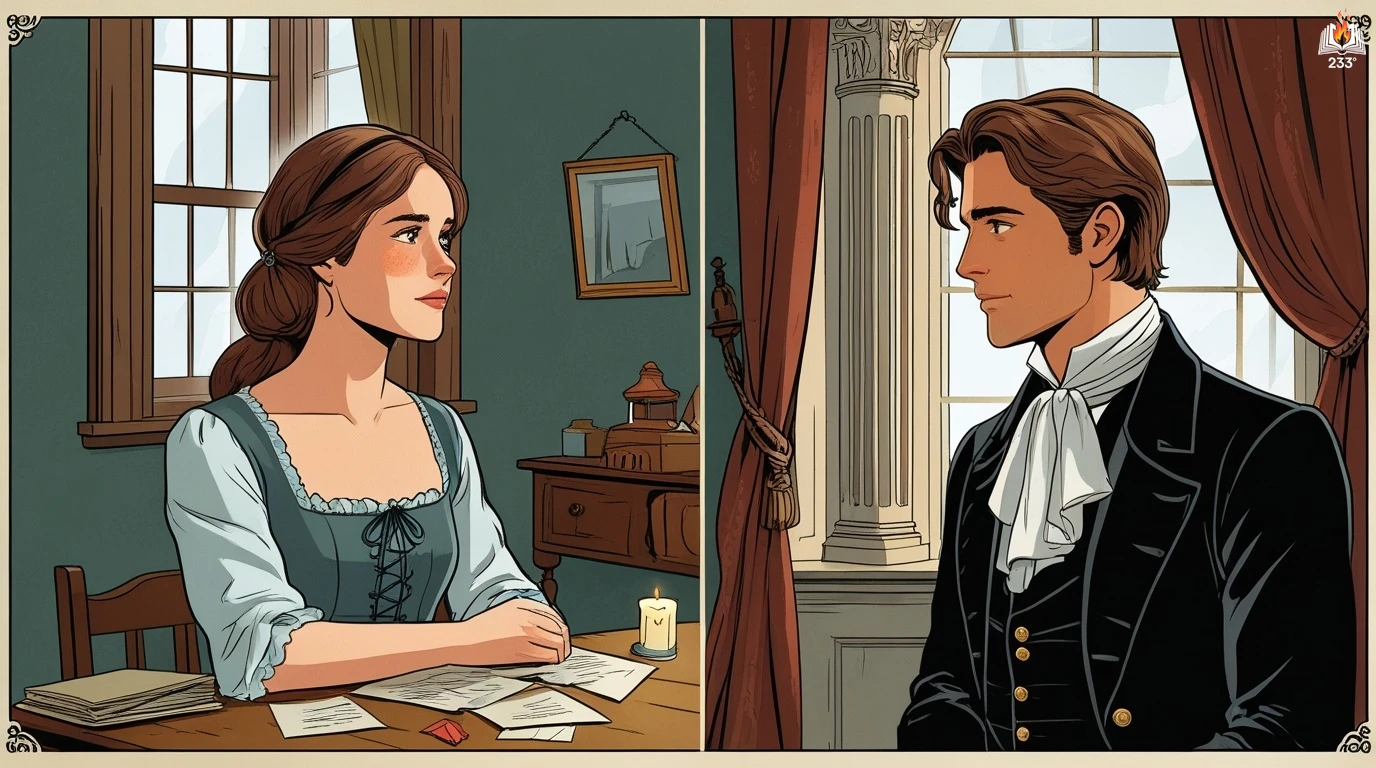
An Artist of the Floating World by Kazuo Ishiguro, published in 1986, is a poignant postwar novel set in Japan, narrated by Masuji Ono, a retired painter reflecting on his past in the wake of World War II. The story unfolds in the late 1940s, during a time of immense cultural and political upheaval, and delves into themes of memory, guilt, and the shifting moral landscape of a nation emerging from defeat. Ishiguro, also known for his Booker Prize-winning novel The Remains of the Day, crafts this introspective narrative with haunting subtlety and emotional precision.
Plot Summary
In October 1948, in a city still nursing the wounds of war, a man named Masuji Ono lives in a once-grand house perched above the “Bridge of Hesitation.” The house, bought at a modest price from the prestigious Sugimura family, stands as a quiet monument to a life once esteemed. Ono, a retired painter of nationalistic propaganda, spends his days reflecting on choices made in a time now buried beneath ash and ruin. Though he claims modesty, there lingers in his bearing the quiet pride of someone once central to a greater cause, though the cause itself has since been disgraced.
Ono lives with his younger daughter, Noriko, whose cheerful sarcasm and modern spirit often clash with her father’s fading authority. As marriage negotiations begin for Noriko, the family treads carefully, for a previous arrangement fell through under unclear circumstances. Ono suspects his past – once celebrated, now questionable – may have cast a shadow over his daughter’s prospects. His elder daughter, Setsuko, arrives with her young son, Ichiro, for a visit, bringing with her a restrained grace and a subtle insistence that Ono address certain matters left unsaid.
The house bears its own scars. Parts remain closed off, damaged by bombs, with tarpaulin ceilings and collapsed corridors. Yet the veranda is repaired, and there, in the warmth of afternoon sun, the family sits as they once did, sipping tea, avoiding what cannot be easily spoken. Ichiro, full of energy and imagination, gallops across rooms pretending to be the Lone Ranger, his mind shaped not by samurai tales but by American heroes. His presence offers Ono moments of unexpected tenderness, and also reminders of a world that has moved on without him.
Through fleeting conversations, Setsuko gently urges her father to offer some form of reassurance to the prospective in-laws. There is no demand, only a quiet acknowledgment that the past, if not addressed, may continue to cause harm. Ono’s protests are soft, often veiled in pride or self-deprecation. He recounts to himself – and, in wandering conversations, to others – memories of his career, students, and influence. He remembers the old pleasure district, now reduced to rubble, where he once held court at Migi-Hidari, a bar where his protégés toasted his reputation. Among them were brilliant young men, their fervor fueled by art and politics. They saw in Ono a leader, a man whose brush had lent strength to the rising empire.
He recalls with warmth the visit from Shintaro and his brother, who came to thank him for securing a job. That memory, filled with bows and praise, lingers in his mind as evidence of his worth. Even now, Shintaro remains loyal, calling him Sensei, though their lives have become simpler, their conversations repetitive. They drink together at Mrs Kawakami’s bar, one of the few establishments still standing, where silence and memory echo more loudly than laughter.
The war changed everything. Those once praised for their patriotic art now find themselves shunned. Kuroda, once a student of Ono, was arrested and tortured, accused of subversion, a fate perhaps sealed by Ono’s denunciation. These acts, long buried, begin to rise to the surface as whispers in the air. Ono remembers these moments with increasing clarity, his recollections tinged with shame, though still cushioned by self-justification. He tells himself he acted out of duty, out of a belief in Japan’s greatness. And yet, when Setsuko asks again if he would consider making a simple acknowledgment of past mistakes, he does not outright refuse.
During a rare gathering at Mrs Kawakami’s, the old district’s emptiness becomes palpable. The streets that once bustled with chatter and sandals now yield only rubble and puddles. Ono walks through them like a ghost among ruins, haunted less by what remains than by what is irretrievably lost. The bars, the students, the laughter, and the cause that once gave his life structure – all dissolved. He is a man left behind by history, yet still clinging to the frame it once gave him.
As Noriko’s negotiations progress, Ono does what is asked of him. He visits the family and offers, without apology, a gesture of humility. The meeting is courteous, his presence acknowledged. Nothing more is said. The engagement proceeds. Noriko shows signs of growing into her own confidence, and Ono, quietly, observes this with a mixture of satisfaction and wistfulness.
In the days that follow, he resumes his routines – tending to the house, talking to Ichiro, sipping sake in the bar where only ghosts remain. The past no longer clings as tightly. He has not been exonerated, nor has he been condemned. What he once believed was firm has shifted beneath him, yet he walks steadily still. On the veranda, in the company of his daughters and grandson, he watches the maple tree sway and listens to the rhythms of a world reshaping itself without his guidance.
And when evening comes, and shadows stretch long across the garden, he sits with a kind of peace. There is no great reckoning, no dramatic collapse. Only the quiet acceptance that time has moved forward, and he, for all his regrets and memories, must move gently with it.
Main Characters
Masuji Ono – A once-prominent painter who endorsed imperialist propaganda before and during World War II. Now retired, Ono is introspective, haunted by a sense of guilt and uncertainty about his legacy. His narration reveals a man grappling with his past, often downplaying or justifying his choices, and gradually confronting the changing values of postwar Japan.
Noriko – Ono’s younger, unmarried daughter. Lively and at times sarcastic, she serves as a subtle counter to her father’s more serious demeanor. Her behavior reflects both affection and a quiet frustration, especially regarding Ono’s outdated ways and the challenges of marriage negotiations in a new Japan.
Setsuko – Ono’s elder daughter, married and more reserved than Noriko. She exhibits quiet strength and emotional sensitivity. Through Setsuko, Ishiguro explores the tension between filial duty and personal conscience, as she gently tries to help her father confront the consequences of his past without dishonoring him.
Ichiro – Setsuko’s energetic young son and Ono’s grandson. His fascination with American cowboy heroes symbolizes the new cultural influences permeating postwar Japan. Through Ichiro’s innocent questions, Ishiguro introduces subtle contrasts between generations and ideologies.
Shintaro – Ono’s former student and longtime friend. Childlike and timid, Shintaro clings to their shared past but becomes a mirror of Ono’s own reluctance to fully acknowledge complicity in wartime propaganda. Their interactions highlight themes of denial and shifting accountability.
Mrs Kawakami – The owner of a bar frequented by Ono and his artist friends. Her declining business reflects the collapse of the old social and artistic circles. She represents both nostalgia and the inability to adapt to the harsh realities of the new era.
Theme
Memory and Self-Deception: Central to the novel is the unreliable narration of Ono, whose recollections are marked by elisions, contradictions, and gradual revelations. The ambiguity of memory becomes a vehicle for exploring the tension between truth and self-preservation, as Ono tries to justify past decisions while facing mounting evidence of their harm.
Guilt and Responsibility: Ishiguro delicately examines personal and national guilt. Through Ono’s attempts to reconcile with his past, the novel questions the extent of individual responsibility in collective wrongdoing, especially in the context of art used as propaganda.
The Changing Japanese Identity: The transition from imperial Japan to a modern, Western-influenced society is evident throughout the novel. Ichiro’s obsession with American heroes, Noriko’s expectations about marriage, and the decline of traditional establishments like Mrs Kawakami’s bar all underscore the disintegration of the old world Ono once celebrated.
Art and Propaganda: Ono’s career as an artist is at the heart of the novel’s exploration of the moral responsibilities of creators. Once proud of using his art to serve nationalistic aims, he now confronts a society that condemns those values, forcing him to reckon with the consequences of influence.
Honor and Prestige: The idea of social standing permeates Ono’s interactions, particularly in the context of marriage negotiations. The tension between past prestige and present irrelevance mirrors Japan’s own fall from imperial power to occupied nation.
Writing Style and Tone
Kazuo Ishiguro’s prose is understated, deliberate, and remarkably controlled. The narrative unfolds through the voice of Masuji Ono, whose formal, almost pedantic tone masks the emotional undercurrents of guilt and uncertainty. Ishiguro masterfully uses this restrained first-person perspective to reveal more in what is left unsaid than in what is openly admitted. The language is elegant and refined, reflecting both the cultural decorum of its setting and the narrator’s internalized need for dignity and self-justification.
The tone throughout the novel is quietly melancholic, tinged with nostalgia and a creeping unease. Ishiguro’s subtle manipulation of mood draws the reader into a world where memory is fragile, and moral reckoning is elusive. The pace is contemplative, allowing room for nuance and silence to convey the weight of what has been lost—not just for Ono, but for a generation of Japanese grappling with the aftermath of war and shifting societal values.
Quotes
An Artist of the Floating World – Kazuo Ishiguro (1986) Quotes
“When you are young, there are many things which appear dull and lifeless. But as you get older, you will find these are the very things that are most important to you.”
“An artist's concern is to capture beauty wherever he finds it.”
“There is certainly a satisfaction and dignity to be gained in coming to terms with the mistakes one has made in the course of one’s life”
“If one has failed only where others have not had the courage or will to try, there is a consolation – indeed, a deep satisfaction – to be gained from this observation when looking back over one’s life.”
“For their kind do not know what it is to risk everything in the endeavor to rise above the mediocre.”
“We're the only ones who care now. The likes of you and me, Ono, when we look back over our lives and see they were flawed, we're the only ones who care now.”
“The best things, he always used to say, are put together of a night and vanish with the morning. What people call the floating world, Ono, was a world Gisaburo knew how to value.”
“Democracy is a fine thing. But that doesn't mean citizens have a right to run riot whenever they disagree with something. #Page: 120”
“... when people are getting poorer, and children are growing more hungry and sick all around you, it is simply not enough for an artist to hide away somewhere, perfecting pictures of courtesans.”
“For indeed, a man who aspires to rise above the mediocre, to be something more than ordinary, surely deserves admiration, even if in the end he fails and loses a fortune on account of his ambitions.”
“How so much honourable is such a contest, in which one's moral conduct and achievement are brought as witnesses rather than the size of one's purse. #Page: 10”
“For however one may come in later years to reassess one’s achievements, it is always a consolation to know that one’s life has contained a moment or two or real satisfaction”
“My conscience, Sensei, tells me I cannot remain forever an artist of the floating world.”
“Revolution? Really, Ono! The communists want a revolution. We want nothing of the sort. Quite the opposite, in fact. We wish for a restoration.”
“Something has changed in the character of the younger generation in a way I do not fully understand, and certain aspects of this change are undeniably disturbing.”
“Of course, it is tragic that so many of his generation died as they did, but why must he harbour such bitterness for his elders?”
“In any case, there is surely no great shame in mistakes made in the best of faith. It is surely a thing far more shameful go be unable or unwilling to acknowledge them.”
“however accurately one may fill in the surface details of one’s mirror reflection, the personality represented rarely comes near the truth as others would see it.”
We hope this summary has sparked your interest and would appreciate you following Celsius 233 on social media:
There’s a treasure trove of other fascinating book summaries waiting for you. Check out our collection of stories that inspire, thrill, and provoke thought, just like this one by checking out the Book Shelf or the Library
Remember, while our summaries capture the essence, they can never replace the full experience of reading the book. If this summary intrigued you, consider diving into the complete story – buy the book and immerse yourself in the author’s original work.
If you want to request a book summary, click here.
When Saurabh is not working/watching football/reading books/traveling, you can reach him via Twitter/X, LinkedIn, or Threads
Restart reading!