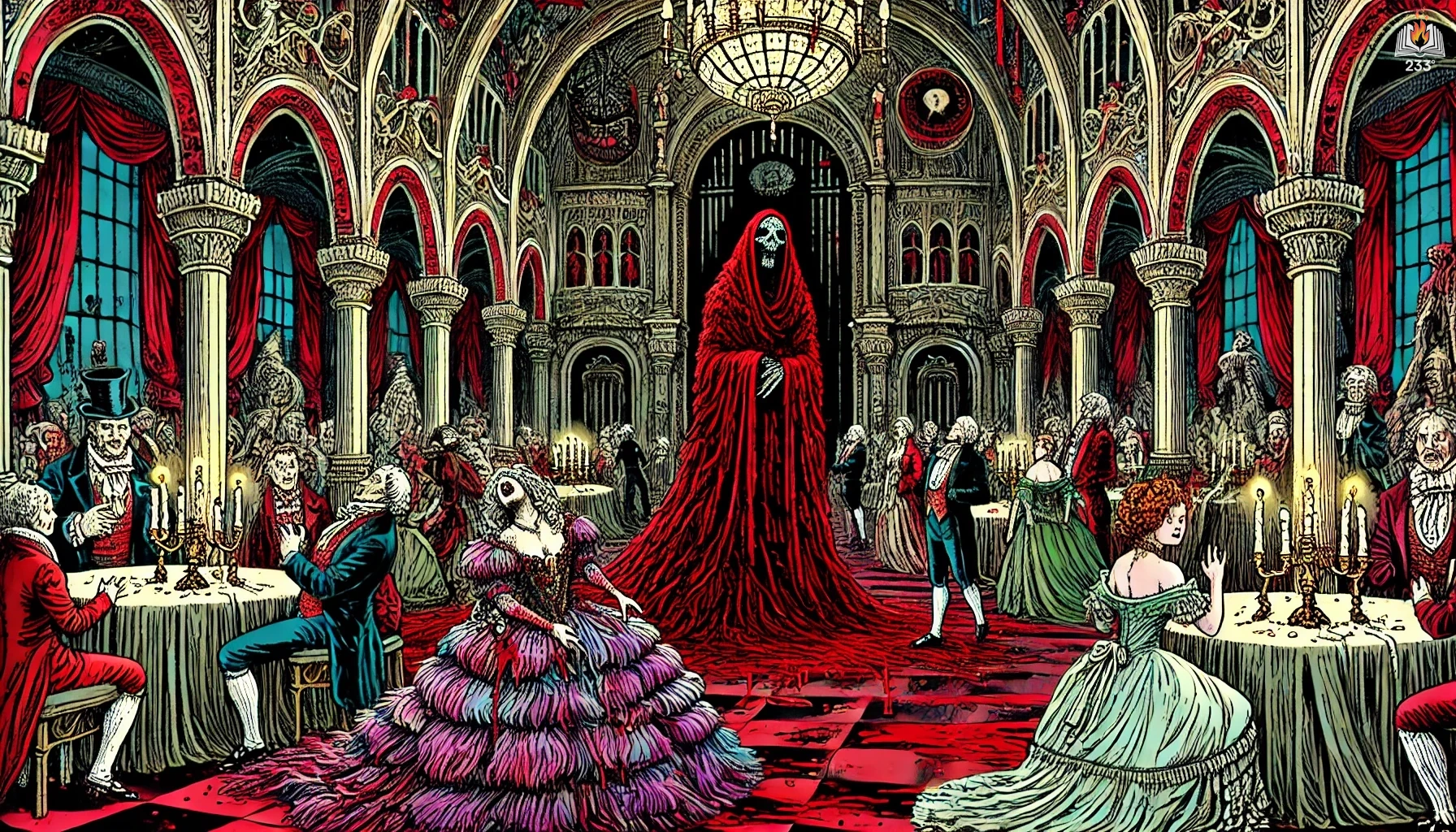
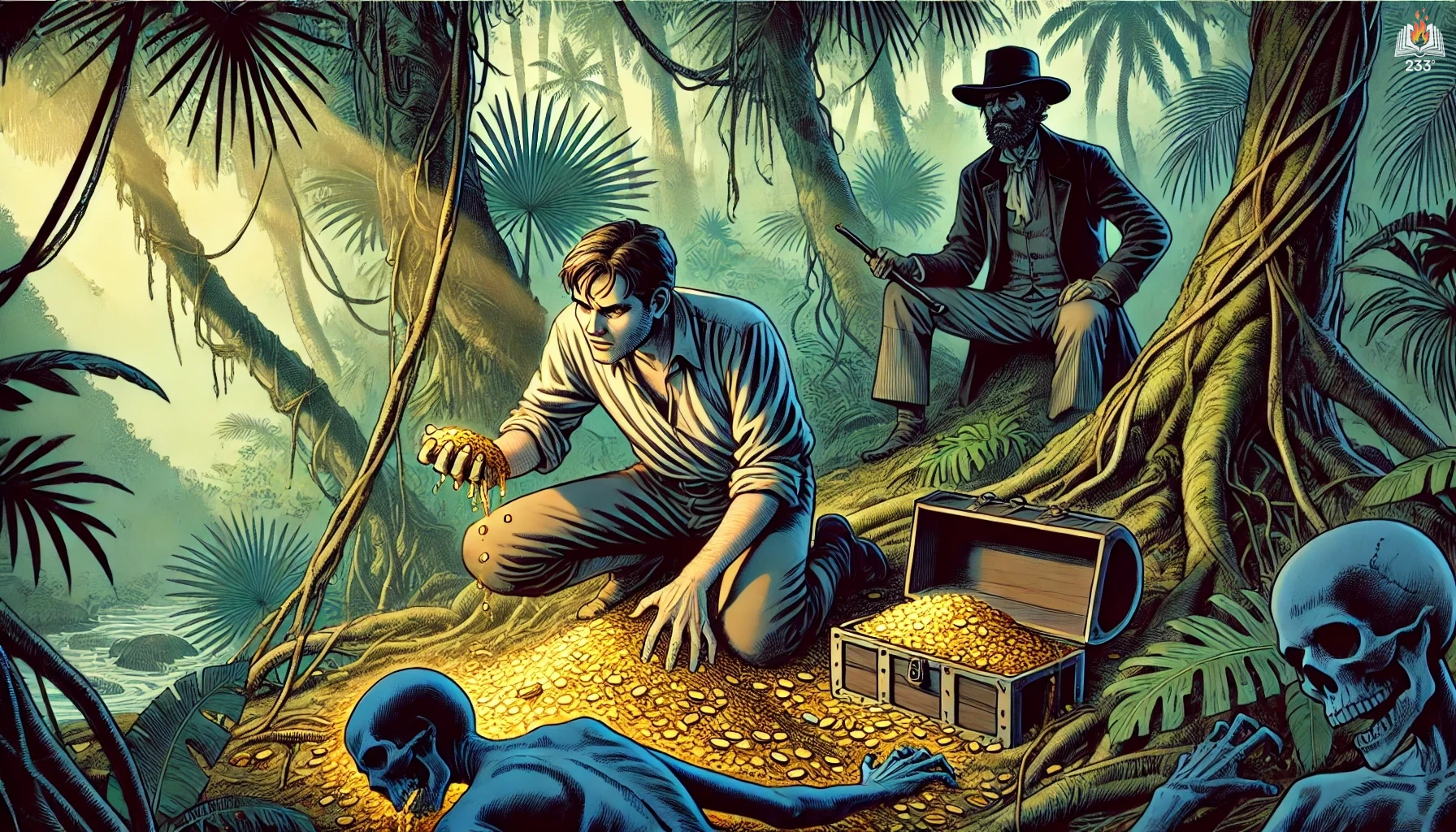
Second Glance by Jodi Picoult, published in 2003, is a genre-defying novel that weaves together a ghost story, a love story, a murder mystery, and a historical narrative into a compelling tapestry of suspense and emotion. Set primarily in Comtosook, Vermont, the novel explores both present-day events and a chilling legacy from the 1930s, revealing how the past continues to shape and haunt the lives of its characters. Picoult uses a paranormal lens to uncover dark secrets about eugenics, love, and justice, masterfully shifting between timelines to illuminate the persistent echoes of history.
Plot Summary
Ross Wakeman had already died three times, and yet, he lived. Each brush with death left no scar deep enough to match the hollow inside him. He wandered the world like a man searching for something he had lost – his fiancée Aimee, gone in a crash he couldn’t undo. He took to ghost hunting, chasing spirits in a desperate attempt to reconnect with her. But no apparition ever answered, and so he moved through each case with the hope that one would finally break through.
When Ross arrived in Comtosook, Vermont, he found himself entangled in a place teetering between beauty and unrest. A real estate company, the Redhook Group, had its eye on a parcel of land to build a strip mall. But the site stirred resistance from the local Abenaki community, who believed it to be a sacred burial ground. Among the protestors stood Az Thompson, a centenarian who carried the weight of memory and history like a stone in his chest. He remembered things others had forgotten or tried to forget – eugenics, sterilizations, and the slow erasure of a people.
Ross didn’t come to Comtosook to join a protest. He came to stay with his sister Shelby and her son Ethan. Ethan’s rare illness – xeroderma pigmentosum – bound their lives to the night. Under the stars, Ross found moments of stillness, watching Ethan glide across the driveway on his skateboard, glowing like a boy carved from moonlight. Shelby welcomed Ross with cautious warmth, knowing his grief could fill rooms and drown the people in them.
But Comtosook refused to be ordinary. Strange phenomena began to manifest – showers of rose petals in August, pennies appearing without cause, whispers in the night. A child named Lucy Oliver woke terrified, whispering of a weeping woman and a pressure in the air too heavy to breathe. Ross had abandoned ghost hunting, but the town pulled him back with its whispers and apparitions.
The land under dispute held secrets older than fences and deeds. Long ago, a woman named Cecelia Pike lived there, a girl with Abenaki blood who had fallen in love with a white man, Spencer Pike. When she became pregnant, their love turned dark. Spencer, a scientist consumed by the eugenics movement, ensured Cecelia was deemed unfit. She vanished under the weight of lies, committed to an institution, her child lost to time. Her story was buried beneath manicured grass and polite silence.
Ross began to dream – of a woman in 1930s clothes, of cold spots and silent cries. The signs were there, flickering at the edges of reason. He met Eli Rochert, the town’s police officer, who straddled the worlds of logic and legacy. Eli’s Abenaki heritage connected him to the past, but duty bound him to enforce the present. He kept peace between protestors and developers, though his heart leaned toward justice for those long silenced.
As Ross dug deeper, he unearthed pieces of a life erased – photographs, records, whispers in the dark. The image of a face, captured on film at the lake, bore an eerie familiarity. Ross wasn’t sure if it was real, but something within him stirred, the same instinct that once made him fall to one knee on a filthy New York curb and ask Aimee to be his wife.
Meanwhile, Meredith Oliver, a geneticist and Lucy’s mother, tried to explain away the strange behavior of her daughter. She didn’t believe in ghosts, only science. But Lucy, with her quiet wisdom and frightened eyes, spoke of a woman who watched her from the shadows. A woman who seemed more sad than scary. When Lucy fled her room for the safety of the bathtub, Meredith began to wonder if logic alone could answer every question.
Ross met with Spencer Pike, now a broken old man in a nursing home. The past clung to him like a bitter perfume. Through veiled admissions and cryptic remarks, Spencer revealed the part he played in Cecelia’s disappearance. He had loved her once, or believed he did. But fear – of scandal, of difference, of bloodlines – twisted that love into something monstrous.
As developers pushed forward, breaking earth where bones should rest, the supernatural events intensified. Ross began to suspect that the hauntings weren’t random, but purposeful. The ghost was not just a lost soul but a voice demanding to be heard. Pennies clinked on floorboards. Cold winds passed through closed windows. And in the attic of Shelby’s home, the ring he had worn since Aimee’s death vanished, replaced by a single 1932 penny – the year Cecelia disappeared.
The past bled into the present. Ross traced the lineage of Lucy’s ancestry and discovered something impossible – Lucy was the descendant of Cecelia. The ghost’s visits were not random hauntings but a mother’s desperate attempt to reach through time and find her child. Ross saw it now – the petals, the whispers, the coins – all signs left by a woman denied her voice and her child.
The final revelation came with the unearthing of remains on the disputed land. Cecelia’s body, buried without record, confirmed what the Abenaki had claimed all along. She had not vanished – she had been silenced. The developers pulled out, the land returned to the community that remembered her. A truth long buried rose like mist from the lake.
Ross found himself changed. He had set out looking for Aimee, hoping death might be a door. Instead, he uncovered a woman who needed to be seen, whose pain echoed through generations. In helping Cecelia find peace, he began to let go. The photograph he once believed captured a ghost now felt like a farewell.
And so the petals stopped falling. The pennies ceased. Lucy no longer woke in fear. Comtosook returned to quiet, but it was a deeper quiet – one that came after listening.
Main Characters
Ross Wakeman – A ghost hunter who has survived multiple suicide attempts, Ross is consumed by grief over the death of his fiancée, Aimee. His desperate desire to reconnect with the dead drives much of the novel, and through his spiritual and emotional unraveling, he becomes a vessel for uncovering painful truths buried by time.
Shelby Wakeman – Ross’s protective sister and the devoted single mother of Ethan. Shelby balances realism and tenderness, offering Ross refuge while caring for her son, who suffers from a rare condition that prohibits exposure to sunlight. Her resilience contrasts Ross’s fragility.
Ethan Wakeman – Shelby’s young son, afflicted with xeroderma pigmentosum (XP). Ethan is precocious and imaginative, forming a quiet emotional core to the narrative. His innocence and vulnerability emphasize the stakes of protecting future generations from past sins.
Spencer Pike – A bitter, elderly man whose connection to the eugenics movement in 1930s Vermont emerges as central to the mystery. Spencer is a scientist whose past actions come under scrutiny, and his presence bridges the historical and modern arcs of the story.
Meredith Oliver – A geneticist and single mother, Meredith becomes involved in the unfolding mystery when her daughter, Lucy, begins experiencing paranormal phenomena. Her scientific skepticism is tested by events that defy logic.
Az Thompson – A 100-year-old Abenaki elder who serves as the spiritual and historical conscience of the novel. Az’s activism against a development project unearths painful histories of injustice and echoes the theme of honoring the dead.
Theme
Grief and the Search for Closure – Ross’s obsession with contacting the dead is rooted in unresolved grief. Picoult explores how personal loss can drive individuals to extremes, while also highlighting the broader societal need to confront and reconcile with historical injustices.
Historical Injustice and Eugenics – One of the novel’s most powerful themes is the revelation of Vermont’s real-life eugenics program. Through the dual timeline structure, Picoult critiques the pseudoscience and racism that justified forced sterilizations and erased indigenous identities.
The Supernatural and Belief – Ghosts are not just metaphors but active forces in the novel, raising questions about faith, doubt, and the permeability of the boundary between life and death. The paranormal serves both as a literal mystery and a symbolic space for unresolved truths.
Family and Protection – The fierce devotion characters feel toward their families—Shelby for Ethan, Meredith for Lucy, and Ross for Aimee—demonstrates the human instinct to protect those we love, sometimes at the cost of truth or justice.
Memory and Haunting – Memory—personal, ancestral, historical—manifests as haunting, both metaphorically and supernaturally. Picoult suggests that what is buried will resurface, and reckoning with the past is necessary for peace.
Writing Style and Tone
Jodi Picoult employs a lyrical and emotionally resonant prose style that blends poetic imagery with forensic detail. Her narrative structure is layered and non-linear, weaving together multiple character perspectives and timelines with seamless transitions. This multifocal lens allows the reader to engage intimately with a broad cast while gradually assembling the emotional and historical puzzle at the heart of the novel.
The tone of Second Glance is reflective, eerie, and often melancholic, marked by a sense of quiet urgency. Picoult deftly balances the supernatural elements with the raw emotional landscapes of her characters. Her tone shifts fluidly—moving from clinical precision when exploring scientific or legal matters, to aching tenderness in scenes of familial intimacy or grief. She sustains a haunting atmosphere throughout, cultivating suspense without sacrificing empathy.
Quotes
Second Glance – Jodi Picoult (2003) Quotes
“Love is not a because, it's a no matter what.”
“Did you ever walk through a room that's packed with people, and feel so lonely you can hardly take the next step?”
“Love meant jumping off a cliff and trusting that a certain person would be there to catch you at the bottom.”
“When we're awake, we see what we need to see. When we're asleep, we see what is really there.”
“People work too hard to figure out the meaning of their lives. Why me, why now. The truth is, sometimes things don't happen to you for a reason. Sometimes it's just about being in the right place at the right time for someone else.”
“Some women are meant to change the world, while others are meant to hold it together. And then there are those of us who simply don't want to be in it, because we know no matter how much we struggle, we can't comfortably fit.”
“I have never fit into this town, this marriage, this skin. I am the child who was picked last to play tag; I am the girl who laughed although she did not get the joke; I am the piecemeal part of you that you pretend doesn't exist, except it is all I am, all the time. ”
“And oh she had been broken. She hid it well, but Ross knew from personal experience that once you had put the pieces together, even though you might look intact, you were never quite the same as you'd been before the fall”
“Infatuation's just another word for not seeing clearly. When you start to love a person- that's when they become real”
“What makes you walk past thirty-thousand people without a second glance, and then you look at the thirty-thousandth-and-first person and know you'll never take your eyes off her again?”
“Heroes were ordinary people who knew that even if their own lives were impossibly knotted, they could untangle someone else's. And maybe that one act could lead someone to rescue you right back.”
“I wish I could tell him I understand: the higher you raise your hopes, the farther you have to fall.”
“Life was all about being in a certain place, at a certain time.”
“She understood what it was like to stand right in front of people you loved, even though they could not see you.”
“Then they scrambled through the window and into the darkness, determined to turn themselves into what they were not.”
“After all, once you know that part of something exists, it stands to reason that the rest of it is somewhere out there, too.”
“The world is a place where the extraordinary can sit just beside the ordinary with the thinnest of boundaries; that even in environments inhospitable to man, all sort of entities might thrive.”
“History could hover, like a faint perfume or a memory stamped on the back of one's eyelids.”
“She thought of death like the seam of a hem: each time you lose someone close, it unraveled a little. You could still go along with your life, but you'd be forever tripping over something you previously took for granted.”
“As anyone who's ever contracted it knows, lies are an infectious disease. They slip under the almond slivers of your fingernails and into your bloodstream.”
“He is dark and quiet and completely different from me, which is exactly why I should put distance between us. But it is also the reason I find him so fascinating.”
“How could you beat an enemy you couldn't see?”
“Close a door, and you'd still feel a breeze through the window.”
“When someone loves you up one side and down the other like that, you make every effort to stick around.”
We hope this summary has sparked your interest and would appreciate you following Celsius 233 on social media:
There’s a treasure trove of other fascinating book summaries waiting for you. Check out our collection of stories that inspire, thrill, and provoke thought, just like this one by checking out the Book Shelf or the Library
Remember, while our summaries capture the essence, they can never replace the full experience of reading the book. If this summary intrigued you, consider diving into the complete story – buy the book and immerse yourself in the author’s original work.
If you want to request a book summary, click here.
When Saurabh is not working/watching football/reading books/traveling, you can reach him via Twitter/X, LinkedIn, or Threads
Restart reading!