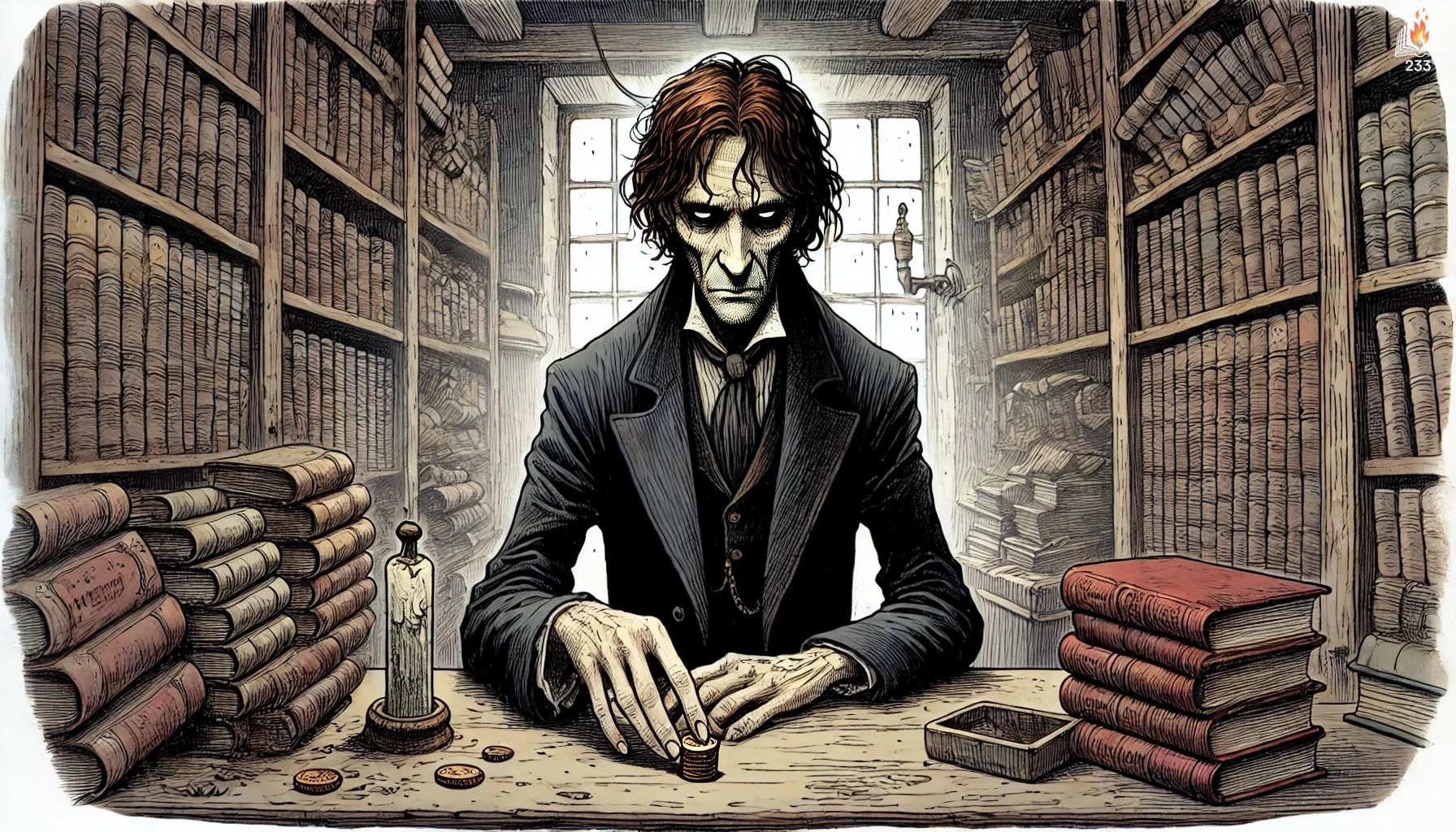


Exile and the Kingdom by Albert Camus, published in 1957, is a powerful collection of six short stories that delves into the tension between human isolation and the longing for connection. Camus, a Nobel laureate and philosophical giant of the 20th century, crafts a landscape of exile both physical and metaphysical – a terrain where his characters search for meaning in an indifferent world. The stories unfold in colonial Algeria and other desolate settings, examining the existential dilemmas faced by individuals caught between inner conflict and societal alienation.
Plot Summary
The desert wind carried dust across the plateau where Janine sat beside her husband Marcel on a slow-moving bus. The landscape, stark and stony, blurred into pale horizons as cold gusts rattled the windows. Marcel, graying and heavyset, clutched his sample case, absorbed in thoughts of business. Janine, taller and sturdier than her name suggested, gazed out at the vanishing lines of palm trees, the silence of the Arab passengers, and a soldier whose pale eyes unsettled her. She had come unwillingly, dragged from the routine of her coastal home to accompany Marcel into the South for a business trip. The journey revealed not warmth or adventure, but a chill, skeletal country of wind and rock that left her breathless and weary.
In a town built of clay and silence, Janine watched her husband argue over prices while she wandered between dusty shops. Her presence, solitary among veiled men and unfamiliar customs, deepened her sense of estrangement. Yet it was not discomfort that stirred her most, but something unnamed she felt while standing on the fortress terrace. From that high place, the oasis unfolded below her – red rooftops, rustling palms, distant tents dotting the horizon. For a moment, suspended between sky and stone, time ceased. She stood with the weight of twenty years pressing down, and then, lifted by the wind, she felt herself part of something vast, ancient, and free. That night, restless and full of longing, she slipped from the cold bed and ran barefoot into the darkness, climbing to the terrace once more. Beneath a sky alive with stars, she surrendered to the rhythm of the desert, her soul stirred by its silence. When she returned to the room, tears fell freely. It was nothing, she said. But something inside her had shifted.
Far to the south, where the heat is a whip and salt eats the flesh, a man waited behind a rock. His tongue had been cut out, and in the silence that followed, another voice had risen inside him. Once a missionary from a pale European village, he had dreamed of converting the savage city of Taghâsa, where salt walls shimmered under a murderous sun. But his faith, tender and prideful, shattered against the indifference and cruelty of that remote kingdom. The men there did not need his salvation. They humiliated him, dragged him to the House of the Fetish, made him witness their rites, their violence, their grotesque power. In time, he surrendered. Not to love or mercy, but to hatred – pure, cold, absolute. He became one of them, not by healing or hope, but by mirroring their malice. Now he crouched with a rifle, waiting for the next missionary, his replacement. He would not allow the reign of kindness to return. His god was a god of iron, of wounds, of salt. Only hatred had power.
In the thin light of another Algerian dawn, Daru prepared his classroom. The high plains stretched endlessly from his schoolhouse perched alone among hills. Snow had fallen lightly. Below, an Arab prisoner trudged uphill under escort. Daru, a schoolteacher, was ordered to deliver the man to the authorities. But Daru resisted. He fed the man, gave him water, and when morning came, offered him a choice. The road east led to prison; south lay freedom among nomads. Alone, Daru watched him walk – eastward, toward his punishment. On the blackboard behind him, someone had scrawled a threat. The teacher was now a marked man. He had chosen neither side, but still he would pay. Silence filled the hills once more.
In the heart of a noisy city, Jonas painted. He was a quiet man with a delicate soul, and now, thanks to a single successful painting, he was suddenly a celebrated artist. His home became a shrine to his talent – filled with hangers-on, admirers, and journalists. Yet with praise came paralysis. As his fame grew, the small studio behind a curtain where he once worked in solitude became a stage. He could no longer paint. Each brushstroke felt forced, each idea strangled by expectation. His wife Louise, gentle but worn, watched helplessly as he faded into a daze of fatigue and failure. At last, he collapsed and was hospitalized. When he returned, thinner and quieter, he found the apartment empty. Behind the old curtain, untouched, stood a small canvas. Slowly, quietly, he began to paint again, this time far from adulation, in the silence of obscurity.
Outside another village, a man named D’Arrast, an engineer, was welcomed for his service to the town. He had helped build a sea wall to prevent flooding, and now the people prepared a celebration. But D’Arrast wandered beyond the festivities, drawn to a poorer quarter of town, where a laborer he had befriended invited him to his home. There, amid modest surroundings, he heard stories of faith and superstition. The next morning, the laborer was to fulfill a vow made to a local saint – to carry a heavy stone to the church. But after a night of drinking, he could not stand. D’Arrast, without ceremony, lifted the stone and carried it through the village, not to the church, but to the laborer’s hut. He laid it on the floor, between them. No words were spoken. Something had been shared – a quiet rebellion, or a deeper act of faith.
The silent man moved through the village like a shadow. He was a blacksmith, solitary and feared, and no one knew his name. Each morning he passed children without greeting, elders without acknowledgment. They called him mad. But one boy watched him closely. The man built a cage, an enormous structure, for no known reason. Some believed it was for punishment, others for penance. In time, he disappeared. Only the cage remained. The villagers peered inside but found nothing. The boy, now grown, could not forget the man’s silence, the look in his eyes. He had witnessed something sacred or terrible, and he knew it would never be spoken.
Each of these lives – Janine, Daru, the renegade, Jonas, D’Arrast, the silent man – drifts through a world without answers, only moments of clarity like stars above a vast desert. There is exile in every soul, a hunger for something just beyond reach. And in that ache, Camus finds not despair, but a kind of grace.
Main Characters
Janine (“The Adulterous Woman”) – A middle-aged, childless Frenchwoman trapped in a routine marriage. Her inner yearning for freedom and vitality surfaces during a journey with her husband through the Algerian plateau. In a moment of silent rebellion, she experiences an ecstatic epiphany under the desert sky, awakening a sense of liberation and sorrow.
Marcel (“The Adulterous Woman”) – Janine’s husband, a pragmatic and passionless traveling salesman more preoccupied with business than with his wife’s inner world. His emotional sterility and controlling behavior mirror the societal expectations constraining Janine, making him both a figure of stability and suppression.
The Renegade (“The Renegade”) – A tormented missionary-turned-traitor who narrates his descent into madness and violence after embracing the cruel fetishistic religion of a Saharan tribe. His internal monologue is chaotic and fevered, revealing a psyche undone by betrayal, humiliation, and a desperate quest for power through suffering.
The Guest (“The Guest”) – Daru, a schoolteacher caught in a moral dilemma during Algeria’s colonial unrest, is forced to choose between allegiance to authority and personal ethics. His quiet resistance and final solitude reflect Camus’ themes of absurdity, choice, and the burden of freedom.
Theme
Exile and Alienation: Central to every story is the sense of exile – not just from place, but from self and society. Characters grapple with cultural, emotional, or spiritual dislocation. This motif heightens the existential struggle as individuals confront the absurdity of their circumstances.
Moral Ambiguity and Responsibility: Camus presents characters facing complex ethical decisions without clear answers. Whether it’s Daru’s refusal to judge the Arab prisoner or the renegade’s catastrophic rebellion, the stories question the nature of justice and the individual’s responsibility in a chaotic world.
Search for Meaning: Across barren deserts and urban detachment, Camus’ protagonists seek transcendence or truth. These moments often arrive suddenly and wordlessly – through nature, silence, or suffering – suggesting that understanding might lie outside reason and doctrine.
Freedom and Rebellion: Camus champions human freedom, but not without the crushing weight of its consequences. Janine’s secret act of defiance and the renegade’s violent apostasy both underscore the existential tension between liberty and its price.
Silence and Communication: Many characters confront an inability to communicate – either physically (like the tongueless renegade) or emotionally (like Janine and Marcel). Silence in these stories becomes a symbol of separation but also a space for revelation.
Writing Style and Tone
Albert Camus’ prose in Exile and the Kingdom is elegant, lucid, and deceptively simple. His language is often restrained, yet it pulses with undercurrents of philosophical weight. He blends the vivid sensuality of landscape with the sparse introspection of thought, allowing physical settings – windswept plateaus, parched towns, empty roads – to mirror the inner desolation of his characters. His narrative technique often eschews overt exposition in favor of deep psychological resonance, inviting the reader into the lived experience of moral ambiguity and silent yearning.
The tone of the stories oscillates between stark realism and lyrical melancholy. There’s an ever-present gravity to the emotional atmosphere, a quiet anguish borne from human solitude. Yet, moments of clarity and transcendence emerge – not through salvation, but through acceptance of the absurd. Camus does not moralize; instead, he presents existence in its rawness, allowing beauty and pain to coexist without resolution. His tone, like his philosophy, is compassionate without being sentimental, tragic without despair.
Quotes
Exile and the Kingdom – Albert Camus (1950) Quotes
“Men who share the same rooms, soldiers or prisoners, develop a strange alliance as if, having cast off their armour with their clothing, they fraternized every evening, over and above their differences, in the ancient community of dream and fatigue.”
“In the other room Rateau was looking at the canvas, completely blank, in the center of which Jonas had merely written in very small letters a word that could be made out, but without any certainty as to whether it should be read 'solitary' or 'solidary'.”
“Above all, she loved being loved, and he had flooded her with attentions. Making her feel so often that she existed for him, he made her existence real. No, she was not alone.”
“...- that they were not sulking, that their mouths had been closed, they had to take it or leave it, and that anger and helplessness sometimes hurt so much that you can't even cry out. They were men, after all, and they weren't going to begin smiling and simpering.”
“Was there a love other than one in darkness, a love that would cry out in broad daylight?”
“What would she do from now on but drag herself into sleep, into death?”
We hope this summary has sparked your interest and would appreciate you following Celsius 233 on social media:
There’s a treasure trove of other fascinating book summaries waiting for you. Check out our collection of stories that inspire, thrill, and provoke thought, just like this one by checking out the Book Shelf or the Library
Remember, while our summaries capture the essence, they can never replace the full experience of reading the book. If this summary intrigued you, consider diving into the complete story – buy the book and immerse yourself in the author’s original work.
If you want to request a book summary, click here.
When Saurabh is not working/watching football/reading books/traveling, you can reach him via Twitter/X, LinkedIn, or Threads
Restart reading!