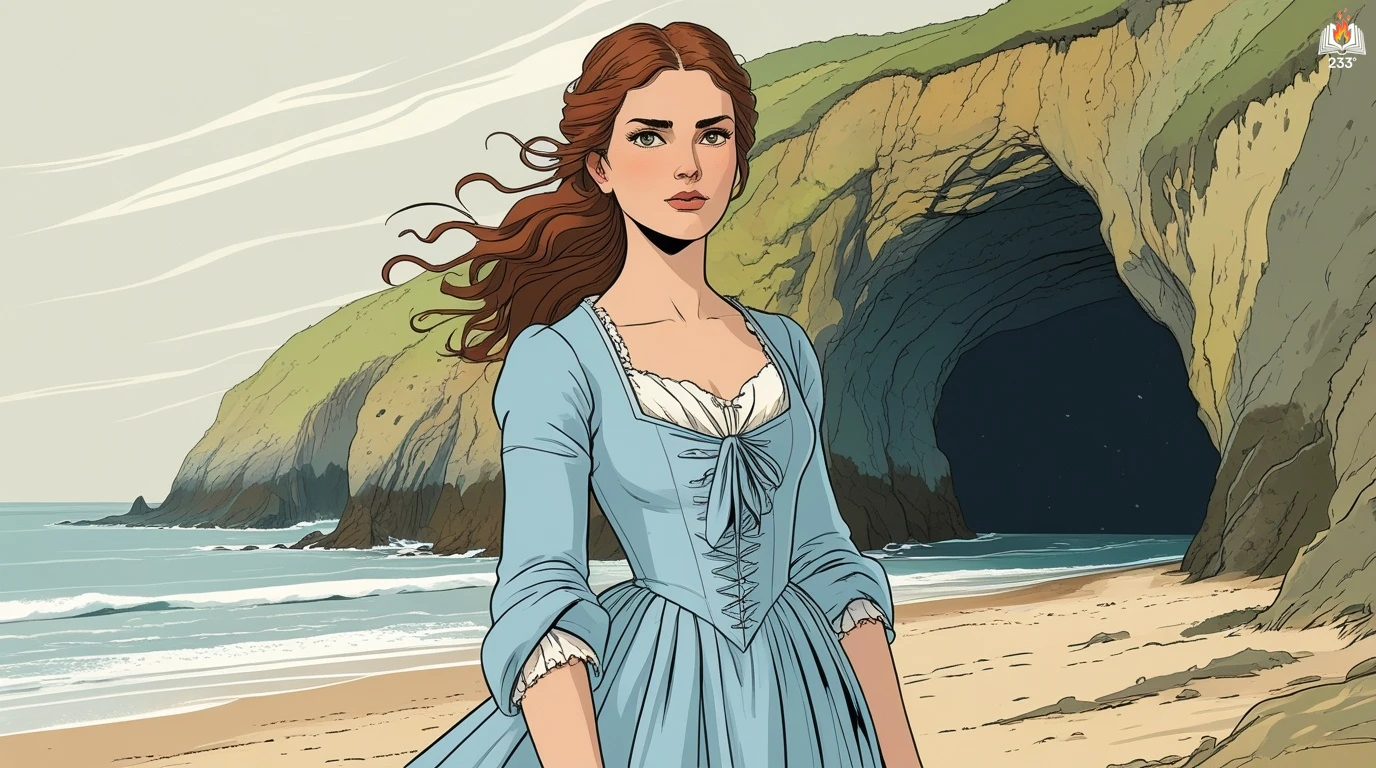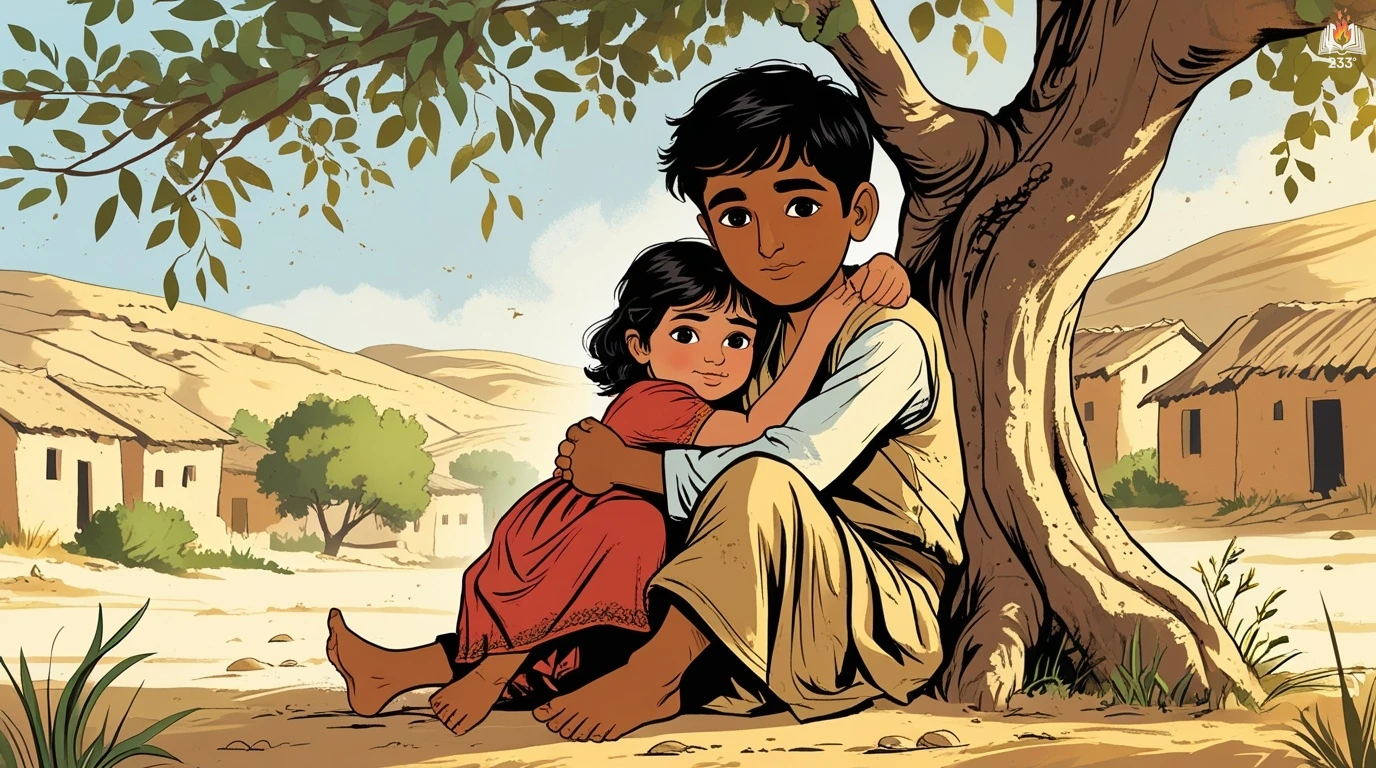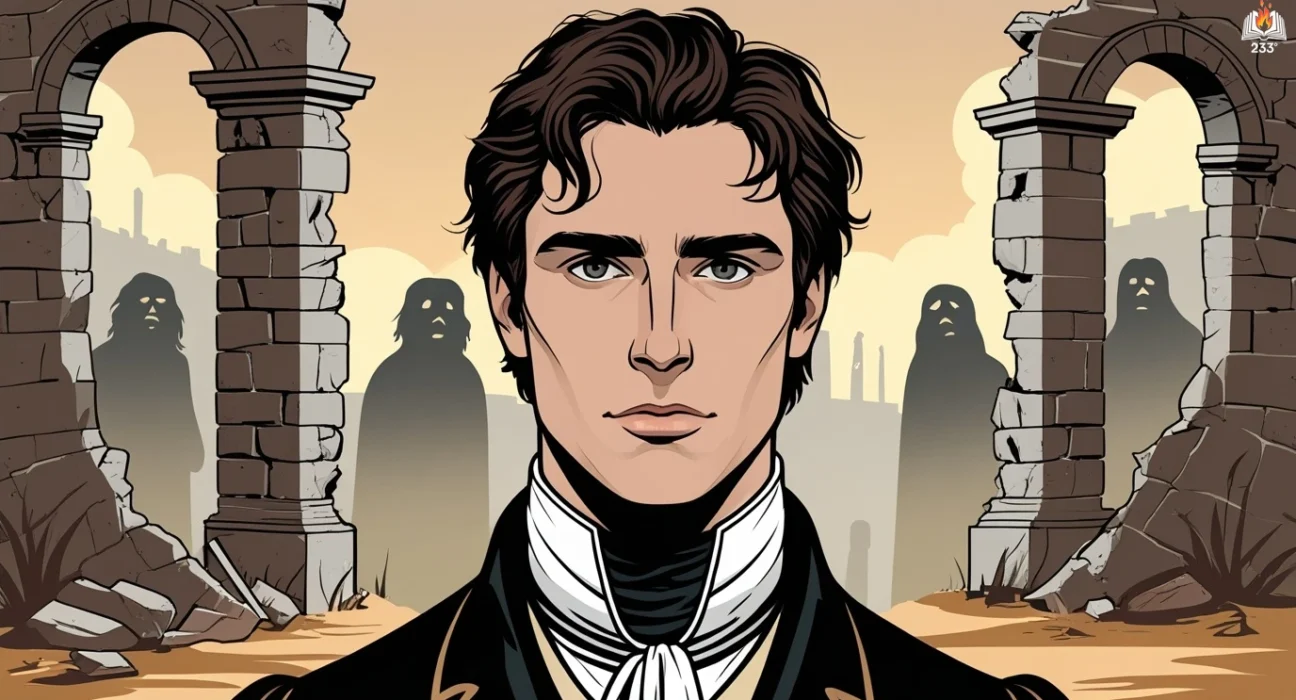
Dancing at Midnight by Julia Quinn, published in 1995, is a Regency-era romance that follows the spirited Lady Arabella Blydon and the war-haunted John Blackwood. As a companion novel to Splendid, this book revisits familiar characters while carving out a richly emotional love story of its own. Quinn blends charm, wit, and poignancy in a narrative that explores love, trauma, and redemption against the backdrop of English country life.
Plot Summary
Lady Arabella Blydon, known to friends and family as Belle, had long grown weary of the endless parade of suitors who saw her as no more than a pretty face with a generous dowry. Intelligent, witty, and with a passion for Shakespeare, she had no intention of marrying without love. So when she journeyed to Westonbirt to spend time with her cousin Emma – now the Duchess of Ashbourne – she saw it as a welcome reprieve from London’s marriage mart.
Belle’s quiet mornings of solitary reading came to an unexpected pause when a chance encounter introduced her to John, Lord Blackwood. The meeting, beneath a brooding sky in a field that bordered both their lands, began with mild antagonism. He corrected her eyesight. She accused him of trespassing. But beneath the surface, something stirred. Belle, with her bright blue eyes and insatiable curiosity, found herself intrigued by the quiet, sarcastic man with the limp and shadowed eyes.
John Blackwood bore the weight of past battles on his soul as well as his body. A former soldier recently ennobled for acts of heroism, he had survived wounds of war that went far beyond the bullet lodged in his knee. Haunted by an incident in Spain, where his inability to prevent a brutal assault on a young girl scarred him deeply, John had buried his conscience beneath walls of solitude and cynicism. Belle’s sudden intrusion into his world disturbed the peace he had so carefully constructed.
At Westonbirt, Belle spoke of John to Emma and her husband Alex – himself a former soldier and once John’s comrade. Learning that John had not only fought with Alex but had once saved his life only deepened Belle’s fascination. She made up her mind to break through his reserve. Despite John’s brusque dismissal, she arrived at his home early the next morning with scones and a maid in tow. He was annoyed. She was undeterred.
What followed was a slow unspooling of tension and warmth, guarded silences punctuated by clever retorts and reluctant smiles. Belle challenged John’s brooding isolation with her laughter and directness. He, in turn, found himself drawn to her light, though he feared that anything good that came too close would eventually be tainted by the darkness he carried within.
Still, fate – and Emma – conspired to keep them near each other. John was invited to dine at Westonbirt, and despite his initial discomfort, the evening unfolded with surprising ease. Belle, keen-eyed and emotionally perceptive, began to see through the sarcasm to the man beneath. John tried to keep his distance, but he found himself craving her presence – her voice, her smile, the way she looked at him like he was worth saving.
When Emma proposed a house party and guests began to fill Westonbirt, Belle and John found themselves increasingly thrown together. Every encounter became a subtle dance – sometimes flirtatious, sometimes tense, but always intimate. John’s instincts to protect kicked in when Belle’s safety was threatened, and for once, he didn’t retreat. Belle, in turn, refused to let his pain remain buried. She saw the sadness in his eyes and the guilt that gripped him. She listened, truly listened, when he told her of Ana – the Spanish girl he could not save.
The telling broke something in him. For years he had lived with the belief that he had failed. That he was tainted. Belle didn’t absolve him with platitudes. She simply stayed. Her presence became a balm. And John, for the first time in years, began to hope.
But love, especially when it grows from broken places, is never simple. When Belle was attacked by a rejected suitor whose interest had turned dangerous, John found her in the nick of time. His fury and fear erupted, and he nearly beat the man to death. Belle, though shaken, defended John’s actions – but he withdrew once more, convinced that he would only bring her further harm.
Belle had had enough of running in circles. She confronted John, not with anger, but with honesty. She told him that she loved him – not in spite of his scars, but because of who he was beneath them. A man who fought for what was right, who loved fiercely, who had endured and still stood tall. John, finally allowing himself to believe that he might be worthy of such love, asked her to marry him.
Their wedding was quiet and joyful, a moment of peace hard-earned. John had once feared that happiness would never find him, that love was something reserved for other men. But as he stood beside Belle – his wife, his match, his light – he knew that the past no longer held dominion over him.
The days that followed were simple and filled with laughter. Belle filled their home with warmth, books, and a few eccentric habits. John filled it with steadiness, the occasional sarcastic comment, and a love that grew deeper by the day. He still limped, and she still squinted at words on a page, but together, they made something whole. Something lasting.
And on quiet evenings, when the fire crackled low and the stars blinked softly above the English countryside, they would sit side by side, speaking little and saying everything.
Main Characters
Lady Arabella “Belle” Blydon: Belle is a sharp-witted and fiercely independent woman who defies societal expectations with her love of Shakespeare and a refusal to settle for anything less than true love. Her intelligence and kindness draw others in, but it’s her quiet persistence and empathy that define her arc. Throughout the story, Belle seeks not only a romantic partner but someone who respects her mind and passion. Her relationship with John Blackwood pushes her to challenge his emotional walls while reaffirming her own self-worth.
John, Lord Blackwood: A war hero turned baron, John is a man burdened by deep emotional scars from his military past and a traumatic incident that haunts him still. Stoic and withdrawn, he hides vulnerability behind sarcasm and solitude. John’s journey is one of healing – learning to trust again, confront his past, and allow himself the possibility of love and happiness. Belle’s tenacity gradually draws him out, revealing the honorable and deeply sensitive man beneath the surface.
Emma and Alex Ridgely (Duke and Duchess of Ashbourne): Emma, Belle’s cousin and best friend, provides emotional support and familial grounding. Her passionate, strong-willed nature mirrors Belle’s, while Alex, her husband and John’s former comrade, offers insight into John’s character and history. Together, they serve as both confidants and catalysts in the developing romance.
Theme
Healing from Trauma: John’s emotional and physical injuries from the war symbolize the internal battles many veterans face. Quinn tenderly explores the road to recovery, emphasizing that healing requires both time and the right person who is willing to listen and understand. Belle becomes that person for John, showing how love can mend even the deepest wounds.
Resilience and Self-Worth: Belle’s refusal to settle in love reflects her inner strength and belief in her own worth. The novel champions women who seek meaningful connections rather than societal approval. Her persistence in facing rejection or disdain – especially from John early on – highlights the importance of resilience in both love and life.
Isolation vs. Intimacy: John’s self-imposed isolation contrasts sharply with the intimacy and warmth of Belle’s extended family circle. This tension underpins much of the story’s emotional development, demonstrating how human connection and shared vulnerability are essential for true intimacy.
Redemption and Forgiveness: John’s guilt over past failures and his need for redemption is a powerful undercurrent. The novel doesn’t offer easy answers, but it portrays forgiveness – of oneself and others – as a crucial step toward emotional freedom.
Writing Style and Tone
Julia Quinn’s writing style in Dancing at Midnight is elegant yet accessible, marked by her signature blend of heartfelt emotion and light-hearted humor. She infuses the narrative with sharp dialogue, especially in the witty banter between Belle and John. The pacing is well-measured, balancing romantic development with introspective passages that deepen character understanding. Quinn’s prose brings a modern sensibility to historical romance, avoiding overly ornate language while retaining period authenticity. Her careful modulation of tone ensures that serious topics like PTSD and sexual trauma are handled with sensitivity, never undercutting the novel’s emotional depth.
Tonally, the book shifts fluidly between romantic tension, cozy domestic scenes, and moments of psychological darkness. The warmth of Belle’s world contrasts with the cold isolation John inhabits, and Quinn’s deft control ensures these transitions feel organic. The dialogue sparkles with flirtation and wit, but it’s the quiet, emotionally raw exchanges that anchor the book’s core message. Through restrained yet evocative prose, Quinn crafts a story that is as emotionally moving as it is charming.
Quotes
Dancing at Midnight – Julia Quinn (1995) Quotes
“Your heart is free now." "No," he whispered. "It's yours.”
“I thought you wouldn't want weepy words of love and all that.' Belle swatted him on the shoulder. 'Of course I do! Every woman does. Especially from the man she actually wants to accept. So devise some weepy words and I'll-' 'Aha! So you accept!”
“But looking beautiful isn't, I think, as important as feeling beautiful,”
“In this light your eyes look almost purple. Like black raspberries.' Belle laughed softly. 'You must be in a state of perpetual hunger. You keep likening me to fruit.”
“Most people don't laugh so much while they're kissing." He grinned boyishly and tweaked her nose. Belle tweaked his back. "They don't? How unfortunate for them.”
“You don't talk much, do you?" she blurted out. "I didn't think there was a need. You seem to be holding up both our ends of the conversation admirably.”
“He could just barely make out her form in the path about ten yards ahead of him. Her hair was so fair it captured what little moonlight hung in the darkness and glowed like a halo.”
“she decided to watch the leaves on the tree across the way. How many would fall off in such a strong wind? ... She now knew why people made such a fuss about weddings. It was to keep the bride's mind occupied, lest she fall into strange mental chasms.”
“How in the hell am I supposed to watch my back if I have no idea what I'm watching for?”
“John ignored her insult, recognizing it for what it was: a mindless jibe from one wounded animal to another.”
“He was wearing that enigmatic little smile of his, as if he knew something that she didn't. Actually, she thought, it was more like he knew something that she never would.”
“Her unintended striptease was all the more sensual because Belle was lowering her stocking with agonizing slowness not because she had an audience but because she seemed to love the feel of the silk sliding along her soft skin.”
“Will you allow me to start over this morning? I fear I arose on the wrong side of the bed. 'It is I who should apologize. I'm afraid that any side of the bed would have been the wrong one at this hour.”
“Belle had a feeling that someone had hurt this man very badly in the past. That didn't, however, mean that she would allow him to abuse her in turn.”
“amidst the horrors of war, it became apparent that there was no way he could possibly survive the carnage. And if by some stroke of fate he managed to come through the conflict with his body intact, he knew that his soul would not be so lucky.”
We hope this summary has sparked your interest and would appreciate you following Celsius 233 on social media:
There’s a treasure trove of other fascinating book summaries waiting for you. Check out our collection of stories that inspire, thrill, and provoke thought, just like this one by checking out the Book Shelf or the Library
Remember, while our summaries capture the essence, they can never replace the full experience of reading the book. If this summary intrigued you, consider diving into the complete story – buy the book and immerse yourself in the author’s original work.
If you want to request a book summary, click here.
When Saurabh is not working/watching football/reading books/traveling, you can reach him via Twitter/X, LinkedIn, or Threads
Restart reading!