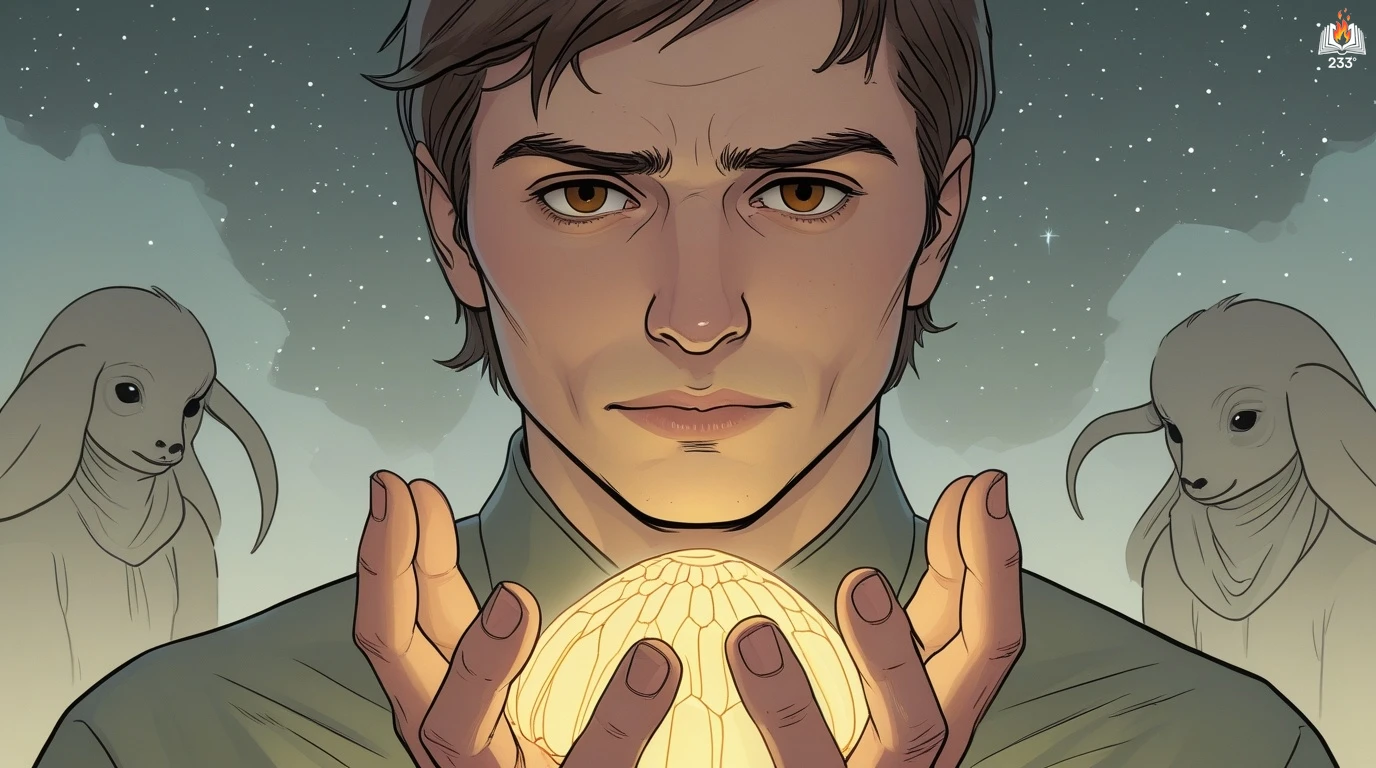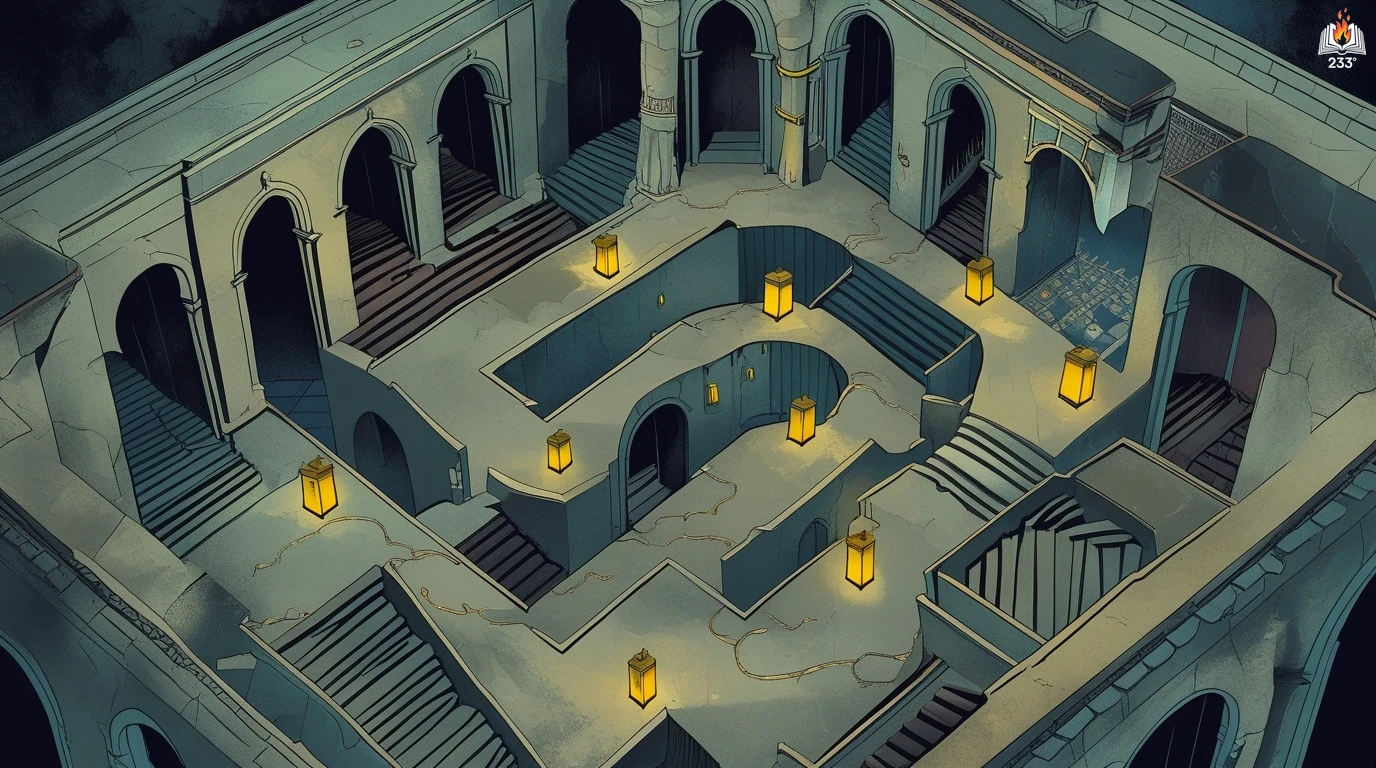


A War of Gifts by Orson Scott Card, published in 2007, is part of the acclaimed Ender’s Game series, which explores a militarized future where gifted children are trained to fight an alien threat. This novella is set within the confines of Battle School, offering a focused exploration of themes like religious freedom, cultural identity, and defiance against institutional control during a tense holiday season.
Plot Summary
Snow drifted down over Eden, North Carolina, blanketing the sanctuary of the Church of the Pure Christ, where young Zeck Morgan sat on the front pew. His body was rigid, his small hands folded neatly on his lap, as if resisting every itch, every tremor that dared remind him of the human frailty he sought to conquer. His father, Habit Morgan, roared from the pulpit, his voice cracking through the cold air, denouncing Saint Nick as the mask of Satan, his sermons etched deep into Zeck’s prodigious memory. Zeck’s gift – an unerring recall of every word spoken to him – was his burden, a secret his mother urged him to hide. To Father, purity mattered above all, and anything that distracted from the battle against sin, even a son’s uncanny mind, was suspect.
When the stranger came to their church, tall in his unfamiliar uniform, his words wrapped in false respect, Zeck recognized the performance. This man came not for the sermon but for Zeck himself. The International Fleet had sent him, and soon, without his consent, Zeck was swept away to Battle School, a cold metal haven among the stars where boys and girls were forged into soldiers. There, in the twisting tunnels and floating chambers, no one cared for sermons, only scores.
Zeck did not shoot. His uniform hung on his thin frame, his gun remained silent, and his name fell to the bottom of every ranking chart. Others pushed, mocked, and jeered, but Zeck, untouched by their scorn, clung to his silence like a shield. To Zeck, the violence was not a game, and the children around him were not playmates. They were followers of the god of war, lost in the frenzy of false purpose.
Yet around him, lives intersected. Dink Meeker, sharp-eyed and quietly defiant, watched over his toon with a wisdom beyond his years. Filippus Rietveld, or Flip, young and homesick, carried with him the traditions of the Netherlands. When December arrived, Flip placed his shoes by his bed, a small act of remembrance for Sinterklaas, and Dink, amused and tender, slipped a teasing poem into one of them and carved an F into Flip’s pancake at breakfast. The gesture was small, a flicker of childhood in the cold machinery of the station.
Zeck saw it all, the shoes, the pancake, the laughter, and the sadness hidden underneath. It was a rebellion that Zeck could not ignore, for if Battle School was to forbid his beliefs, how could it tolerate theirs? He carried his complaint to Colonel Graff, his voice mild, his logic sharp. The commander, wearied by the boy’s persistence, summoned Dink and Flip, reprimanding them, confiscating the poem, but the damage was already done. Whispers spread through the barracks, and Zeck’s name, once dismissed as that of a harmless oddity, now stirred anger.
Zeck’s world had always been clear: there was God and there was sin. Yet Agnes O’Toole, the woman who had tested him before he was taken from home, had pierced through his defenses with a single observation. She saw that the boy who preached purity had hidden his perfect memory from his father, the man whose approval he craved and feared. Zeck reeled from the realization, his faith shaken not by the school’s cold discipline but by the reflection in his own mind.
In the barracks, Dink watched Ender Wiggin arrive, the boy who carried a weight far greater than his small shoulders should bear. Ender, like Dink, like all of them, played his part in the great game, learning to lead, to win, to survive. Dink saw in Ender something rare, a mind quick and a heart burdened, and quietly decided to help him. The school measured victories, tallied points, but Dink knew the real battle was within each boy, between ambition and conscience, between survival and self.
The night of Sinterklaas passed, but its echoes lingered. Dink understood the longing that stirred Flip to place his shoes by his bed. The yearning for home, for family, for the simple joys that the cold steel walls of Battle School could never mimic. Dink wrote his awkward, affectionate verse, knowing it was as much a balm for himself as for Flip. It was not about rebellion but about remembrance.
When Zeck watched Dink’s small act and saw Flip’s quiet joy, it unsettled him. It was not violence, not conquest, yet it was a defiance of the rules that Zeck had been told were absolute. When he reported them, when he forced the school to acknowledge the contradiction, it was not cruelty but a cry to restore a balance that only he seemed to see. But instead of finding clarity, Zeck found himself more adrift, his purity questioned, his isolation deepened.
Around him, the others watched with mixed disdain and curiosity. Some, like Rosen, the leader of Rat Army, scoffed and moved on. Others, like Dink, pondered the strange challenge Zeck posed. And Ender, ever the quiet observer, understood. He knew the weight of carrying too much, the ache of being seen and unseen at once.
In time, Zeck’s resistance became less of a disruption and more of a fixture. He drifted through practice, his weapon untouched, his score unmoved, a silent sentinel in the Battle Room. The instructors ceased their coaxing, his peers let him fade into the periphery, and Zeck stood, proud in his zero effectiveness, a boy who had kept his vow when no one believed he could.
Yet beneath the silence, the ripples of Zeck’s presence remained. Dink, restless in his mind, questioned the purpose of the games they played. Flip, now marked by the laughter and reprimand of Sinterklaas Eve, carried with him a reminder of home. Ender, watching, absorbing, prepared for burdens none of them could imagine. And Zeck, the boy with the unshakable memory and the unyielding will, stood apart, untouched by the games, yet shaping the hearts of those around him in ways neither he nor they fully understood.
In the floating corridors and zero-gravity chambers of Battle School, where childhood was a memory and war a curriculum, it was not the battles won or lost that left their mark. It was the stubborn, trembling flame of humanity, flickering in a pair of shoes by a bedside, in a crude poem tucked into leather, in a boy who would not shoot, and in those who, quietly, chose to see him.
Main Characters
Zeck Morgan: The son of a strict, abusive preacher, Zeck is burdened by an inflexible moral code and a photographic memory. His refusal to participate in Battle School’s war games stems from his pacifist convictions, making him an outsider among the competitive children. Zeck’s inner conflict, shaped by his oppressive upbringing and rigid sense of purity, drives much of the story’s emotional tension.
Ender Wiggin: Though not the central figure in this novella, Ender remains the quiet observer and natural leader. He demonstrates empathy toward Zeck and others, often serving as a moral compass in the ruthless Battle School environment. Ender’s capacity for understanding and bridging divides deepens the contrast between the authoritarian system and individual conscience.
Dink Meeker: A clever and rebellious soldier, Dink plays a pivotal role in the Sinterklaas subplot. His decision to honor Dutch holiday traditions despite institutional rules shows his resistance to conformity and his subtle mentorship of younger soldiers. Dink’s actions reflect his belief in preserving humanity within the cold military structure.
Flip (Filippus Rietveld): A young Dutch soldier, Flip embodies homesickness and quiet resilience. His simple act of leaving out shoes for Sinterklaas becomes a catalyst for examining cultural expression in a controlled environment, highlighting the importance of small human rituals.
Habit Morgan: Zeck’s father, a domineering preacher whose violent and fanatical parenting has shaped Zeck’s world. His presence looms large in Zeck’s mind, influencing his guilt, fear, and deep-seated resistance.
Theme
Religious Freedom vs. Institutional Control: The central tension revolves around Zeck’s religious convictions clashing with Battle School’s secular, utilitarian aims. His refusal to conform highlights the difficulty of maintaining spiritual or personal beliefs in oppressive systems.
Cultural Identity and Ritual: Through the Sinterklaas subplot, Card explores how children cling to cultural rituals to preserve a sense of home and identity. Dink and Flip’s quiet rebellion serves as a celebration of individuality amid uniformity.
Isolation and Belonging: Zeck’s isolation underscores the painful struggle between the desire for belonging and the need to remain true to one’s beliefs. The story probes how institutions strip away personal identity and how acts of kindness or rebellion create bridges between people.
The Power of Compassion: Ender’s empathy toward Zeck, even when others scorn or ignore him, underlines the redemptive power of understanding. Compassion becomes a rare but vital thread that holds together the fractured community of Battle School.
Writing Style and Tone
Orson Scott Card’s prose in A War of Gifts is concise yet emotionally layered, marked by a subtle interplay between introspection and dialogue. He uses a close third-person perspective, often shifting between characters to reveal their inner lives with clarity and nuance. Card’s language balances the directness of military life with the complexity of internal conflict, crafting characters whose emotional depth transcends the stark setting.
The tone is reflective and bittersweet, with flashes of humor and rebellion amid an overarching sense of constraint. Card’s treatment of faith, authority, and defiance is neither heavy-handed nor dismissive; instead, he probes the tensions with sensitivity, allowing readers to engage with the characters’ moral dilemmas. The juxtaposition of militaristic regimentation with small moments of human connection lends the novella a poignant, almost melancholic atmosphere.
Quotes
A War of Gifts – Orson Scott Card (2007) Quotes
“Graff smiled a little Mona Lisa smile, if Mona Lisa had been a pudgy colonel.”
“You really are the stupidest smart kid in the world,” said Mother.”
“In the face of a threat to the survival of the species, all these planetside trivialities are put aside until the crisis passes.”
“Who else but a pacifist would attack somebody as little as Wiggin?”
We hope this summary has sparked your interest and would appreciate you following Celsius 233 on social media:
There’s a treasure trove of other fascinating book summaries waiting for you. Check out our collection of stories that inspire, thrill, and provoke thought, just like this one by checking out the Book Shelf or the Library
Remember, while our summaries capture the essence, they can never replace the full experience of reading the book. If this summary intrigued you, consider diving into the complete story – buy the book and immerse yourself in the author’s original work.
If you want to request a book summary, click here.
When Saurabh is not working/watching football/reading books/traveling, you can reach him via Twitter/X, LinkedIn, or Threads
Restart reading!