
Servant of the Bones by Anne Rice, published in 1996, is a gothic fantasy novel that delves into the life, death, and spiritual metamorphosis of Azriel, a ghostly entity bound by ancient magic. Set against a backdrop of contemporary chaos and ancient grandeur, the story weaves together myth, history, theology, and the supernatural. With her signature lyricism and lush detail, Rice explores both modern tragedy and Babylonian mysticism through a metaphysical journey told in the voice of an immortal spirit.
Plot Summary
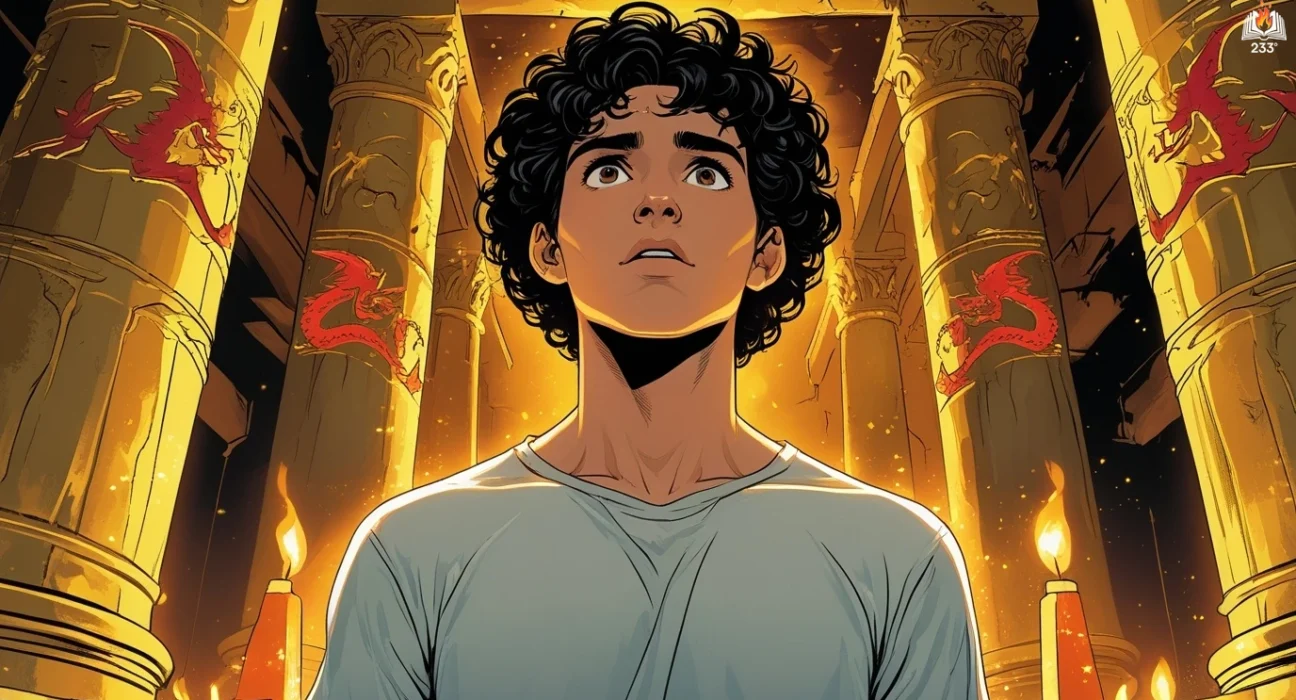
In the snowy seclusion of a mountain retreat, a historian named Jonathan, stricken with fever and prepared for solitude, is visited by a stranger with hair like black fire and eyes shadowed with centuries. The man saves Jonathan’s life, but more than that, he brings a tale – a life unlike any other, suspended between flesh and spirit, past and present. He is Azriel, once a youth of ancient Babylon, now a ghost cloaked in his former body, a being made from gold and bones, summoned by sorcery and anchored to the earth by the griefs of the living and the dead.
Azriel had not been born in Jerusalem but in Babylon, carried there in exile by the conquering Nebuchadnezzar. His family – rich Hebrews of learning and commerce – thrived among fragrant courtyards and sacred texts, raising their children with Psalms and prophecy. Babylon, a city of jeweled bricks and temple towers, called to Azriel with its lush power and splendor. Though he prayed to Yahweh, it was Marduk, the god of Babylon, who whispered in his ear, laughed in his dreams, and led him to secret conversations that no other could hear.
Azriel’s life was bright with privilege, yet marked by spiritual entanglements. The priests of Babylon, seeing the god’s affection for the boy, watched him with wary awe. The child with the curly hair and bright mouth became a vessel – destined, though he did not know it, to be sacrificed not to a god but to a sorcerer’s ambition. In his youth, Azriel was led into the temple where his own body would be broken, his soul bound into the Bones by an act so ancient, its cruelty had been long hidden by ritual. Death was not a veil but a transformation. His flesh burned, and from it rose something else – a genii, a spirit of command and slavery, his will no longer his own.
For centuries, Azriel passed between masters, conjured by those who possessed the Bones and the words to summon him. His powers were vast – he could change his form, kill with thought, cross cities as vapor. Yet his heart, though ghostly, remembered his mortal self. He wandered the world, sometimes obeying, sometimes rebelling, always caught in the pain of being between. The moments of rebellion were rare, costly, and often erased by new captivity. But the memory of humanity clung to him, especially when he took on the body of his youth – twenty years of age, golden-skinned, black-eyed, radiant with unspent sorrow.
The modern world drew Azriel out once again when a girl named Esther Belkin was murdered on Fifth Avenue. She had been a student once, curious and kind. Her death echoed across television screens and newspapers, her image frozen in time, blood on silk. She was the stepdaughter of Gregory Belkin, founder of the Temple of the Mind – a global religion built on illusion and control. Her murder, staged to appear like a terrorist act, was part of a larger plot for domination, one that threatened to poison cities with gas and weaponized faith. Esther’s death cried out to something deep in Azriel – not by sorcery, not by spell, but by purity.
Azriel came. On that winter street, amid panic and noise, he killed the three men who had stabbed her. Ice picks buried in their own chests. The world saw it as coincidence. The police saw it as vengeance. But Azriel knew it was his own reckoning. Her death had summoned the part of him still bound to justice. That moment of action led him to the Temple’s heart, to Gregory himself. Taking on the very form of Gregory – every hair, every stitch of cloth replicated – Azriel approached and executed the man who would have murdered thousands more.
But instead of peace, Azriel found that he could not die. The Ladder to Heaven, which he glimpsed in the aftermath of justice, vanished. He was still bound to the Bones. The flesh he wore clung to him more solidly now, refusing to dissolve into mist. He had defied the laws that governed his kind, but it had not brought release. It had only deepened his mystery.
He fled into the mountains, into snow and silence, and there found Jonathan. The historian, scholar of ancient texts and forgotten lore, opened his door to the spirit without knowing why. Azriel, exhausted and burning with memory, told him everything. From the courtyards of Babylon to the death in New York, from the voice of Marduk to the flames of ritual sacrifice, every word spilled into the room like incense. Jonathan listened, recording Azriel’s tale with reverence and sorrow. He came to care for the ghost, to see in his struggle the tragedy of eternity without rest.
As the storm howled beyond the shutters, Azriel spoke of those he had served and destroyed. He described his rebirths, his power, and his longing to be nefesh – a whole being, body and soul united. He drank water, the only substance a ghost could truly taste. He changed form at will, showing Jonathan the miracle of illusion, the art of divine deception. He remembered laughter, fear, and the first time a god had smiled at him.
He spoke of love too – not romantic, but holy, the kind born from pity and shared silence. He remembered the old chants, the prayers of his people, and the rage of priests who sought to control even the afterlife. The Bones, golden and radiant, still held him captive. But perhaps his telling of the tale, his search for a witness, was itself a defiance of fate. He had become not just a servant, but a seeker.
By the fire, in a house untouched by phone or light, two men sat – one mortal, one more than mortal – and tried to make sense of the centuries. The genii spoke and the scribe wrote. Not as a historian, but as a friend.
And when the tale was done, the wind no longer roared. The snow fell gently. The fire burned low.
Azriel sat quietly, his eyes on the flames. He did not vanish. Not yet.
Main Characters
Azriel – The titular character, Azriel is a powerful, shape-shifting spirit who was once a young Hebrew man in ancient Babylon. Betrayed and murdered through a magical ritual, he is bound to a vessel of gold and bones, becoming a genii – a ghostly servant with immense power. Azriel’s journey is one of awakening and rebellion, as he grapples with his spiritual bondage, his moral purpose, and his longing for true humanity and redemption.
Jonathan – A historian and scholar who serves as the scribe and listener to Azriel’s tale. Jonathan, recovering from illness and isolation in the snowy mountains, becomes Azriel’s confidant. Through their interactions, he brings a grounded and empathetic lens to Azriel’s supernatural revelations, anchoring the ghost’s tale in the human world.
Esther Belkin – A young, intelligent woman whose murder sparks Azriel’s re-entry into the modern world. Once a student of Jonathan’s, Esther is remembered for her humility and curiosity. Her death becomes a catalyst for the unfolding narrative.
Gregory Belkin – Esther’s stepfather and the charismatic, dangerous leader of the Temple of the Mind, a global pseudo-religious empire. Gregory’s delusions and violent schemes provoke Azriel’s ultimate rebellion, leading to Gregory’s dramatic assassination at the ghost’s hands.
Theme
The Bondage of the Spirit – Central to the novel is the concept of spiritual imprisonment. Azriel, transformed into a genii, is bound to physical remains and summoned at the whim of others. His struggle to reclaim autonomy and identity underscores the pain of being trapped between worlds – neither truly alive nor dead.
Faith, Doubt, and Divinity – The novel wrestles with questions of belief, God, and divine justice. Azriel’s life spans multiple cultures and religions, and his own experiences with Babylonian deities and Hebrew prophets pose complex theological questions about destiny, choice, and redemption.
Power and Corruption – The narrative critiques the manipulation of faith for power, embodied in figures like Gregory Belkin. Through the downfall of cults and the misuse of spiritual authority, Rice illustrates how spiritual longing can be twisted into fanaticism.
Memory and Identity – Azriel’s tale is fundamentally an act of remembering. The ghost must reclaim his past to understand his present self. The theme of memory—personal, cultural, and historical—is intricately tied to identity and transformation.
Sacrifice and Rebirth – Azriel’s death and resurrection as a spirit mirror ancient sacrificial rituals. His eventual rebellion against his masters and acts of protection for the innocent frame him as both a monster and a martyr, struggling for a kind of spiritual rebirth.
Writing Style and Tone
Anne Rice employs an ornate, lyrical prose that blends historical richness with supernatural sensuality. Her language is deliberately baroque, layered with poetic imagery, biblical references, and philosophical musings. The voice of Azriel is intimate yet expansive, offering grand descriptions of ancient cities and intimate confessions of despair and longing. Rice often moves seamlessly between past and present, using lush detail and rhythmic cadences to create a timeless, dreamlike atmosphere.
The tone of Servant of the Bones is melancholic and mystical, filled with an emotional intensity that borders on the operatic. There is a deep reverence for history, ritual, and the metaphysical. Yet the novel is also grounded in existential reflection, exploring suffering, love, and the possibility of grace. Through the eyes of a ghost, Rice gives voice to human agony and transcendence, crafting a narrative that is as much about moral struggle as it is about magic and myth.
Quotes
Servant of the Bones – Anne Rice (1996) Quotes
“There is one purpose to life and one only: to bear witness to and understand as much as possible of the complexity of the world- its beauty, its mysteries, its riddles.”
“The greatest create of power you have on earth, whether you are an angel, a spirit, a man or woman or child is to help others.”
“What makes you think anyone has a destiny? We do what we do and we die.”
“The greatest creative power you have on earth... is to help others. To ease pain and give joy are your finest powers. Kindness is a human miracle.”
“First and foremost, there is one God, and his name does not matter. Yahweh, Ahuramazda, Zeus, Aten, it does not matter at all.”
“The belief in a special destiny is one of the most rampant and harmful delusions on earth.”
“Enjoy your life, fill your belly with wine and food, and accept death. The Gods kept immortality for themselves, death is the lot of man.”
“Anger is a confusing force, and hatred is blinding. So. You cripple yourself with this, you see, and that is why I would like to discipline it out of you, but that can’t be done.”
“As long as you hate, and you roast in a hell of anger, there will be a limit to what you can do. You will be at the mercy of other spirits now and then and magicians. Anger”
We hope this summary has sparked your interest and would appreciate you following Celsius 233 on social media:
There’s a treasure trove of other fascinating book summaries waiting for you. Check out our collection of stories that inspire, thrill, and provoke thought, just like this one by checking out the Book Shelf or the Library
Remember, while our summaries capture the essence, they can never replace the full experience of reading the book. If this summary intrigued you, consider diving into the complete story – buy the book and immerse yourself in the author’s original work.
If you want to request a book summary, click here.
When Saurabh is not working/watching football/reading books/traveling, you can reach him via Twitter/X, LinkedIn, or Threads
Restart reading!