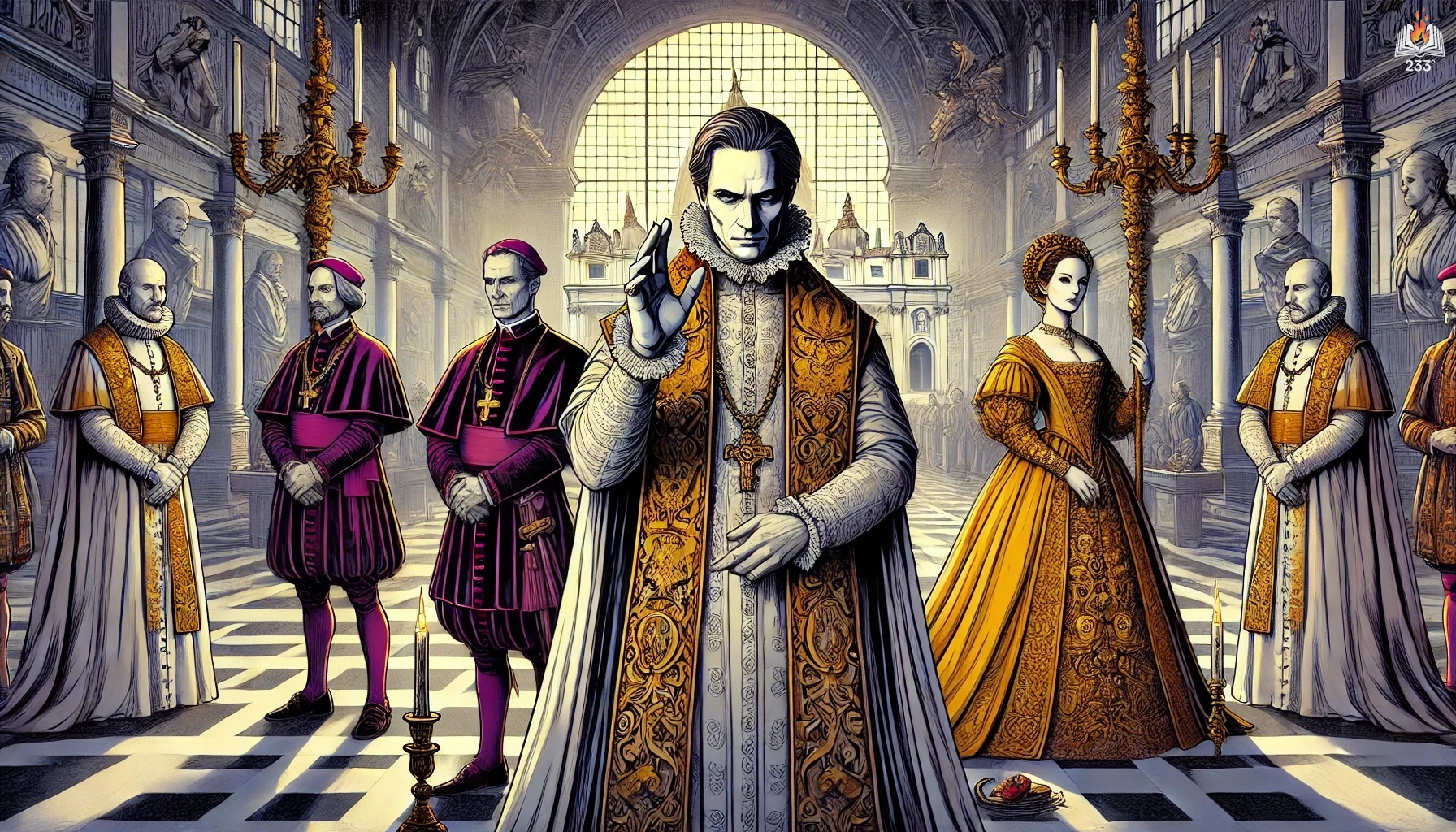
The Borgias by Alexandre Dumas explores the scandalous rise of Pope Alexander VI and his children Cesare and Lucrezia, notorious for power, corruption, and intrigue.
The War Prayer by Mark Twain is a satirical short story critiquing blind patriotism and the unspoken horrors of war through a mysterious stranger’s revelation.
A gondolier with a terrible voice changes Venice forever in this bittersweet fable of love, silence, and the quiet beauty of dreams that refuse to die.
A scathing, satirical portrait of greed, ambition, and political rot in post-Civil War America - where fortune beckons, failure waits, and dreams are as fragile as promises.
A philosopher, a painter, and a forgotten poet converge across centuries in a darkly brilliant reflection on power, art, and the eternal absurdity of history.
The Battle of Life by Charles Dickens follows Marion and Grace Jeddler as they navigate love and sacrifice in an English countryside setting without supernatural elements.
The Million Pound Bank Note by Mark Twain follows a poor American in London who is given a massive banknote as part of a bet, testing the power of wealth.
A royal gift vanishes, triggering a wild manhunt led by a self-assured detective. Absurd clues, blind confidence, and biting satire unravel in this brilliantly comic misadventure.
The Genius by Theodore Dreiser follows Eugene Witla, an aspiring artist whose passion, ambition, and relationships shape his rise and fall in the art world.
Ann Veronica by H.G. Wells follows a young woman rebelling against societal norms as she pursues education, independence, and self-fulfillment in early 20th-century England.