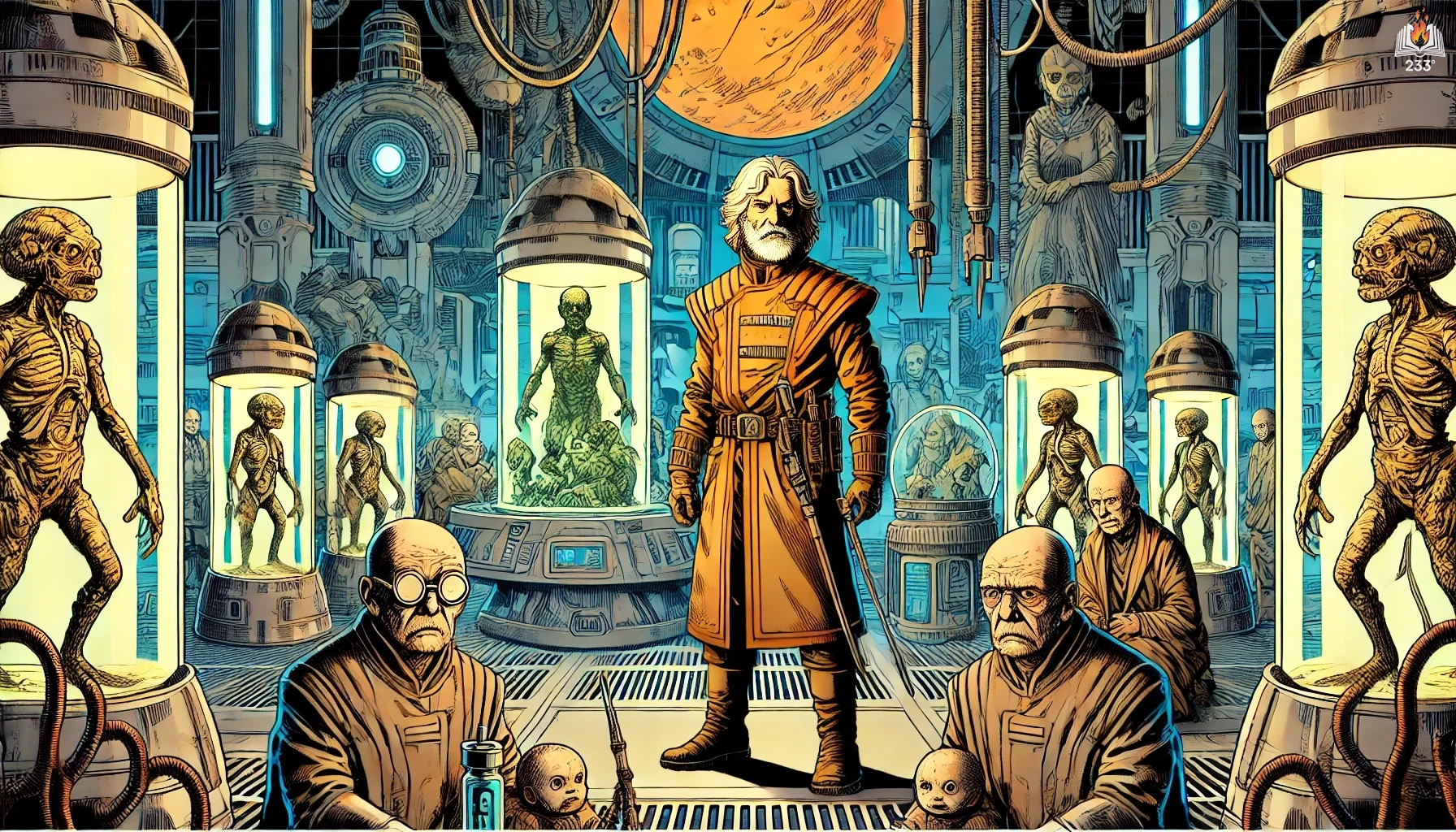


The Raid, written by Leo Tolstoy and first published in 1853, is one of the author’s earliest works and reflects his personal experiences as a Russian artillery cadet in the Caucasus. Set against the vivid and often brutal backdrop of imperial military campaigns, the story unfolds as a philosophical dialogue between a young narrator and a seasoned captain. Through the lens of a military expedition, Tolstoy explores the elusive nature of courage, the moral ambiguity of war, and the stark contrast between idealistic youth and hardened experience.
Plot Summary
Under the sharp heat of the Caucasian sun and the shadow of an empire’s slow grind, the world unspooled itself not as a grand strategy of warfare but in the quiet gestures of men, their fears and questions, their dusty boots, their silences. On the twelfth of July, a small fort near the mountains bustled with a quiet that only soldiers understood – a battalion was ordered to march. Among them moved a young volunteer, curious not about military glory, but about something more elusive: the nature of courage. He sought not medals or victories, but the moment in which a man chooses to risk his life and the truth that lies beneath that choice.
Captain Khlopov, a man of modest bearing and steady resolve, served as the companion and quiet teacher to this seeker. His epaulettes rusted with years of hardship, his sword rarely worn, he spoke little, did much, and carried himself with a resigned calmness. To him, courage was simply doing what was necessary – nothing more, nothing less. When asked why he served in such a remote and dangerous place, his reasons were plain: duty, need, perhaps a poor man’s arithmetic of survival. Behind his stern expression was a worn-out tenderness, revealed only when he accepted a small icon sent by his mother, a relic of prayer and hope.
They marched through a ravine washed in mist and pigeon wings. The infantry sang, their bayonets catching stray shafts of morning light. The mountains gleamed in the distance, covered in snow, as if untouched by the labor and weariness below. There was talk of past battles, of a foreigner who died foolishly, of a young officer named Alanin whose enthusiasm burned too bright for the dusk they were all marching into.
Lieutenant Rosenkranz stood apart, both by dress and by spirit. He styled himself after romantic heroes, his gestures full of deliberate flair. A musket slung over his shoulder, a dagger glinting from his sash, he spoke a language that even his Tartar companions couldn’t understand, but that hardly mattered. He lived for appearances, and perhaps beneath it all, for love. When no one watched, he tended the wounds of a captured foe. When the flames of a burning house lit the sky, he plunged in to rescue a pair of pigeons. Men like him believed they had enemies even in peace. And they longed for war to justify the battle raging within themselves.
The march reached Fort M. by evening. Here the contrast was stark: the dusty earth of the road met the dainty parasols of officers’ ladies, the polka music from a ramshackle piano met the general’s silken compliments. Even the general, gallant and unconcerned, scheduled visits for tea while issuing commands for blood. A countess smiled at him through her carriage window; he returned her charm with a jest about infidels. For these men, war was both a profession and a dance. Only the young lieutenant denied permission to join the march wept in private, not from fear, but from the shame of exclusion.
By night, the detachment moved again, the sky stitched with stars and clouds. They crossed rivers swollen by July rains, their cannons pulled by weary horses through the torrent. The moon faded as dawn crept behind the black hills. Lights flickered in the distance – enemy signals, they were told. The hillsmen were awake, moving their families and possessions into the ravines. War, it seemed, was known before it was seen. A gunshot cracked the silence. A voice wailed with rage. The enemy’s scouts had fired, then vanished. The soldiers pressed on through the wet grass, the forest narrowing around them like a throat.
When dawn broke, they met the enemy in full. A glade opened among the trees and the general, mounted on a black horse, gave the order. Cannons roared. Rockets hissed through the sky. The lieutenant-colonel asked permission to charge. The answer was given lightly, as if in jest. Men screamed their hurrahs. Horses galloped. The Tartars scattered into the woods, their banners fluttering for a moment before disappearing into gun smoke. A cannonball flew past. A moan followed. No one turned. The general lit a cigar and made a comment in French.
The village was taken with little resistance. The huts were clean, the gardens full. The enemy had vanished. Then came the order no one spoke plainly – the looting began. Cossacks laughed as they smashed roofs, soldiers bartered stolen hens for wine. One soldier chased a white kid through the smoke. The young Ensign Alanin stopped them, mistaking the cries for a child’s. He blushed when mocked. But that blush masked something he had not yet understood – that bravery, once summoned, does not disappear easily.
The withdrawal was harder than the capture. Through a narrow thicket they moved, watched by eyes in the trees. Shots rang again, closer now. The enemy returned. Captain Khlopov, quiet as ever, crossed himself and sat calmly on his horse. His men fired with steady aim. There was no need for orders. The captain moved only to stop a soldier from exposing his head. Behind his plain face burned a kind of bravery few noticed – unadorned, uncelebrated, unshaken.
Ensign Alanin begged to charge. The captain refused. Then came the moment – a spontaneous hurrah, a dash across the open field, thirty soldiers stumbling after him. Into the forest they vanished. Then came the sound of clatter, and then silence. Alanin was carried back on a stretcher, his shirt stained red. He whispered apologies to the captain. There was nothing more to say. A drunken doctor arrived too late, pressing too hard. Alanin turned away and spoke of a gambling debt. He died before the evening.
The retreat continued. The general rode ahead, pleased with the day’s result. The mountains blushed with the last light, and the fields turned black with dew. The battalion moved through the meadows, their songs soft and full. A second tenor’s voice rose above the march, beautiful and clear. Lieutenant Rosenkranz already imagined how the tale would be retold. The captain led his little white horse quietly, eyes downcast, his step steady.
And behind them all, the wind passed gently through the fields, as if nothing had happened at all.
Main Characters
The Narrator: A curious and reflective young man, likely a stand-in for Tolstoy himself, he seeks firsthand understanding of what constitutes true courage. Philosophical by nature, his journey is not just through the terrain of the Caucasus, but through the moral complexities of human motivation. His open mind and moral sensitivity drive much of the story’s introspective tone.
Captain Khlopov: A grizzled, stoic veteran of the Caucasian campaigns, Captain Khlopov is the narrative’s philosophical counterweight. His calm demeanor, quiet bravery, and grounded sense of duty exemplify a distinctly Russian valor. Though he has seen much bloodshed, he refrains from dramatization, embodying the ideal of understated heroism.
Ensign Alanin: A young, eager officer recently arrived from the Cadet Corps, Alanin is bright-eyed and romantic about the idea of battle. His journey ends in tragedy, as his youthful exuberance leads him to a fatal encounter in the raid, symbolizing the clash between illusion and experience.
Lieutenant Rosenkranz: A flamboyant and contradictory character, Rosenkranz postures himself as a fearless adventurer inspired by romanticized notions of war. Despite his theatrics and affectations, his actions—such as nursing a wounded enemy—reveal a conflicted but ultimately humane spirit.
The General: A charismatic and well-positioned figure of authority, the General represents the institutional confidence of empire. He is elegant, sociable, and seemingly untouched by the moral weight of the events around him. His presence underscores the social layers within the military hierarchy and adds irony to the narrative’s moral reflections.
Theme
The Nature of Courage: The story is a meditation on what makes a man brave. Is courage born of duty, instinct, vanity, or something more profound? Tolstoy deconstructs both romantic and utilitarian definitions of valor, contrasting raw emotion with stoic duty to suggest that true bravery may lie in quiet action, not showy heroics.
Moral Ambiguity of War: Far from glorifying battle, The Raid reveals its absurdities and contradictions. Whether examining looting, the death of innocents, or the routine destruction of homes, the narrative questions the legitimacy and justice of the imperial campaign, echoing Tolstoy’s later pacifist convictions.
The Illusion of Heroism: Through characters like Ensign Alanin and Lieutenant Rosenkranz, Tolstoy critiques the glamorization of war. The naive idealism of youth is swiftly met with grim realities, and theatrical displays of valor are rendered hollow in contrast to the silent, uncelebrated acts of endurance by men like Captain Khlopov.
Disconnection from Nature and Humanity: The juxtaposition of serene natural landscapes with brutal acts of violence serves to highlight the dissonance between mankind’s capacity for beauty and destruction. Nature, in its peace and grandeur, becomes a silent witness to human folly, underscoring the story’s moral irony.
Writing Style and Tone
Tolstoy’s writing in The Raid is richly descriptive yet psychologically restrained, offering a seamless blend of journalistic observation and philosophical inquiry. The narrative voice is inquisitive and reflective, often digressing into meditations on human nature and the moral intricacies of conflict. His use of detailed natural imagery juxtaposed with human action deepens the emotional resonance of the story, allowing landscape to mirror or challenge the internal states of his characters.
Stylistically, Tolstoy leans into realism but allows moments of lyrical beauty to interrupt the grimness of the tale. The tone oscillates between ironic detachment and mournful empathy. His characterizations avoid caricature, instead offering layered portrayals that invite readers to question their assumptions about valor, honor, and heroism. The inclusion of small, poignant moments—such as an old man’s arrest or a white kid nearly slaughtered—renders the narrative not only anti-heroic but deeply humane.
We hope this summary has sparked your interest and would appreciate you following Celsius 233 on social media:
There’s a treasure trove of other fascinating book summaries waiting for you. Check out our collection of stories that inspire, thrill, and provoke thought, just like this one by checking out the Book Shelf or the Library
Remember, while our summaries capture the essence, they can never replace the full experience of reading the book. If this summary intrigued you, consider diving into the complete story – buy the book and immerse yourself in the author’s original work.
If you want to request a book summary, click here.
When Saurabh is not working/watching football/reading books/traveling, you can reach him via Twitter/X, LinkedIn, or Threads
Restart reading!