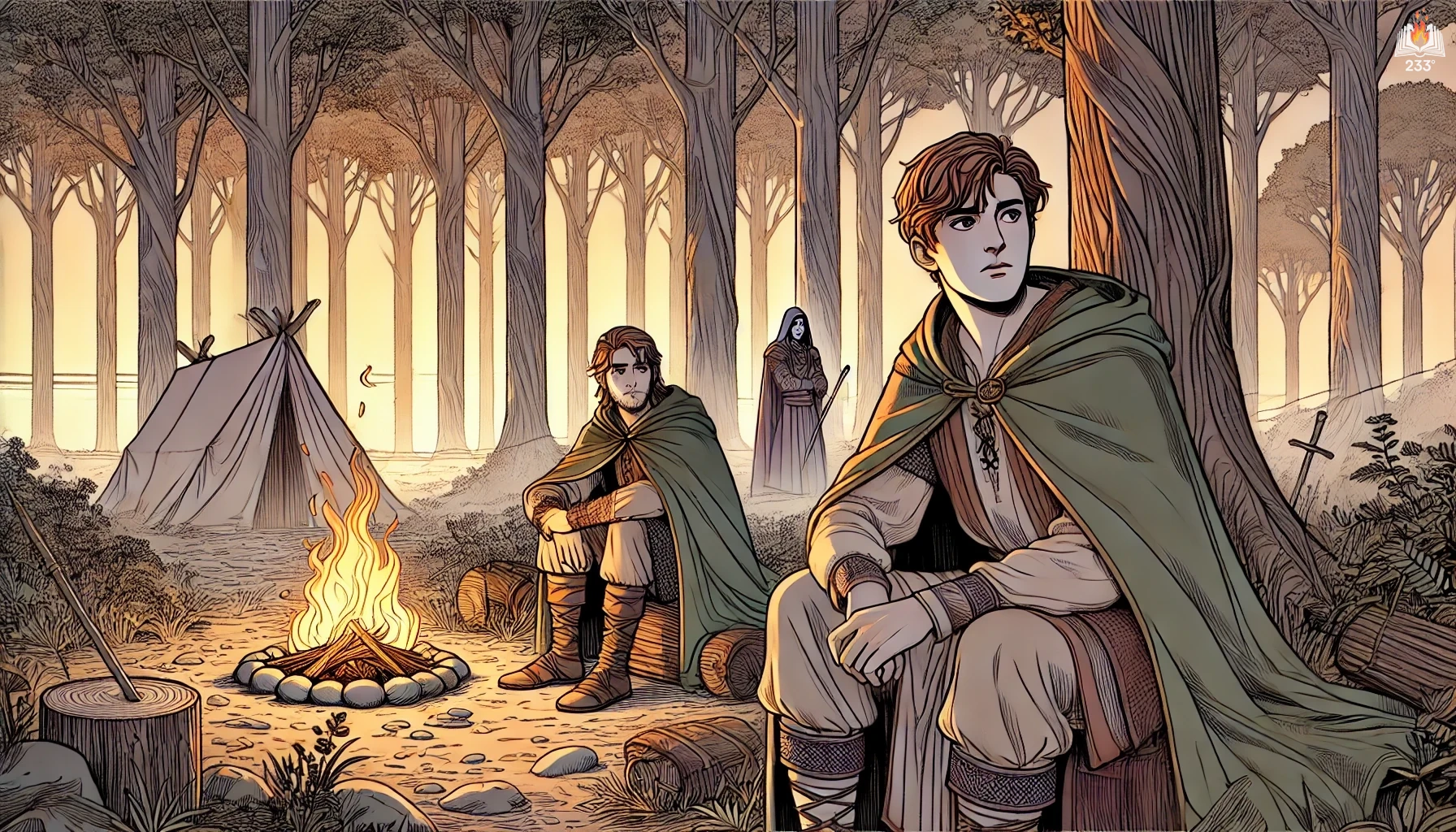


The Lady and the Unicorn by Tracy Chevalier, published in 2003, is a historical fiction novel that imaginatively explores the creation of the famous 15th-century French tapestry series known as The Lady and the Unicorn. The narrative spans the cultural and social contrasts between Paris and Brussels in the late 1400s, unfolding through multiple perspectives to reveal the passions, ambitions, and secrets behind the commissioning and weaving of the tapestries. With sensuality, power, and artistry at its core, the story blends fact and fiction to resurrect the world of medieval artisans and aristocrats.
Plot Summary
In the waning days of the fifteenth century, a young artist named Nicolas des Innocents crosses the Seine, brushes still wet, summoned to the house of Jean Le Viste. Nicolas is known at Court for his miniature portraits and his persuasive charm with women. What he lacks in discretion, he makes up for in confidence. Jean Le Viste, an ambitious nobleman newly appointed President of the Cour des Aides, desires a grand set of tapestries to commemorate his elevation – a sweeping visual of battle, blood, and banners. But Nicolas, thinking less of swords and more of seduction, introduces the idea of the unicorn – swift, mystical, pure.
Jean agrees, not through his own whim but through a suggestion quietly planted by his wife, Geneviève. She has grown tired of the endless heraldry and male grandeur that soaks the walls of their Paris home. She wants something else, something softer, something for her daughter Claude, who will one day inherit the tapestries. Nicolas, ever alert to the hearts of women, senses his opportunity and embraces the new direction. He begins to sketch not war, but wonder: a lady in a forest, tempting a unicorn with music, flowers, and quiet power.
In Claude, he finds inspiration and danger. She is young, restless, eager to leap puddles and cross boundaries. The daughter of a noble house and too aware of her caged future, she finds herself drawn to Nicolas, and he to her. Their flirtation is swift and intoxicating, a flash of warmth that threatens to undo them both. Nicolas speaks of unicorns and Eden, weaving seduction into mythology. But Claude is not so naive, and her mother sees more than she says. Geneviève watches with sad wisdom, her marriage cold, her desires muted by duty and disappointment.
As Nicolas prepares his designs, he travels north to Brussels, where the best weavers live. There, in the dim workshops of master artisans, he meets Georges de la Chapelle, a stern and meticulous man responsible for turning paint into thread. Georges must balance his pride in his craft with the demands of his noble patron and the impulsive artist whose drawings he is bound to follow. He sees the weaknesses in the designs and grumbles at the impracticalities, but still, he works. His family – his wife Christine, his son, and his blind daughter Aliénor – become entangled in the process.
Aliénor, despite her lack of sight, sees more than most. Her world is built on texture, scent, sound. She touches Nicolas’ face and unsettles his certainty. For the first time, he is not the pursuer, not the seducer, but the one exposed. Her innocence disarms him, and her quiet understanding lingers long after their parting. She is the only woman he does not attempt to conquer, and for that reason, she begins to change him.
In Brussels, the tapestries begin to take shape. Christine Du Sablon, once a weaver herself and now managing the business of thread, fights to maintain control. Her marriage to Georges is brittle, worn by disappointment and the weight of unspoken truths. She envies the unicorn tapestries, these visions of longing and beauty, so different from her own life’s coarser threads. Yet she remains firm, refusing to let her household fall apart.
Back in Paris, Claude’s fascination with Nicolas deepens even as it veers toward danger. She spies on him, watches him work, and discovers a drawing of herself, standing between a lion and a unicorn, parakeet perched delicately on her finger. The Lady and the Unicorn. In the reflection of that image, she sees her desire and her future all tangled together.
But others see the image too. Léon Le Vieux, Jean Le Viste’s merchant and emissary, understands the peril. The faces in the tapestries – Claude’s, Geneviève’s – are too recognizable. Jean would not appreciate an eternal tribute to the women he controls but barely notices. Léon warns Nicolas to disguise them, to erase their features before thread immortalizes them. But Nicolas hesitates, torn between the honesty of his art and the reality of his position.
The weavers continue their labor. Each tapestry reflects a different sense – sight, sound, touch, taste, and smell – cloaked in symbolism. The lady tames the unicorn not with force but with allure. In one, she plays an organ. In another, she crowns the unicorn with carnations. She feeds him, holds a mirror to his face, lays his head gently in her lap. And in each panel, the Le Viste coat of arms hangs subtly, asserting ownership in the midst of seduction.
Aliénor, despite her blindness, is tasked with spinning gold thread. The labor is delicate, but so is her heart. She begins to fall for Nicolas in her quiet way. He returns to Brussels and, drawn by her presence, almost touches a different kind of love – one that is not conquest but recognition. But there is no place for tenderness in his world. He must return to Paris, to his sketches, to the shadows cast by noble ceilings.
Claude’s feelings crescendo. She dreams of running away, of escaping marriage and expectation. But her family has other plans. A suitor is selected, and her fate is sealed. Her drawing remains, now dulled and faded by compromise. The unicorn may have been tamed in the tapestry, but in life, it flees.
Geneviève retreats deeper into her prayers, her once vibrant face now a mirror of loss. Yet she is the true force behind the transformation of the tapestries. Through her quiet insistence, a tale of blood and steel has become one of longing and restraint. She wanted something beautiful for her daughter, and even if Claude cannot keep the man, she will inherit the dream.
The tapestries are hung at last in the Grande Salle, glowing with color and motion. The lady stands surrounded by flowers, by banners, by myth. The unicorn gazes up at her, the world stilled in that moment of surrender. Visitors admire the detail, the richness, the mystery. They do not see the real faces behind the woven ones, nor the stories whispered between each stitch.
In a quiet house in Brussels, Aliénor touches the finished thread and remembers a man who almost saw her. Claude sits beneath the tapestries, a wife now, recalling the pulse of her heart when she saw herself between lion and unicorn. And Nicolas, ever restless, paints elsewhere, his memory lingering not on conquest, but on what he could not possess.
The unicorn remains still, head in the lady’s lap, forever tamed, forever desiring.
Main Characters
Nicolas des Innocents – A charming and seductive Parisian artist commissioned to design the unicorn tapestries. Nicolas is both talented and reckless, driven by vanity, desire, and artistic ambition. His liaisons with women, especially noble ones, complicate his position, yet his vision ultimately shapes the heart of the artwork. His journey mirrors his transformation from a careless seducer to someone touched by genuine admiration and emotional growth.
Claude Le Viste – The intelligent and spirited eldest daughter of Jean and Geneviève Le Viste. Claude yearns for freedom and romantic adventure in a world that limits her to marriage and obedience. Her interactions with Nicolas awaken her longing for autonomy and love, but her status and future are tightly controlled by her father.
Geneviève de Nanterre – Claude’s mother and Jean Le Viste’s wife. Once beautiful and now resigned to a loveless marriage, Geneviève exerts influence behind the scenes. Her decision to change the subject of the tapestries from a battle to a unicorn tale reflects both subtle rebellion and maternal intent. Her character embodies grace, sorrow, and quiet defiance.
Jean Le Viste – A powerful and prideful nobleman, newly appointed President of the Cour des Aides. His obsession with status and legacy drives his initial desire for battle tapestries. He is stern and authoritarian, preferring control over connection, particularly with his wife and daughters.
Georges de la Chapelle – A Brussels weaver tasked with turning Nicolas’ designs into tapestries. Georges is practical and skilled, caught between the demands of his patron and the realities of weaving. He represents the working-class artisan navigating pride, duty, and hidden emotions.
Aliénor de la Chapelle – Georges’ blind daughter, whose presence brings a rare sense of purity and emotional clarity. She forms a tender bond with Nicolas, challenging his superficial ideas of beauty and desire, and forcing him to confront deeper truths about intimacy.
Theme
Art as Seduction and Power: The story revolves around the creation of tapestries, which serve as both symbols of aristocratic identity and expressions of personal desire. Through the artistic process, characters project their fantasies, assert influence, or seek immortality.
Female Agency and Constraint: The lives of Claude, Geneviève, and Aliénor reflect the limited roles available to women in medieval society. Yet within these constraints, they assert quiet acts of resistance – through art, wit, or emotional strength – carving out spaces for autonomy.
Vision and Blindness: Aliénor’s literal blindness contrasts with others’ emotional or moral blindness. The motif challenges perceptions of beauty and insight, suggesting that clarity often lies beyond sight.
Desire and Transformation: Passion drives many of the characters, particularly Nicolas. But desire, when deepened by emotional insight (as with Aliénor), becomes transformative. The unicorn – a creature of myth and longing – becomes the perfect metaphor for this journey.
Legacy and Identity: Jean Le Viste’s obsession with heraldry and reputation clashes with the more intimate, symbolic tapestry subject that emerges. The tapestries become a contested space for defining what will be remembered – bloodline or emotion, violence or enchantment.
Writing Style and Tone
Tracy Chevalier employs a rotating first-person narrative that allows readers to delve intimately into the thoughts and emotions of her diverse characters. Each voice is distinct, reflecting class, gender, and regional differences. This layered structure gives the novel a rich, textured feel, mirroring the complexity of the tapestries themselves. The language is elegant yet accessible, maintaining historical authenticity without overwhelming the reader with archaisms.
The tone of the novel shifts with each perspective. From the flirtatious and self-aggrandizing voice of Nicolas to the introspective melancholy of Geneviève and the innocent clarity of Aliénor, the tone evolves organically to reflect character growth and setting. Sensuality and melancholy thread through the narrative, giving it a lush, intimate atmosphere. Chevalier’s style is subtle and visual, effectively evoking medieval Paris and Brussels with all their sights, textures, and power dynamics.
Quotes
The Lady and the Unicorn – Tracy Chevalier (2003) Quotes
“I didn't move. I've learned from years of experience that dogs and falcons and ladies come back to you if you stay where you are.”
“in the cartoon of Sight. It”
“I feel like a bird who has been wounded with an arrow and now cannot fly.”
We hope this summary has sparked your interest and would appreciate you following Celsius 233 on social media:
There’s a treasure trove of other fascinating book summaries waiting for you. Check out our collection of stories that inspire, thrill, and provoke thought, just like this one by checking out the Book Shelf or the Library
Remember, while our summaries capture the essence, they can never replace the full experience of reading the book. If this summary intrigued you, consider diving into the complete story – buy the book and immerse yourself in the author’s original work.
If you want to request a book summary, click here.
When Saurabh is not working/watching football/reading books/traveling, you can reach him via Twitter/X, LinkedIn, or Threads
Restart reading!