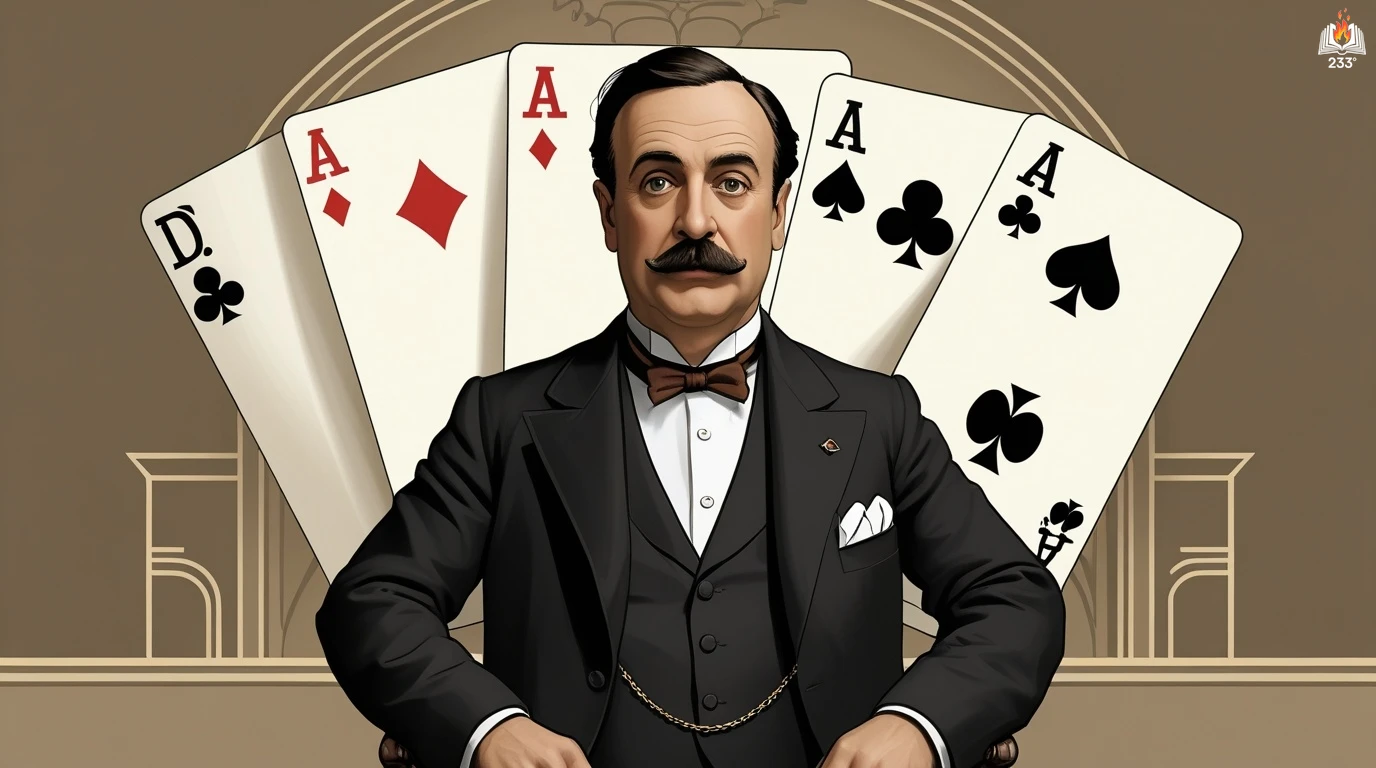


The Third Twin by Ken Follett was published in 1996. A gripping thriller infused with bioethical quandaries, this novel centers on a geneticist’s dangerous investigation into nature versus nurture and the murky ethics of cloning. Follett, best known for historical epics like The Pillars of the Earth, turns his attention here to a modern scientific mystery interwoven with political intrigue, psychological suspense, and criminal investigation.
Plot Summary
A heatwave cloaked Baltimore in late September when Jeannie Ferrami’s life began to splinter. A professor at Jones Falls University, Jeannie was navigating the strains of personal responsibility – a mother slipping into the shadows of Alzheimer’s and a sister leaning on her for strength – when her research into the genetic roots of criminality thrust her into a tempest of violence and conspiracy. Her work focused on studying identical twins raised apart, searching for the elusive answer to whether nature or nurture governed human behavior.
Jeannie’s world collided with chaos on an ordinary Sunday. A fire broke out in the women’s locker room at the university gym, engulfing the basement in thick, choking smoke. Amidst the panic, a man posing as a security officer used the cover of the smoke and fear to assault her friend Lisa Hoxton in the pool maintenance room. The violation shook Jeannie’s foundation. She had always believed in logic, in research, in data. But this was raw, devastating, and deeply personal.
In the aftermath, Jeannie was determined to uncover the truth. Lisa, though shattered, confided what little she remembered: the attacker wore a red cap marked SECURITY. Yet, no official guard had been assigned there. The impersonator had vanished, but not without leaving a trail. The crime scene, the emotions, and the inept response from the police sparked something fierce in Jeannie. She decided to investigate on her own terms.
Her research took an eerie turn when her data flagged an anomaly – two subjects with identical DNA but no known familial connection. One was Steve Logan, a charming, athletic law student with a clean record. The other was Dennis Pinker, a convicted felon incarcerated for violent crimes. Identical in genetics, yet raised in different worlds. As Jeannie probed deeper, she discovered other pairs – all genetically identical, scattered across the country, all born on the same day.
Curiosity turned to dread as Jeannie traced their origins to a shadowy medical experiment dubbed Project Alpha. The project had begun under the auspices of Genetico, a fertility research firm co-founded by Berrington Jones, a powerful figure in academia and biotechnology. Years ago, embryos had been cloned and implanted into unsuspecting surrogate mothers as part of a secret eugenics initiative masked as infertility treatment. The clones, including Steve and Dennis, were meant to be the future of genetic engineering – controlled, perfected, and replicated without consent.
Steve, innocent and unknowingly at the center of the storm, was arrested when he was misidentified as Lisa’s attacker. The DNA from the crime scene matched his. Only Jeannie believed in his innocence, driven not only by scientific evidence but by a growing bond between them. She raced to clear his name, navigating bureaucratic stonewalls, legal threats, and mounting danger.
When Jeannie confronted Berrington Jones, she expected denial. Instead, she found a man who viewed science as dominion over nature. He did not flinch at the ethics of cloning humans. To him, the clones were data points, not people. Genetico’s powerful backers, including Senator Jim Proust and investor Preston Barck, were eager to suppress the truth. Landsmann, a German conglomerate planning to acquire Genetico, had its sights on the future – and no intention of letting a scandal derail it.
Jeannie’s life became a game of survival. She was followed, threatened, and ultimately suspended from her position at the university. But her conviction only grew. She pieced together medical records, birth certificates, and adoption files. She found other clones. Some were thriving, others imprisoned or dead. Each led her closer to the center of the scheme.
Steve, released on bail and hiding from the law, joined Jeannie in her quest. Together, they traced the origin of the embryos to a closed-down Genetico lab. There, they found damning records, photographic evidence, and logs detailing the implantation schedules. But discovery came with a price. As they uncovered the final files, a hired enforcer set fire to the building. They escaped narrowly, the truth in hand but their freedom hanging by a thread.
Jeannie presented her findings to the media, exposing the unauthorized cloning experiment. The storm was immediate. Genetico’s deal with Landsmann crumbled. Senator Proust distanced himself. Barck denied knowledge. Berrington Jones stood defiant, but the scientific community recoiled from his hubris.
Yet justice did not come swiftly. The court case was complex, the defense slippery. Jeannie testified before a grand jury. Lisa, still battling trauma, stood beside her. Steve was finally exonerated, though the scars of suspicion remained. The world now knew of Project Alpha, but the law moved cautiously, and the ramifications of cloning law were still uncharted.
In the end, Jeannie returned to her lab, quieter now, marked by fire and truth. Lisa slowly recovered, choosing therapy over silence. Steve, after the storm, stayed close. There was no triumph, only resolve. The clones, the echoes of a secret ambition, were scattered across America, living their lives, unaware of their engineered origins.
In a world where identity could be replicated but not easily explained, Jeannie had pulled back the curtain. The questions of what made a person – genes or experience – remained. But in the wreckage of lies and power, one truth stood firm: humanity could not be patented, and conscience was the last frontier science could not clone.
Main Characters
Dr. Jeannie Ferrami – A brilliant and determined genetic researcher at Jones Falls University, Jeannie is investigating inherited traits among criminals through the study of twins separated at birth. Her passionate dedication to science is matched only by her moral compass, and her journey thrusts her into a dark conspiracy that tests her intellect and courage.
Lisa Hoxton – A close friend and colleague of Jeannie, Lisa is a technician in the psychology lab. Her traumatic assault becomes a catalyst for Jeannie’s deeper investigation. Lisa’s vulnerability and strength embody the emotional stakes of the story.
Steve Logan – A law student and former Marine, Steve becomes Jeannie’s key ally and love interest. His entanglement in the mystery as a falsely accused rapist makes him a central figure in exposing the deeper conspiracy. Steve is level-headed, resilient, and ultimately pivotal in uncovering the truth.
Berrington Jones – A high-ranking academic and one of the founders of the Genetico biotech firm. His ambition, cold detachment, and manipulative tactics make him a formidable antagonist. He is deeply implicated in the unethical cloning experiment that lies at the heart of the plot.
Senator Jim Proust and Preston Barck – Co-founders of Genetico alongside Berrington. While not as hands-on, they represent the political and corporate interests complicit in the cover-up, highlighting the intersection of science and power.
Dennis Pinker – A violent criminal whose DNA matches Steve’s, sparking the initial mystery. His existence leads Jeannie to discover the disturbing reality behind the twins and clones.
Theme
Nature vs. Nurture – The novel’s core philosophical inquiry explores whether genetics predetermine behavior or if upbringing shapes individuals. By comparing genetically identical men raised in radically different environments, Follett invites readers to consider the weight of heredity versus life experience.
Ethics in Genetic Research – Follett delves into the consequences of unregulated science. The clandestine cloning project known as “Project Alpha” serves as a cautionary tale about ambition untempered by ethical oversight.
Abuse of Power and Institutional Corruption – Institutions like universities, corporations, and the government are portrayed as entities that can become corrupt and complicit in grave misconduct when driven by profit, prestige, or political gain.
Identity and Free Will – The cloned characters challenge the concept of individual identity. Are we just the sum of our DNA, or something more? The story questions how much control people truly have over their destinies.
Trauma and Justice – Through Lisa’s attack and the flawed legal process that follows, the novel comments on how the justice system handles sexual assault and the re-traumatization victims face in pursuit of truth.
Writing Style and Tone
Ken Follett’s writing in The Third Twin is brisk, accessible, and meticulously structured for suspense. He employs short, punchy chapters and sharp cliffhangers that keep the reader engaged. The prose leans toward cinematic, often visual and tactile, with particular attention to pacing that mimics the tension of a psychological thriller.
Dialogue plays a critical role, revealing character and moving the plot forward efficiently. Follett balances scientific exposition with personal drama, ensuring that even complex biogenetic concepts remain understandable to a general audience. His scenes of action and confrontation are vividly described, often evoking a sense of urgency and peril.
The tone of the novel oscillates between chilling and contemplative. At times dark and foreboding, especially in scenes depicting institutional malfeasance or physical danger, it also contains moments of warmth, particularly in the camaraderie between Jeannie and Lisa or the budding romance between Jeannie and Steve. Follett’s underlying tone is one of moral inquiry – he challenges the reader to think critically about science, responsibility, and humanity.
Quotes
The Third Twin – Ken Follett (1996) Quotes
“defending her male colleagues to an outsider.”
“See you sooner, Montezuma? In a flash, succotash!”
“rapists aren’t really interested in sex. What they enjoy is having power over a woman, and dominating her, and scaring her, and hurting her. He picked someone who looked as if she would be easily frightened.”
“I identified four inherited traits that lead to criminal behaviour: impulsiveness, fearlessness, aggression and hyperactivity. But my big theory is that certain ways of raising children counteract those traits and turn potential criminals into good citizens.”
“A crime is a breach of an important social rule. Solitary animals don’t have rules. A bear will trash another bear’s cave, steal its food and kill its young. Wolves don’t do those things: if they did, they couldn’t live in packs.”
“kept in the laboratory for varying periods before being implanted in the women’s wombs.” Why did this happen to me? Why couldn’t I be like everyone else? “They’re closing the flight, I have to go.” “I want to see you. I’ll”
“no trace left of the overwhelming physical desire she had once felt for Will’s strong body.”
“If we're all aggressive, obedient solders [sic], who's going to write the poems and play the blues and go on anti-war protest marches?”
We hope this summary has sparked your interest and would appreciate you following Celsius 233 on social media:
There’s a treasure trove of other fascinating book summaries waiting for you. Check out our collection of stories that inspire, thrill, and provoke thought, just like this one by checking out the Book Shelf or the Library
Remember, while our summaries capture the essence, they can never replace the full experience of reading the book. If this summary intrigued you, consider diving into the complete story – buy the book and immerse yourself in the author’s original work.
If you want to request a book summary, click here.
When Saurabh is not working/watching football/reading books/traveling, you can reach him via Twitter/X, LinkedIn, or Threads
Restart reading!