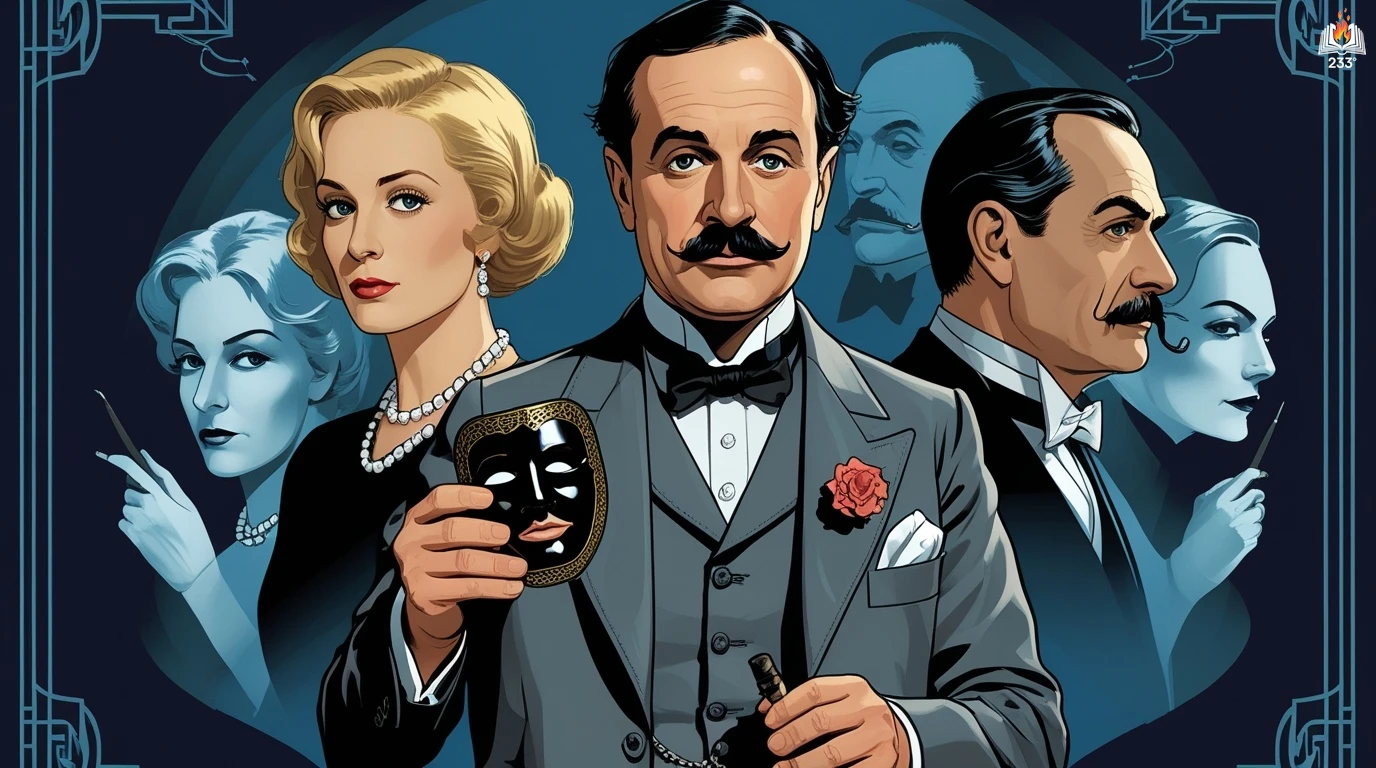
Timequake, published in 1997 by Kurt Vonnegut, is a singular mix of science fiction, autobiography, and metafiction. Set against the backdrop of a cosmic glitch that forces humanity to relive the past decade, the novel blends satire and meditation as it explores human agency and fatalism. Notably, Timequake stands apart from Vonnegut’s better-known works like Slaughterhouse-Five and Cat’s Cradle, though it features his recurring character Kilgore Trout, tying it loosely to his broader fictional universe.
Plot Summary
The world shuddered on February 13, 2001. Without warning, the timequake hit, and every man, woman, child, and beast was hurled back ten years to February 17, 1991. But there was no thrill in this journey through time, no chance to rewrite past mistakes or seize lost opportunities. Instead, the world became a rerun, a merciless playback of the decade, forcing all to act out their past moves without deviation or resistance. People walked through their days like puppets, mouths repeating words they had long forgotten, hands performing gestures burned into memory, feet following paths both glorious and shameful. The world itself was trapped, not in memory, but in mechanical repetition.
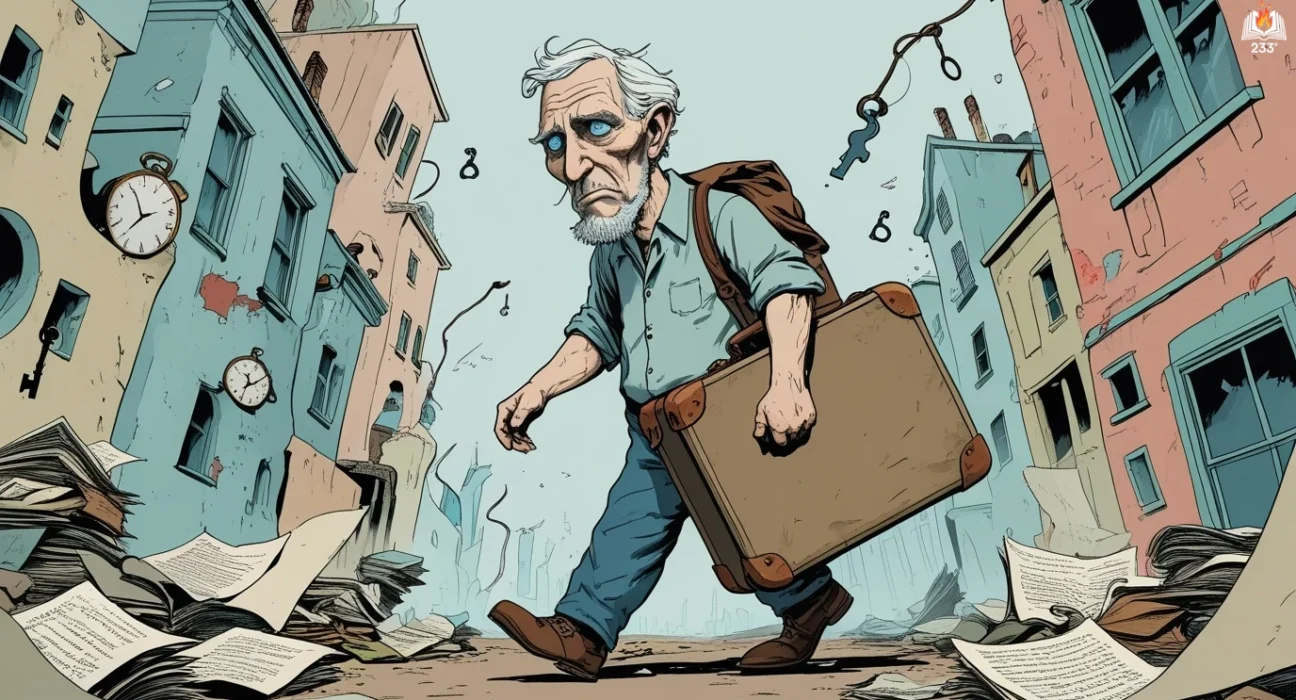
Among those caught in this absurd loop was Kilgore Trout, the grizzled, half-mad science fiction writer, whose lifetime of obscurity had sharpened his gaze into something both savage and tender. Trout shuffled through the decade with a groaning heart, watching people stumble into old failures – lovers betraying each other again, gamblers backing the wrong horse again, and dreamers tossing themselves against the same indifferent walls. When the rerun ended and free will came crashing back, the world stumbled to its feet, dizzy and shell-shocked. Trout, however, sensed the terror behind the confusion. People had forgotten how to live. They had become too used to being machines.
It was then that Trout took it upon himself to become their reminder, their spark, their mad prophet. At a clambake in Point Zion, Rhode Island, he gathered a crowd of stunned, bewildered people. There, amid the corn steamed in seaweed, the lobsters and clams, Trout bellowed at the sunlit sky and the trembling crowd, urging them to seize their freedom, to act, to remember what it meant to be alive. He waved his hands like a man warding off death itself, a grinning, toothless angel shouting into the face of eternity.
Not far from Trout stood Kurt Vonnegut, the weary, sardonic observer of human folly. With the dry wit of a man who has seen too much and expects no miracles, Vonnegut watched the post-timequake world take its first uncertain steps. He saw Monica Pepper, a statuesque, blonde executive secretary at the American Academy of Arts and Letters, wrestling with the guilt of having caused her husband Zoltan’s paralysis in a freak swimming pool accident. Zoltan, confined to his wheelchair, found bitter amusement in the absurdity of human competition with machines, watching as young upstarts composed string quartets on computer programs and designed Jeffersonian parking garages with the click of a button.
Monica and Zoltan became symbols in Vonnegut’s drifting mosaic – people stripped of their illusions, left clutching small dignities in a world gone ridiculous. Zoltan wept and laughed in the same breath, mourning his lost legs and broken marriage while marveling at the strange beauty of a life still lived. Monica, tall as a Watusi and equally out of place, carried her burdens with the awkward grace of someone who never quite learned how to fit into the world’s mold.
Across the city, Kilgore Trout scoured the streets, his pockets stuffed with crumpled stories and rejected manuscripts. Once a derelict living in libraries and shelters, he now became a kind of messiah to the shaken masses. His stories, tossed into wire trash baskets or flushed down toilets in lonely fits of despair, were born anew as parables for the lost and the weary. To Trout, life was undeniably preposterous – a grand cosmic joke with no punchline – but within that absurdity lay a fierce, defiant joy.
As the world resumed its chaotic march forward, the effects of the timequake rippled through the lives of ordinary people. The Peppers’ neighbor, Frank, a once-proud architect, crumbled under the revelation that his teenage daughter had designed a recreation center using a simple computer program. Unable to face the obsolescence of his craft, Frank surrendered to despair, and the world watched as he fell, twice – once in the original decade, and again in the cold echo of the timequake.
In these scattered lives, Vonnegut glimpsed the heart of the human condition: the mingled comedy and tragedy of people struggling to matter. Even as the future loomed, technology sharpened its teeth, rendering artists, architects, and dreamers quaint relics in a mechanized age. Yet amid the dying embers of craftsmanship and imagination, Vonnegut lingered on small epiphanies – a clambake under the stars, a daughter’s school play, a father’s quiet blessing.
The children fared no better in this new old world. They had been rewound along with their elders, forced to relive scraped knees, awkward crushes, and petty rebellions, only to awaken in a future they barely understood. They faced screens filled with meaningless wonders, their imaginations numbed by endless noise. The planet’s brightest chemicals, too, were conspiring, weary of their roles in human cruelty, aligning to birth antibiotic-resistant plagues that would sweep across the globe. It was a world both astonishing and grotesque, teetering between invention and annihilation.
Vonnegut’s gaze drifted across the wide landscape of human absurdity – from war, where camouflage-clad generals posed on TV while children sickened from Chernobyl’s fallout, to the sad triumphs of atomic age scientists, and the crumbling American families caught between progress and heartbreak. Through it all, Kilgore Trout remained the beating heart of the tale, his cracked voice rising above the chaos to remind his fellows: If this isn’t nice, what is?
As the days turned and the people stumbled forward, they bore the scars of their rerun decade – some haunted, some hardened, some barely aware of their own survival. But in small corners, kindness endured. Firemen sent letters of praise across oceans to fellow firefighters. Strangers offered a hand to those teetering on the edge of despair. And above it all, Trout’s voice lingered, ragged but unyielding, proclaiming that amid the pratfalls and buffoonery, there was still something to love.
The rerun had ended, the show had gone on, and the curtain, though tattered, still hung. Vonnegut, older now, watched the rising generation with wry affection, knowing they, too, would learn the bittersweet taste of living, the quiet triumph of enduring, the fleeting miracle of noticing the moment and whispering, If this isn’t nice, what is?
Main Characters
Kilgore Trout: A recurring Vonnegut alter ego, Trout is an aging, impoverished science fiction writer who becomes the philosophical anchor of the novel. He is reflective, bitterly humorous, and paradoxically hopeful. His journey through the timequake — and his attempt to shake people out of their mechanical existence afterward — reveals his deep ambivalence about free will and human potential.
Kurt Vonnegut (as himself): In a bold metafictional move, Vonnegut inserts himself as a character, blending autobiographical details with fiction. He is sardonic, self-deprecating, and contemplative, offering a personal commentary on aging, writing, and meaning in life.
Monica Pepper: Executive secretary of the American Academy of Arts and Letters, Monica is drawn with humor and sympathy. She is intelligent, practical, and burdened by guilt over her husband’s accident, highlighting themes of responsibility and unintended consequences.
Zoltan Pepper: Monica’s husband, a paraplegic composer, Zoltan embodies resilience and dignity despite his physical limitations. His character underscores the absurdity and endurance of the human condition in Vonnegut’s universe.
Theme
Free Will vs. Determinism: Central to the novel is the tension between choice and inevitability. The timequake traps humanity in a mechanical replay of their past, stripping them of agency. The moment free will returns becomes a profound exploration of what it means to live authentically.
Loneliness and Connection: Through Trout’s eccentricities and Vonnegut’s autobiographical musings, the novel dwells on human isolation and the aching need for connection. Moments like the communal clambake serve as epiphanies of shared existence.
Mortality and Aging: Vonnegut’s self-reflection on aging and the passing of time lends the novel a bittersweet, elegiac tone. His humor masks a deep meditation on the losses and wisdom that come with age.
Satire of Human Folly: As always, Vonnegut skewers human pretensions, from the absurdity of war to the superficiality of modern life. His biting satire calls out societal failures while maintaining a tender faith in individual decency.
Writing Style and Tone
Vonnegut’s writing style in Timequake is fragmented, conversational, and darkly humorous. He blends fictional narrative with autobiographical interludes, creating a patchwork of vignettes, aphorisms, and philosophical asides. The prose is stripped-down yet sharp, oscillating between slapstick humor and profound melancholy. His characteristic simplicity — short sentences, plain diction, and punchy dialogue — gives the novel a deceptive lightness that conceals its deeper existential weight.
The tone shifts fluidly between sardonic detachment and earnest reflection. Vonnegut’s voice is world-weary but compassionate, filled with both rage at human cruelty and wonder at small moments of grace. The metafictional elements — including his direct addresses to the reader — break the fourth wall, reminding us constantly of the artificiality of fiction while affirming its power to capture truth. The result is a novel that feels like a conversation with an old friend, laced with wit, wisdom, and wistful resignation.
Quotes
Timequake – Kurt Vonnegut Jr (1997) Quotes
“Many people need desperately to receive this message: 'I feel and think much as you do, care about many of the things you care about, although most people do not care about them. You are not alone.”
“I say in speeches that a plausible mission of artists is to make people appreciate being alive at least a little bit. I am then asked if I know of any artists who pulled that off. I reply, 'The Beatles did'.”
“I am eternally grateful for my knack of finding in great books, some of them very funny books, reason enough to feel honored to be alive, no matter what else might be going on.”
“If your brains were dynamite there wouldn't be enough to blow your hat off.”
“You were sick, but now you're well again, and there's work to do.”
“Ting-a-ling mother fucker.”
“All persons, living and dead, are purely coincidental.”
“I will say, too, that lovemaking, if sincere, is one of the best ideas Satan put in the apple she gave to the serpent to give to Eve. The best idea in that apple, though, is making jazz.”
“Extenuating circumstance to be mentioned on Judgment Day: We never asked to be born in the first place.”
“Listen: We are here on Earth to fart around. Don't let anybody tell you any different!”
“In real life as in grand opera, arias only make hopeless situations worse.”
“Why throw money at problems? That is what money is for. Should the nation's wealth be redistributed? It has been and continues to be redistributed to a few people in a manner strikingly unhelpful.”
“if there is a god, he sure hates people”
“TV is an eraser.”
“I never asked to be born in the first place.”
“They gave Pandora a box. Prometheus begged her not to open it. She opened it. Every evil to which human flesh is heir came out of it. The last thing to come out of the box was hope. It flew away.”
“They like life alright, but that they would like it even better if they could know that it was going to end sometime.”
“I'm wild again, beguiled again, a whimpering, simpering child again. Bewitched, bothered, bewildered am I.”
“Scum of the Earth as some may be in their daily lives, they can all be saints in emergencies.”
“science never cheered up anyone. the human situation is just too awful.”
“But he is tired. He puts the pistol to his head again. He says, “I never asked to be born in the first place.”
“Then again, I am a monopolar depressive descended from monopolar depressives. That's how come I write so good.”
“Let me note that Kilgore Trout and I have never used semicolons. They don't do anything, don't suggest anything. They are transvestite hermaphrodites.”
“They say the first thing to go when you're old is your legs or your eyesight. It isn't true. The first thing to go is parallel parking.”
“There is a planet in the Solar System where the people are so stupid they didn't catch on for a million years that there was another half to their planet." - Kilgore Trout”
We hope this summary has sparked your interest and would appreciate you following Celsius 233 on social media:
There’s a treasure trove of other fascinating book summaries waiting for you. Check out our collection of stories that inspire, thrill, and provoke thought, just like this one by checking out the Book Shelf or the Library
Remember, while our summaries capture the essence, they can never replace the full experience of reading the book. If this summary intrigued you, consider diving into the complete story – buy the book and immerse yourself in the author’s original work.
If you want to request a book summary, click here.
When Saurabh is not working/watching football/reading books/traveling, you can reach him via Twitter/X, LinkedIn, or Threads
Restart reading!