Violin by Anne Rice, published in 1997, is a haunting and lyrical exploration of grief, madness, music, and spiritual torment. This metaphysical novel follows Triana, a woman overcome by loss and despair, as she is drawn into an intimate, dangerous bond with a ghostly violinist named Stefan. Set primarily in New Orleans, with excursions through dreamscapes and memories, the novel plays out like a gothic symphony of love, suffering, and artistic longing. Known for her lush, sensual prose, Rice orchestrates an eerie duet between the living and the dead, layered with classical music, historical resonance, and deep emotional trauma.
Plot Summary
In the silence of her grand but decaying New Orleans house, Triana Becker sat surrounded by memory, grief, and an unquenchable hunger for music. She was no longer young, no longer hopeful, and no longer tethered to the world by love. Her daughter, Lily, once radiant and curious, was long buried. Her marriage, too, dissolved into photographs and postcards. What remained was Beethoven – the Maestro, the guardian – and the aching notes of a past she couldn’t forget. Then came the violinist.
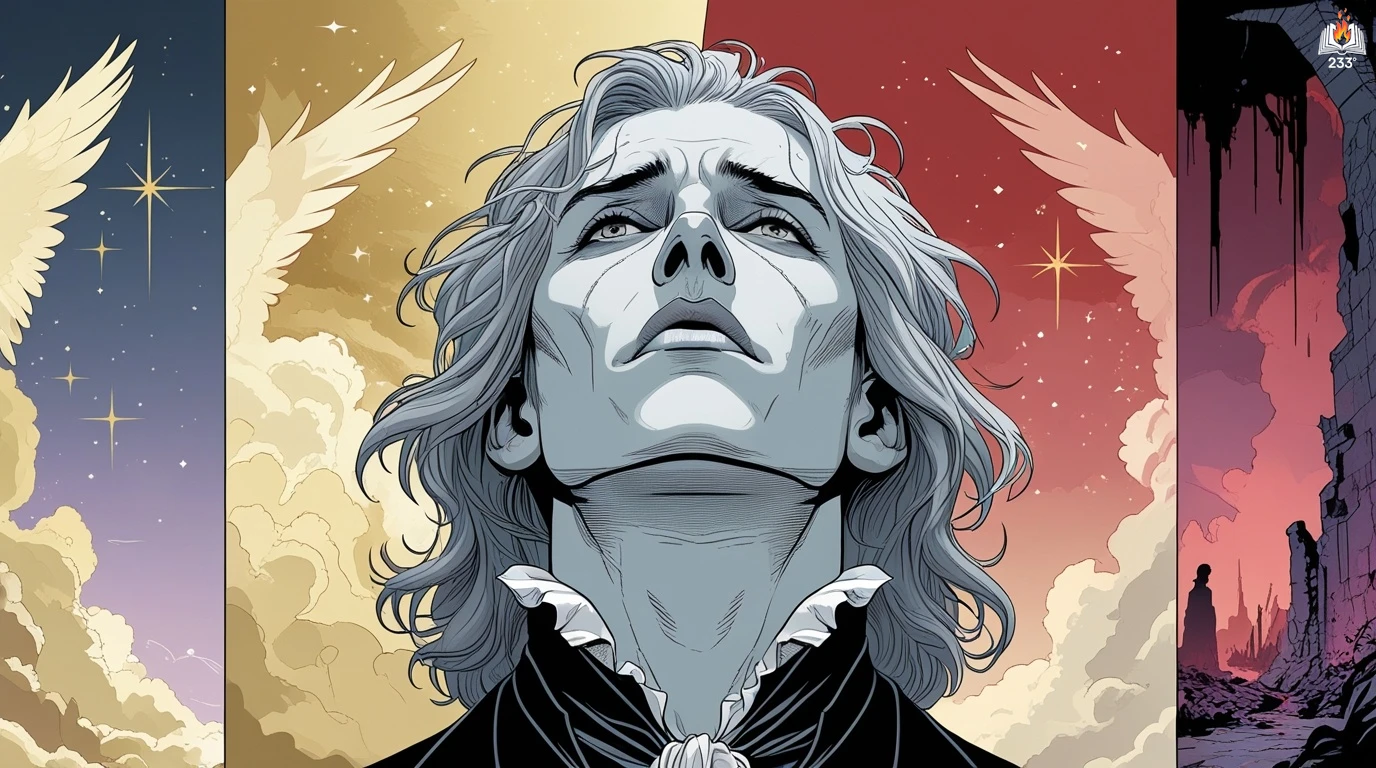
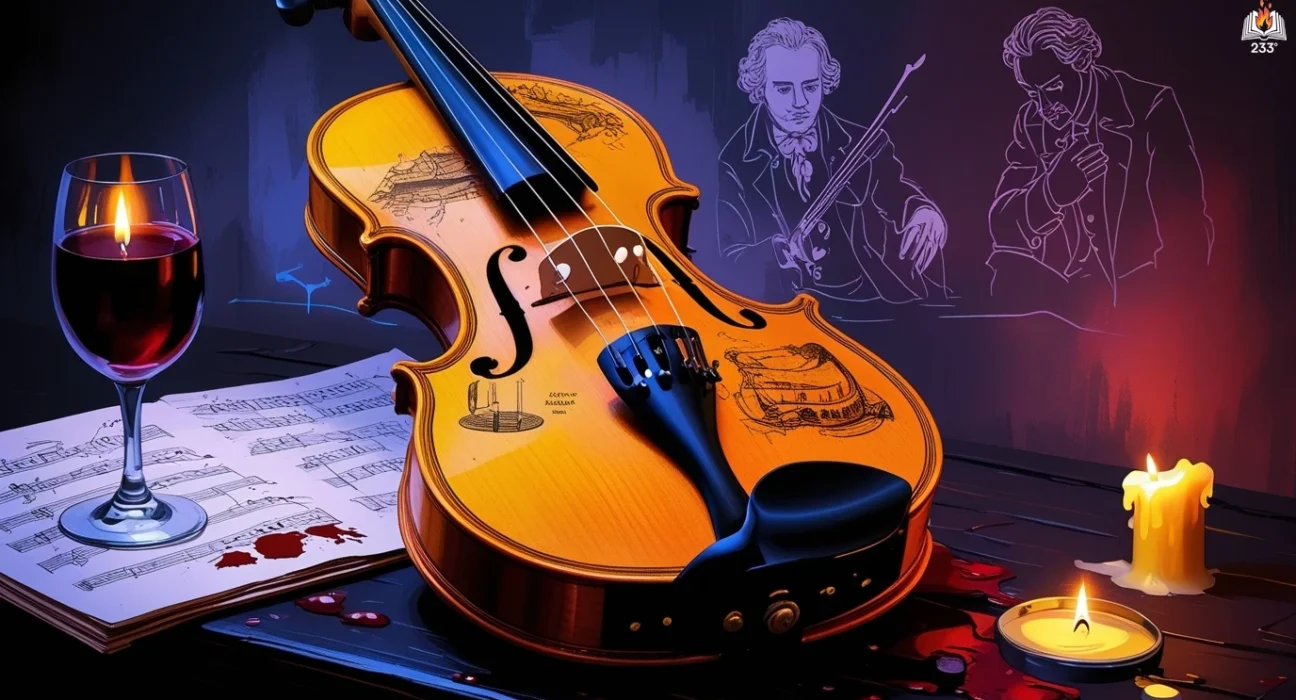
He arrived like a hallucination carved out of shadow and fire. Tall, severe, beautiful – Stefan. He carried with him a violin of exquisite make, a long Stradivarius born in the year 1690. The instrument glimmered like something from a cathedral. His bow moved with otherworldly grace. He played not only for Triana but into her – stirring the most personal pain, unburying memories with every pull of the strings. He was not a dream, not an illusion, not madness. He was real, or real enough to torment.
Stefan claimed Beethoven had been his teacher. He spoke of Mozart and Paganini as though they had been friends or rivals. He told her he had died, but not in the way mortals do – his soul torn loose by violence and rage, condemned to wander, kept alive by the eternal echo of music and the hunger to be heard. His music did not comfort. It devoured. Triana, aching and fractured, listened because she couldn’t turn away.
Their meetings became duets of pain and beauty. In the hushed corners of the house, beneath chandeliers dim with dust, they argued, they taunted, they confessed. Stefan hurled memories into her path like daggers – her daughter’s sickness, her mother’s descent into drunken ruin, her own abandonment of her artistic dreams. He painted scenes so vivid that the past roared back in full color: a chapel filled with saints long removed, the scent of wax and incense, Lily’s bald head lifted high in defiance of death. And he played through it all, tearing open every wound.
Triana, once merely a lover of music, now lived within it. Beethoven’s Ninth became her shield. Tchaikovsky’s Violin Concerto her battlefield. But Stefan’s music overwhelmed even the Maestro’s. It reached deeper, fed on her memories, conjured hallucinations so precise she could smell the sea, feel the soft bristle of dust in childhood rooms, hear her daughter laughing from beyond the veil.
She tried to resist. She played her records loud, lay on the floor in defiance, pulled out memories of dignity, of choice, of having let her husband go with grace rather than clutching him in grief. She called Stefan a ghost, a thing, a hungry specter of rage. But he would not leave. He could not. His art bound him to her as much as her loss drew her to him.
They wandered through time. He showed her scenes she had locked away – the night she crept as a child into her mother’s room, terrified of fire, of abandonment, of waking to find the world had turned to ash. He tore through the veil of denial, made her see the small, humiliating truths she had never dared speak aloud – her mother’s open-door defecations, the stench of poverty, the rot of neglect wrapped in the warmth of maternal love. And in doing so, he gave her no mercy.
He tormented her with the letter from Susan, an old friend who claimed that Lily had been reborn in Brazil – a musician, no less. Triana had dismissed the letter as nonsense. But Stefan unearthed the memory again, thrust her into dreams of Rio, of beaches shimmering under ghostly moonlight, of girls speaking Portuguese with gentle voices. He conjured the weight of the unsent answer, the bitterness of envy – that Lily’s soul might have reached for someone else.
Yet Stefan, for all his cruelty, was not whole. He, too, wept. He longed for something he never named. Perhaps redemption. Perhaps an end. He held his violin with reverence, as if it were the last piece of his soul. And though he never let Triana play it – never let her cradle its weight or draw the bow – he allowed her to touch it, to feel its varnished body, to speak its secrets aloud. It was not only music he shared, but the agony of love unfulfilled and the madness of being trapped between death and eternity.
They spoke of Beethoven again, the grand funeral in Vienna, the crowded streets, the perfect monument. Stefan had watched it through the dark veil, sobbed at the grave of the only man he ever revered. And Triana thought of Lily, whose funeral was marked by chaos and lost mourners on highways. No marble markers. No symphonies. Just the memory of baldness, of suffering, and a radiant final smile.
The more she opened herself, the more Stefan unraveled. His brilliance flickered. His fury softened. At last, he allowed himself to sit across from her not as a tormentor, but as a man who had once lived and lost. He told her he had died for the violin – for the right to play. That had been his passion. That had been his end.
In the stillness of her bedroom, as the lights of the house dimmed and the wind rattled the windows, Triana faced him. Not as a victim. Not as a muse. But as an equal. Someone who had also died many small deaths, who had loved and lost and never stopped listening. She did not cast him out. Nor did she surrender. She invited him to play – to play not to torment, but to remember. And so he did.
In the hush of the dark, his bow moved again. Music flowed, not like fire this time, but like water, cool and clear. Triana listened. And in that listening, something shifted. Not salvation. Not forgiveness. But a note of peace, a brief silence between movements where neither ghost nor grieving mother spoke, and the house, heavy with memory, simply breathed.
Main Characters
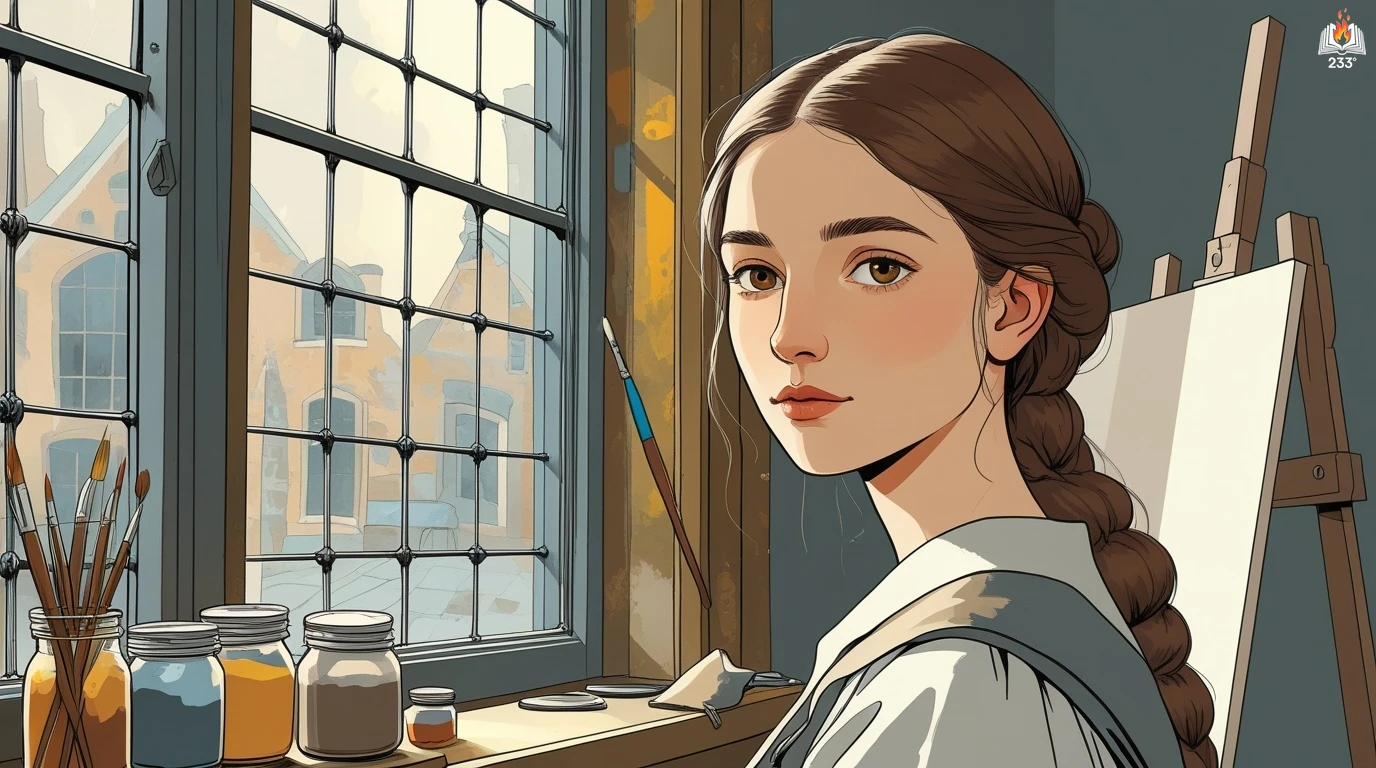
Triana Becker: A middle-aged woman ravaged by grief over the death of her daughter, Lily. Triana is intelligent, passionate, and deeply sensitive to music, particularly the works of Beethoven and Tchaikovsky. Her longing for artistic greatness and unresolved guilt over past losses make her vulnerable to the otherworldly seductions of Stefan. Throughout the story, Triana navigates her internal despair and the chaos brought by Stefan, eventually confronting the deepest parts of her memory and identity.
Stefan: A ghostly violinist of immense talent and volatile temperament, Stefan emerges from the shadow realms to play for Triana. Claimed to be a former pupil of Beethoven and contemporary of Mozart, Stefan is both seductive and cruel. He haunts Triana with memories and illusions, seeking something beyond companionship – a witness to his pain, a participant in his music, and perhaps, redemption. He is equal parts tormentor and muse, often teetering on the edge of love and destruction.
Lily: Triana’s deceased daughter, whose death has left a void that shapes much of Triana’s behavior and emotional world. Though physically absent, Lily’s presence is deeply felt through flashbacks, dreams, and supernatural impressions. She symbolizes innocence, unfulfilled potential, and the unbearable weight of maternal grief.
Lev: Triana’s former husband, a poet and painter, who has moved on to a new life and family. Though absent from the primary action, Lev is a source of regret and contemplation for Triana, representing choices not taken and love lost not through betrayal but through circumstance.
Karl and Rosalind: Peripheral yet meaningful figures from Triana’s life, Karl being an artistic companion, and Rosalind a sister. Their roles primarily serve to illuminate aspects of Triana’s past, particularly her memories and family dynamics.
Theme
Grief and Memory: At its core, Violin is a meditation on the ravages of loss and how memory both heals and haunts. Triana’s psychological and emotional unraveling is powered by the lingering grief over her daughter’s death and her complicated past. Rice examines how memory can be repressed, distorted, or reawakened through music and trauma.
The Supernatural and Artistic Genius: Stefan, a spectral virtuoso, embodies the tortured artist archetype and the idea that true artistic brilliance can transcend death. Through his character, Rice explores the price of genius and the ethereal connection between art and suffering, especially when music becomes a conduit for emotional possession and spiritual unrest.
Madness and Identity: The blurred line between reality and illusion is a recurring motif. Triana’s descent into what might be madness is echoed in her emotional dialogues with Stefan, her hallucinations, and the surreal events she experiences. Identity is fragmented and constantly reexamined, particularly in relation to art, motherhood, and trauma.
The Power of Music: Music is portrayed as a near-divine force capable of evoking deep emotions, conjuring memories, and even altering spiritual realities. Beethoven’s and Tchaikovsky’s compositions are more than background – they are characters in their own right, shaping the tempo and tone of Triana’s spiritual journey.
Redemption and Damnation: Stefan’s eternal torment and Triana’s desire for healing reflect two sides of the same existential struggle. Rice suggests that redemption may be found not in forgetting pain but in embracing it fully through expression, understanding, and compassion.
Writing Style and Tone
Anne Rice’s writing in Violin is rich, indulgent, and often operatic in tone. Her language is saturated with lush metaphors, musical references, and philosophical musings, creating an atmosphere that is both romantic and unsettling. Her long, flowing sentences mimic the cadence of classical music, with a structure that frequently echoes the emotional swells of a symphony. This style immerses the reader in Triana’s psyche, capturing her grief, rage, and longing with poetic intensity.
The tone of the novel fluctuates between melancholic reflection and fevered emotional pitch. There’s a gothic grandeur to Rice’s depiction of New Orleans, dream landscapes, and decaying family homes, all of which amplify the ghostly tension between the real and the imagined. Through this blend of horror, beauty, and introspection, Rice crafts a narrative that is deeply personal yet universal in its emotional reach. The overall mood is one of haunting intimacy, where every note of the violin resonates with aching truth and unresolved sorrow.
Quotes
Violin – Anne Rice (1997) Quotes
“If only we would wake from (these) states of oblivion with some certain sense that there was no mystery to life at all, that cruelty was purely impersonal, but we don't.”
“Lord God, to be born with no talent is bad enough, but to have a macabre and febrile imagination as well is a curse.”
“Goodbye, darling, would I could leave you with something, some little thing...' 'You leave me with all I'll ever need,' she said softly. There was resignation in her voice. 'You leave me with some hours that other women must make up or read about in stories.”
“I thought the curse of memory is this: Everything is ever present.”
“Oh, it seems a sin to ask compassion of the dead, those who died in pain, those I couldn’t save, those for whom I didn’t have the right farewells”
“Worry stops your ears to the real music. Worry doesn’t let you fold your arms around the bones of those you love.”
“like to cry alone. It felt so marvelously good, to cry and cry, totally removed from any hint of censure! No one to tell you yes or no, no one to beg for forgiveness, no one to intervene.”
“Songs are everywhere you look, in the rain, in the wind, in the moan of the suffering, songs.”
“It was the most shamefully emotional music, so like Tchaikovsky just saying, Hell with the world, and letting the sweetest, saddest pain gush, in a way that my Mozart and my Beethoven never did.”
“Beethoven’s Ninth. I played the torture part. I played the Second Movement.”
“Master of His Choir of Angels, that is Mozart; but Beethoven is the Master of My Dark Heart, the captain of my broken life and all my failures.”
“Worry stops your ears to the real music. Worry doesn't let you fold your arms around the bones of those you love.”
“Grief is wise. Grief does not cry. Grief comes only long after the horror at the sight of the grave, the horror at the side of the bed, grief is wise, and grief is imperturbable. Stillness.”
“panic, or agony, of those who saw in the final careless, dissonant moments no tears perhaps or heard no pledge that I would mourn you forever.”
“as if all the dark veils and the lilies and the smell of candles, and grandiose promises of the grave, meant nothing.”
“life, and seen its most faithful worshipers crumble in the end, screaming just to live, as if all the dark veils and the lilies and the”
“It’s so easy to wish for death when nothing’s wrong with you! It’s so easy to fall in love with death, and I’ve been all my”
“It’s like walking music, the music of someone walking doggedly and almost vengefully up a mountain. It just goes on and on and on, as though the person won’t stop walking.”
“captain of my broken life and all my failures.”
“Mozart was always my happy guardian, the Little Genius, I called him, Master of His Choir of Angels, that is Mozart; but Beethoven is the Master of My Dark Heart, the”
“The music went on, sweet, and demure, and winding to a compassionate finale. I know your pain. I know. But madness isn’t for you. It never was. You’re the one who never goes mad.”
“But you covered yourself with a concealing bulk, didn’t you? To hide from whom?”
“IT WAS that sea again, that ocean clear and blue and frothing wild into the flopping prancing ghosts with every wave that hit the beach.”
“In this soft rainy realm, where water sings as it falls from the darkening leaves, as the earth falls from the uneven edges above,”
“Mozart was always my happy guardian, the Little Genius, I called him, Master of His Choir of Angels, that is Mozart; but Beethoven is the Master of My Dark Heart, the captain of my broken life and all my failures.”
“or charms to drive off panic, or agony, of those who saw in the final careless, dissonant moments no tears perhaps or heard no pledge that I would mourn you forever.”
We hope this summary has sparked your interest and would appreciate you following Celsius 233 on social media:
There’s a treasure trove of other fascinating book summaries waiting for you. Check out our collection of stories that inspire, thrill, and provoke thought, just like this one by checking out the Book Shelf or the Library
Remember, while our summaries capture the essence, they can never replace the full experience of reading the book. If this summary intrigued you, consider diving into the complete story – buy the book and immerse yourself in the author’s original work.
If you want to request a book summary, click here.
When Saurabh is not working/watching football/reading books/traveling, you can reach him via Twitter/X, LinkedIn, or Threads
Restart reading!