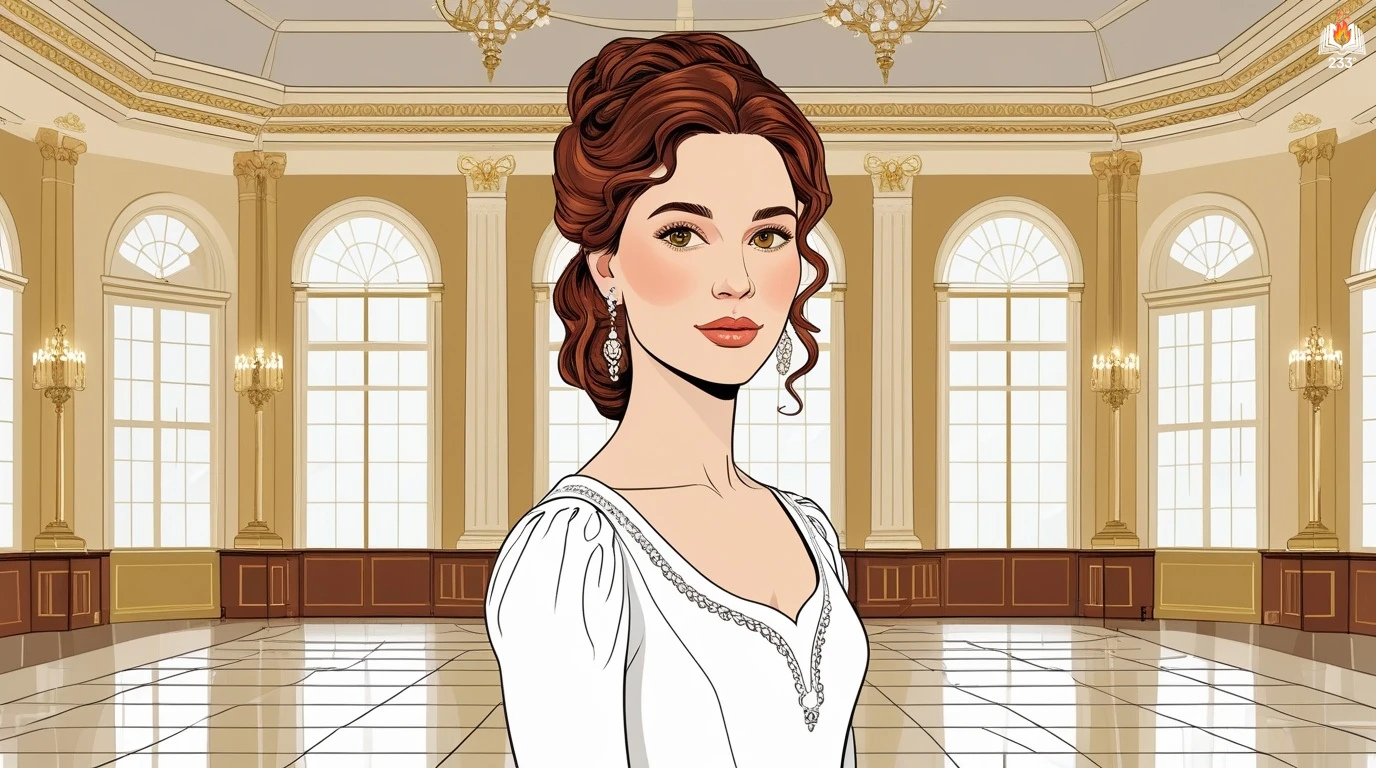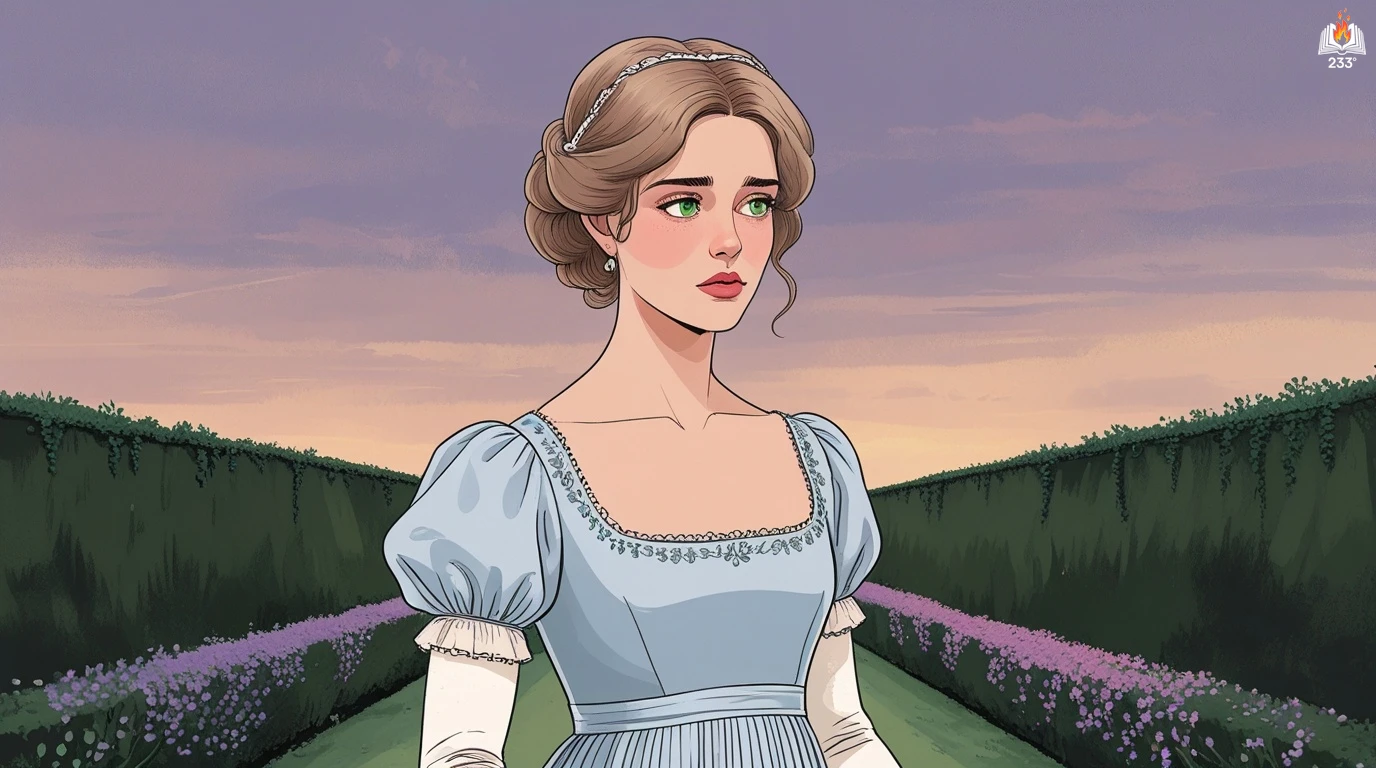

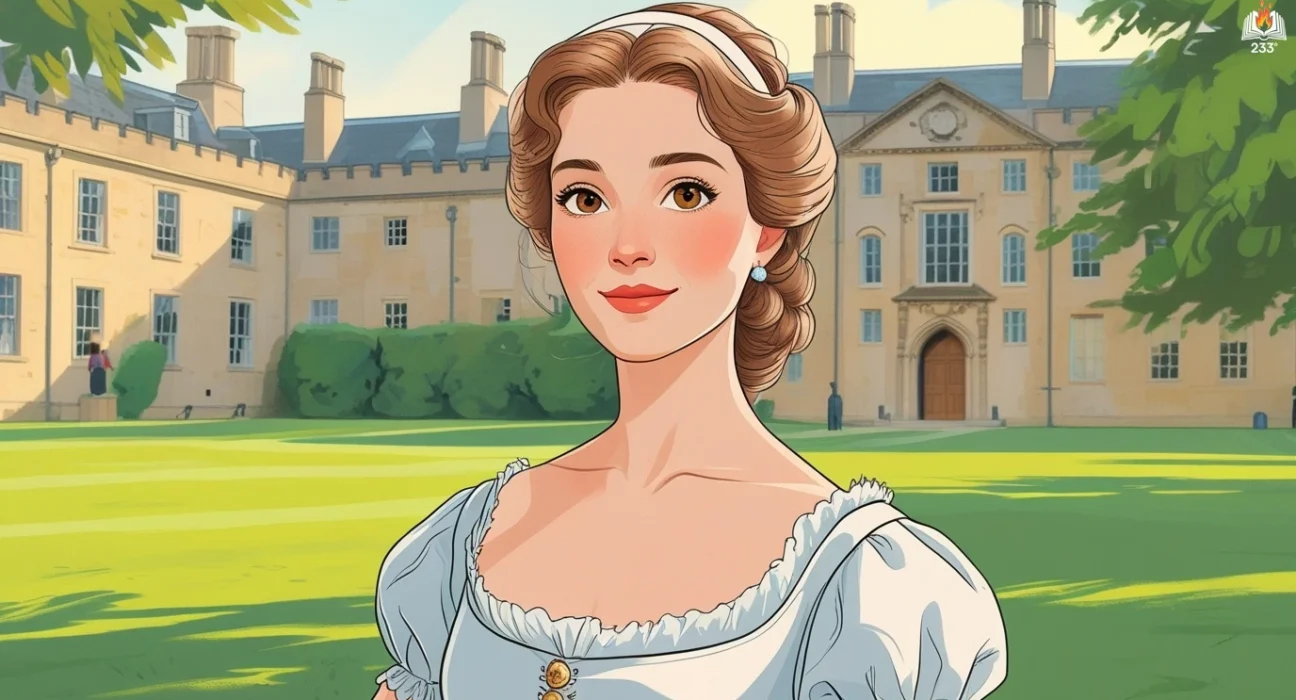
Just Like Heaven by Julia Quinn, published in 2011, is the first installment in the Smythe-Smith Quartet, a beloved Regency romance series spun off from Quinn’s popular Bridgerton novels. The book centers on Lady Honoria Smythe-Smith, a member of a notoriously untalented family musicale quartet, and her slow-burning, deeply affectionate romance with Marcus Holroyd, the Earl of Chatteris. Their relationship, rooted in childhood friendship and complicated by family loyalty, evolves into a tender, humorous, and emotionally resonant love story.
Plot Summary
When Honoria Smythe-Smith stood beneath the awning of a musty tobacco shop, drenched by the unforgiving English rain and mourning her ruined slippers, the last person she expected to see was Marcus Holroyd, the Earl of Chatteris. He emerged from his fine carriage like a harbinger of salvation – infuriatingly dry and disapproving, as always. Their exchange, dappled with old teasing and sharp familiarity, felt like slipping into a well-worn pair of gloves. He had known her since she was six and followed her brother Daniel like a shadow. He had once called her Bug. He still did, sometimes, with an exasperated fondness she never dared admit she loved.
Years earlier, Marcus had been the solemn boy with too much silence and too few friends, his aristocratic childhood colder than most English winters. Then he had met Daniel Smythe-Smith at Eton, and his world shifted. The boisterous chaos of the Smythe-Smiths took him in, wrapping him in warmth and laughter. Daniel became the brother he never had. Honoria, the youngest and loudest Smythe-Smith, was the pest who clung to their heels, demanding inclusion in every outing and conversation. Marcus had tolerated her then, out of politeness, perhaps. But over time, her chatter had become endearing, her stubbornness familiar, her presence expected.
Then Daniel was gone – vanished abroad after a foolish duel that left a marquess’s son wounded and vengeful. In the frenzied hours before departure, Daniel had grabbed Marcus by the shoulder and made him swear one thing – protect Honoria. Make sure she didn’t marry an idiot. Marcus had nodded, not knowing that the promise would tether him to her future more tightly than either of them could imagine.
Years passed. Honoria grew into a determined young woman, eager to marry not for status or title but for noise and family and companionship. Her home had grown too quiet, her mother too withdrawn, and she longed for a house filled with laughter and children and unrestrained chaos. In Cambridge, with her cousins and friends, she schemed and hoped to meet suitable young gentlemen. She insisted she was not desperate, but even she could hear the edge in her voice when she said she needed to find a husband this year.
Marcus, residing not far from Cambridge, kept watch from a distance. He never admitted he was watching, of course. He had grown into the role of the aloof and dutiful earl far too well. But whenever a suitor drew too close, Marcus was there – with a carefully placed word, a subtle glare, or a reminder of his influence. He had made a promise. That was all.
When the Royles planned a countryside house party and insisted on inviting Marcus, Honoria panicked. She knew what Marcus thought of such events – he would be bored, insufferable, and disapproving of every attempt she made to charm the eligible gentlemen in attendance. So she wrote him a letter. A warning disguised as an invitation, gently begging him to stay away. He obliged, as she knew he would. But then fate, impatient with their dance, intervened.
During the house party, a sudden turn of weather and an ill-planned expedition led Marcus to Honoria again – only this time, he was gravely ill. What began as a minor injury, a wound to his leg sustained in the muddy woods, turned perilous as fever set in. Honoria, recognizing the signs of infection, sprang into action. With the help of a frazzled country doctor and a loyal butler, she cared for Marcus through long, feverish nights, soothing him when he raved, refusing to leave his side even as fear clenched her heart.
She saw then what she had never allowed herself to fully consider – Marcus, proud and stiff and maddeningly reserved, was also vulnerable. And kind. And impossibly dear to her. She saw the boy who had once stood awkwardly beside Daniel, the man who had kept every promise he had ever made, the soul who had silently woven himself into every chapter of her life.
As Marcus recovered, clarity came not in a sweeping declaration but in quiet understanding. For Marcus, the fever broke not only his body’s grip but his emotional restraint. He had not simply watched over Honoria out of loyalty to Daniel. He had done so because somewhere along the way, without even realizing, he had come to love her.
Yet Marcus, ever noble and stubborn, resisted. He believed himself unsuitable. He had made too many enemies on Daniel’s behalf. He had secrets and regrets and shadows. But Honoria would not be dissuaded. She knew the man behind the titles and the scowls. She had seen his gentleness when she had been six and full of tears over a missed tea party, and again when he had offered her cake in a rain-soaked carriage. Love, she argued, was not about perfection. It was about showing up – with cake, with fever dreams, with quiet promises made in the dark.
So when Marcus finally proposed, it was not grand. It was not scripted. It was honest, and perhaps a little awkward, and it made Honoria laugh in delight. The Smythe-Smiths, naturally, were overjoyed. The musicale was still dreadful, but now it rang with joyful dissonance, the kind that comes when a family is celebrating something truly good.
As for Daniel, he returned – warily, cautiously, with the weight of his exile still pressing on his shoulders. But he saw Honoria’s happiness and Marcus’s steady hand at her side, and he knew the promise had been kept. He clapped Marcus on the back and muttered something about finally being off the hook.
Marcus and Honoria’s life together was not quiet, nor perfectly ordered. It was filled with interrupted breakfasts, unexpected musical rehearsals, cousins who dropped by without notice, and a house that echoed with more laughter than they knew what to do with. Just as she had hoped.
And on more than one occasion, over chocolate cake or an absurdly overdramatic family dispute, Honoria would look at Marcus and say it again – he was the absolute best. The best of the best. And he would simply shake his head, pretend to be annoyed, and reach for her hand under the table.
Main Characters
Lady Honoria Smythe-Smith – The youngest of the Smythe-Smith family, Honoria is vivacious, determined, and fiercely loyal. She’s known for her cheerful demeanor, though beneath it lies a quiet desperation to escape her lonely household and find a loving marriage. Her awkward participation in the annual Smythe-Smith musicale and her genuine longing for family underscore her vulnerability. Her emotional journey is shaped by personal growth, an awakening to her own desires, and her reawakened connection with Marcus.
Marcus Holroyd, Earl of Chatteris – Reserved, dutiful, and somewhat aloof, Marcus grew up in isolation until his close friendship with Honoria’s brother, Daniel, brought him into the warm chaos of the Smythe-Smith family. Though he appears cold to outsiders, Marcus harbors a deep sense of loyalty and quiet affection for Honoria. His inner transformation from a solitary guardian to a man who realizes his own capacity for love is one of the novel’s most poignant arcs.
Daniel Smythe-Smith – Though absent for much of the book, Daniel’s presence looms large. Banished abroad due to a duel gone wrong, he entrusts Marcus with the care of Honoria, catalyzing the romance that unfolds. His protective nature and lasting friendship with Marcus shape the emotional framework of the story.
Sarah Pleinsworth, Iris Smythe-Smith, and Cecily Royle – These supporting characters, especially the female cousins and friends of Honoria, bring energy and comic relief. They also reflect the expectations placed on women of their time to marry well, highlighting the social pressures faced by young ladies in the marriage market.
Theme
Friendship as the Foundation of Love – Central to the story is the idea that the deepest romances often grow from years of familiarity and trust. Honoria and Marcus’s bond evolves naturally from childhood memories, misunderstandings, and quiet moments, emphasizing love that is built, not sudden.
Duty and Loyalty – Marcus’s promise to Daniel to watch over Honoria reflects a recurring theme of obligation and its complications. While he intends only to protect her, his feelings grow deeper, challenging the line between duty and desire.
Belonging and Family – Honoria’s yearning for a noisy, joyful family home stems from her grief over Daniel’s absence and her mother’s emotional withdrawal. The warmth and chaos of the Smythe-Smith clan contrast sharply with Marcus’s lonely upbringing, reinforcing the healing power of familial bonds.
Female Agency and Social Constraints – The novel touches on the limited roles available to women during the Regency period, particularly through the annual musicale, which becomes both a symbol of tradition and a hurdle to overcome. Honoria’s active pursuit of love—and her resistance to the matchmaking plans around her—illustrates a subtle rebellion against societal expectations.
Writing Style and Tone
Julia Quinn’s writing in Just Like Heaven is witty, elegant, and emotionally astute, combining classic Regency romance tropes with modern humor and character depth. Her prose dances with light banter and sharp dialogue, especially in scenes involving Honoria and her cousins. The first-person perspectives shift smoothly into moments of third-person intimacy, allowing readers to explore the emotional landscapes of both protagonists without breaking the narrative flow.
The tone alternates between lighthearted comedy and sincere introspection. Scenes involving the dreaded musicale, the cousins’ dramatic matchmaking schemes, or Marcus’s discomfort among society are rich with humor, while quieter moments—like Marcus’s illness or Honoria’s loneliness—are treated with tenderness and gravity. Quinn’s signature blend of romantic tension and familial warmth gives the story a satisfying emotional rhythm, ensuring that the laughs never diminish the depth of feeling at the story’s heart.
Quotes
Just Like Heaven – Julia Quinn (2011) Quotes
“No. Haven’t you been listening?” Marcus would always remember that moment. It was to be the first time he would ever be faced with that most vexing of female quirks: the question that had nothing but wrong answers.”
“I shall have one, too," he told her. "So that you don't feel alone." She tried not to smile. "That is most generous of you." "I am quite certain it is my gentlemanly duty." "To eat cake?" "It is one of the more appealing of my gentlemanly duties," he allowed.”
“Watch over Honoria, will you? See that she doesn’t marry an idiot.”
“Every unmarried man is looking for a wife. They just don't always know it.”
“You are always looking at people like this.” And then she made a face, one he couldn’t possibly begin to describe. “If I ever look like that,” he said dryly, “precisely like that, to be more precise, I give you leave to shoot me.”
“He loved her. He wanted her. He needed her. And he needed her now.”
“In his heart, she’d been smiling for him. But now she was smiling at Colin Bridgerton, he of the famous charm and sparkling green eyes.”
“It’s a curse, really,” Lady Danbury said. “I’m the only person I know my age who has perfect hearing.” “Most would call that a blessing.” She snorted. “Not with that musicale looming over the horizon.”
“Love works in mysterious ways,”
“Rehearsels, actually." "Rehearsals?" "For the-" Oh,no. "-musicale." The Smythe-Smith musical.It finished off what the Crusades had begun.There wasn't a man alive who could maintain a romantic thought when faced with the memory-or the threat-of a Smythe-Smith musicale.”
“People saw what they expected to see. It was one of the basic truisms of life.”
“The girl doesn’t need a violin,” he added. “She needs to have her hands bound so she can never touch an instrument again.”
“He leaned down and whispered, “I love you,” in Honoria’s ear. Just because he wanted to. She didn’t look up, but she smiled. And he smiled, too”
“Nothing like trapping the gentlemen where they couldn't get away.”
We hope this summary has sparked your interest and would appreciate you following Celsius 233 on social media:
There’s a treasure trove of other fascinating book summaries waiting for you. Check out our collection of stories that inspire, thrill, and provoke thought, just like this one by checking out the Book Shelf or the Library
Remember, while our summaries capture the essence, they can never replace the full experience of reading the book. If this summary intrigued you, consider diving into the complete story – buy the book and immerse yourself in the author’s original work.
If you want to request a book summary, click here.
When Saurabh is not working/watching football/reading books/traveling, you can reach him via Twitter/X, LinkedIn, or Threads
Restart reading!