

Blood Canticle by Anne Rice, published in 2003, is the tenth novel in the Vampire Chronicles series, a saga that began with the iconic Interview with the Vampire. Narrated once again by the flamboyant, irreverent, and introspective Vampire Lestat, this novel marks a thematic and tonal shift. In Blood Canticle, Rice weaves the gothic sensibilities of her vampire lore with elements of spiritual yearning, Catholic mysticism, and a renewed connection to the Lives of the Mayfair Witches, bridging her two famous series in a bold crossover. The novel begins with Lestat’s earnest (and comically egotistical) desire to become a saint and rapidly unfolds into a tale of supernatural alliances, mortal frailty, and moral reckoning.
Plot Summary
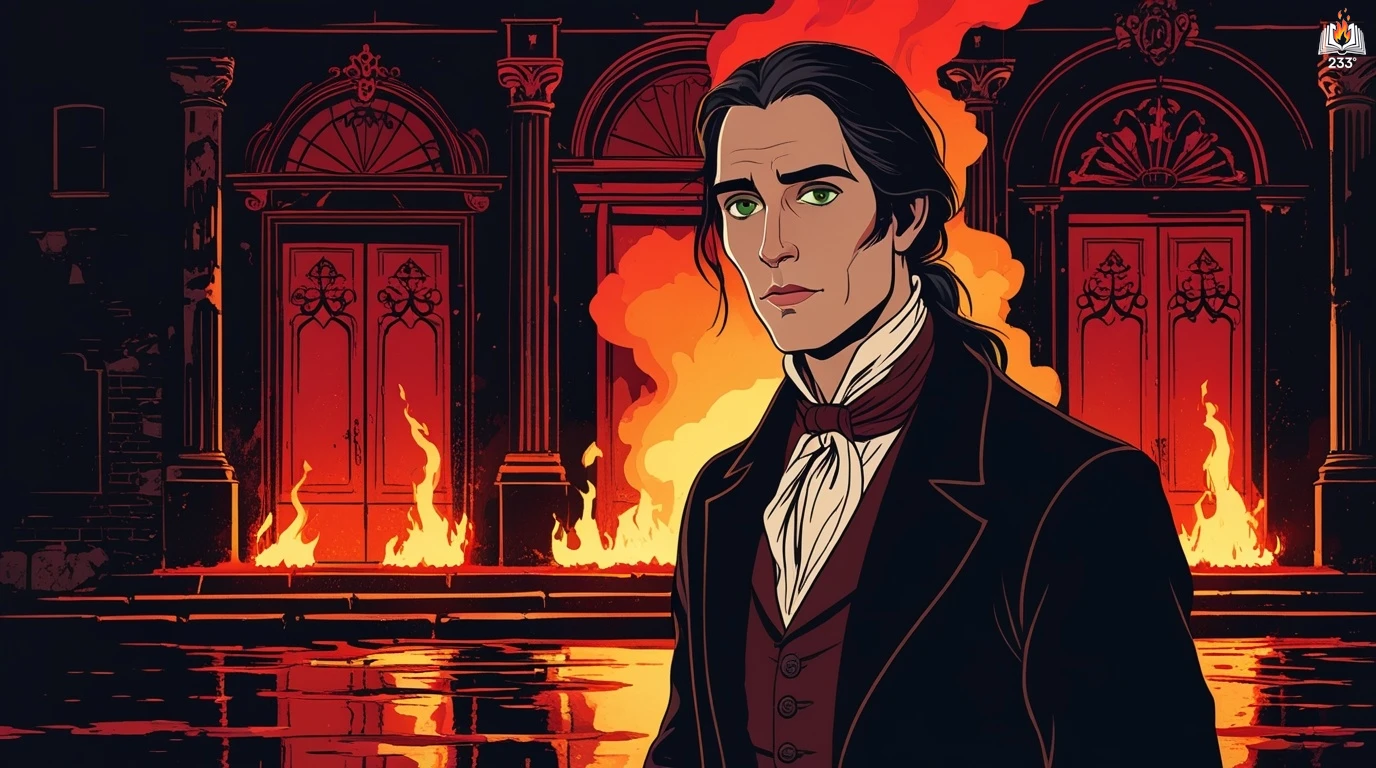
The summer heat lay heavy on Blackwood Farm, where the cypress swamp whispered its ancient songs and old graves blistered in soot from a fire that had only just consumed the undead. Merrick Mayfair was gone – burnt in ritual, vanished into smoke and silence – leaving behind a void that the vampire Lestat could neither ignore nor accept. Haunted by the memory of her sacrifice, he prowled the shadows, his thoughts flickering between saintly fantasy and immortal obligation.
In the Big House, the mood was fragile. Quinn Blackwood, newly turned vampire, clung to the last human tethers of his past. His home was still full of mortals – Jasmine, the stunning housekeeper; Jerome, the curious boy who bore his blood; Tommy, the grieving young heir; and Big Ramona, the matron whose heart beat loud with suspicion and love. All of them unaware that the master of the house drank blood, walked without breath, and brooded over ancient guilt.
Then came Mona Mayfair.
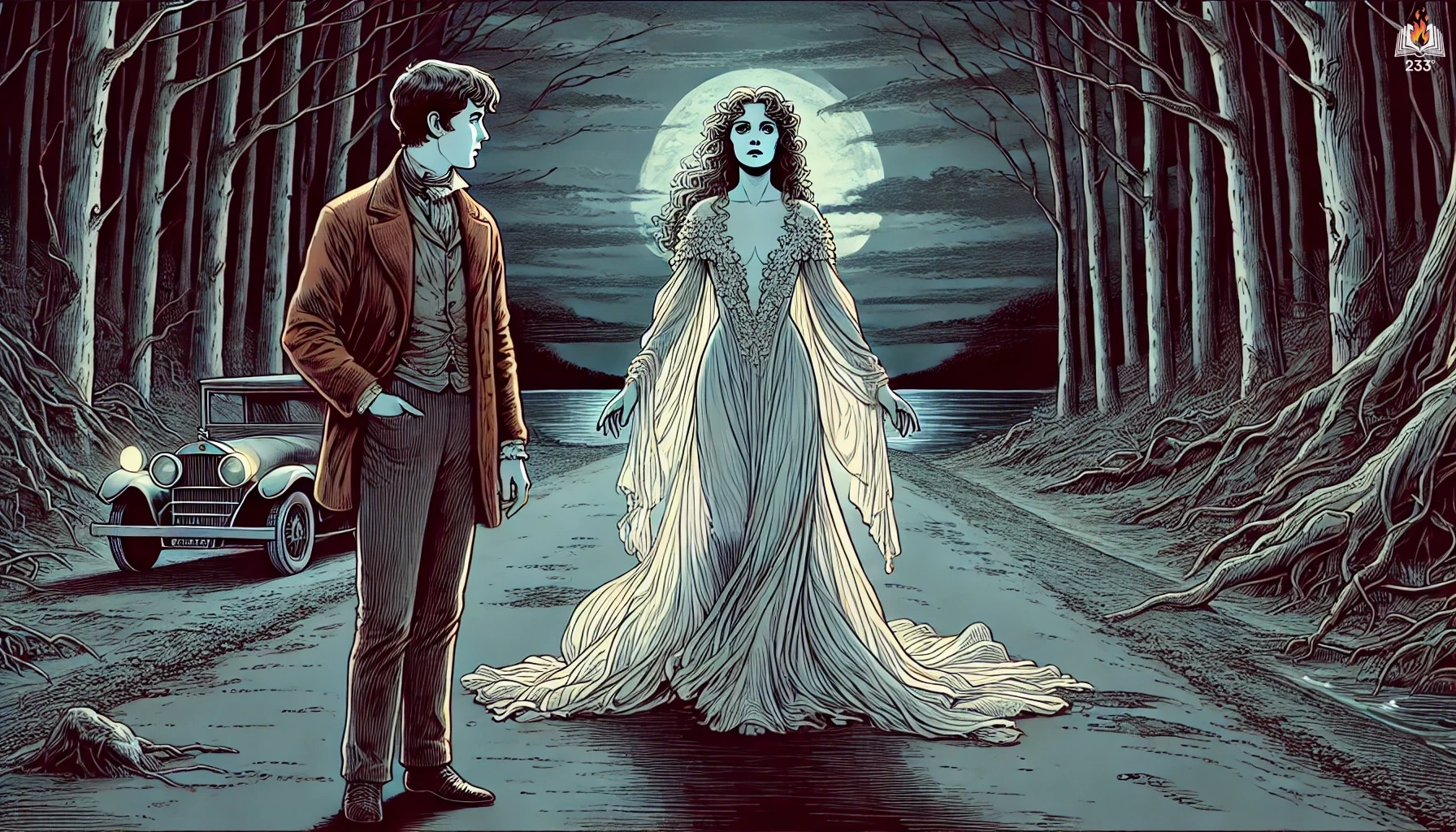
She arrived as if from a fever dream – barefoot, frail, draped in a hospital gown, stealing the family limousine, burdened with flowers, and drenched in suffering. She was dying – not with a whisper but a cry, dragging the last of her life to Blackwood Farm for one reason: to see Quinn. Her body was broken, seventy pounds of skin and pain, but her green eyes still burned with the will that had once made her a formidable witch.
Quinn had not forgotten her. He had loved her before the Blood took him. He had mourned her isolation, honored her dying by never letting her see what he had become. But now she lay in his bed, surrounded by roses, speaking in Shakespearean fragments, laughing at death, and begging to stay. Quinn, still young in the Dark Gift, dared to offer her the one escape from her agony – the transformation into vampire.
Lestat watched, torn by the pull of compassion and the weight of damnation. He knew the price. Mona, though willing, was too frail. The Dark Trick, performed without care, could kill her instantly. So he stepped in – not as the saint he dreamt of becoming, but as the predator he had always been. He bled for her, fed her, drew her into the fold. And she drank, fiercely, greedily, clinging to him with bruised hands, her cracked lips pressed to his wrist as her body came alive again.
The transformation was immediate. Bones thickened, skin healed, red hair gleamed in restored health. Her soul closed itself from Lestat – the blindness between maker and fledgling now complete. Mona stood, breathless and reborn, her hospital gown stretched over a figure no longer dying. Quinn stared at her, his love rekindled, awed and terrified by what had just occurred.
But something else stirred. A presence – tall, spectral, furious. Oncle Julien, ghost of the Mayfairs, had come to claim her. The ancestral spirit who guarded the Mayfair bloodline lashed out, seeking to stop what had already been done. Lestat met him head-on, banished him with fury and defiance. The ghost vanished, defeated. Mona belonged to them now.
Downstairs, mortals stirred uneasily. Rowan Mayfair and Father Kevin had arrived, flanked by medics, bearing holy oils and sorrow. They came expecting to collect a corpse, not to find Mona standing tall, vibrant, reborn in white lace. Big Ramona clutched silks and slips from Aunt Queen’s closet, bewildered but obedient. Mona wanted a white dress. She wanted lace. She wanted to leave behind the decay and step forward as something more.
In the bedroom, Lestat prepared her for the last agony – the mortal death, the severing of all that was left of her human tether. A single shower, a burst of fire in the blood, and then it would be done. She would be fully of the Blood. Quinn wrapped his arms around her and spoke softly of the pain and the thirst that would come. She was not afraid. Not yet.
As Mona passed through the final transformation, her spirit surged. She was not like the others – not merely a victim of sickness rescued by vampires. She had power, memory, and lineage that stretched through centuries of witches. The secrets of her family ran deep in her blood, and with her new senses, she began to see them with clarity. A child she had borne – Morrigan – lost to her through violence and secrecy, still haunted her heart. The Taltos child, born too quickly, too strangely, taken from her arms before she could understand its nature. Her pregnancy had marked the beginning of her decline, and now, with her body whole, her purpose sharpened into resolve. She would find the child. She would have justice. She would remember everything.
Lestat, watching from the edge, saw in her a perfection he rarely found. Not a vampire driven by thirst alone, but one carved by suffering and gifted with intellect, wit, and burning will. Her transformation was not just survival. It was ascension.
Rowan and Kevin could not take her now. Mona had no need for gurneys or sacraments. She had entered a different kingdom.
Blackwood Farm remained quiet, its mortals still unaware, though their hearts thudded with fear and suspicion. Jasmine whispered prayers. Jerome played on the stairs. Big Ramona folded the hospital gown and wept in silence.
Lestat, Quinn, and Mona – three bound by blood, grief, and newfound purpose – stood together. The air around them shimmered with decisions not yet spoken aloud. The ghost was gone, but other shadows waited. The secrets of the Mayfair legacy stirred beneath the surface. The dark vision of the Taltos child loomed over them. And though the flowers had withered, the scent of immortality hung in the room like a spell that could never be undone.
Main Characters
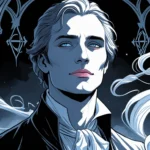
Lestat de Lioncourt: The ever-charismatic and tormented narrator, Lestat is both the antihero and reluctant moralist of the story. Infamous for his vanity and sardonic humor, he enters Blood Canticle seeking redemption, fantasizing about sainthood, and grappling with his dual nature as both killer and savior. Despite his usual flamboyance, this installment reveals a deeper yearning for transcendence and belonging.
Quinn Blackwood: A young and sensitive vampire recently introduced in Blackwood Farm, Quinn is Lestat’s fledgling companion. Loyal, romantic, and spiritually tormented, Quinn struggles with his place in the vampiric world, especially as he becomes entangled with Mona Mayfair and the legacy of her mystical bloodline.
Mona Mayfair: A powerful witch from the Mayfair family, Mona is as brilliant and rebellious as she is tragic. Ravaged by a mysterious illness and on the brink of death, she seeks out Quinn and willingly embraces the Dark Gift. Her transformation and the secrets she carries make her one of the most pivotal figures in the novel.
Merrick Mayfair: Though deceased, Merrick’s spiritual presence lingers throughout. A witch-turned-vampire who sacrifices herself to exorcise a malevolent spirit, her loss haunts Lestat deeply, representing both a moral warning and an emotional scar.
Rowan Mayfair: Mona’s brilliant and enigmatic cousin, Rowan is both a neurosurgeon and a powerful witch. Her presence looms large in the narrative, symbolizing the cerebral and spiritual lineage of the Mayfair clan, and the fusion of science with mysticism.
Oncle Julien Mayfair: A ghostly patriarch of the Mayfair family, Julien intervenes from beyond the grave, particularly in opposition to Mona’s transformation. His appearances evoke the weight of ancestral legacy and the ever-present power of Mayfair spirits.
Theme
Redemption and the Desire for Sainthood: Lestat’s longing to be a saint becomes the central irony of the novel. His inner monologue is saturated with grandiose religious imagery, juxtaposed against his undeniable acts of vampiric violence. The tension between his aspirations for spiritual purity and the reality of his nature creates a poignant, often humorous struggle.
Mortality and Immortality: Mona’s terminal illness and subsequent transformation into a vampire force the reader to confront the costs of eternal life. This theme is underscored by Lestat’s reflections on death, loss, and the fragility of the human body versus the dark gift of vampirism.
The Intertwining of Witchcraft and Vampirism: Through the Mayfair family, Rice intricately binds two supernatural traditions – witches and vampires. The union of Quinn and Mona represents more than romance; it is a confluence of legacies and supernatural forces, leading to questions about fate, bloodline, and magical power.
Love and Moral Ambiguity: Romantic love, parental love, and spiritual love all intersect in complex ways. Lestat’s affection for Quinn and Mona is genuine but tainted by the moral ambiguity of his actions. This theme questions whether good intentions can outweigh dark consequences.
Spiritual Enlightenment vs. Physical Reality: Lestat’s visionary encounter with the Pope and his musings on Christianity and modernity reflect a recurring motif – the clash between the metaphysical and the tangible. Anne Rice explores whether true enlightenment is compatible with physical desire, violence, and eternal life.
Writing Style and Tone
Anne Rice’s prose in Blood Canticle is lush, confessional, and richly layered with both satire and philosophical introspection. Lestat’s voice dominates the narrative with his characteristic theatrical flair – blending florid descriptions with sardonic asides and abrupt tonal shifts. This internal monologue is one part divine comedy, one part gothic melodrama, and one part soulful reflection.
The tone oscillates between irreverent and reverent, often within a single paragraph. Lestat, both narrator and performer, engages directly with the reader, breaking the fourth wall to rant, plead, seduce, or amuse. His digressions are not merely narrative indulgences – they mirror the chaotic, conflicted nature of his identity. Anne Rice’s command of voice ensures that even when the plot veers into metaphysical or theological speculation, the intensity and intimacy of Lestat’s narration keep the reader entranced. The novel’s pacing, while more reflective than action-driven, is propelled by emotional stakes and the unpredictable charisma of its central figure.
Quotes
Blood Canticle – Anne Rice (2003) Quotes
“You make me miserable. You really do, I want you to know that. Much as I love you, much as I need you, much as I can't exist without you, you make me miserable.”
“As we move on year by year in this life, we learn that telling doesn't necessarily purge; telling something is merely a reliving, and it's a torment.”
“I'd drink your blood if I could and hook you into every memory inside me, every heartbreak, frame of reference, temporary triumph, petty defeat, mystic moment of surrender.”
“I WANT to be a saint. I want to save souls by the millions. I want to do good far and wide. I want to fight evil! I want my life-sized statue in every church. I'm talking six feet tall, blond hair, blue eyes-. Wait a second. Do you know who I am?”
“It struck me, sharp and hard, that I had been given so many chances to save my soul that my entire life had been constructed around these chances! That was my nature - going from temptation to temptation, not to sin, but to be redeemed.”
“He was a seer of visions and a dreamer of dreams, unconsciously charming and unfailingly kind.”
“You're my insatiable blood thief and soul smasher.”
“Kindly go to Hell! (Lestat to Oncle Julien's ghost)”
“Who knows about another's love? The more you love the more you know the burnt out loss of love, the more you heed the silence of unknowing in the face of another's spiritual bondage.”
“The big problem is not How to explain the existence of evil in this world. It's How to explain the existence of good.”
“Love. Who knows about another’s love? The more you love the more you know the burnt out loss of love, the more you heed the silence of unknowing in the face of another’s spiritual bondage.”
“Does anybody look better in rags than me?”
“We must have the courage to embrace the beauty of science in the name of the Lord.”
“Sometimes I think the theologians have got it backwards. The big problem is not How to explain the existence of evil in this world. It’s How to explain the existence of good.”
“But before we cut to Present Time, let me have my little fantasy. I need it (Chapter 1).”
We hope this summary has sparked your interest and would appreciate you following Celsius 233 on social media:
There’s a treasure trove of other fascinating book summaries waiting for you. Check out our collection of stories that inspire, thrill, and provoke thought, just like this one by checking out the Book Shelf or the Library
Remember, while our summaries capture the essence, they can never replace the full experience of reading the book. If this summary intrigued you, consider diving into the complete story – buy the book and immerse yourself in the author’s original work.
If you want to request a book summary, click here.
When Saurabh is not working/watching football/reading books/traveling, you can reach him via Twitter/X, LinkedIn, or Threads
Restart reading!