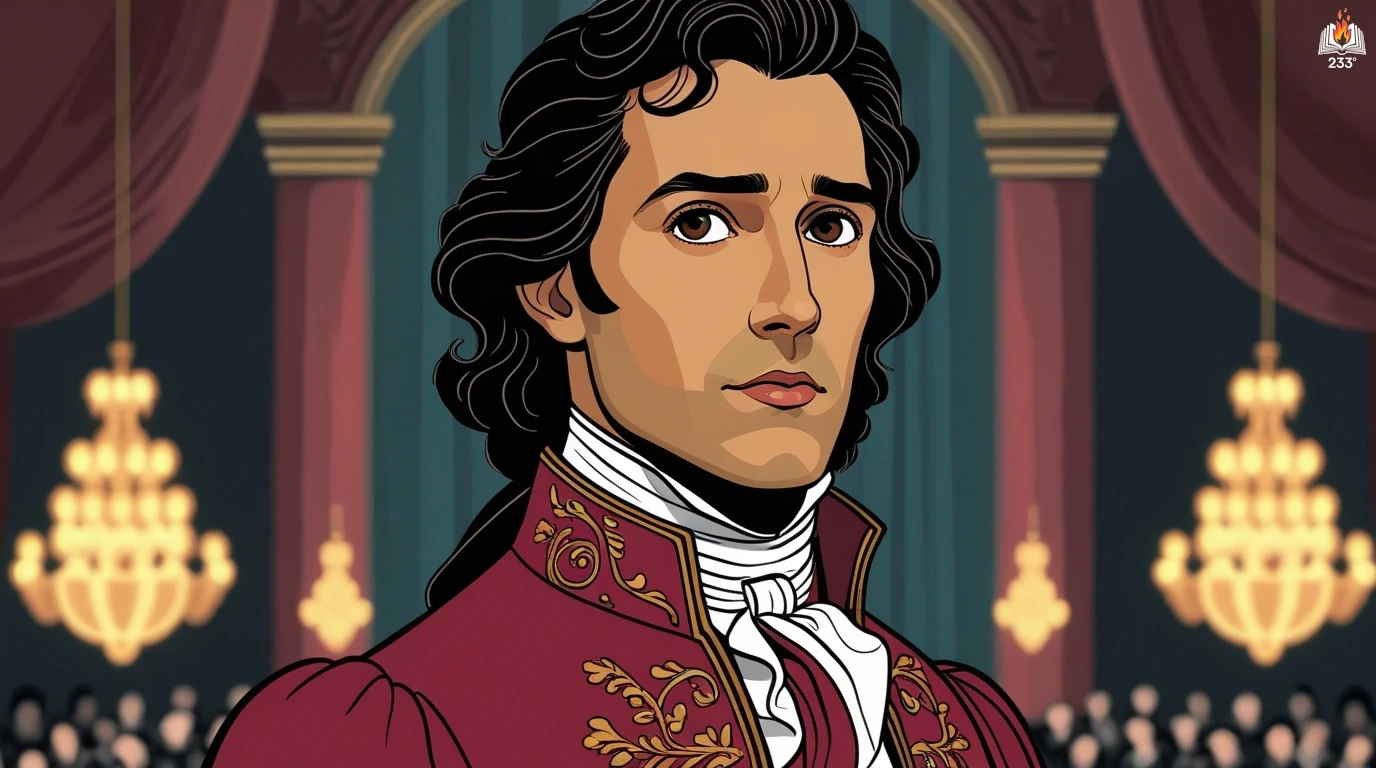

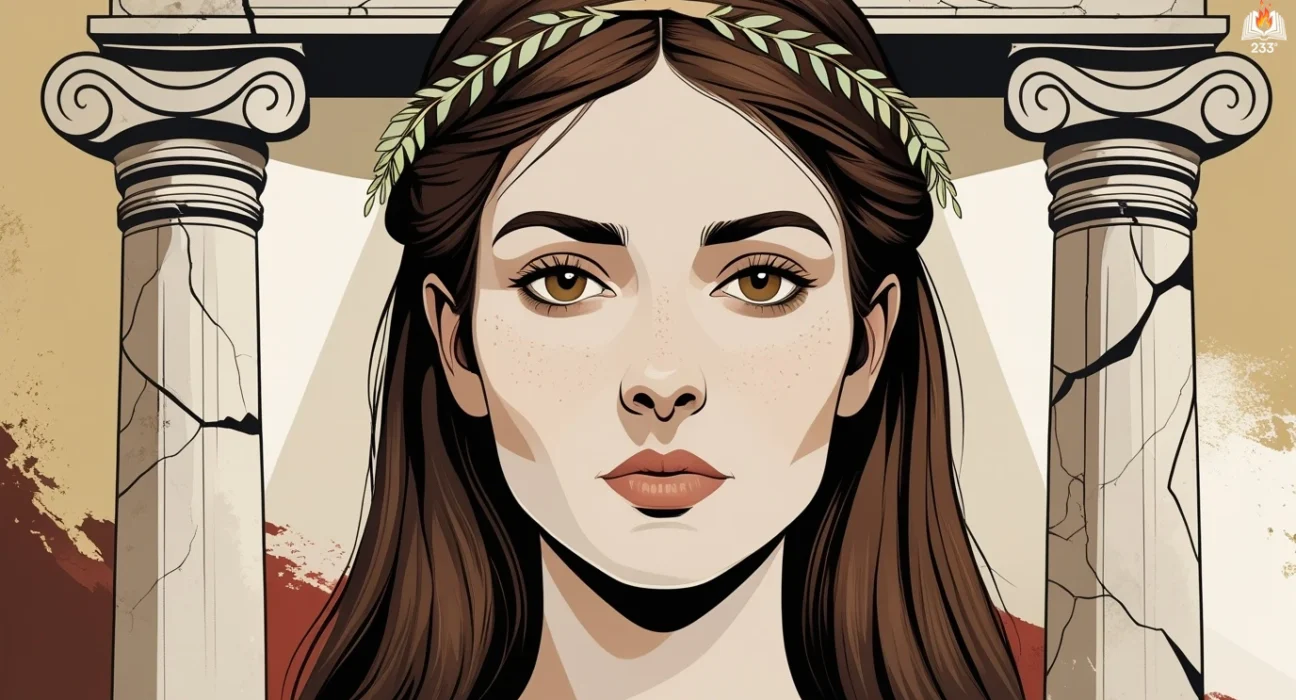
Pandora by Anne Rice, published in 1998, is the first installment in the New Tales of the Vampires series, a companion cycle to her renowned The Vampire Chronicles. Told in the form of a confessional memoir, Pandora centers around the titular vampire as she chronicles her transformation from a privileged Roman noblewoman to a creature of the night. Set against the opulent backdrop of ancient Rome and woven with threads of mythology, history, and existential yearning, the novel stands as one of Rice’s most introspective and character-driven works.
Plot Summary
In the candlelit quiet of a Paris café, Pandora begins to write, lured from her ancient silence by the gentle insistence of David Talbot, a newly born vampire with the soul of a scholar. It is not his request alone that moves her, but the stirrings of memory and the aching echo of centuries. As rain falls on the boulevards outside, she opens the dark, leather-bound notebook he has given her, and with it, the gates to a life once mortal, once brilliant, once lost.
Pandora’s tale begins in Imperial Rome, during the reign of Augustus Caesar. Born to a noble senatorial family, she is raised among opulence, learning, and discipline. Her father, a wise and loyal supporter of Augustus, cherishes her beyond measure. She grows up surrounded by scholars, poets, and orators, her mind sharpened by Virgil and Ovid, her spirit emboldened by debate and the philosophy of Stoics. Though women are often dismissed in Rome, Pandora’s brilliance cannot be cloistered. She speaks with the confidence of a man, walks freely among the gardened peristyles of her home, and draws admiration from her father’s peers.
Among them is Marius – tall, golden-haired, radiant with intellect and charm. He is unlike the other men of Rome. There is something already otherworldly about him, a watchful gentleness, a hidden depth. They meet when she is still a girl, and though their paths do not cross again for years, the image of him lingers in her memory like a light behind a veil.
But Rome is not immune to blood. Politics boil beneath the marble calm, and Pandora’s family becomes entangled in deadly intrigue. Her father, suspected of disloyalty, is murdered with poisoned figs – a treachery cloaked in ritual. Her brothers vanish, slaughtered by agents of the state. In the space of days, Pandora’s world collapses. Stripped of safety and home, she flees to Antioch, clutching the remnants of her name, seeking sanctuary among strangers.
In Antioch, she crafts a new identity, becoming a courtesan not for survival alone, but to guard the secret of her lineage. Amid whispered poetry and veiled laughter, she again encounters Marius. But he is not as she remembered. He is no longer merely a Roman – he is a vampire, ageless, bearing the burden of centuries. He watches over Akasha and Enkil, the twin progenitors of their kind, locked in statuesque silence, bound in ritual and blood.
Drawn together by fate and memory, Pandora and Marius fall into a love as fevered as it is impossible. Their union burns with passion and philosophical yearning. She learns the truth of the Dark Gift, the terrible beauty of immortality, the hunger that pulses behind the elegance of their kind. Marius resists giving her this gift. He believes it a curse, and fears her soul would be broken beneath the weight of eternity.
But the night does not wait for consent.
Rebellion brews among the vampires of Antioch. A group of blood drinkers, worshippers of the ancient Mother, believes Akasha should reign and rule, rather than sit silent beneath Marius’s care. They despise his restraint, his human sympathy, his refusal to make fledglings. One night, they strike. Marius is attacked and burned, Akasha and Enkil are taken, and Pandora is left with her lover’s shattered body, drenched in ash and horror.
She gives him her blood to save him, defying the order of his kind, becoming his savior and equal. But the act does not bind them – it unravels them. Marius, scarred and secretive, recedes into obsession. He disappears, leaving no trace. Pandora, heartbroken and furious, takes to the roads of the empire.
Centuries pass.
She wanders through cities and ages, from Byzantium to Constantinople, witnessing kingdoms rise and fall, emperors crowned and murdered, lovers born and lost. Time erodes everything but memory, and her hunger becomes not only for blood, but for meaning. The weight of immortality bears down on her, a constant pressure in her veins. She feeds not for survival alone, but for fleeting glimpses of warmth, for moments of connection that mimic life.
Occasionally, she hears of Marius – rumors like candlelight flickering across a distant wall. He appears, disappears, walks in and out of legend. She never forgets him, even as she curses his abandonment. Her love turns to something colder – not hate, but something mournful and unnameable.
In the modern era, she retreats further into solitude. The world is too loud, too fast, and she feels like a statue among glass towers and satellites. She sits in cafés, watching mortals move with careless joy, envying the brevity of their lives.
Then David Talbot finds her.
He is not like the others. He was old when he became a vampire – old in soul, in thought, in weariness. He carries his transformation with grace and seeks not power, but knowledge. His presence disturbs her – not violently, but like a breeze across a forgotten harp string. He watches her feed, but not with judgment. He asks for her story, not to expose her, but to understand.
And so, at last, she begins to write.
She does not write to relive, but to retrieve. Her pen carves memory into paper, anchoring a past that threatens always to vanish. As she writes, she feels the echo of Marius’s voice, the scent of Roman gardens, the heat of torches and the clang of sandals in marble halls. She sees again the blood – of her family, her enemies, her lovers – and feels again the pulse of that first kill, the moment she crossed from mortal to myth.
With every line, she takes herself back, and in doing so, moves forward.
The café remains, dim and murmuring. Outside, the rain has stopped. The air is filled with the scent of coffee and wet stone. The notebooks are no longer empty. Her tale has poured into them like blood into a waiting chalice.
And somewhere, beneath centuries of silence, something begins to heal.
Main Characters
- Pandora – The narrator and protagonist, Pandora is an ancient vampire whose story begins in Rome during the reign of Augustus. Once a headstrong, intellectually curious noblewoman, she is deeply shaped by trauma, betrayal, and a yearning for understanding in a violent, patriarchal world. Her transformation into a vampire is as much psychological as it is physical – a reclamation of power, though not without its curses. Pandora’s voice is eloquent, melancholic, and reflective, marked by longing and defiance.
- Marius – A noble Roman turned immortal, Marius is Pandora’s great love and the vampire who gives her the Dark Gift. Stoic, philosophical, and burdened by his responsibilities as guardian of ancient vampires Akasha and Enkil, he embodies the conflict between duty and emotion. His love for Pandora is complex, often restrained by fear, ideology, and his view of power.
- David Talbot – A modern fledgling vampire and former scholar of the Talamasca, David serves as the catalyst for Pandora’s story. His respectful curiosity and genuine compassion contrast sharply with the brutality of Pandora’s past, and his persistent request for her tale opens a channel for emotional release and historical recovery.
- Akasha and Maharet (mentioned) – Ancient vampires of central mythological importance. Akasha once sought to dominate the vampire world; Maharet, by contrast, represents memory, lineage, and a matriarchal form of stewardship. Their presence looms large in the background, shaping the philosophical stakes of Pandora’s narrative.
Theme
- Memory and Identity – The novel is structured as a recollection, making memory both the medium and the message. Pandora sifts through layers of ancient trauma, love, and transformation to rediscover and define herself. Her identity is a composite of mortal intellect, supernatural power, and emotional scars.
- Power and Patriarchy – From the rigid Roman familial structure to the manipulative politics of the vampire realm, power structures, especially those dominated by men, define Pandora’s life. Her eventual vampiric rebirth becomes a symbolic subversion – yet she remains haunted by the limits imposed on her humanity.
- Immortality and Isolation – As with much of Rice’s vampire literature, Pandora grapples with the existential weight of immortality. Eternal life is not portrayed as liberation but as an intensifier of sorrow, loneliness, and philosophical questioning.
- Historical and Mythological Continuity – The novel blurs the line between history and myth. Pandora reflects on ancient Roman politics, literature, and theology, while also engaging with Christian mysticism and vampire lore. Rice explores how stories, cultures, and beliefs endure through time – and how the undead carry those narratives within them.
- Blood as Connection and Curse – Blood is not merely sustenance but memory, lineage, love, and power. Drinking blood becomes an act of intimacy and consumption, sometimes beautiful, often horrifying. It symbolizes both desire and damnation.
Writing Style and Tone
Anne Rice’s prose in Pandora is lush, lyrical, and erudite, deeply immersed in classical references and rich psychological introspection. The narrative tone is confessional and meditative, framed by Pandora’s voice as she records her life story in an elegant Paris café. Rice carefully crafts a first-person perspective that feels both ancient and modern, merging historical realism with gothic grandeur.
Rice’s language is elevated yet emotionally raw. Long, flowing sentences are often punctuated by sharp bursts of pain or insight. Her diction draws heavily from classical allusion and philosophical discourse, evoking the intellectual life of Imperial Rome while also exploring deeply human questions about suffering, faith, and desire. The juxtaposition of historical detail with personal grief creates an immersive, haunted tone that defines much of the novel.
Quotes
Pandora – Anne Rice (1998) Quotes
“One moment the world is as it is. The next, it is something entirely different. Something it has never been before.”
“Oh to have you with me, to have you here, not to be alone, but to be with you, my beauty, you of all souls! You.”
“The finest thing under the sun and moon is the human soul. I marvel at the small miracles of kindness that pass between humans, I marvel at the growth of conscience, at the persistence of reason in the face of all superstition or despair. I marvel at human endurance.”
“I congratulate myself on not having arrived into the world until the present time. This age suits my taste.”
“What is written beneath this heavy handsome book cover will count, so sayeth this cover...”
“It was over now, and the meaningless world was tolerable and need not be explained. And never would it be, and how foolish I had ever been to think so.”
“Don’t cling to reason so desperately in a world of so many horrid contradictions”
“Roman influence seeds itself, sprouting mighty oaks right through the modern forest of computers, digital disks, microviruses and space satellites.”
“But know this. All is speculation under the sky. All myth, all religion, all philosophy, all history - is lies.”
“The disparity between outward appearances and inner disposition had disturbed me all my life.”
“The typical conservative Roman was far too practical for that. If you didn’t know by age five that the gods were made-up creatures and the myths invented stories, then you were a fool.”
“I can walk through a myth and out of it!”
“The true crafty evil person is rare. It’s bumbling that causes most of the misery of the world, utter stupid bumbling.”
“At times I felt a huge exhilaration, a freedom from all falsehoods and conventions, all means by which a soul or body can be held hostage!”
“You can sow the seeds of distrust everywhere, and lose yourself in an overgrown field.”
“Apparently each century yields a new kind of vampire, or let us say that our course of growth was not set in the beginning any more than the course of human beings.”
“You know what it takes to teach philosophy here? You have to lie. You have to fling meaningless words as fast as you can at young people, and brood when you can't answer, and make up nonsense and ascribe it to the old Stoics.”
“Why did I have to cut you so deeply to find your soul? Why can't we simply reveal ourselves to one another?”
“Do you see cruelty in my eyes? Can't you believe that it is perhaps the tempered soul that survives grief? One need not fight on a battlefield to have courage.”
“The were only fleeting recollections of that [...] night of rising into the stars, of seeing the scope of life in its cycles, of accepting perfectly just for a little while that the moon would always be changing, and the sun would set as it always rose.”
“Love." You shrugged your shoulders. You looked up and then back at me for emphasis. "And it rained and it rained for millions of years, and the volcanoes boiled and the oceans cooled, and then there was love?" You shrugged to make fun of the absurdity.”
“It seems that there are minds who would weave it all together, every myth, or its essence, to make a glorious tapestry.”
We hope this summary has sparked your interest and would appreciate you following Celsius 233 on social media:
There’s a treasure trove of other fascinating book summaries waiting for you. Check out our collection of stories that inspire, thrill, and provoke thought, just like this one by checking out the Book Shelf or the Library
Remember, while our summaries capture the essence, they can never replace the full experience of reading the book. If this summary intrigued you, consider diving into the complete story – buy the book and immerse yourself in the author’s original work.
If you want to request a book summary, click here.
When Saurabh is not working/watching football/reading books/traveling, you can reach him via Twitter/X, LinkedIn, or Threads
Restart reading!