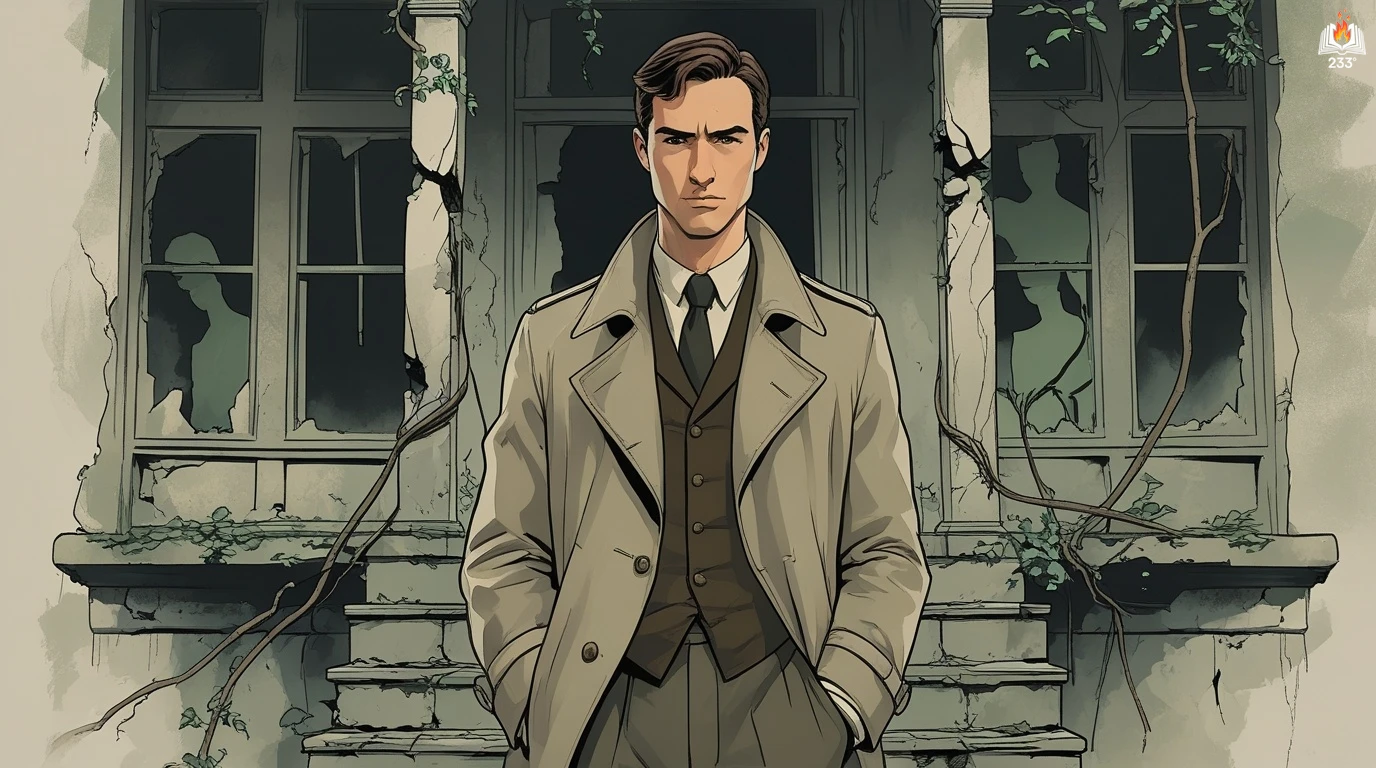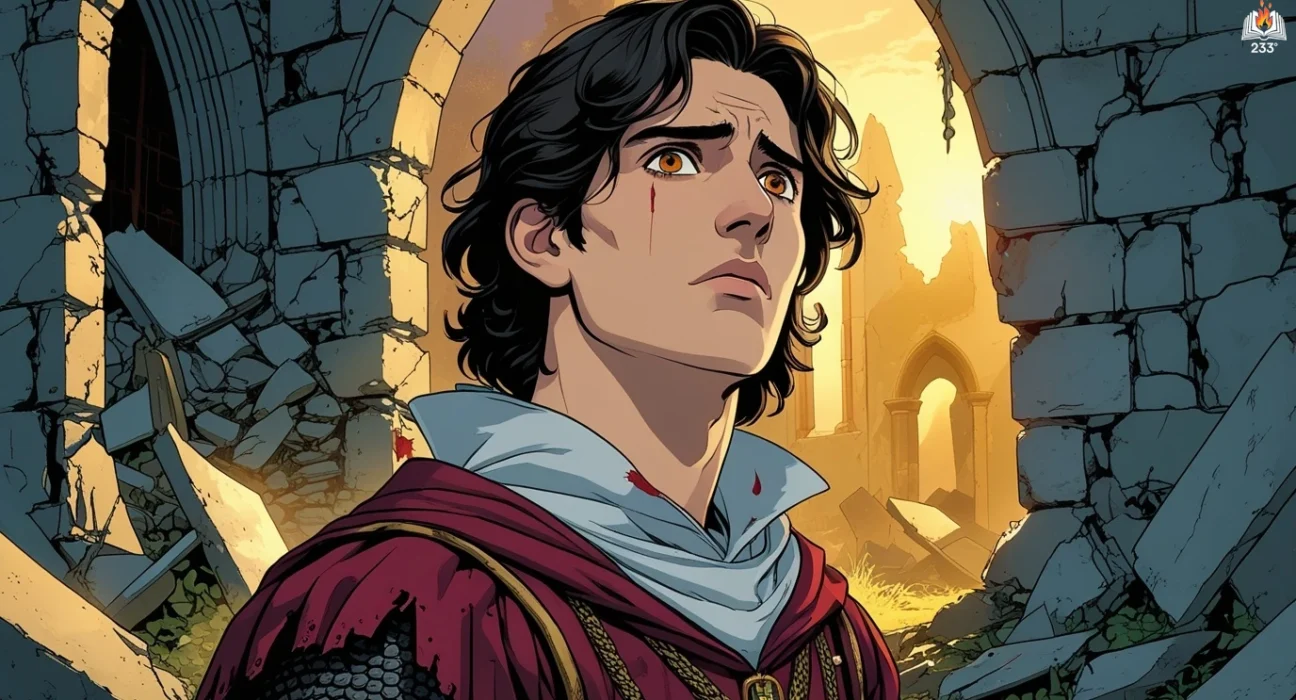
Vittorio, the Vampire by Anne Rice, published in 1999, is the second installment in the New Tales of the Vampires series, a companion cycle to her renowned The Vampire Chronicles. Set in 15th-century Italy during the splendor of the Renaissance, the novel recounts the tragic and transformative journey of Vittorio di Raniari, a young Tuscan nobleman whose idyllic life is shattered by a brutal vampire attack. As Vittorio navigates a world of angels, demons, and immortal predators, his story unfolds as a haunting memoir – a blend of philosophical reflection, historical detail, and gothic sensuality that captures the dualities of beauty and horror, love and damnation.
Plot Summary
In the sun-drenched hills of Tuscany, amidst the towering forests and the glimmer of the Renaissance, lived Vittorio di Raniari – a noble youth of charm, intellect, and radiant beauty. His family’s castle crowned a remote mountain, sovereign over villages nestled along steep slopes. Raised in the warmth of a feudal household yet enriched by the grandeur of Florence’s humanist teachings, Vittorio knew the pleasures of falconry, poetry, theology, and the luminous art of men like Fra Filippo Lippi. He adored his younger siblings, Bartola and Matteo, and revered his proud, world-wise father. For all his immersion in the sensual and sacred, he was unprepared for the darkness that would soon fall over his house.
One Carnival night, Vittorio dreamt of holding his brother’s and sister’s severed heads. He awoke in horror, but the vision slipped away like the remnants of a bitter wind. Spring came, flowers bloomed, but a silent dread settled upon the mountain. Villages below the castle emptied without warning. The fields lay fallow. Smoke ceased rising from distant hearths. Whispers began – of old witches gone missing, of creatures glimpsed at night, of the sacred air itself being violated. Vittorio’s father, always a practical and lordly man, refused to surrender to hysteria. When a mysterious visitor of great height and regal bearing came to the gates, shrouded in wine-red velvet and unwilling to step into the hall’s holy light, the lord sent him away with the name of Christ upon his lips.
That night, the household prayed in the chapel as torches lit the walls and soldiers watched the gates. Yet no watch could prevent what came. A village child disappeared. Then another. Finally, the horror struck home. In the black silence before dawn, monstrous figures slipped through the castle’s defenses. They moved like shadows through the corridors, leaving no trace but blood. One by one, Vittorio’s entire family was slaughtered. He awoke to find their mangled bodies, the echoes of their laughter now silenced beneath the chapel’s roof. Bartola, dear Bartola, was among the fallen. He held her, drenched in sorrow, as if he might bring her back by sheer will.
Only Vittorio survived.
He wandered in the days that followed like a man broken. He buried his kin with his own hands. Madness teased the edge of his thoughts. But then came Ursula.
She was radiant, ageless, and cruel. A member of the vampiric Court of the Ruby Grail – an ancient, opulent gathering of night-dwellers who ruled through seduction and slaughter. She came to him not in threat but in charm, luring him with her beauty, offering him pleasure, knowledge, and the power to see what lay hidden to mortal eyes. Her bite did not kill him, not yet. It awakened in him the gift – or curse – to see angels. Spirits of divine grace now flanked his vision, whispering, guiding, mourning. Unlike other vampires, Vittorio retained his soul, and with it, an agony no blood could soothe.
He followed Ursula, half-compelled, half-curious, to the Court of the Ruby Grail. There he beheld its terrible majesty: a cavernous cathedral beneath a mountain, where the ancient undead ruled like Roman gods. They drank from golden chalices, adorned in jewels and cloth-of-gold, presided over rituals of ecstatic cruelty. At their heart was the vampire Lord, an entity of immense age and cold elegance, whose hunger had long since devoured any hint of compassion. They welcomed Vittorio as a guest, a plaything, and perhaps an heir.
Ursula spoke to him of love. She whispered of eternity, of passion unbounded by time, of beauty preserved forever in flesh that could not decay. But Vittorio saw the Court for what it was – a theater of sin, fed on innocence. He watched them feast on children, slay without mercy, and speak of humanity as cattle. And yet, torn by desire, he could not leave. Ursula’s enchantment ran deep, and the pull of immortality, with all its allure, gnawed at him.
In the shadows of the Court, the angels who followed him began to cry.
Tormented, Vittorio devised a plan. He would destroy them all. Through stealth and cunning, he uncovered the weakness of the vampires – that sunlight and sacred relics could turn them to ash. With weapons of blessed iron and the light of dawn as his ally, he returned to the cryptic cathedral and committed a massacre. The Court of the Ruby Grail, centuries old, was annihilated in one morning’s purge. The angels sang in grief and awe, not celebration. Blood ran like wine over marble, and the echoes of ancient voices were silenced.
But Ursula survived.
In her, he found no malice now, only resignation. She begged not for mercy but for love. She had made him what he was. She had shown him both agony and ecstasy. And despite all, Vittorio loved her. Or perhaps he loved what he had once been in her presence – desired, chosen, transformed.
He drank from her. Took her blood. Took her darkness. The angels turned their faces away.
So began his true life – not as the boy of Tuscany, not as the lover of art and scripture, but as a vampire with a soul. He wandered the centuries in a body that did not age, speaking all tongues with an Italian accent, haunted not by the hunger but by memory. He recalled Bartola’s laughter, his father’s wit, the light of Florence, and the silent scream of angels. He avoided his kind. He walked alone. Not damned, not saved. Only enduring.
And though the world changed – empires fell, cities crumbled, and saints were forgotten – Vittorio remained, neither redeemed nor forsaken, bearing the curse of remembrance.
Main Characters
Vittorio di Raniari: The narrator and central character, Vittorio is a young Tuscan nobleman whose idyllic life is shattered by a brutal vampire attack. Intellectual, poetic, and devoutly Catholic, he is deeply torn between his human conscience and his vampiric nature after his transformation. His moral and philosophical conflicts drive the novel, especially his complex views on good and evil, sin, and salvation.
Ursula: A seductive and enigmatic vampire who leads the coven that slaughters Vittorio’s family. Ursula eventually becomes his lover and the agent of his transformation. She is manipulative and mysterious, representing the allure of darkness and the sensual promise of immortality. Her relationship with Vittorio is both passionate and tragic.
Vittorio’s Father: A noble and pragmatic feudal lord loyal to Florence and Cosimo de’ Medici. He is a figure of wisdom and strength, guiding Vittorio with care until his death at the hands of vampires. His refusal to offer children as tribute to the vampire coven sets off the events of the novel.
Bartola and Matteo: Vittorio’s beloved siblings, whose innocence and affection deeply impact his psyche. Their violent deaths in the vampire attack are a pivotal moment that haunts Vittorio throughout the story.
The Vampiric Court of the Ruby Grail: A collective of ancient and powerful vampires who embody decadence, cruelty, and supernatural terror. They function almost like a dark pantheon, existing outside human morality and preying upon it.
Theme
Loss of Innocence and the Burden of Memory: Vittorio’s journey from an innocent, scholarly youth to a haunted vampire is underscored by the tragic memories of his family and former life. The narrative explores how grief and guilt linger, even when time and mortality are stripped away.
Faith, Morality, and the Soul: The book interrogates Catholic theology through Vittorio’s inner conflicts. He retains his soul and can see angels after becoming a vampire, which places him in a unique moral space between damnation and grace. This tension gives rise to deep philosophical reflections on redemption and divine justice.
Beauty and Art as Redemption and Corruption: Florence and the Renaissance provide a canvas for Rice to explore the dual power of beauty: as both a spiritual elevation and a tool of seduction. Vittorio’s love for art and his admiration for painters like Fra Filippo Lippi serve as emotional anchors even as they blur lines between the sacred and profane.
Free Will versus Destiny: Vittorio is constantly caught between making choices and being swept up in a destiny carved by supernatural forces. His resistance, submission, and ultimate embrace of vampirism frame a meditation on whether fate is fixed or self-forged.
The Nature of Evil: Through vampiric characters and theological musings, the novel questions what evil truly is. Is it a metaphysical force, or a consequence of desire and disobedience? The vampires themselves range from gleefully malevolent to tragically conflicted.
Writing Style and Tone
Anne Rice’s writing in Vittorio, the Vampire is lush, romantic, and deeply introspective. Her prose is baroque, dense with historical allusions and philosophical undertones. She creates a vivid sensory world – from the opulence of Renaissance Florence to the decaying grandeur of haunted castles. This atmospheric richness is a hallmark of Rice’s style, and here it serves both to romanticize and destabilize the narrative. Her descriptions are often emotionally charged, filled with longing, regret, and awe.
The tone of the novel oscillates between sorrowful elegy and passionate confession. Vittorio speaks with the lyrical voice of a Renaissance poet and the despairing clarity of a man marked by eternal loss. His voice is refined, articulate, and highly intellectual, reflecting his immersion in classical education and Catholic doctrine. Rice uses first-person narration to its fullest, delving into the psyche of a character grappling with dualities: human and vampire, sinner and saint, lover and killer.
Quotes
Vittorio, the Vampire – Anne Rice (1999) Quotes
“We all suffer under a curse, the curse that we know more than we can endure, and there is nothing, absolutely nothing we can do about the force and the lure of this knowledge.”
“That’s the case with most vampires, no matter who says otherwise. Beauty carries us to our doom. Or, to put it more accurately, we are made immortal by those who cannot sever themselves from our charms.”
“I wouldn't write a book to tell you that a vampire was happy.”
“The sun shocked me, and made me sicken, yet how I wanted it, how I longed for it, and yet it rebuked me and seemed to scourge me as if it were a whip.”
“What am I? Do I live? Or am I walking always in death, forever in love with time?”
“Beauty carries us to our doom.”
“I delve in all, and blend without prejudice, and that some higher good pertains to what I do, I cannot doubt.”
“You squirm on the end of a hook, you’re a doomed catch from the sea, and you do not even know that you are no longer in the life-sustaining water.”
“How steady yet pulsing was this orgy of fierce light!”
“Revenge is a lure, a mighty molten lure, even if it is hopeless!”
“I saw in him a species of fear as real as that which I had seen in the young forest, but it was even more innocent for all his age, and all his wrinkles, and the wetness of his lips with the wine. He looked fatigued by that which he couldn’t comprehend.”
“I had never seen anything as beautiful as this painting, with its immense crowd of still attentive faces, its splendid collection of angels and saints, its lithe and graceful feline women and willowy celestial men. I went crazy for it.”
“Beauty carries us to our doom. Or, to put it more accurately, we are made by immortal by those who cannot sever themselves from our charms.”
“I know nothing of those heroes of macabre facts masquerading as fiction.”
“They have been buried, nameless, beneath five centuries of time.”
“It is a vision of every human being, bursting with fire and with mystery, a vision I cannot deny, nor blot out, nor ever turn away from, nor ever belittle nor ever escape.”
“I knew that things human would lose all love of this place, as they had lost their love of so many ruins in the country round.”
“It wasn’t so like the dream, but then again it was, because these things were above and full of the verdant smell of the wild, and the sylvan woods were gently heaving their limbs on the scented wind.”
“Do I live? Or am I walking always in death, forever in love with time?”
“It was a drunken labyrinth of a garden gone wild under the naked night.”
We hope this summary has sparked your interest and would appreciate you following Celsius 233 on social media:
There’s a treasure trove of other fascinating book summaries waiting for you. Check out our collection of stories that inspire, thrill, and provoke thought, just like this one by checking out the Book Shelf or the Library
Remember, while our summaries capture the essence, they can never replace the full experience of reading the book. If this summary intrigued you, consider diving into the complete story – buy the book and immerse yourself in the author’s original work.
If you want to request a book summary, click here.
When Saurabh is not working/watching football/reading books/traveling, you can reach him via Twitter/X, LinkedIn, or Threads
Restart reading!