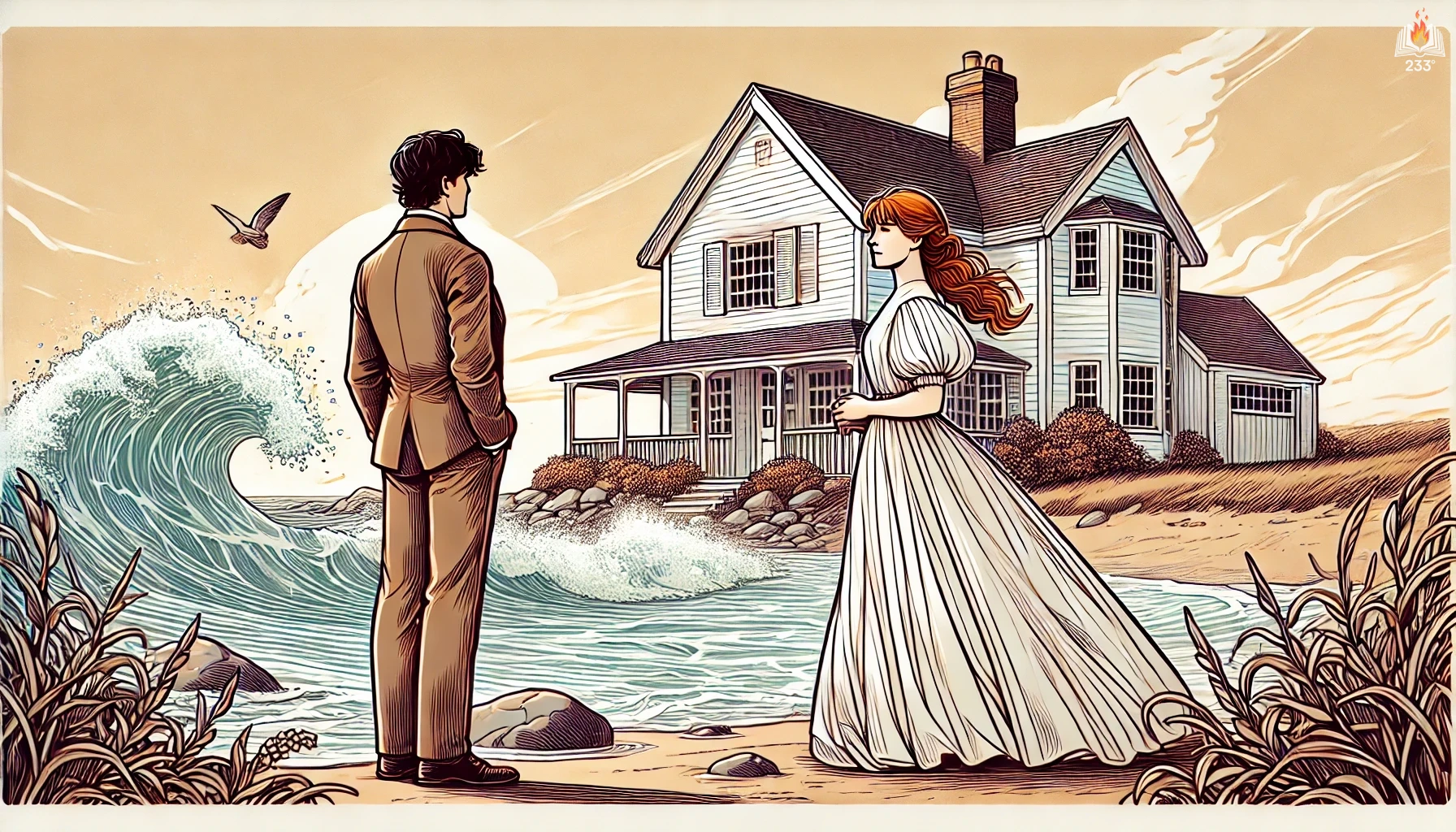
The Anti-Muffins by Madeleine L’Engle, first published in 1980, is part of her beloved Austin family series, which began with Meet the Austins. This thoughtful and tender novella is a quiet but powerful exploration of individuality, conformity, and the often turbulent process of growing up within a nurturing yet imperfect family. Through the lens of the sensitive and reflective Vicky Austin, L’Engle delivers a poignant story that blends domestic realism with philosophical inquiry, as the children of the Austin family grapple with issues of identity, fairness, and community belonging.
Plot Summary
When measles struck the Austin household, it came not with a bang but with a slow and orderly progression – first John, then Maggy, followed by Suzy and Rob, all falling one after the other like dominoes in varying states of misery. Vicky, for a time, remained the lone survivor, a caretaker rather than a patient, assigned by her mother to watch over Rob, who bore the brunt of the illness with dramatic flair and unrelenting complaints. There was a strange tenderness to the task, as Vicky rediscovered her love for her younger brother in the quiet hours of rocking chairs, whispered stories, and soft dog fur. But illness has a way of evening the score, and not long after the others recovered and returned to school, Vicky herself succumbed.
As fever took hold and the room narrowed into a dim haze of throbbing eyes and scratchy sheets, a moment crystallized. John, freshly returned to health, came to her side not with bravado or dismissal, but with ginger ale and a gaze softened by shared understanding. They spoke of stars, of the unfathomable scale of atoms and galaxies, and the strange comfort that came from considering how small, or how large, a single life might be. John, in his offbeat way, brought the cosmos into her bedroom and gave her something vast to lean against.
By Sunday, the house was quiet again, the family scattered to Sunday School and church. Vicky, alone in her bed with Rochester the dog and Prunewhip the cat curled at her side, was immersed in a book when the back door creaked open. Moments later, Maggy and John appeared in the doorway – disheveled, bruised, and breathless from something far more dramatic than the usual walk home from church. John’s glasses were shattered, his eye swollen, his lip split. Maggy’s dress was torn, her face flushed with fury and triumph.
There had been a fight in the churchyard. A tangle of fists and taunts born not from mischief, but from misunderstanding and cruelty. John had been asked to lead the Sunday School opening when the usual superintendent failed to arrive. He had accepted, reluctantly but earnestly, delivering a heartfelt invocation and a story with trembling sincerity. To protect himself from the weight of stares and snickers, he removed his glasses – rendering the congregation into a benign blur. But the gesture was misread. Whispers of vanity and mockery spread among the boys. A jeering comment escalated into confrontation. Alone, without his best friend Dave to back him, John faced the mob.
Maggy, seeing the injustice unfold, did not hesitate. She hurled herself into the fray with a fury that outmatched her size, scratching and biting with righteous indignation. Together, battered and bruised, they were eventually pulled apart by arriving teachers and parents. But the mark had been made. In that moment, Maggy had crossed a threshold. She was no longer just a guest in the Austin home – she had become one of them.
The dust settled, apologies were exchanged, and the house was once again full of voices and movement. But something lingered. A new layer of connection between John and Maggy, an unspoken acknowledgment of shared defiance. A week later, John proposed a picnic on Hawk Mountain. Not just for the pleasure of eating baked beans and listening to birdsong, but for a meeting. A ceremony of sorts.
They were the Anti-Muffins, a loosely knit band of kindred spirits bound by their refusal to conform. The term was born from a family joke – a misheard comment, a misunderstanding about kittens born in an oven being called muffins – and it had grown into something real. Muffins, in their eyes, were the symbol of bland sameness, of expectations pressed into predictable shapes. Anti-Muffins, by contrast, celebrated the unconventional, the misfits, the quiet resistors who stood up for what was right without waiting for applause.
That evening, as twilight painted the mountaintop in warm hues, the children gathered. There was John, whose strange wisdom and sudden bursts of brilliance often set him apart. Vicky, the quiet observer. Suzy, fiercely practical, already dreaming of a white coat and a stethoscope. Rob, still small but full of curiosity and thunderous insights. Pedro, who came from little but dreamed of stars larger than any town could hold. Izzy and Nannie, the musical Irving sisters with strong minds and warm hearts. And Dave, John’s steadfast friend, now recovered and whole again.
John nominated Maggy.
There was no formal vote, only a collective nod, a ripple of agreement across the group. They remembered the churchyard, the wild spark in Maggy’s eyes, the way she had rushed to John’s side not because she had to, but because she couldn’t not. She belonged.
As dusk deepened into night, they sang. Their voices rose over the trees – harmonizing in old hymns and laughing through half-remembered folk songs. Rob, curled beside Izzy, drifted into sleep. There was no ceremony, no oaths or secret handshakes, just a sense of knowing. In their small way, they were choosing to be different in a world that pressed for sameness.
Later, they played Touch Tag under the stars, shouting each other’s names into the wind. The air was full of fireflies and breathless laughter. Pedro pointed out constellations, naming stars like old friends, speaking with reverence of light that had traveled millennia to reach them. They listened. And in the quiet after the game, as their limbs lay sprawled in the grass and the sky unfolded above them, something unspoken bound them together.
Things would not always be this way. They were growing – voices deepening, eyes widening, hearts stretching into the unknown. But that night, under the hush of the universe, they were together. And Maggy, once on the outside, whispered her thanks in the darkness, her words drifting upward like a prayer.
Main Characters
John Austin – The eldest Austin sibling and a complex, introspective teen. Intelligent and perceptive, John is viewed by others as aloof or eccentric, yet he is deeply moral and empathetic. A budding scientist with a love of stars and space, John struggles with peer judgment but ultimately shows courage and leadership, particularly in founding the “anti-muffin” club, a symbolic gesture against societal conformity.
Vicky Austin – The narrator of the story, Vicky is emotionally intelligent and observant. Her perspective allows readers to access the nuances of family dynamics and internal growth. Through her bout with measles and her reflections on her siblings, Vicky reveals her own growth in empathy and maturity, as well as her longing to find her place in a world that seems to shift as she ages.
Maggy Hamilton – A recently orphaned girl who is adjusting to life with the Austins. Initially spoiled and self-centered due to her traumatic losses, Maggy undergoes a significant transformation. Her willingness to stand up for John in a moment of crisis marks her emotional integration into the Austin family and signals her evolving sense of belonging.
Rob Austin – The youngest of the siblings, Rob is a bright and curious five-year-old with a precocious vocabulary and open-heartedness. He provides levity and sincerity throughout the story and is credited with inspiring the name of the anti-muffin club.
Suzy Austin – A spirited and practical girl who dreams of becoming a doctor. Suzy’s matter-of-fact nature and medical ambitions provide a grounding presence in the family. She also showcases fierce loyalty and compassion, especially in caring for Vicky during her illness.
Victoria and Wallace Austin – The loving, attentive parents whose approach to parenting is gentle yet principled. Wallace, a country doctor, and Victoria, a thoughtful and culturally astute mother, provide a foundation of stability and moral clarity for their children.
Theme
Conformity vs. Individuality – The central motif, embodied by the idea of “muffins,” represents the pressure to conform to societal expectations. The creation of the “anti-muffin” club serves as a symbolic rebellion against sameness, encouraging self-expression and moral courage, particularly in the face of peer pressure.
Family and Belonging – The Austins exemplify a family that nurtures individuality within a communal setting. Their support for one another – even during disagreements or illness – underscores the importance of unconditional love and emotional safety in fostering personal growth and belonging.
Courage in the Everyday – From standing up to bullies to confronting one’s fears in public speaking, the story emphasizes the quiet but profound forms of bravery that children and adolescents often must practice. John’s journey highlights how integrity and authenticity require courage, especially when misunderstood.
Perspective and Growth – Vicky’s narration provides an insightful meditation on how our views of others shift with time and experience. She learns to see her family and peers with greater complexity, a subtle but powerful journey of maturation.
Writing Style and Tone
Madeleine L’Engle’s writing in The Anti-Muffins is marked by its gentle lyricism and intimate narration. Her prose flows with a quiet rhythm, mirroring the contemplative nature of the Austin family and their rural home. The language is accessible yet emotionally nuanced, capturing the inner lives of children without condescension. L’Engle’s dialogue is authentic, often laced with humor or philosophical depth, and she weaves educational and moral themes seamlessly into the characters’ interactions.
The tone of the novella is warm, introspective, and quietly radical. L’Engle strikes a balance between domestic tranquility and existential questioning, using small events – like a Sunday School fight or a kitchen conversation – to delve into much larger questions about identity, justice, and social pressure. Her signature blend of realism and idealism gives the story a timeless quality, one that resonates deeply with both young and adult readers.
We hope this summary has sparked your interest and would appreciate you following Celsius 233 on social media:
There’s a treasure trove of other fascinating book summaries waiting for you. Check out our collection of stories that inspire, thrill, and provoke thought, just like this one by checking out the Book Shelf or the Library
Remember, while our summaries capture the essence, they can never replace the full experience of reading the book. If this summary intrigued you, consider diving into the complete story – buy the book and immerse yourself in the author’s original work.
If you want to request a book summary, click here.
When Saurabh is not working/watching football/reading books/traveling, you can reach him via Twitter/X, LinkedIn, or Threads
Restart reading!