
The Truth, published in 2000, is a satirical fantasy novel by British author Terry Pratchett. It is part of the beloved Discworld series, a long-running sequence of interconnected novels set in a flat world balanced on the backs of four elephants standing on a giant turtle. This installment introduces readers to the birth of the newspaper industry in Ankh-Morpork, a bustling, grimy city filled with trolls, dwarfs, and eccentric characters. As with other Discworld novels, The Truth uses humor, fantasy, and sharp wit to explore contemporary issues—this time, focusing on journalism, truth, and the nature of information.
Plot Summary
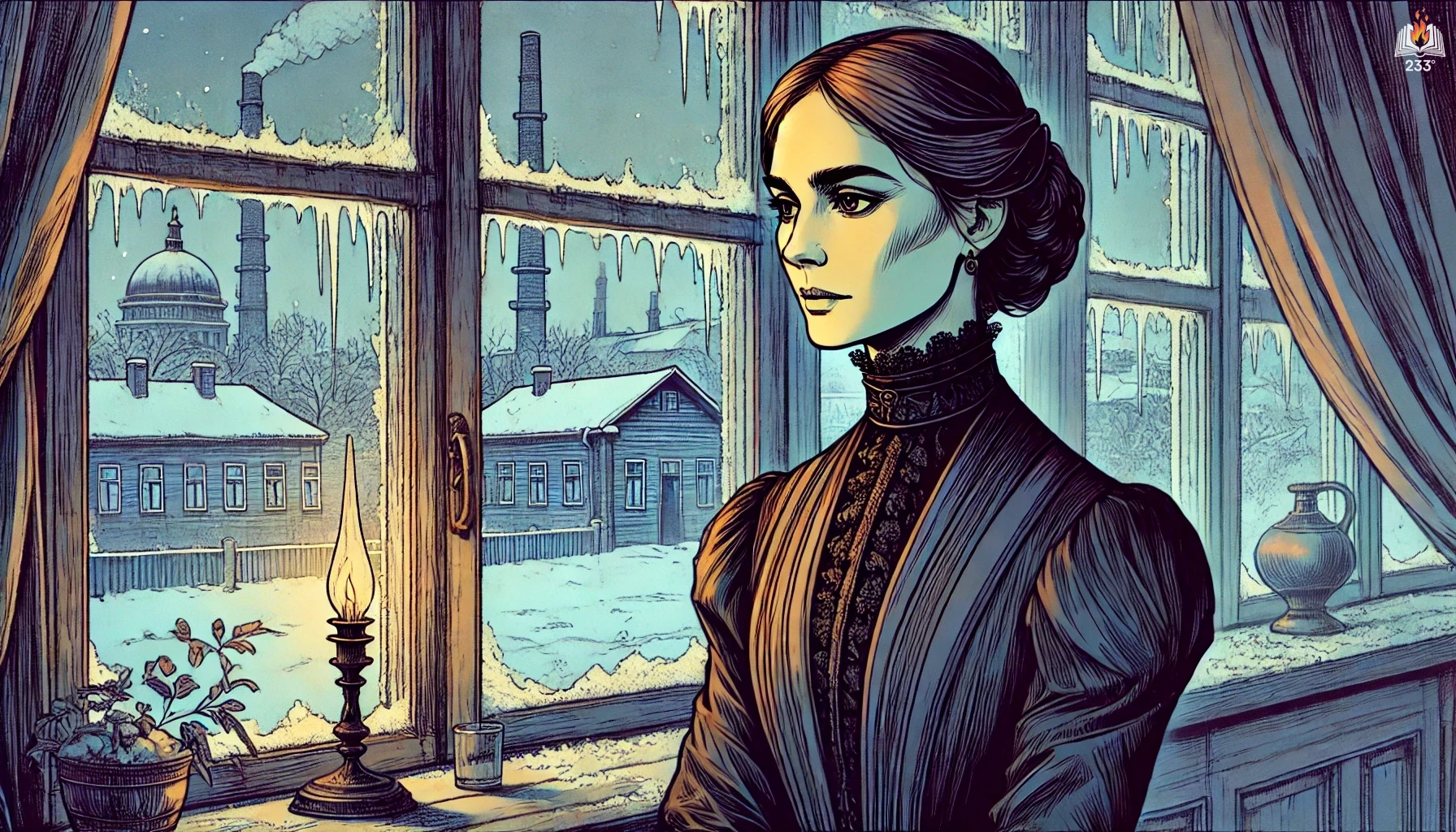
In the bustling, grimy heart of Ankh-Morpork, where the air is thick with smoke and schemes, a young man named William de Worde finds himself at the cusp of an accidental revolution. With a nose for information and a profession writing monthly letters for distant aristocrats, William’s life is precise, ordered, and comfortably mundane. That is, until a chance collision with a dwarf printer named Gunilla Goodmountain sets movable type rolling, and with it, the birth of something the city never knew it needed – a newspaper.
The Ankh-Morpork Times begins as a modest broadsheet printed in the cellar, chronicling dog shows and petty crimes. But Ankh-Morpork is a city that thrives on gossip and chaos, and soon the paper becomes a daily necessity for citizens craving drama, scandal, and the delicious sting of truth. William, armed with integrity and an unshakable belief in facts, quickly finds himself not merely reporting on the world but influencing it.
While the ink is still drying on the early editions, the city’s balance of power begins to shift. Lord Vetinari, the silent puppeteer of Ankh-Morpork, is suddenly accused of attempted murder and theft. The accusation reeks of conspiracy, for Vetinari’s genius lies not in bloodshed but in manipulation. William, wary of the obvious narrative, begins digging deeper, his journalistic instincts humming with suspicion.
Unbeknownst to most, a shadowy duo known only as Mr. Pin and Mr. Tulip have arrived in the city. Hired by powerful figures fearing Vetinari’s grip on order, they are tasked with orchestrating the Patrician’s downfall. Mr. Pin, eloquent and oily, is the brains; Mr. Tulip, a hulking, drug-addled brute with an unexpected interest in fine art, is the brawn. Their plan is meticulous – frame Vetinari, install a puppet ruler, and watch the city dance to a new tune.
The pair enlist the help of a reluctant Lord de Worde, William’s estranged father, whose disdain for his son’s plebeian ambitions burns with aristocratic fury. Together, they mold a candidate to replace Vetinari – a vaguely nobleman named Wuffles, a dog. The city’s guilds, already restless under Vetinari’s quiet dominance, begin to waver. The truth, William discovers, is under siege.
As the Times gains readership, it also gains enemies. Dwarfs from the engravers’ guild threaten violence, angry at the encroachment on their traditional domain. Rivals attempt to undercut the paper with salacious counter-sheets, but William and his team – the sensible Sacharissa Cripslock and the flamboyant vampire iconographer Otto Chriek – remain resolute. Otto, in a constant battle against his photogenic instincts and his vampiric urges, captures images with explosive flair, literally. His devotion to the “truth in pictures” adds an unpredictable but invaluable element to the team.
As William inches closer to the core of the conspiracy, he uncovers more than corruption – he reveals how easily a lie, well-dressed and conveniently placed, can consume a city. Mr. Pin and Mr. Tulip, meanwhile, spiral into desperation. Their plan unravels as William exposes their trail, and their attempt to eliminate him results in a daring escape and the accidental death of several accomplices. The city’s appetite for scandal grows ravenous, but the Times refuses to pander.
The final confrontation unfolds within the murky back alleys and looming towers of Ankh-Morpork. Mr. Tulip, confused and battered, becomes increasingly unpredictable, and Mr. Pin begins to see the futility of their assignment. William, armed not with weapons but with truth typed in firm black letters, corners them with the help of the City Watch. Commander Vimes, no stranger to filth and deception, plays his part in ensuring justice, though not through official channels.
In the chaos, Vetinari returns, untouched, unbothered, watching events unfold with mild interest. His understanding of power, William realizes, is deeper than any sword or law – it lies in letting people believe they are free, while guiding them with invisible strings. He tolerates the Times, not out of affection, but because it maintains the illusion of control through transparency.
William, offered the chance to bury the paper and return to a noble life, declines. He has found a new identity – not just as a printer or editor, but as a guardian of fact in a city allergic to it. Sacharissa becomes more than an assistant – she becomes his equal in battle, shaping headlines with sharp wit and sharper instincts. Otto continues snapping volatile images, creating a visual archive of a city that never pauses.
As Ankh-Morpork settles back into its peculiar rhythm, the presses of the Times continue to roll, echoing through cobbled streets. Dogs still go missing, petty thieves still filch apples, and the grand wheels of power turn unseen. But somewhere, in ink and paper, the truth finds its place – not always welcome, often uncomfortable, but vital.
Main Characters
William de Worde: The protagonist, William is the estranged son of a noble family who carves out a modest living as a professional letter-writer. Intelligent, principled, and driven by a belief in the power of truth, William inadvertently founds Ankh-Morpork’s first newspaper, The Ankh-Morpork Times. Throughout the story, he grapples with his aristocratic past and the ethical complexities of journalism.
Gunilla Goodmountain: A dwarf printer with a vision of movable type and mass communication. Practical, innovative, and idealistic, Goodmountain is instrumental in transforming William’s ideas into a functioning newspaper, embodying the spirit of technical revolution.
Mr. Pin and Mr. Tulip: Notorious assassins-for-hire, they represent the dark forces attempting to manipulate truth and reality for profit and power. Mr. Pin is smooth-talking and cunning, while Mr. Tulip is unpredictable and addicted to various substances, creating a deadly yet often darkly humorous duo.
Lord Vetinari: The Patrician of Ankh-Morpork, Vetinari is a master manipulator who keeps the city balanced through calculated control. He monitors the newspaper’s rise with characteristic calm and insight, understanding both its dangers and its inevitability.
Otto Chriek: A vampire iconographer (photographer) working for the newspaper, Otto battles his vampiric urges with comic self-discipline, and adds a gothic flair and visual element to the narrative.
Sacharissa Cripslock: William’s colleague and an aspiring journalist, Sacharissa is sharp-witted, inquisitive, and gradually becomes a pivotal figure in shaping the editorial direction of the paper.
Theme
Truth and Journalism: The novel’s central theme is the pursuit of truth, particularly in the face of power, corruption, and public opinion. Pratchett examines the responsibilities of journalists, the susceptibility of truth to manipulation, and the public’s hunger for sensationalism.
Freedom of the Press: Closely tied to the theme of truth, the book reflects on the press’s power to shape society. William’s struggle to remain honest while facing pressure from various sides mirrors real-world challenges faced by media institutions.
Innovation vs. Tradition: The rise of movable type printing and the newspaper industry challenges established norms, including the engravers’ guild and societal elites. The narrative juxtaposes disruptive progress with conservative backlash, highlighting how change is met with both excitement and resistance.
Identity and Legacy: William’s personal conflict with his aristocratic background and his desire to forge his own path underscores the theme of identity. The novel explores how people are shaped by, and can escape from, their pasts.
Corruption and Power: Through the conspiracy against Lord Vetinari and the manipulation of public opinion, Pratchett illustrates how those in power can use misinformation to control narratives and achieve their ends.
Writing Style and Tone
Terry Pratchett’s signature writing style—witty, irreverent, and richly layered—is on full display in The Truth. His prose is packed with wordplay, satire, and observational humor, often using exaggerated fantasy settings to critique real-world issues. The dialogue sparkles with irony and clever banter, and his narrative voice frequently steps outside the story to provide dry, omniscient commentary that enhances the humor and depth of the plot.
The tone of the novel balances comedic lightness with serious undertones. While many scenes are played for laughs—particularly those involving the bumbling Mr. Tulip or the undead Otto—the narrative never shies away from thoughtful critiques of media ethics, societal manipulation, and the nature of truth. This dual tone allows The Truth to function both as an entertaining fantasy romp and a poignant social commentary, reflecting Pratchett’s brilliance in blending entertainment with insight.
Quotes
The Truth – Terry Pratchett (2000) Quotes
“In short, what people think they want is news, but what they really crave is olds.”
“The young man is also an idealist. He has yet to find out that what’s in the public interest is not what the public is interested in.”
“We’ve always been privileged, you see. Privilege just means ‘private law.’ That’s exactly what it means.”
“what was once considered impossible is now quite easily achieved. Kings and lords come and go and leave nothing but statues in a desert, while a couple of young men tinkering in a workshop change the way the world works.”
“William wondered why he always disliked people who said “no offense meant.” Maybe it was because they found it easier to say “no offense meant” than actually to refrain from giving offense.”
“My motives, as ever, are entirely transparent.’ Hughnon reflected that ‘entirely transparent’ meant either that you could see right through them or that you couldn’t see them at all.”
“you cannot apply brakes to a volcano. Sometimes it is best to let these things run their course. They generally die down again after a while.”
“The press waited. It looked now like a great big beast. Soon he’d throw a lot of words into it. And in a few hours it would be hungry again, as if those words had never happened. You could feed it, but you could never fill it up.”
“You are concerned citizens.” He knew about concerned citizens. Wherever they were, they all spoke the same private language, where “traditional values” meant “hang someone.” He did not have a problem with this, broadly speaking, but it never hurt to understand your employer.”
“No law says you have to like dwarfs and trolls,' said Goodmountain. 'Yes, but there ought to be a law against disliking them the way he does.' 'Ah. Now you've drawn me a picture.' 'Maybe you've heard the term "lesser races"?' 'And now you've coloured it in.”
“As for Mr. Pin and Mr. Tulip, all that need be known about them at this point is that they are the kind of people who call you “friend.” People like that aren’t friendly.”
“Because nothing has to be true for ever. Just for long enough, to tell you the truth.”
“I’m saying, sir, that a lie can run round the world before the truth has got its boots on.”
“The truth has got its boots on,” he said. “It’s going to start kicking.” His eyes narrowed. “I told you to take your hand off that sword!”
“So... we have what the people are interested in, and human interest stories, which is what humans are interested in, and the public interest, which no one is interested in.”
“William wondered why he always disliked people who said ‘no offence meant’. Maybe it was because they found it easier to say ‘no offence meant’ than actually refrain from giving offence.”
“Ankh-Morpork people considered that spelling was a sort of optional extra. They believed in it in the same way they believed in punctuation; it didn’t matter where you put it so long as it was there.”
“Well, I hear things,” she began. “And...well, writing things down? I suppose that’s a suitable job for a lady, isn’t it? It’s practically cultural.”
“The nature of truth always bothered William. He had been brought up to tell it or, more correctly, to “own up” and some habits are hard to break if they’ve been beaten in hard enough.”
“I like Villiam. He was not brought up nice but he tries to be a nice person, vithout even cocoa and a sing song to help him. It is hard to go against your nature.”
“Do you know what they called a sausage-in-a-bun in Quirm?’ said Mr Pin, as the two walked away. ‘No?’ said Mr Tulip. ‘They called it le sausage-in-le-bun.”
“Really true? Who knows? This is a news paper, isn't it? It just has to be true until tomorrow.”
“People who took an opposing view were insane, or dangerous, or possibly not even people at all.”
We hope this summary has sparked your interest and would appreciate you following Celsius 233 on social media:
There’s a treasure trove of other fascinating book summaries waiting for you. Check out our collection of stories that inspire, thrill, and provoke thought, just like this one by checking out the Book Shelf or the Library
Remember, while our summaries capture the essence, they can never replace the full experience of reading the book. If this summary intrigued you, consider diving into the complete story – buy the book and immerse yourself in the author’s original work.
If you want to request a book summary, click here.
When Saurabh is not working/watching football/reading books/traveling, you can reach him via Twitter/X, LinkedIn, or Threads
Restart reading!