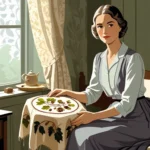
The Glassmaker by Tracy Chevalier, published in 2024, is a sweeping historical novel that melds art, craftsmanship, and female resilience across centuries in Venice and Murano. The story follows the life of Orsola Rosso, born in 1486 on the island of Murano, the heart of Venetian glassmaking. Against the backdrop of Renaissance Venice and its rigid traditions, Orsola’s journey unfolds in layers, stretching through time in a mysterious flow, as if echoing the timeless nature of glass itself. Chevalier, known for richly imagined historical fiction like Girl with a Pearl Earring, crafts a story both intimate and epic, where art, memory, and identity intertwine with surprising twists and resonances.
Plot Summary
In the quiet shimmer of Murano, where the canals weave silver threads between workshops and homes, Orsola Rosso was born into the heat and glitter of glass. The year was 1486, and Venice, in its Renaissance glory, pulsed with trade and power. Her family, the Rossos, owned a modest glassmaking workshop, where her father Lorenzo crafted pitchers and goblets with care and precision. Orsola, clever and curious even as a child, was drawn to the fire, to the rhythm of men pulling molten glass from the furnace, shaping it with breath and touch. Yet she, a girl, was to remain at the edges – watching, sweeping, laundering.
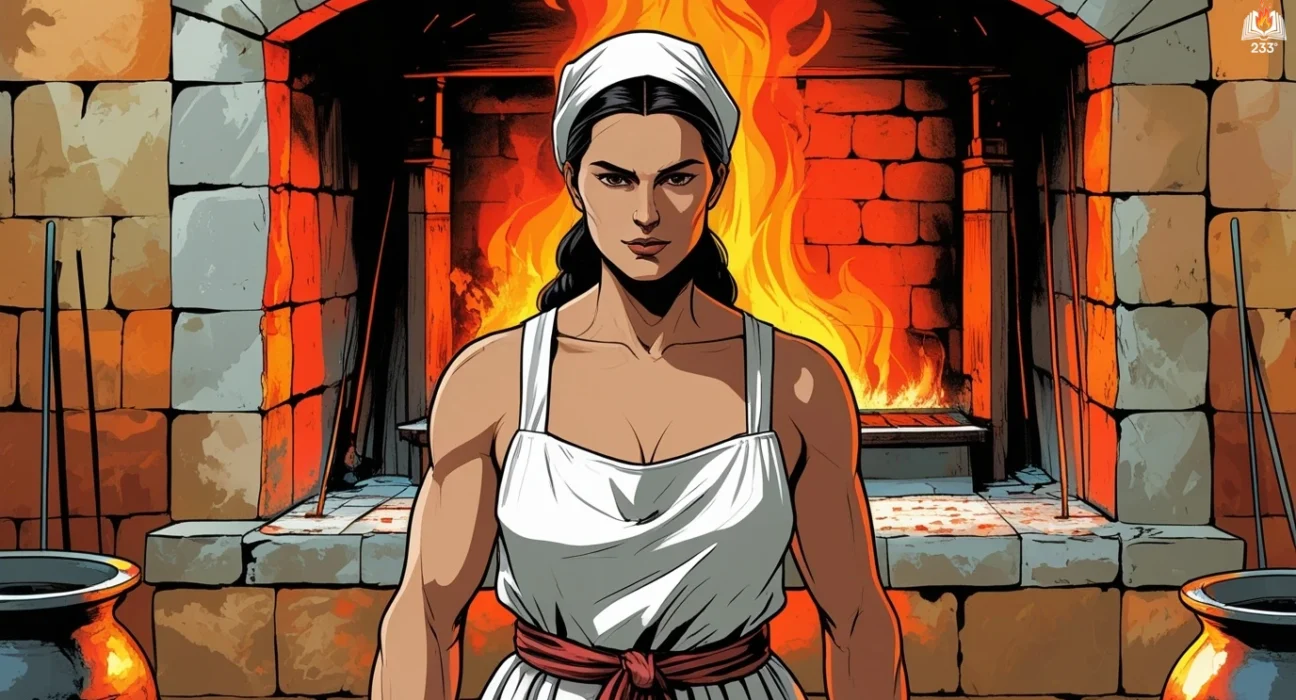
A fall into a canal – pushed, perhaps purposefully, by her mischievous brother Marco – led her into the famed Barovier workshop. There she saw Maria Barovier, a rare woman of glass, tall and square like the furnaces she commanded. Maria scolded her garzone over a cane of red, white, and blue, and caught Orsola spying. Out, Rosso. Spy. The words stung, but the image of the rosetta bead forming in the furnace stayed longer.
The Rosso household pulsed with heat and labor. Lorenzo was calm, focused, his workshop orderly. Marco, impulsive and arrogant, chased brilliance without discipline. Giacomo, the quieter brother, mirrored their father – deliberate and watchful. Orsola’s mother, Laura, ran the house like a second furnace, her hands stirring laundry vats and calculating costs. Orsola learned her place in this world of sweat and heat, her role etched in the silence between sweeping glass shards and folding linen.
But glass, like life, shatters with no warning.
An accident, quick as flame. A garzone’s careless twist. A piece of glass arced from the punty, struck Lorenzo in the neck, and blood pooled where marbles had once rolled. Orsola’s hands, stained with her father’s lifeblood, would never be the same. The workshop froze in the wake of his death. Laura stiffened into resolve. Marco raged and flailed, now maestro in title but not in spirit. Giacomo, dependable as always, kept the fires lit, but the rhythm faltered.
Maria Barovier attended the funeral, her gaze resting briefly on Orsola. Days later, a parcel of brown-red fabric arrived – fine linen, no note. Laura knew: this was not a debt payment. Orsola, clad in the new dress, went to Maria, bearing the weight of her family’s ruin.
Maria, always precise, asked questions, sharp and efficient. Klingenberg, the German merchant who bought their glass, had accepted their last shipment out of respect but would order no more. The goblets Marco made didn’t match. The bowls were uneven. The glass lacked control. Maria offered advice – expand, diversify. Not just goblets and bowls. Try goti, plates, platters. Let each brother find what his hands do best. But also: beads.
Beads, small and inconsequential, were a path Maria herself had walked. Women could make beads, unnoticed and unchallenged. Orsola could start with lampwork, melting cane over a flame, winding glass around a rod to shape it bead by bead. A cousin, Elena Barovier, could teach her. Maria, ever strict with legacy, would not share the rosetta. But she offered Orsola the tools to craft her own future.
Elena was sharp-tongued and impatient. Orsola’s early beads were disasters – lopsided, blistered, too thick or too thin. The smell of tallow turned her stomach. But she returned night after night, hands blistered, eyes aching from the fire. She practiced with honey, mimicking molten glass, spinning it between sticks in the courtyard under the eyes of brothers who sneered or watched in silence. Marco scoffed. Giacomo encouraged her quietly, helping her build bellows, cheering her smallest successes.
Marco believed his ornate lion-handled goblet would impress Klingenberg. He took it to Venice with swagger and certainty. When he did not return, Laura grew tense. Giacomo and Orsola went to Venice by boat, threading through the Grand Canal’s frenzy of curses, laundry, and reflections. They found Marco, hungover and furious. Klingenberg had rejected the goblet – beautiful, but unusable. The cup was too shallow. It spilled. It was art without function.
Back home, Orsola continued her lampwork in secret. Her beads grew rounder, smoother. She added color, then patterns. Elena’s grudging approval grew. Eventually, Laura learned the craft too. Together, they worked by the kitchen fire, the rhythm of bellows replacing the hush of grief. Orsola sold her beads discreetly – to merchants, then to traders, then to a visiting buyer who sought ornaments for ships headed west. The Rossos became known not just for goblets and bowls, but for beads that told stories in swirls of green, blue, and amber.
Time flowed strangely in Murano. Orsola aged slowly, or not at all. As decades passed, Venice shifted, rulers changed, glass styles came and went, yet Orsola remained steady – her hands shaping fire into form, her eyes always watching. Her mother passed. Marco disappeared into obscurity. Giacomo aged, gentle and steady. Orsola stayed, a figure etched into the island like stone, like glass, like myth.
Wars came. Empires rose and fell. New languages echoed in the markets. Tourists flooded Murano, but few knew of the woman who had once spied on Maria Barovier, who had shaped beads in secret, who had slipped through time like a stone skimming water.
She stood one day at the edge of the canal, watching the reflection of the workshop flicker across water. A gondola passed. Children laughed. Somewhere, a furnace roared back to life.
And still, her hands remembered the shape of flame.
Main Characters
Orsola Rosso – The determined and insightful daughter of a glassmaking family on Murano, Orsola begins her journey at age nine and matures through a series of personal and artistic awakenings. Intelligent and observant, Orsola defies gender expectations by secretly learning to make beads and eventually influencing her family’s craft. Her arc is one of transformation—both literal and metaphorical—as she becomes an artist, a daughter, and a woman navigating tradition and change.
Laura Rosso – Orsola’s formidable mother, Laura is pragmatic, sharp, and quietly powerful. She supports her husband’s glass workshop while subtly orchestrating events behind the scenes. After her husband’s death, she assumes leadership over the struggling family business, revealing her resourcefulness and iron will in the face of grief and financial uncertainty.
Marco Rosso – Orsola’s impulsive and volatile older brother, Marco is a gifted yet undisciplined glassmaker. His pride often overshadows his potential, and his inability to adapt threatens the Rosso family’s legacy. Marco’s arc is marked by arrogance, misplaced confidence, and a gradual unraveling of his authority.
Giacomo Rosso – The steadier of the Rosso brothers, Giacomo is humble, patient, and dutiful. He mirrors his father’s quiet craftsmanship and becomes a stabilizing presence in the family. Giacomo’s loyalty and work ethic contrast sharply with Marco’s recklessness.
Maria Barovier – A powerful and enigmatic figure in Murano’s glass world, Maria is one of the few women granted the right to tend her own furnace. Known for inventing the iconic rosetta bead, she becomes both rival and mentor to Orsola. Her stoic presence and sharp intellect make her a symbol of female strength and innovation in a male-dominated craft.
Paolo – The loyal and soft-spoken assistant to Lorenzo Rosso, Paolo is a talented glassmaker in his own right. He serves as a quiet teacher to the younger Rosso sons and remains a stabilizing influence in the workshop even after Lorenzo’s death.
Lorenzo Rosso – Orsola’s father and the Rosso family’s maestro, Lorenzo is a master glassmaker known for his solid, utilitarian work. His untimely and tragic death marks a pivotal moment in the story, sending the family into a period of uncertainty and forcing others to step into leadership roles.
Theme
Time and Immortality – The novel plays with the idea of time as both fluid and frozen, much like the nature of glass itself. Venice and Murano seem immune to the passage of time, and Orsola’s life appears to extend across centuries, suggesting a surreal, almost mythic quality to her existence. Time becomes a character in its own right, shaping and warping perception.
Artistry and Legacy – The meticulous craft of glassmaking serves as both backdrop and metaphor for the characters’ identities. The novel explores how artistic traditions are preserved, transformed, or disrupted across generations, particularly through Orsola’s journey from observer to creator.
Feminine Power and Constraint – At its core, the novel is a meditation on what it means to be a woman in a world governed by male dominance. Through Laura Rosso, Maria Barovier, and Orsola, Chevalier examines the strategies women employ to gain agency—whether by mastering domestic influence, breaking into forbidden spaces, or creating art in secret.
Grief and Rebirth – The death of Lorenzo Rosso catalyzes a series of transformations within the Rosso household. Each character must contend with loss and find new ways to survive and redefine themselves, echoing the way glass must be broken before it can be reformed.
The Alchemy of Creation – Glass itself is central: a mystical, volatile, beautiful substance. It symbolizes fragility and resilience, transparency and mystery. The novel treats glassmaking as an almost spiritual act, one that demands balance, risk, and surrender to fire.
Writing Style and Tone
Tracy Chevalier’s prose in The Glassmaker is lush, lyrical, and infused with historical richness. Her narrative voice is intimate yet elevated, weaving sensory detail with emotional depth. The descriptions of glassmaking are especially vivid—technical yet poetic—bringing to life the heat of the furnace, the sheen of molten glass, and the delicate dance of craftsmanship. She balances exposition with immersion, so that even complex details feel natural and evocative.
The tone of the novel is contemplative and quietly magical. While grounded in the realism of Renaissance Venice, Chevalier employs a dreamlike quality, especially in her treatment of time. There is a timelessness to Orsola’s voice that mirrors the suspended, glimmering world of Murano glass. Beneath the historical surface lies an undercurrent of myth, transformation, and longing, creating a narrative that feels both ancient and eternal.
Quotes
The Glassmaker – Tracy Chevalier (2024) Quotes
“Even if I had known, I would never have told them. Torture does not deserve an answer.”
“you never recover from losing someone; you just learn to accommodate the hole it makes in you.”
“...you never recover from losing someone; you just learn to accommodate the hole it makes in you.”
“People who make things also have an ambiguous relationship with time. Painters, writers, wood-carvers, knitters, weavers and, yes, glassmakers: creators often enter an absorbed state that psychologists call flow, in which hours pass without their noticing.”
“A pearl needs grit to be beautiful; beauty comes from the scar on the lip, the gap in the teeth, the crooked eyebrow.”
“My beads have gone everywhere—even to Africa. But I have gone nowhere. I want to go somewhere.”
“reminder that you never recover from losing someone; you just learn to accommodate the hole it makes in you.”
“But once children outnumbered adults, it was impossible to control them.”
“When you already know how to do something, it can be hard to put yourself in the shoes of someone who doesn’t.”
“People who make things also have an ambiguous relationship with time. Painters, writers, wood-carvers, knitters, weavers and, yes, glassmakers: creators often enter an absorbed state that psychologists call flow, in which hours pass without their noticing. Readers, too.”
“creators often enter an absorbed state that psychologists call flow, in which”
“And then the plague properly took hold of the city. The Venetian provveditori alla sanità swung into action, delegating citizens in”
“Venice by Jan Morris (1960) and A Brief History of Venice by Elizabeth Horodowich”
“You don’t have to care about people to look after them. Indeed, some say emotions get in the way of looking after them.”
We hope this summary has sparked your interest and would appreciate you following Celsius 233 on social media:
There’s a treasure trove of other fascinating book summaries waiting for you. Check out our collection of stories that inspire, thrill, and provoke thought, just like this one by checking out the Book Shelf or the Library
Remember, while our summaries capture the essence, they can never replace the full experience of reading the book. If this summary intrigued you, consider diving into the complete story – buy the book and immerse yourself in the author’s original work.
If you want to request a book summary, click here.
When Saurabh is not working/watching football/reading books/traveling, you can reach him via Twitter/X, LinkedIn, or Threads
Restart reading!